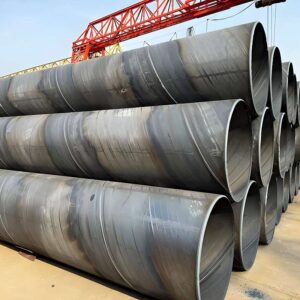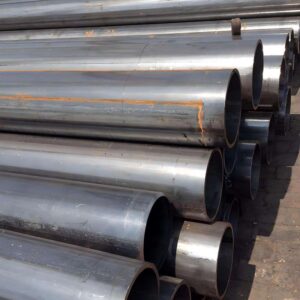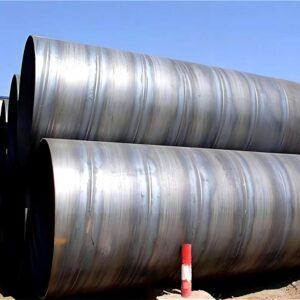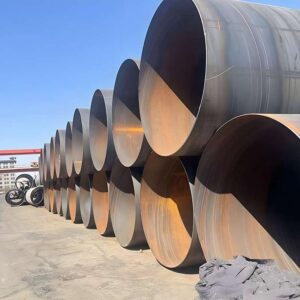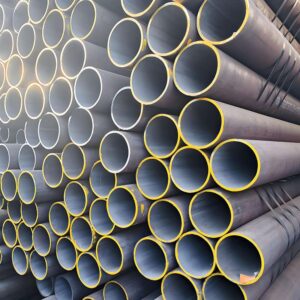
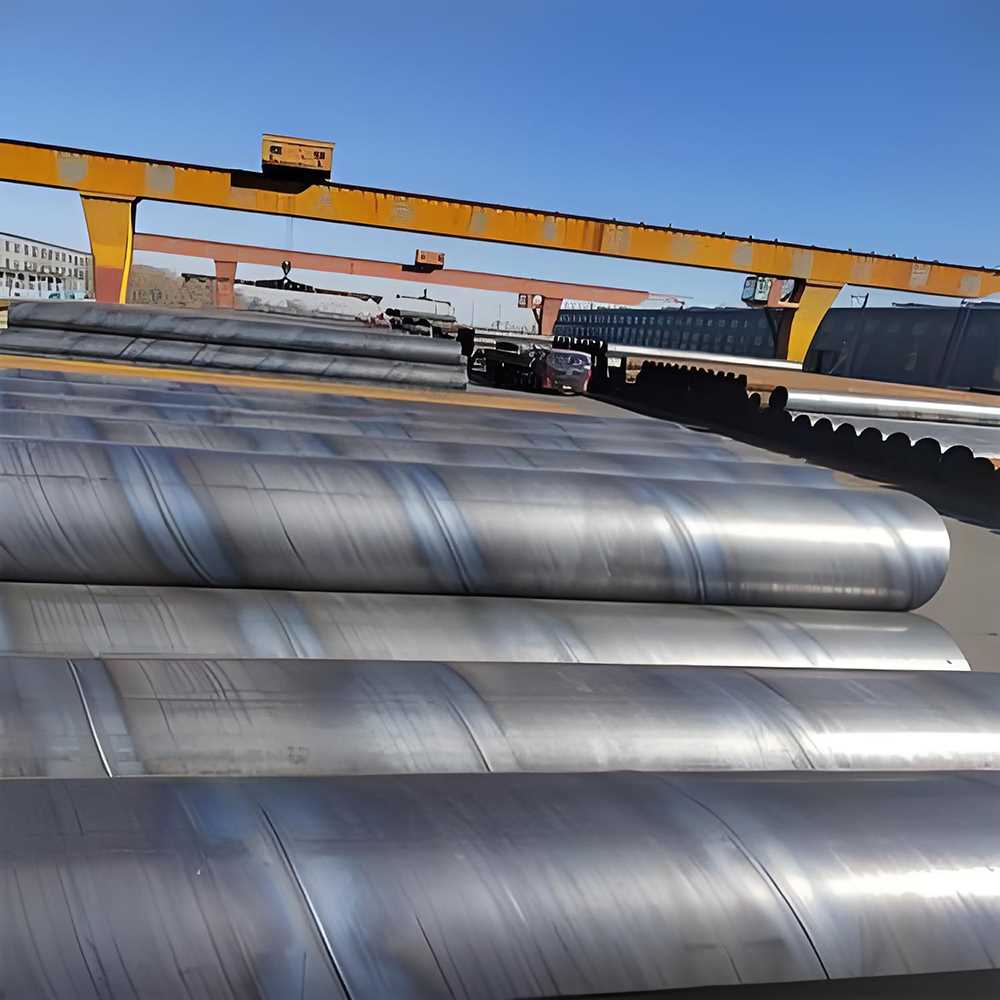
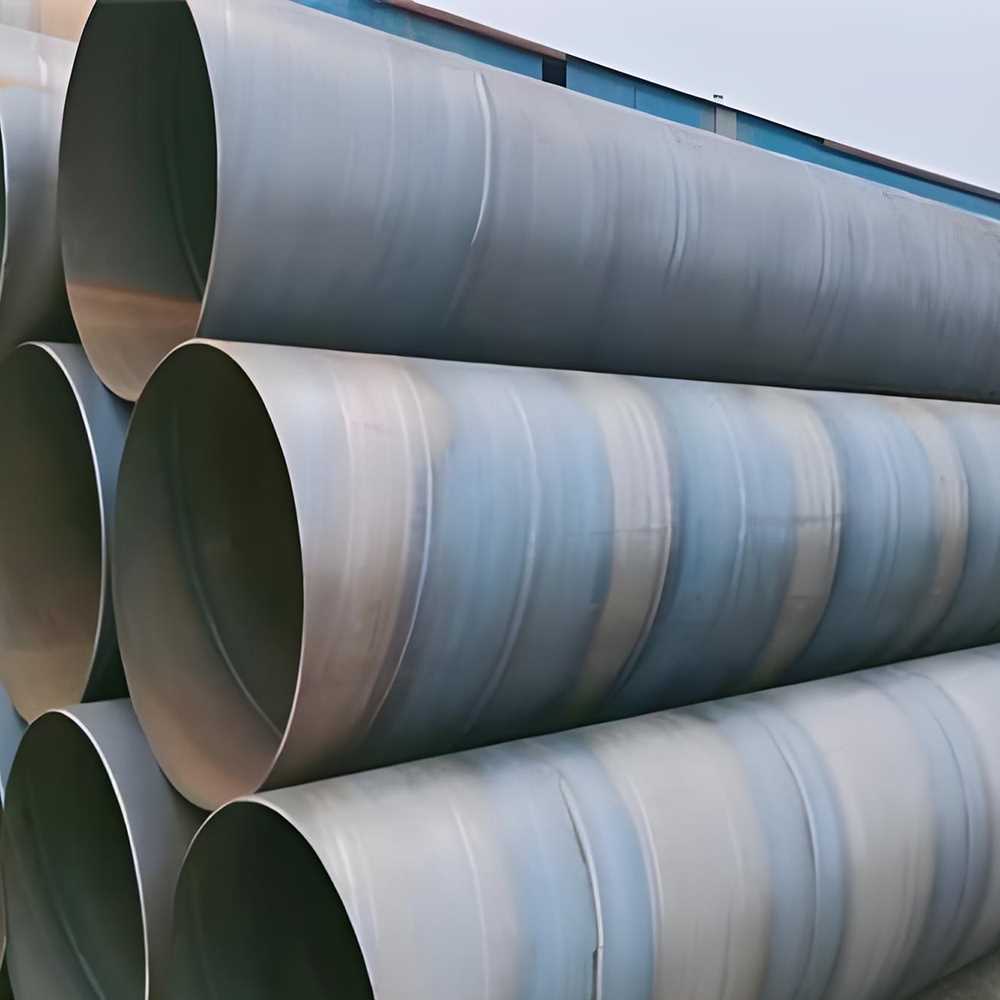
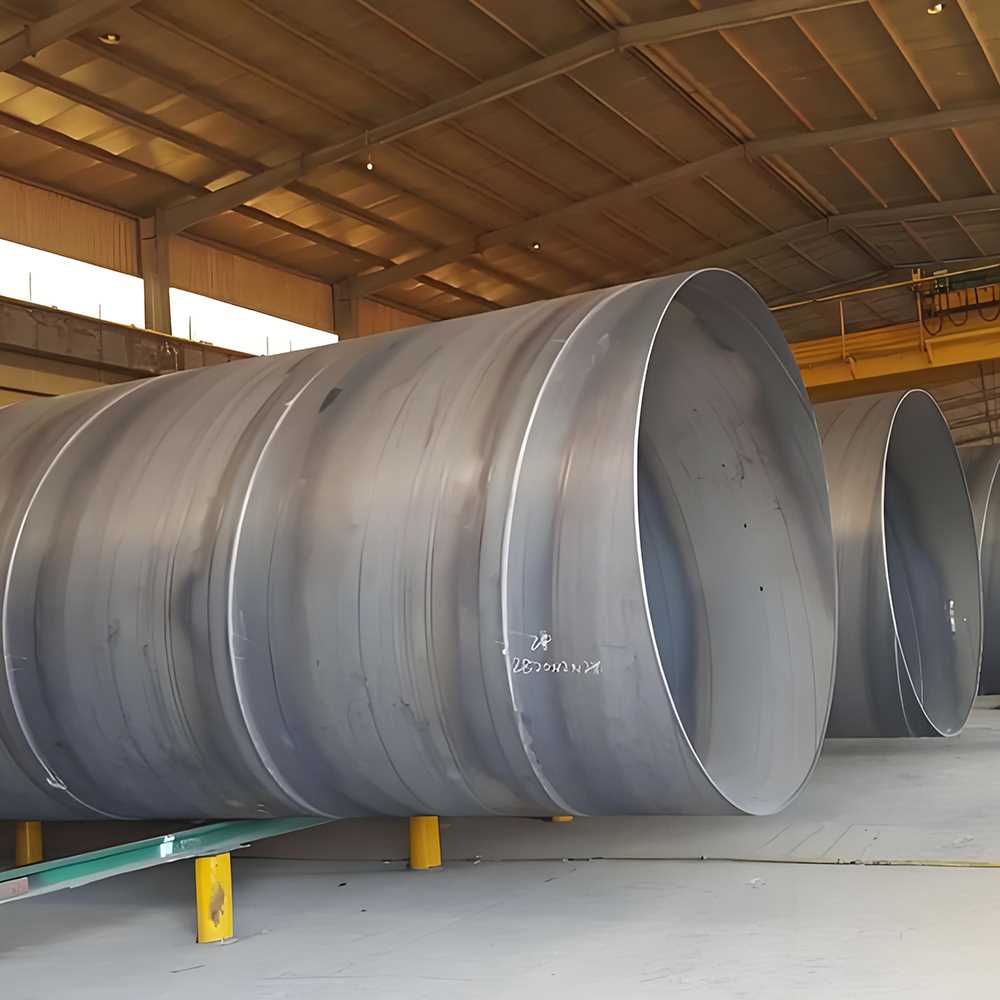
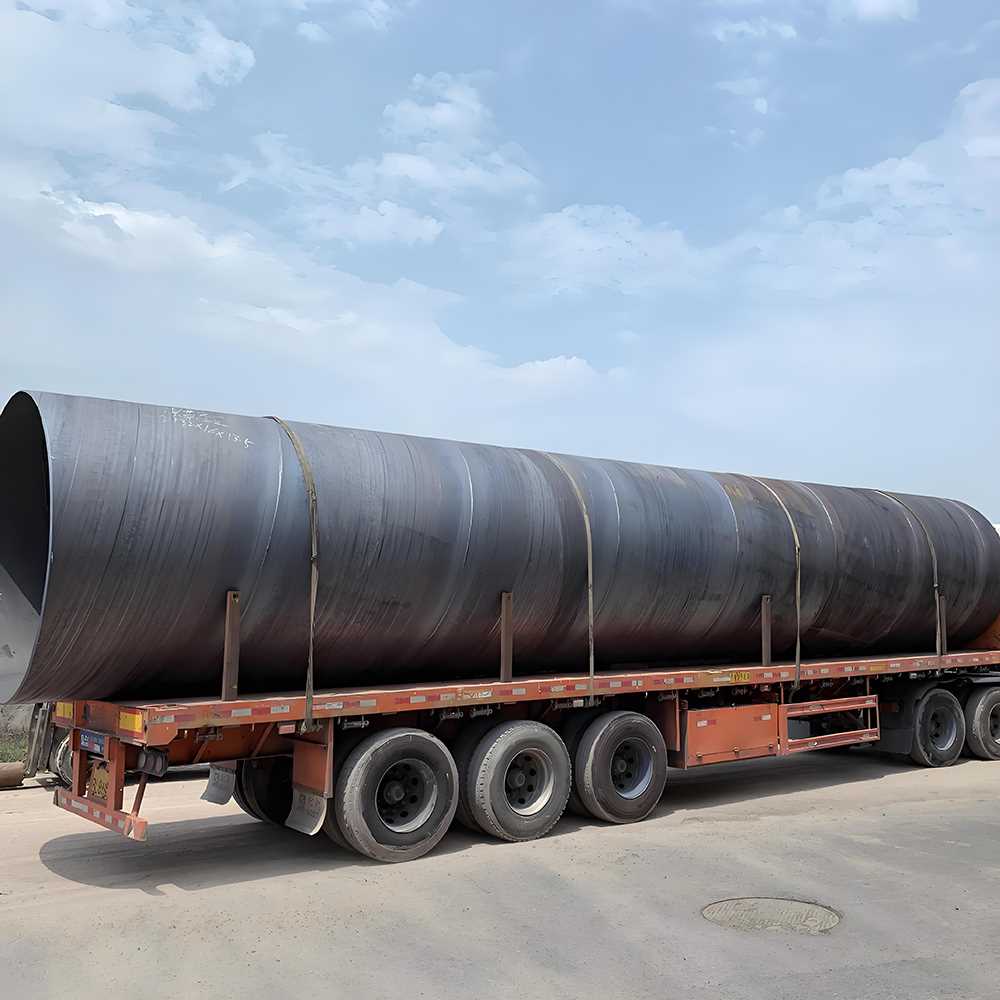
I. What is spiral steel pipe?
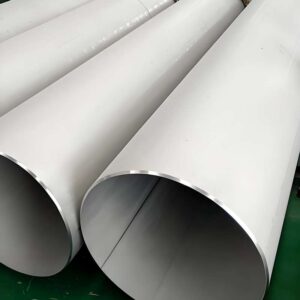
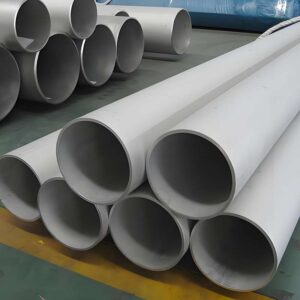
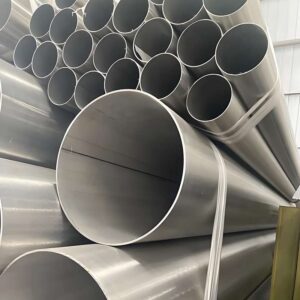
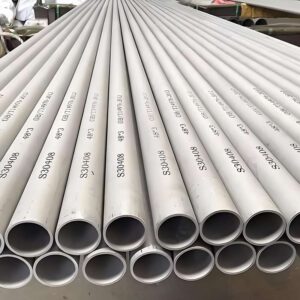
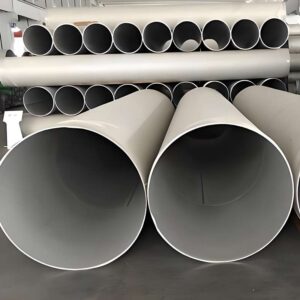
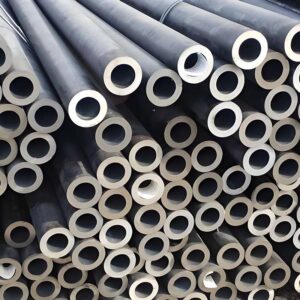
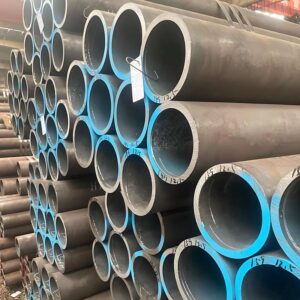
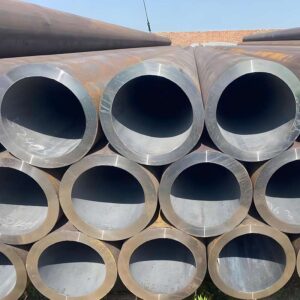
Spiral Steel Pipe for Water, Oil, and Gas Pipelines is a type of spiral welded steel pipe. It is manufactured by winding steel strip (usually called steel strip or steel coil) into a spiral shape and then continuously welding along the spiral seam to form a pipe structure with high strength and good sealing performance.
II. Key Features and Advantages of Spiral Steel Pipes
(1) Capability to Produce Large-Diameter Pipes
The advantage of SSAW steel pipes is that they can easily produce pipes with extremely large diameters. The diameter can reach 3 meters or even larger.
For other welded steel tube manufacturers using different processes, such specifications are often more costly or difficult to achieve. Spiral welded pipes have a clear advantage in this regard.
Theoretically, as long as the steel strip is wide enough, carbon steel pipes of any large diameter can be manufactured.
(2) Flexibility and Cost-Effectiveness
Using standard width steel strip coils, double-sided submerged arc welded pipes of different diameters can be produced by adjusting the forming angle. This production method reduces the demand for raw material specifications, improves production flexibility, and increases economic efficiency.
(3) Weld Strength Distribution
The welds in these pipes are distributed in a spiral pattern. Compared to straight-seam pipes, the weld direction forms a certain angle with the pipe’s main stress direction, typically around 45°. This angular design facilitates stress distribution when the pipe is subjected to internal pressure and prevents weld defects from penetrating the entire circumferential cross-section.
(4) High Production Efficiency
The production process of spiral steel pipes is highly automated, enabling continuous production with high efficiency. This makes them highly suitable for manufacturing welded pipes required for long-distance transportation.
(5) High Material Utilization Rate
During production, the utilization rate of steel coil rolls is typically high. This means that materials can be maximally conserved, reducing costs and enhancing the overall competitiveness of carbon steel pipes.
III. Spiral steel pipe standards in various countries
| Country/Region | Standard Number | Standard Name / Scope of Application | Main Purpose |
|---|---|---|---|
| China | SY/T 5037 | Spiral Welded Steel Pipes (Spiral Submerged Arc Welded Steel Pipe for General Fluid Transportation) | Transportation of water, petroleum, natural gas and other low-pressure fluids |
| China | GB/T 9711 | Petroleum and Natural Gas Industry Conveyance Steel Pipe | Transportation of petroleum and natural gas |
| China | SY/T 5040 | Spiral Seam Double-sided Submerged Arc Welded Steel Pipe for Water and Gas Conveyance | Urban water supply, gas conveyance |
| USA | API 5L | Pipeline Steel Pipe for Petroleum and Natural Gas | Petroleum and natural gas long-distance transmission pipelines |
| USA | ASTM A252 | Steel Pipe Piles | Bridges, structural foundation piling |
| USA | ASTM A139 | Electric Arc Welded Steel Pipe (including spiral welding) | Water conveyance, structural applications |
| Europe | EN 10219 | Hollow Sections for Cold-formed Structural Welding | Structural pipes |
| Europe | EN 10217 | Welded Steel Pipe for Pressure Purposes | Pressure pipeline systems |
| Japan | JIS G3444 | Carbon Steel Pipe for Structural Use | Building structural pipes |
| Japan | JIS G3457 | Water Conveyance Steel Pipe | Water supply pipelines |
| Russia | GOST 20295 | Petroleum and Natural Gas Conveyance Steel Pipe | Transportation of petroleum and natural gas |
| Canada | CSA Z245.1 | Petroleum and Natural Gas Industry Steel Pipe | Transportation of petroleum and natural gas |
| Australia | AS 1579 | Spiral Submerged Arc Welded Steel Pipe | Water pipelines |
| India | IS 3589 | Steel Pipe for Water, Gas and Structural Use | Water supply pipelines, structural applications |
| South Korea | KS D 3562 | Spiral Welded Steel Pipe for Water Conveyance | Water pipelines |
IV. Comparison between spiral welded steel pipes and straight seam welded steel pipes
| Comparison Item | Spiral Welded Pipe | Straight Seam Welded Pipe (LSAW/JCOE/UOE/ERW) |
|---|---|---|
| Production Process | Hot-rolled steel strip is formed at a helical angle (forming angle) and then welded by double-sided submerged arc welding. | Steel plate or strip is directly rolled into shape by a forming machine and welded with a straight seam (ERW is resistance welding, LSAW/JCOE/UOE is submerged arc welding). |
| Available Diameter | Can produce large-diameter pipes, with a maximum diameter of up to 3000mm or even larger. | ERW is usually ≤26", LSAW/JCOE/UOE can reach around 60", but the cost increases sharply beyond this diameter. |
| Wall Thickness Range | The wall thickness range is flexible, but the thickness is generally relatively limited. | LSAW can produce pipes with larger wall thicknesses. |
| Production Efficiency | Fast production speed, suitable for mass production of long-distance conveyance pipelines. | ERW is fast, LSAW is relatively slow, and JCOE/UOE has a long production cycle. |
| Weld Seam Direction | The weld seam is helically distributed, forming an angle (about 45°) with the pipe body. | The weld seam is parallel to the pipe body, with the pressure-bearing direction perpendicular or parallel to the weld seam. |
| Weld Seam Length | The weld seam length is longer for the same length of pipe. | The weld seam length is shorter than that of spiral welded pipes. |
| Welding Strength | The weld seam direction forms an angle with the circumferential stress of the pipe, which has advantages in certain working conditions. | The straight seam is aligned with the pressure-bearing direction of the pipe, making inspection easier. |
| Cost | High raw material utilization rate, relatively low manufacturing cost. | ERW has the lowest cost (for small diameters), while LSAW/JCOE/UOE have higher costs. |
| Common Standards | API 5L, ASTM A252, SY/T 5037 | API 5L, ASTM A53, ASTM A252, GB/T 9711 |
| Application Fields | Petroleum and natural gas conveyance pipelines, large-diameter water supply pipes, structural pile pipes | Petroleum and natural gas conveyance, structural pipes, pressure pipelines, urban networks |
| Welding Process | Double-sided submerged arc welding | ERW (resistance welding), LSAW/JCOE/UOE (double-sided submerged arc welding) |
Summary:
Spiral steel pipes (spiral welded pipes) are suitable for the production of large-diameter, long-distance pipelines, offering high production efficiency and low costs.
Straight seam welded pipes (ERW, LSAW, JCOE, UOE) are suitable for applications with high weld seam requirements and high pressure, especially thick-walled and high-strength pipelines.
V. Quality Inspection (in accordance with API 5L/GB 9711 standards)
| Inspection Type | Method | Inspection Target | Acceptance Criteria |
|---|---|---|---|
| Non-destructive Testing of Welds | Ultrasonic Testing (UT) | Internal porosity, slag inclusion, incomplete fusion | No defects ≥ φ3mm |
| Radiographic Testing (RT) | Volume-type defects in welds | Comply with GB/T 3323 Class II requirements | |
| Dimensional Inspection | Laser diameter gauge + Caliper | Outer diameter, wall thickness, ovality | Ovality ≤ 1% × diameter, wall thickness tolerance ±10% |
| Mechanical Testing | Universal testing machine + Impact testing machine | Tensile strength, yield strength, Charpy impact energy at -20℃ | Comply with material grade requirements (e.g., X80: σs ≥ 555 MPa) |
| Hydrostatic Testing | High-pressure pump (pressure holding ≥ 30s) | Overall sealability | Test pressure = Design pressure × 1.5 times, no leakage |
VI. Application areas of spiral welded steel pipes
1. Spiral Steel Pipe for Water Supply Systems
- Spiral steel pipes are widely used in municipal water supply and drainage systems. They are particularly suitable for long-distance water transmission, urban pipe networks, and sewage projects.
- These steel pipes can be produced in large diameters and have high structural strength, meeting the needs of water conservancy projects of varying scales.
- In water supply projects, internal anti-corrosion treatment, such as epoxy lining, is typically applied. This prevents water contamination and extends service life.
- As a mature spiral steel pipe for water supply, it demonstrates stable and reliable performance in various water transmission projects.
- Furthermore, water transmission steel pipes manufactured using the SSAW process reduce project costs while maintaining strength.
2. Spiral Steel Pipe for Oil Pipelines
- Spiral steel pipes are widely used in oil transportation projects, primarily for long-distance transportation of crude oil and refined oil products.
- Their welded structure is stable and can withstand high pressure, making them suitable for complex environmental conditions.
- Under high-pressure conditions, high-strength steel grades conforming to API 5L standards are typically selected. This ensures the safe operation of the pipeline.
- As a reliable spiral pipe for oil transmission, its application in the petroleum industry is very mature.
- High-quality oil pipeline steel pipes are usually used in conjunction with anti-corrosion systems and undergo rigorous testing. This ensures long-term stable operation.
3. Spiral Steel Pipe for Natural Gas Pipelines
- Natural gas transmission places high demands on pipeline safety, especially in terms of airtightness and pressure resistance.
- Spiral steel pipes possess excellent mechanical properties and weld quality, making them widely used in natural gas pipelines.
- In engineering projects, 3PE or FBE anti-corrosion coatings are typically used to prevent external corrosion.
- These anti-corrosion measures significantly extend pipeline life and improve safety.
- High-quality gas pipeline spiral steel pipes are suitable for long-distance transmission projects.
- As a reliable natural gas transmission pipe, it is crucial in energy engineering.
VII. Anti-corrosion treatment (optional process)
| Corrosion Protection Type | Process | Coating Thickness | Applicable Scenarios |
|---|---|---|---|
| 3PE Corrosion Protection | Epoxy powder → Adhesive → Polyethylene extrusion winding | 2.0~3.5mm | Acidic/alkaline soils, subsea pipelines |
| FBE Corrosion Protection | Electrostatic spraying of fusion-bonded epoxy powder | 300~500μm | Water conveyance pipelines, mildly corrosive environments |
| Epoxy Coal Tar | Glass cloth interlayer + multiple layers of epoxy coal tar paint | 0.8~1.2mm | Municipal networks, moderately corrosive soils |
| Galvanizing | Hot-dip galvanizing (450℃ zinc bath) | 80~200μm | Atmospheric exposure environments (e.g., structural pipes) |
VIII. FAQ – Spiral Steel Pipe for Water, Oil, and Gas Pipelines
1. Which pipe is best for water transmission?
- Spiral steel pipes are a very common choice for water transmission projects. They are suitable for large-diameter and long-distance water transmission projects.
- Internal corrosion protection (such as epoxy lining) is generally recommended to ensure water quality safety and extend service life.
2. Can spiral steel pipe be used for gas pipelines?
- Yes. Spiral welded steel pipes are widely used in natural gas transmission pipelines.
- However, they must meet high airtightness requirements and pass rigorous testing. 3PE or FBE corrosion protection is also necessary to ensure long-term safe operation.
3. What coating is used for oil pipelines?
- Oil pipelines typically employ external anti-corrosion coatings, such as 3PE or FBE.
- These coatings effectively prevent soil corrosion and environmental impacts, extending the pipeline’s service life.
4. How to choose the right spiral steel pipe grade?
- The selection depends primarily on the pressure, load, and operating environment.
- For low-pressure projects, standard steel grades can be used, while for high-pressure or critical projects, high-strength steel grades (such as API 5L standard) are recommended.
5. Is wall thickness more important than steel grade?
- In many cases, wall thickness is more important than steel grade.
- Thicker pipe walls can significantly improve load-bearing capacity and compressive strength. Therefore, both steel grade and wall thickness need to be considered.
6. Why do spiral steel pipe prices vary so much?
- Price differences usually stem from quality factors, not just the materials themselves.
- These factors include wall thickness tolerances, welding processes, testing standards, and anti-corrosion coatings, all of which affect the final price and performance.