I. What is SSAW spiral steel pipe?
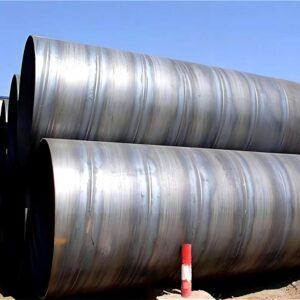
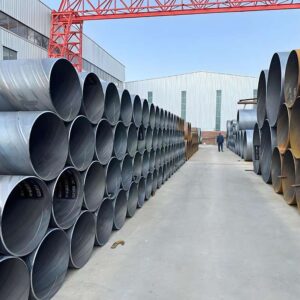
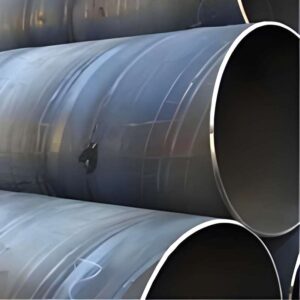
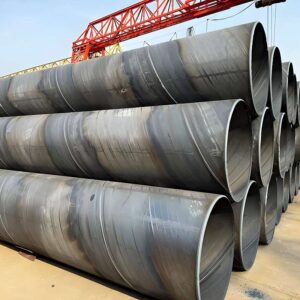
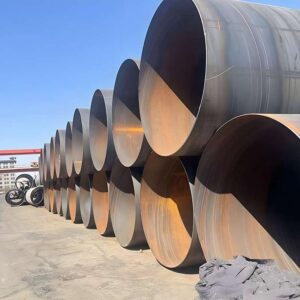
SSAW stands for Spiral Submerged Arc Welded Steel Pipe.
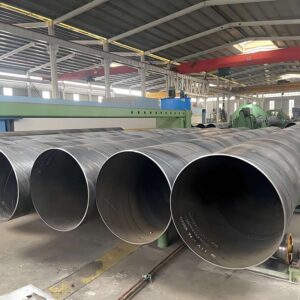
It is a steel pipe manufactured from steel coil stock, formed into a spiral shape through cold rolling, and welded using a double-sided submerged arc welding process.
Definition of SSAW (Spiral Submerged Arc Welded Steel Pipe)
1. Core Processes
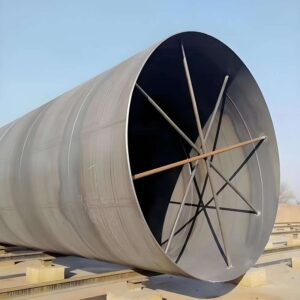
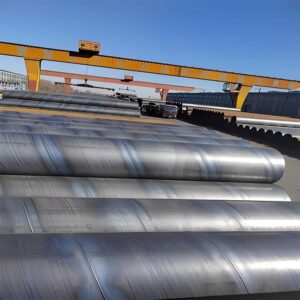
Spiral Forming: As the steel strip advances, the entire strip is coiled at an oblique angle to form a spiral-shaped pipe body.
Submerged Arc Welding: The arc burns beneath a layer of flux to perform the welding. There is no spatter during welding, and the weld quality is exceptionally high and uniform.
2. Double-Sided Welding Process
Internal Welding: The first weld is applied after the tube is formed on the inside.
External Welding: The second weld is applied to the outside of the tube, fusing perfectly with the internal weld.
Uncoiling of steel strip → End trimming and butt welding → Loop storage → Edge milling and flattening → Spiral forming → Internal and external welding (submerged arc welding) → Flying saw cutting → Visual and dimensional inspection → Ultrasonic/X-ray testing → Hydrostatic testing → Beveling and end finishing → Final inspection and warehousing
An Introduction to 4 Key Processes:
1. Spiral Forming
Process: The steel strip, after being uncoiled and flattened, is fed into the forming machine. Through the compression of multiple sets of horizontal and vertical rollers, the steel strip is forcibly bent and rolled into a circle at a predetermined spiral angle (forming angle).
Function: This step determines the outer diameter, wall thickness uniformity, and roundness of the steel pipe.
2. Double-Sided Submerged Arc Welding
Process: Welding is divided into internal and external welding. First, a primary arc weld is applied to the joint inside the steel pipe, followed by a secondary weld at the corresponding position on the outside of the pipe. During welding, the arc burns completely submerged beneath a layer of granular flux.
Function: Double-sided fusion ensures a dense weld with no porosity or slag inclusions, resulting in weld strength that matches or exceeds that of the base steel.
3. Non-Destructive Testing
Process: The production line is equipped with an in-line automatic ultrasonic flaw detector. As the steel pipe passes through, the flaw detector performs a 100% scan of the entire spiral weld. If even the slightest internal defect is detected, the system automatically triggers an alarm. For suspicious areas, X-ray imaging is used for verification.
Purpose: To thoroughly eliminate hidden defects within the weld, such as cracks and lack of fusion.
4. Hydrostatic Testing
Process: Both ends of the steel pipe are sealed, filled with high-pressure water, and pressurized to the test pressure specified by standards. During pressurization, a computer system monitors for pressure drops, while a mechanical device taps the pipe body to check for minute leaks.
Purpose: To ensure that the steel pipe will never burst or leak when deployed in harsh operating environments such as underground, high-pressure systems, or marine applications.
III. SSAW Spiral Steel Pipe Specifications and Parameters Table
| Item |
Specification / Description |
| Product Name |
SSAW Spiral Steel Pipe (Spiral Submerged Arc Welded Pipe) |
| Manufacturing Process |
Double-sided Submerged Arc Welding (SSAW / HSAW) |
| Outer Diameter Range |
219mm – 3500mm |
| Wall Thickness Range |
5mm – 25mm (custom thickened available upon request) |
| Length Range |
6m – 12m (custom cut-to-length available) |
| Steel Grade |
Q235B, Q355B, API 5L Gr.B / X42 / X52 / X60 / X65 / X70 |
| Standards |
API 5L, GB/T 9711, ASTM A252, EN 10219 |
| Welding Type |
Double-sided Spiral Submerged Arc Welding (Double-sided SAW) |
| End Type |
Plain End / Beveled End / Flanged End |
| Coating |
FBE coating, 3PE coating, coal tar epoxy, cement mortar lining |
| Application |
Oil & gas transmission, water conservancy projects, piling, structural support, water pipelines |
| Pressure Rating |
Low / Medium / High pressure (depending on wall thickness and steel grade) |
| Inspection Standards |
Ultrasonic Testing (UT), Radiographic Testing (RT), Hydrostatic Testing |
| Delivery Condition |
Bare pipe / coated / cut-to-length delivery |
IV. Spiral steel pipe implementation standards
1. API 5L (Oil and Gas Pipeline Standard)
Scope of Application: Oil and gas transmission pipeline systems
Steel Grades: Gr. B, X42, X52, X60, X65, X70
Features: High strength and good toughness, suitable for long-distance transmission pipelines
Applications: Oil, natural gas, and energy pipeline networks
2. GB/T 9711 (Chinese Standard for Steel Pipes for Oil and Gas Pipelines)
Scope of Application: Domestic oil and gas pipeline projects in China
Classification: PSL1 / PSL2
Features: Strict quality control; suitable for high-demand engineering projects
Applications: Domestic oil and gas transmission projects, energy infrastructure
3. ASTM A252 (Standard for Structural Steel Pipe Piles)
Scope of Application: Building structures and pile foundation engineering
Features: Emphasizes strength and load-bearing capacity
Applications: Bridge pile foundations, wharf construction, building foundation support
4. EN 10219 (European Standard for Cold-Formed Welded Structural Steel Tubes)
Scope of Application: Structural engineering and building applications
Features: Common standard in the European market, emphasizing structural performance
Applications: Steel structure buildings, foundation support projects
5. AWWA C200 (American Water Works Association Standard for Water System Steel Pipe)
Scope of Application: Municipal water supply and water conveyance systems
Features: Suitable for large-diameter water conveyance pipelines
Applications: Urban water supply, water conservancy projects, water conveyance systems
V. Surface treatment and corrosion protection types
i. Surface treatment
1. Sandblasting/Shot Blasting for Rust Removal
Principle: Steel grit or iron shot is propelled at high speed onto the surface of the steel pipe using compressed air or mechanical centrifugal force.
Purpose: To thoroughly remove rust, scale, and contaminants from the surface of the steel pipe, while creating a certain degree of micro-roughness on the surface to enhance the adhesion of the anti-corrosion coating.
Common Standards: Typically requires achieving Sa2.5 grade.
2. Acid Pickling
Principle: The steel pipe is immersed in an acid solution to remove scale from the surface through a chemical reaction.
Application: Primarily used for small-diameter steel pipes requiring batch processing, or as a critical step prior to galvanizing.
3. Chemical Degreasing and Cleaning
Purpose: Scrubbing the steel pipe with an alkaline solution or solvent specifically to remove industrial grease, lubricants, or rust-preventive oil from the surface.
ii. Common Types of Corrosion Protection
1. 3PE Corrosion Protection
Base Layer: Fusion-bonded epoxy powder, providing excellent chemical adhesion and resistance to cathodic delamination.
Intermediate Layer: Copolymer adhesive, which firmly bonds the inner epoxy powder layer to the outer polyethylene layer.
Outer Layer: High-density polyethylene, providing strong mechanical protection, impact resistance, and waterproofing and moisture-proofing properties.
2. FBE Coating
Process: The steel pipe is heated to over 200°C, and epoxy powder is electrostaticly sprayed onto the pipe surface. The powder melts under heat and cures into a hard coating.
Classification: Divided into single-layer FBE and double-layer FBE.
3. TPEP Coating
Structure: The outer wall uses 3PE coating, while the inner wall uses fusion-bonded epoxy powder (FBE).
4. Epoxy-Coal Tar Asphalt Corrosion Protection
Process: Composed of epoxy resin, coal tar asphalt, and anti-corrosion pigments, typically applied in conjunction with glass fiber cloth wrapping.
5. Polyurethane Insulation and Corrosion Protection
Structure: The inner layer consists of a service pipe, the middle layer is a polyurethane rigid foam insulation layer, and the outer layer is a high-density polyethylene outer casing.
6. Hot-Dip Galvanizing
Process: The rust-removed steel pipe is immersed in molten zinc at approximately 500°C, causing a uniform layer of zinc to adhere to the pipe’s surface.
VI. Comparison of SSAW vs LSAW vs Seamless Steel Pipe
| Item |
SSAW Spiral Steel Pipe |
LSAW Longitudinal Submerged Arc Welded Pipe |
Seamless Steel Pipe |
| Full Name |
Spiral Submerged Arc Welded Pipe |
Longitudinal Submerged Arc Welded Pipe |
Seamless Steel Pipe |
| Manufacturing Process |
Steel strip rolled into spiral seam |
Steel plate rolled into straight seam |
Piercing + hot rolling forming |
| Weld Type |
Spiral weld |
Longitudinal straight weld |
No weld |
| Outer Diameter Range |
Large diameter (219–3500mm) |
Medium to large diameter (406–1620mm) |
Small to medium diameter (6–610mm) |
| Wall Thickness Range |
Medium (5–25mm+) |
Thick (6–50mm+) |
Relatively uniform (2–60mm) |
| Pressure Capacity |
Medium |
High |
Very high |
| Cost |
Low |
Medium to high |
High |
| Production Efficiency |
High |
Medium |
Low |
| Applications |
Water conservancy, piling, water transmission, oil & gas pipelines |
Long-distance oil & gas pipelines |
High-pressure, high-temperature, precision applications |
| Advantages |
Large diameter, low cost, suitable for long-distance transmission |
High strength, stable quality |
No weld, highest reliability |
| Disadvantages |
Long weld seam |
Higher cost |
Limited diameter range, high cost |
VII. FAQ
Q1: In which engineering fields are SSAW spiral steel pipes suitable for use?
SSAW spiral welded steel pipes are widely used in large-diameter transportation projects, primarily in the fields of oil and gas transmission, water conservancy projects, municipal water supply, pile foundations, and structural support.
Because they can be manufactured in ultra-large diameters, they are particularly well-suited for long-distance, high-flow transmission projects, such as water supply networks, natural gas trunk lines, and bridge foundation engineering.
Q2: What is the difference between SSAW spiral steel pipes and LSAW steel pipes?
The main difference between the two lies in the weld configuration and raw materials used.
SSAW uses steel strips rolled into a spiral weld, making it suitable for large-diameter, cost-effective projects;
LSAW uses steel plates rolled into a straight weld, offering higher strength and making it more suitable for high-pressure oil and gas pipelines.
Generally speaking, SSAW is more suited for “economical large-diameter pipelines,” while LSAW is more suited for “high-standard engineering pipelines.”
Q3: What is the pressure-bearing capacity of SSAW spiral steel pipes?
The pressure-bearing capacity of SSAW spiral steel pipes depends on the steel grade, wall thickness, and weld quality. They can typically meet the requirements for low- to medium-pressure and medium- to high-pressure transportation.
Under the same conditions, LSAW or seamless steel pipes have a higher pressure-bearing capacity. Therefore, SSAW is more suitable for water conservancy, water supply, and general oil and gas transportation projects, rather than extreme high-pressure environments.
Q4: What is the maximum diameter of SSAW spiral steel pipes?
One of the key advantages of SSAW spiral steel pipes is their ability to produce extra-large-diameter pipes, typically ranging from 219 mm to 3,500 mm in outer diameter, with even larger sizes available upon request to meet specific project requirements. This is the primary reason for their widespread use in water conservancy projects and large-scale water conveyance systems.
Q5: Is the quality of SSAW spiral steel pipes reliable? Will it affect safety?
SSAW spiral welded steel pipes produced by reputable manufacturers undergo strict quality control, including ultrasonic testing (UT), radiographic testing (RT), and hydrostatic testing. The quality of the welds is guaranteed. For non-extreme high-pressure applications, their safety and reliability fully meet engineering standards.
Q6: How do you select the appropriate SSAW spiral steel pipe specifications?
Three main factors should be considered when selecting: engineering application, design pressure, and the conveyed medium. For example, water conservancy projects generally opt for thinner wall thicknesses and standard steel grades, while oil and gas transmission requires higher steel grades (such as API 5L X52 or above) and thicker wall thicknesses.
It is recommended to select specifications based on design standards (API 5L / GB/T 9711, etc.) in conjunction with engineering drawings to ensure a balance between safety and cost.