I. Introduction
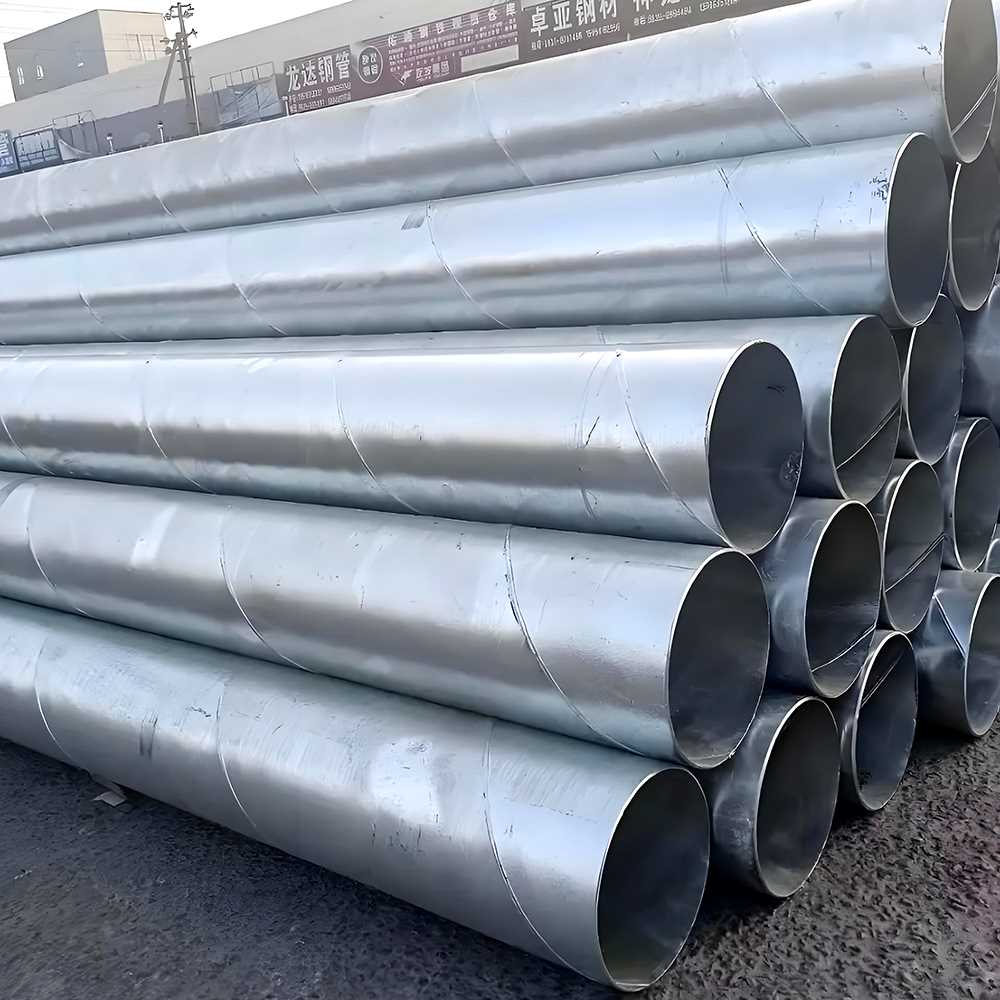
Welding galvanized steel pipes, as an important industrial material, are widely used in various fields such as construction, municipal engineering, and industry. Welded steel pipes inherently possess excellent mechanical properties, and through the galvanizing process, welded galvanized steel pipes also achieve outstanding corrosion resistance. This makes welded galvanized steel pipes highly practical in numerous applications.
This article will explore the classification of welded galvanized steel pipes and the key stages in their production process, aiming to provide readers with a comprehensive understanding of their production workflow and diverse application characteristics.
II. Classification of welded galvanized steel pipe
i. Classification by galvanizing process
(1) Hot dip galvanized welded steel pipe
Process: Steel pipe is immersed in molten zinc at 450℃ to form a zinc-iron alloy layer (80-120μm).
Advantage: Excellent corrosion resistance, service life up to 20-50 years, suitable for outdoor and high humidity environment.
Applications: building structures, water supply and drainage pipes, petrochemical equipment.
(2) Electro-galvanized welded steel pipe (cold galvanized)
Process: Formation of zinc layer (10-50μm) by electrochemical deposition.
Characteristics: Smooth surface but weak corrosion resistance, mainly used for interior decoration or short-term protective scenes.
Note: China has restricted the use of cold galvanized steel pipes in water supply systems since 2000.
(3) Comparison of galvanizing process selection
| Type | Coating Thickness | Corrosion Resistance | Applicable Scenarios | Cost |
|---|---|---|---|---|
| Hot-dip Galvanizing | 80-120μm | ★★★★★ | Outdoor/High Humidity Environments | High (+30%) |
| Electro-galvanizing | 10-50μm | ★★★☆☆ | Indoor Dry Environments | Low |
Purchase Alert: Suppliers are required to provide plating thickness test report (refer to GB/T13912 standard).
ii. Classification by use
(1) Tubes for building structures
Scenario: scaffolding, supporting frame, railing and other scenarios that need to withstand mechanical pressure.
Requirements: wall thickness ≥2.0mm, in line with ASTM A53 or GB/T 3091 standards.
(2) Tubes for fluid transportation
Water supply and drainage: need to have smooth inner wall without zinc tumors, hot dip galvanizing is preferred for drinking water system.
Industrial pipeline: oil, natural gas and other high-pressure scenarios require wall thickness ≥ 4.5mm.
iii. Classification according to the thickness of pipe wall
| Category | Wall Thickness Range | Pressure Capacity | Typical Applications |
|---|---|---|---|
| Thin Wall Pipe | 0.8-2.0mm | ≤1.6MPa | Ventilation systems, lightweight supports |
| Standard Wall Thickness Pipe | 2.0-4.5mm | 2.5-6.4MPa | Building structures, municipal water supply |
| Heavy Wall Pipe | ≥4.5mm | ≥10MPa | High-pressure oil and gas transportation, industrial equipment |
iv. Classification by connection
(1) Threaded connection
Applicable pipe diameter:DN15-DN80 (small diameter pipe).
Advantages: easy to install, can be disassembled; need to cooperate with the raw material belt sealing.
(2) Flange connection
Applicable pipe diameter:DN100 and above (large caliber or high pressure scenario).
Sealing scheme: rubber gasket (conventional) or metal winding gasket (high temperature and high pressure).
(3) Welding connection
Process requirements: need to be polished to remove the plating layer first to avoid corrosion in the welding area.
Application: buried pipelines, non-detachable industrial pipelines.
v. Classification by production process
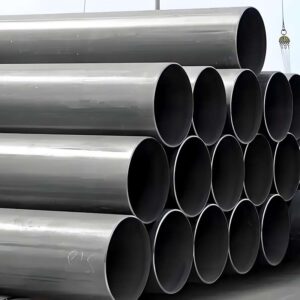
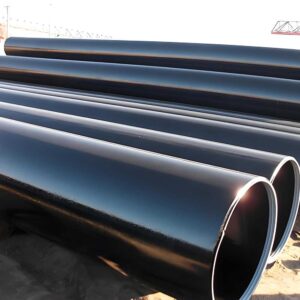
(1) High frequency welding (ERW) steel pipe
Characteristics: straight weld, smooth surface, high production efficiency.
Testing standard: ASTM E215 eddy current flaw detection, applicable to DN15-DN600 pipe diameter.
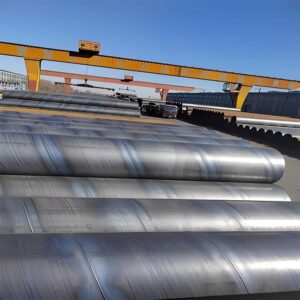
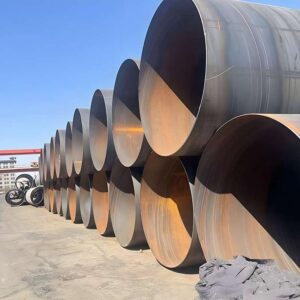
(2) Submerged Arc Welding (SAW) Steel Pipe
Characteristics: spiral weld, large depth of fusion, high strength.
Testing standard: API 5L X-ray inspection, applicable to DN300 pipe diameter.
(3) Production process quality identification
| Process | Weld Seam Characteristics | Inspection Method | Applicable Sizes |
|---|---|---|---|
| High Frequency Welding (ERW) | Straight seam / Smooth surface | Eddy current testing (ASTM E215) | DN15-DN600 |
| Submerged Arc Welding (SAW) | Helical seam / Higher strength | X-ray inspection (API 5L) | Above DN300 |
Acceptance tips: Test both sides of the weld with a zinc layer thickness gauge (should be ≥ 80% of the average).
III. Welded galvanized steel pipe production process core process
i. Steel strip pretreatment and molding
(1) Material selection
Base material: Q235B/Q345B low carbon steel strip (tensile strength ≥375MPa).
Pre-treatment: pickling to remove oxidized skin → alkaline washing to remove oil → two rinsing.
(2) Molding key
Leveling error: ≤0.5mm/m to ensure uniformity of welded seam.
High-frequency welded pipe molding: 7-9 rolls forming, ellipticity ≤ 1%.
ii. Welding process selection
| Welding Process | Applicable Scenarios | Speed Comparison | Inspection Requirements |
|---|---|---|---|
| High Frequency Welding (ERW) | Thin-walled pipes (DN15-DN600) | 20-50 m/min | Eddy current testing |
| Submerged Arc Welding (SAW) | Thick-walled / High-pressure pipes (DN300+) | 1-3 m/min | X-ray inspection |
Operation Points: The galvanized layer (≥10mm width) of the weld area must be polished before welding.
iii. Galvanizing core parameters
(1) Hot dip galvanizing process
Co-plating agent: ZnCl₂+NH₄Cl solution (concentration 30-50g/L)
Zinc pot temperature: 450±5°C
Zinc dipping time: pipe diameter × 1.2 sec/mm (e.g. DN100 needs 120 sec)
(2) Quality control
Zinc layer thickness: ≥85μm (outdoor pipe) / ≥50μm (indoor pipe)
Passivation treatment: chromate solution (enhance corrosion resistance by 30%)
iv. Four levels of quality inspection
Appearance test: zinc tumor ≤ 3 / square meters, no leakage plating / cracks
Non-destructive testing: ultrasonic detection of weld porosity (diameter ≤ 1.5mm)
Mechanical test: take samples for 90°cold bending test (no cracking)
Salt spray test: 480 hours without red rust (ASTM B117 standard)
v. Finished product processing specification
Cutting precision: CNC sawing machine error ≤±0.5mm
End processing:
Thread connection: ISO7 standard taper threads
Flange welding: Reserve 1.5mm welding gap
Packaging requirements: PE film + steel tape strapping (anti-salt spray corrosion in sea transportation)
vi. Suggestions to buyers
Process matching: Hot dip galvanized + submerged arc welding combination is selected for outdoor pipes.
Certification verification: ASTM A53/A106 or API 5L certification is required.
Cost optimization: Decorative pipes can be downgraded to electro-galvanized (40% cost reduction).