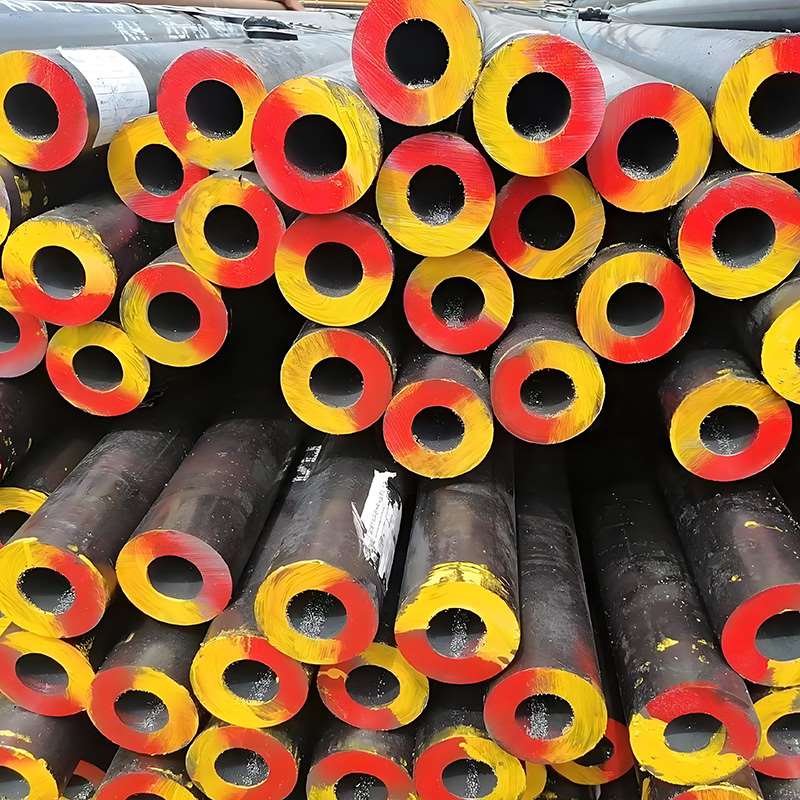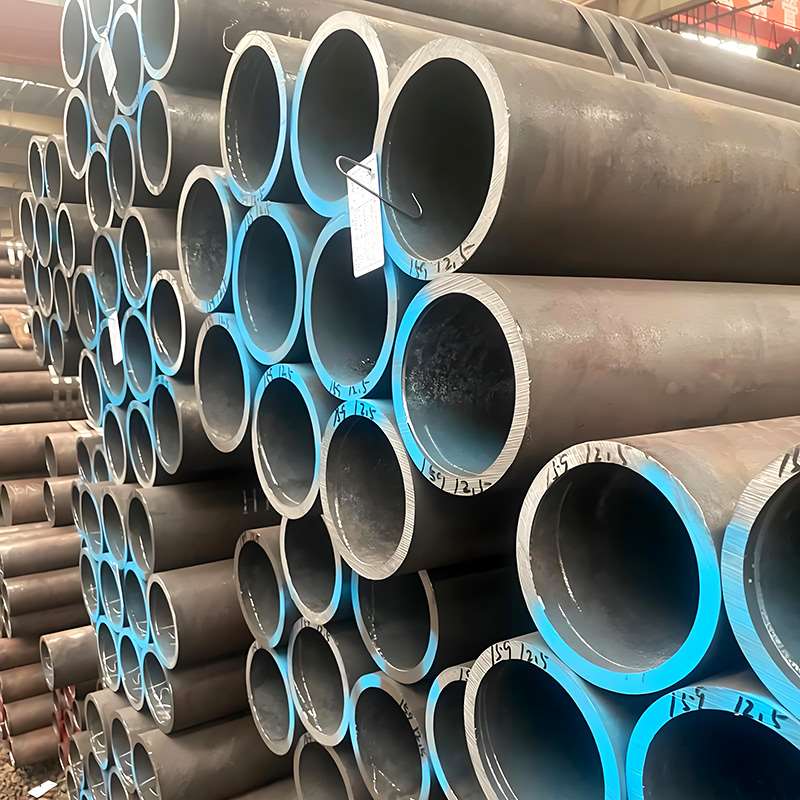
Welded steel pipes are among the most widely used types of pipes in industrial engineering, particularly in oil and gas transportation, municipal infrastructure, structural construction, and pile foundation projects.
A common question for procurement professionals at the early stage of pipe selection is: What types of welded steel pipes are available, how do they differ, and how should one choose the right type?
A proper understanding requires examining welded steel pipes through the lens of manufacturing process, as the process directly determines the pipe’s performance, cost, and suitable applications.
I. Three Main Types of Welded Steel Pipes
According to the bending direction of the steel strip or plate during forming, and the type of weld seam, the industry primarily categorizes welded steel pipes into three types:
- ERW (Electric Resistance Welded Pipe) – Longitudinal seam (straight seam)
- LSAW (Longitudinal Submerged Arc Welded Pipe) – Longitudinal seam (straight seam)
- SSAW (Spiral Submerged Arc Welded Pipe) – Spiral seam
i. ERW Pipes
Process Principle & Characteristics
ERW pipes are manufactured from hot-rolled steel coils. The coils are continuously cold-formed into a cylindrical shape using forming equipment. High-frequency electric current (typically 300–500 kHz) induces surface and proximity heating, rapidly raising the edges of the steel strip to welding temperature. The edges are then pressed together under the mechanical force of squeeze rolls, achieving a solid-phase grain bond.
Key point: ERW welding does not require additional filler wire or flux. The weld is essentially a re-melt and compression of the parent material, ensuring that the weld composition is identical to the base metal.
Advantages & Limitations
- Advantages: High production speed, high automation, low manufacturing cost; continuous coil production ensures tight diameter and wall thickness tolerances, with uniform wall thickness.
- Limitations: Constrained by coil thickness and high-frequency power, ERW pipes are typically limited to small and medium diameters (20 mm – 610 mm) and wall thicknesses. Improper HF welding parameters can lead to micro-defects such as cold welds or heat-affected zones, and residual stress in the weld often requires full-pipe or weld seam online heat treatment.
Typical Applications
Medium-to-low-pressure fluid transport (e.g., city gas networks, potable water pipelines), oilfield casing (OCTG), and mechanical structural tubes.
ii. LSAW Pipes
Process Principle & Characteristics
LSAW pipes are made from single sheets of medium-to-thick steel plates. The plates are first formed into a U-shape, then into an O-shape using molds or forming machines—known in the industry as JCOE or UOE processes—followed by double-sided inner and outer submerged arc welding.
Submerged arc welding (SAW) occurs under a layer of granular flux, concealing the arc. With the addition of welding wire and flux, the weld forms a fusion metal structure typical of conventional welding metallurgy.
Advantages & Limitations
- Advantages: Capable of producing extra-large diameters (up to 1620 mm+) and thick walls (up to 100 mm). Suitable for high-grade steels (e.g., API 5L X70/X80), low-temperature and high-pressure applications, and highly corrosive environments. Full-length mechanical expansion after JCOE or UOE forming ensures dimensional stability and effectively relieves residual stresses.
- Limitations: Complex process, expensive equipment (requiring multi-thousand-ton presses), low production efficiency, and high cost per ton of steel.
Typical Applications
High-pressure onshore and offshore oil & gas transmission pipelines, high-rise building structural columns, offshore wind turbine jacket piles, deep-water bridge foundation piles.
iii. SSAW Pipes
Process Principle & Characteristics
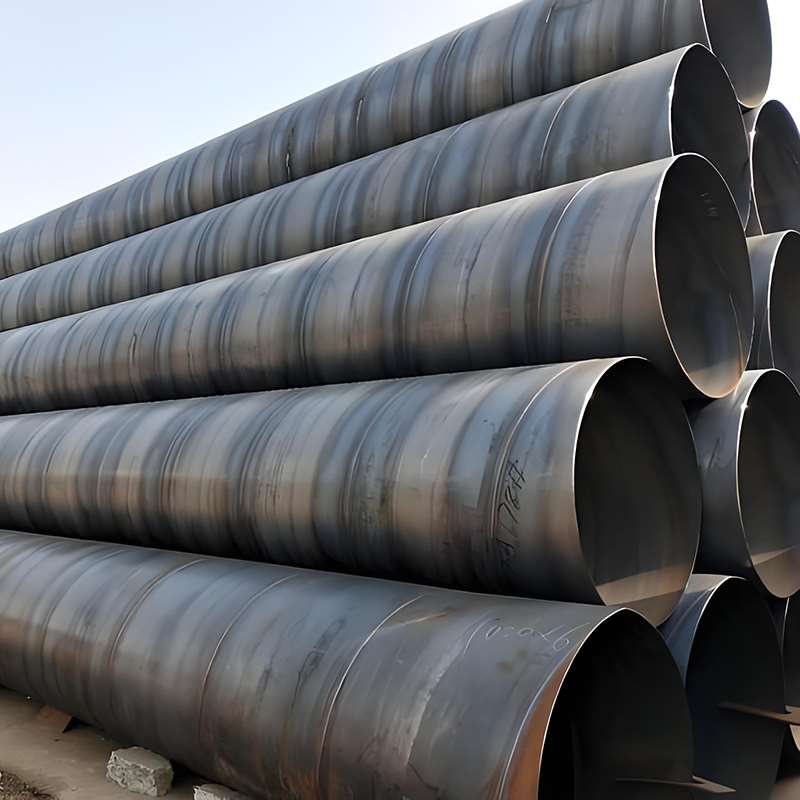
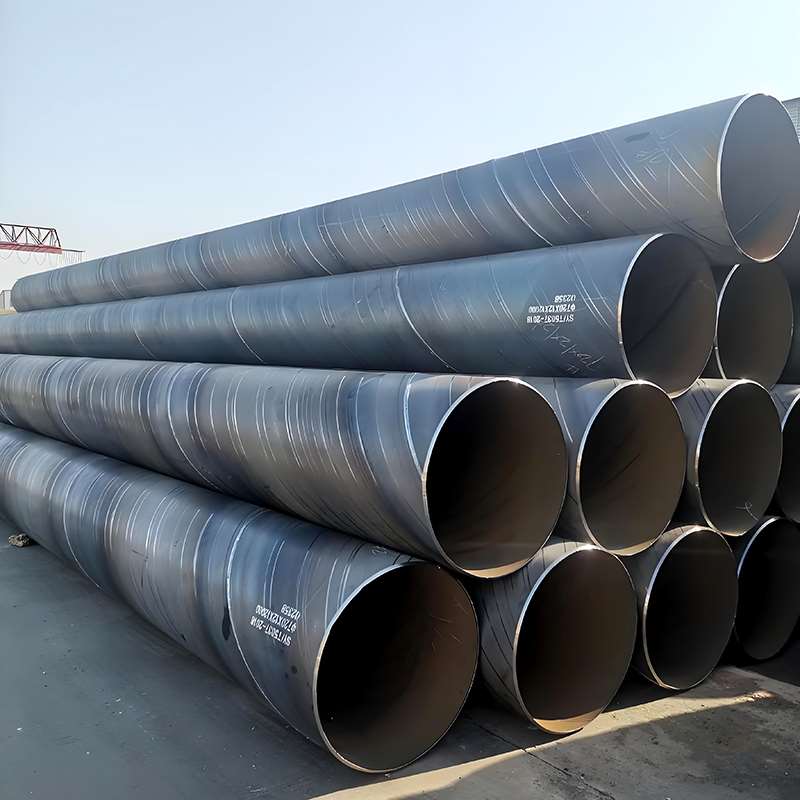
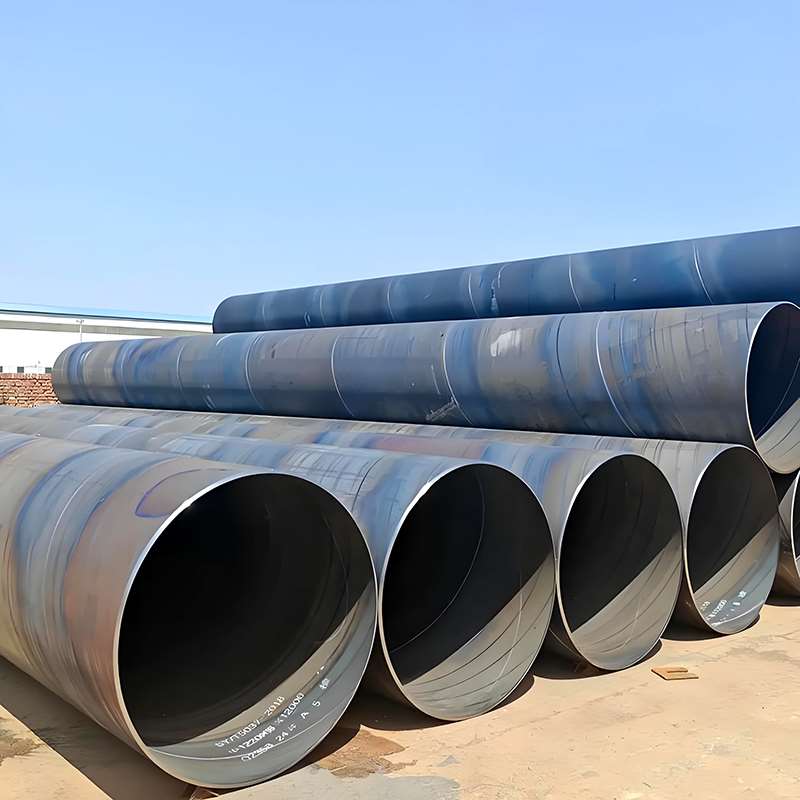
SSAW pipes are made from hot-rolled steel coils, forming the pipe at an angle relative to the pipe axis (forming angle). The steel strip is continuously spirally bent into a cylindrical shape, followed by double-sided SAW welding.
Key characteristic: the weld forms a spiral around the pipe body, allowing the production of large-diameter pipes from narrow strips by adjusting the forming angle.
Advantages & Limitations
- Advantages: Flexible production—different diameters can be produced from the same coil, simplifying supply chains. Continuous spiral forming offers higher efficiency than LSAW, and equipment costs for large diameters are significantly lower, making SSAW cost-competitive.
- Limitations: The total weld length is typically 30–100% longer than straight-seam pipes, increasing the probability of defects (slag inclusions, porosity, lack of fusion). The spiral seam orientation under internal pressure has a unique stress pattern, giving it slightly lower historical reliability than LSAW in high-pressure oil and gas transport.
Typical Applications
Large-diameter low-pressure long-distance water supply pipelines, municipal sewage pipelines, bridge and dock foundation piles, and low-pressure structural supports.
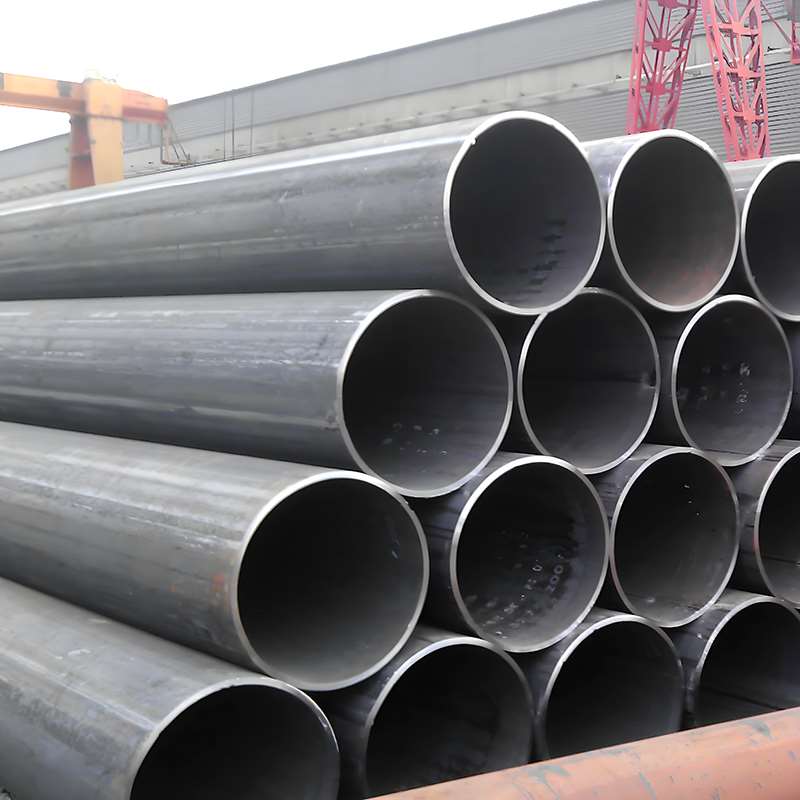
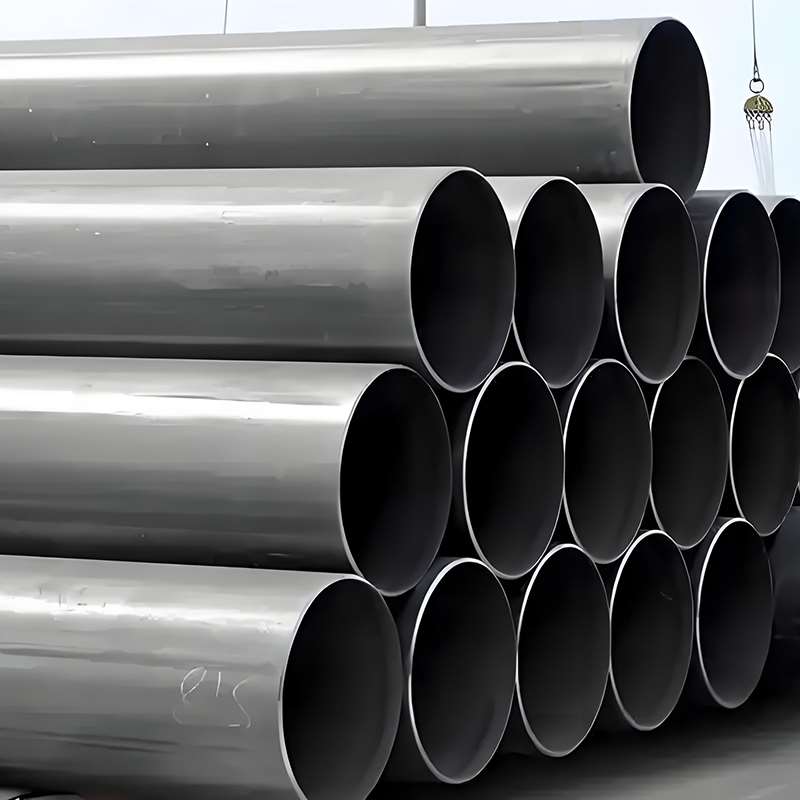
II. Comparative Table of Welded Steel Pipe Types
| Evaluation Dimension | ERW (HF Longitudinal) | LSAW (Double-Sided SAW) | SSAW (Double-Sided Spiral SAW) |
|---|---|---|---|
| Seam Type | Straight (no filler) | Straight (with filler & flux) | Spiral (with filler & flux) |
| Diameter Range | Small: 21.3–610 mm | Extra-large: 406–1620+ mm | Large: 219–3000+ mm |
| Max Wall Thickness | Thin (≤22 mm) | Very thick (40–100 mm) | Medium (≤25 mm) |
| Dimensional Accuracy | Very high | High (mechanical expansion) | Moderate (residual stress and ovality risk) |
| Weld Length | Short (pipe length) | Short (pipe length) | Very long (1.3–2× pipe length) |
| Defect Rate / NDT | Low, easy ultrasonic inspection | Low, most reliable NDT | Relatively higher, difficult spiral seam inspection |
| Relative Cost | Lowest | Highest | Moderate (excellent value for large diameters) |
III. Selection Logic for Engineering Projects
Selecting a welded steel pipe is not simply about choosing the most expensive or cheapest option; it requires balancing design pressure, environmental conditions, geometric safety, and project budget. A three-step logic is recommended:
1. Safety Grade Based on Design Pressure and Medium
- High-risk/high-pressure media (natural gas, crude oil, high-pressure jet fuel): Pipeline failure can be catastrophic. For diameters >610 mm, LSAW is preferred. For ≤610 mm, ERW pipes with stringent NDT (PSL2) are acceptable.
- Low-risk/standard-pressure media (potable water, agricultural irrigation, low-to-medium-pressure sewage): Cost-effective, large-diameter solutions like SSAW are suitable.
2. Structural Stress Assessment
- Dynamic or seismic loads (bridge piles, high-rise core columns, deep-water piling): Pipes endure thousands of impact cycles; replacement is impractical. LSAW is the only reliable choice due to uniform stress distribution and defect-free longitudinal seams.
- Static support structures (roof trusses, protective piles, foundation casings): SSAW or ERW may be used to optimize procurement costs.
3. Manufacturing Feasibility and Commercial Considerations
When technical feasibility overlaps (e.g., 508 mm OD, 12 mm wall thickness water pipes), commercial factors guide the choice:
- Small quantity, tight delivery: LSAW, flexible due to single-plate production.
- Large quantity, budget-sensitive: ERW, lower amortized cost due to automated production lines.
Key Takeaways
There is no absolute “best” welded pipe type—risk arises from misalignment with application scenarios:
- ERW: Precision, efficiency, low cost for medium diameters
- LSAW: Extreme pressure capability, critical infrastructure applications
- SSAW: Economical, flexible, ideal for large-diameter, low-pressure applications
Correct selection ensures project safety, cost efficiency, and long-term operational reliability.