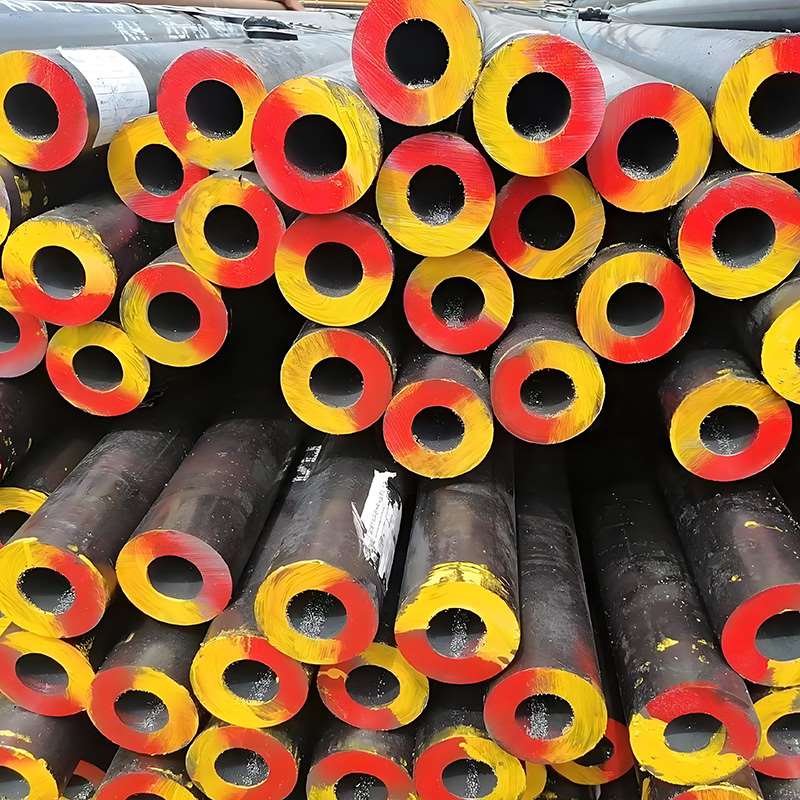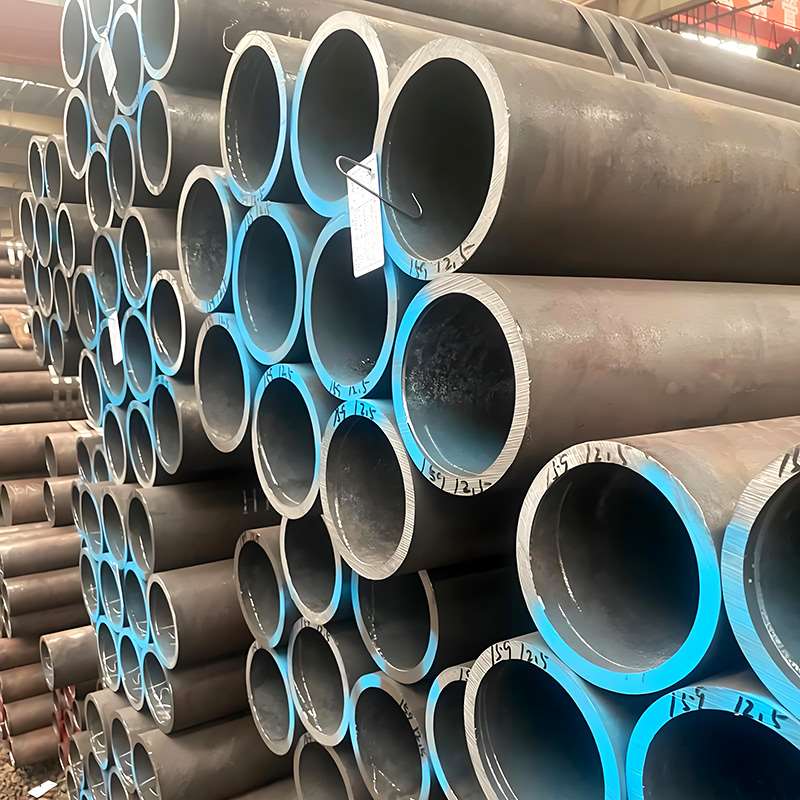
In the procurement, logistics, and structural design of spiral-welded steel pipes, “weight” is a critical parameter. Accurately calculating the weight of steel pipes not only helps procurement personnel precisely manage budgets and verify the tonnage of incoming shipments, but also provides a reliable basis for load planning in logistics and transportation.
This article provides industry-standard formulas for calculating the weight of spiral-welded steel pipes, along with a quick-reference table of weights for common specifications.
I. Formula for Calculating the Theoretical Weight of Spiral-Welded Steel Pipes
Regardless of variations in the outer diameter and wall thickness of spiral-welded steel pipes, the calculation of their theoretical weight follows the basic physical formula for the density of carbon steel. The industry-standard calculation formula is as follows:
W = (D – t) × t × 0.0246615
Where:
W = Theoretical weight of the spiral-welded steel pipe, unit: kilograms per meter (kg/m)
D = Actual outer diameter of the spiral steel pipe, unit: millimeters (mm)
t = Actual wall thickness of the spiral steel pipe, unit: millimeters (mm)
Principle Behind the Formula:
The density of carbon steel is generally calculated as 7.85 g/cm³. This formula essentially first calculates the cross-sectional area of the steel pipe, then multiplies it by the density of the steel, and finally simplifies the result to yield a coefficient of 0.0246615.
Calculation Example:
Suppose you have purchased a batch of spiral welded steel pipes with an outer diameter of 219 mm and an actual wall thickness of 6 mm. The weight per meter is calculated as follows:
W = (219 – 6) × 6 × 0.0246615 = 213 × 6 × 0.0246615 ≈ 31.52 kg/m
If the standard length of a pipe is 12 meters, then the total weight of that pipe is:
31.52 kg/m × 12 m = 378.24 kg
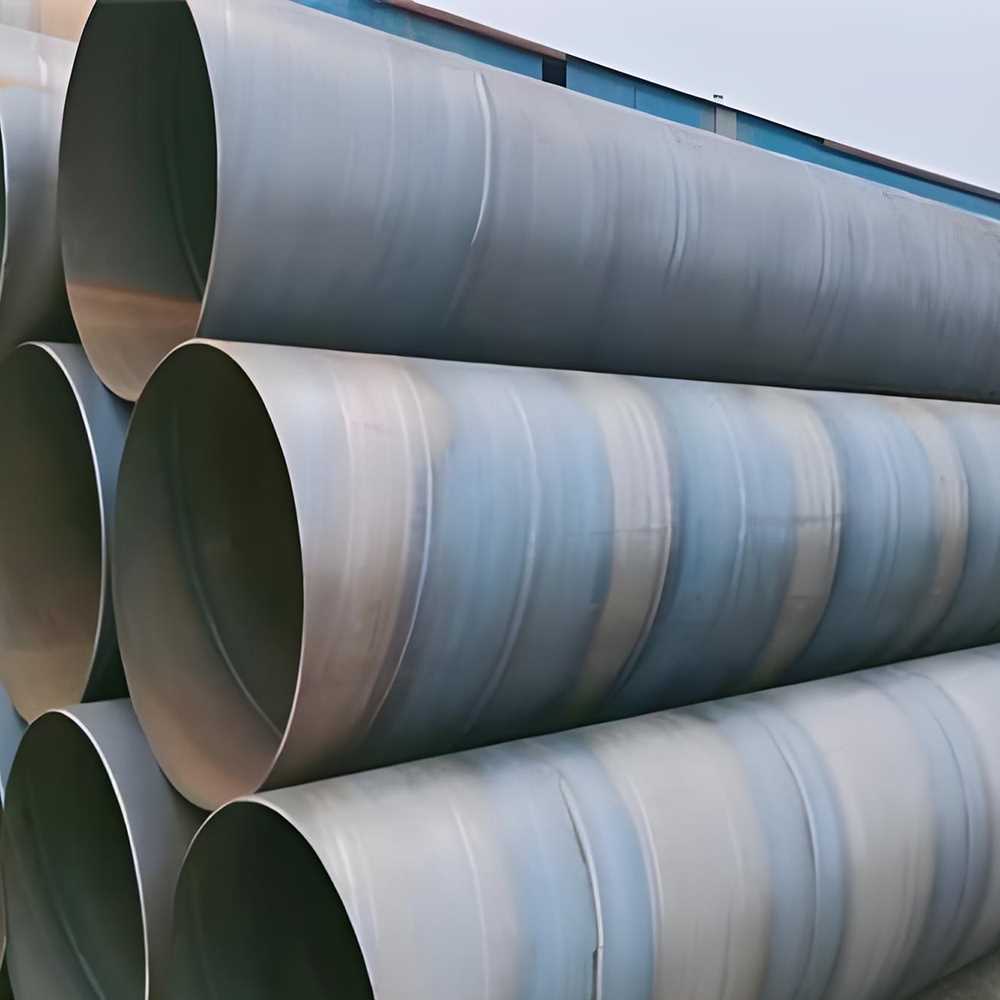
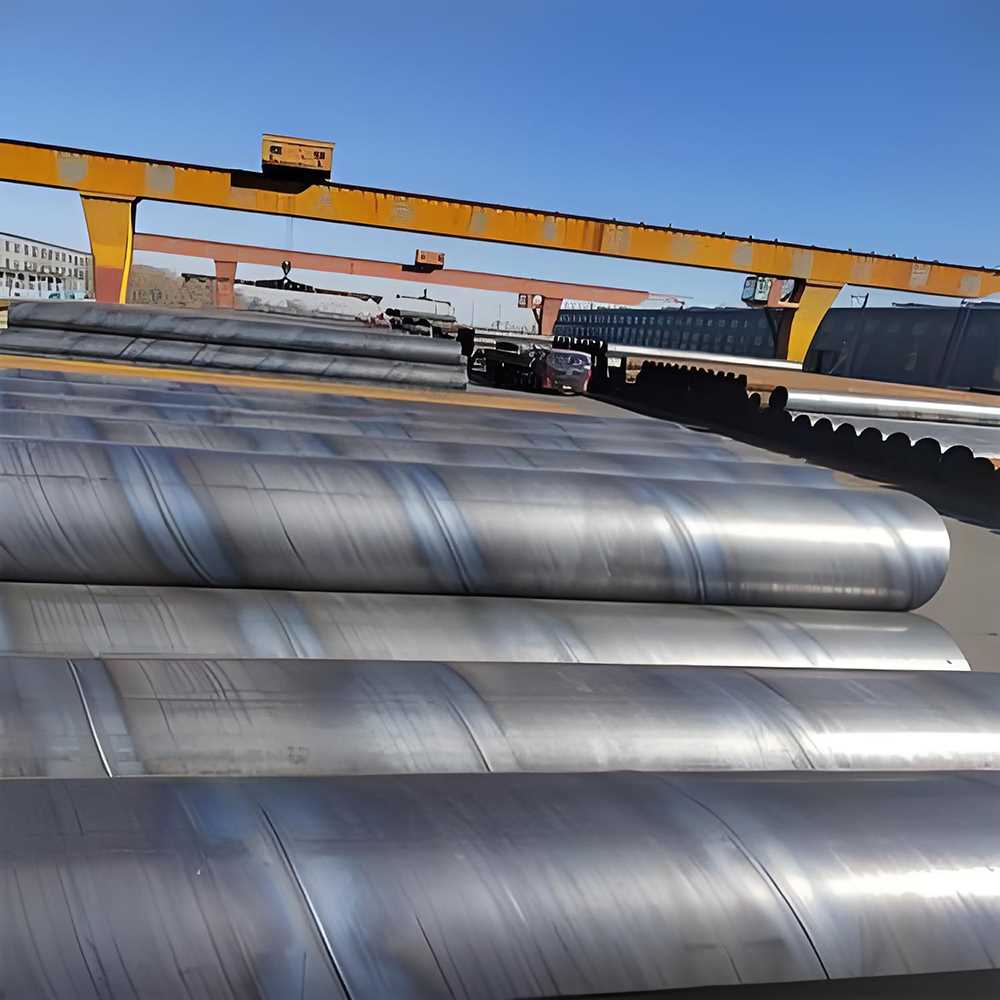
II. Quick Reference Table for the Weight of Common Large-Diameter Spiral-Welded Steel Pipes
To save you time on calculations, the following table lists the theoretical weight per meter (kilograms per meter) for the most common large-diameter spiral-welded steel pipes used in engineering (ranging from NPS 8 to NPS 32) at various standard wall thicknesses:
| Nominal Pipe Size (NPS) | Actual Outside Diameter (D) | Wall Thickness 6 mm | Wall Thickness 8 mm | Wall Thickness 10 mm | Wall Thickness 12 mm |
|---|---|---|---|---|---|
| 8″ | 219 mm | 31.52 kg/m | 41.63 kg/m | 51.54 kg/m | 61.26 kg/m |
| 10″ | 273 mm | 39.51 kg/m | 52.28 kg/m | 64.86 kg/m | 77.24 kg/m |
| 12″ | 325 mm | 47.20 kg/m | 62.54 kg/m | 77.68 kg/m | 92.63 kg/m |
| 16″ | 406.4 mm | 59.25 kg/m | 78.60 kg/m | 97.76 kg/m | 116.72 kg/m |
| 20″ | 508 mm | 74.28 kg/m | 98.65 kg/m | 122.82 kg/m | 146.79 kg/m |
| 24″ | 610 mm | 89.37 kg/m | 118.77 kg/m | 147.97 kg/m | 176.97 kg/m |
| 28″ | 711 mm | 104.32 kg/m | 138.70 kg/m | 172.88 kg/m | 206.86 kg/m |
| 32″ | 813 mm | 119.41 kg/m | 158.82 kg/m | 198.03 kg/m | 237.05 kg/m |
Notes:
NPS = Nominal Pipe Size
D = Actual Outside Diameter
Wall Thickness = Actual Wall Thickness
kg/m = Kilograms per meter
III. Avoiding Pitfalls in the Field: Theoretical Weight vs. Actual Weight
In actual bulk trade transactions, many people find discrepancies between the “weight calculated using a formula” and the “weight measured on a truck scale.” This is determined by the following two industry realities:
Negative tolerance (wall thickness tolerance):
When steel mills produce coiled steel, to comply with standards (such as GB/T 9711 or API 5L), wall thickness is typically allowed a certain negative tolerance (commonly known as “under-tolerance”). For example, a pipe with a nominal thickness of 10 mm may measure 9.75 mm in reality. If the theoretical weight is calculated based on the nominal thickness of 10 mm, the result will be heavier than the actual weight recorded on the scale.
Discrepancy Between Theoretical Calculation and Actual Weighing:
- Theoretical Weight Delivery: The weight calculated directly using the formula above is multiplied by the unit price. This method saves time and effort for both buyer and seller, but requires that the applicable wall thickness tolerance be clearly specified in the contract.
- Actual Weight Delivery: The weight determined by weighing the truck on a scale is used as the final measurement. This is the most straightforward method, but the purchaser must ensure that the weight of packaging materials, anti-corrosion coatings, or end caps is deducted.