I. Overview of ASTM A572 Gr.50 / Gr.60 Spiral Steel Pipe
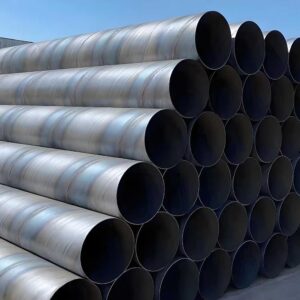
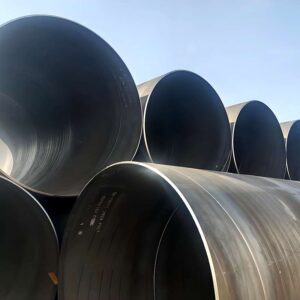
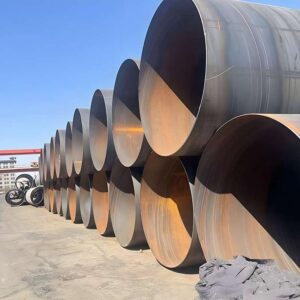
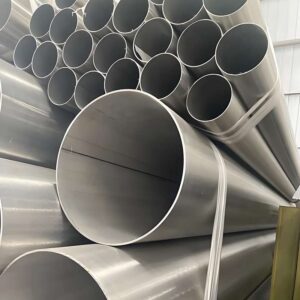
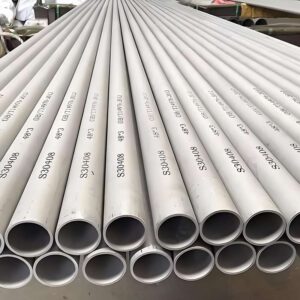
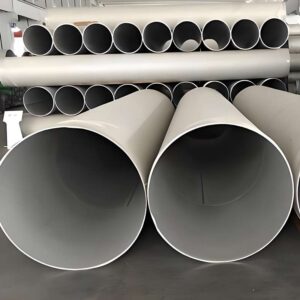
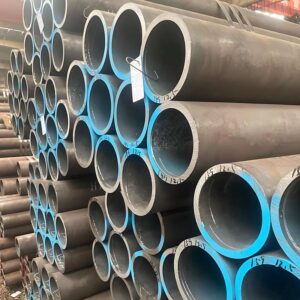
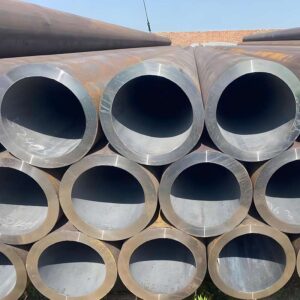
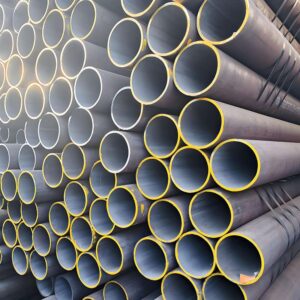
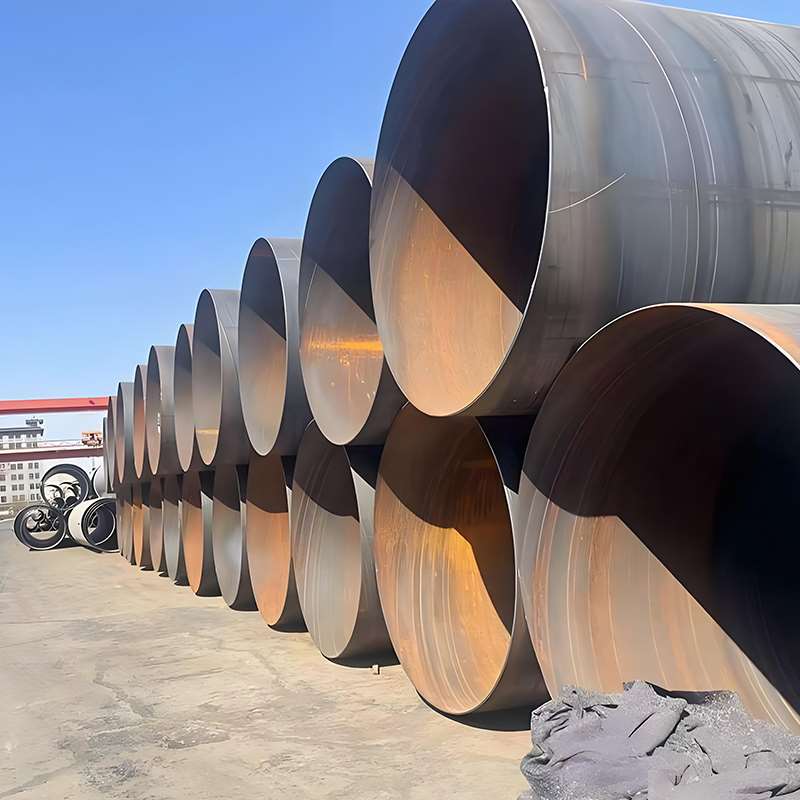
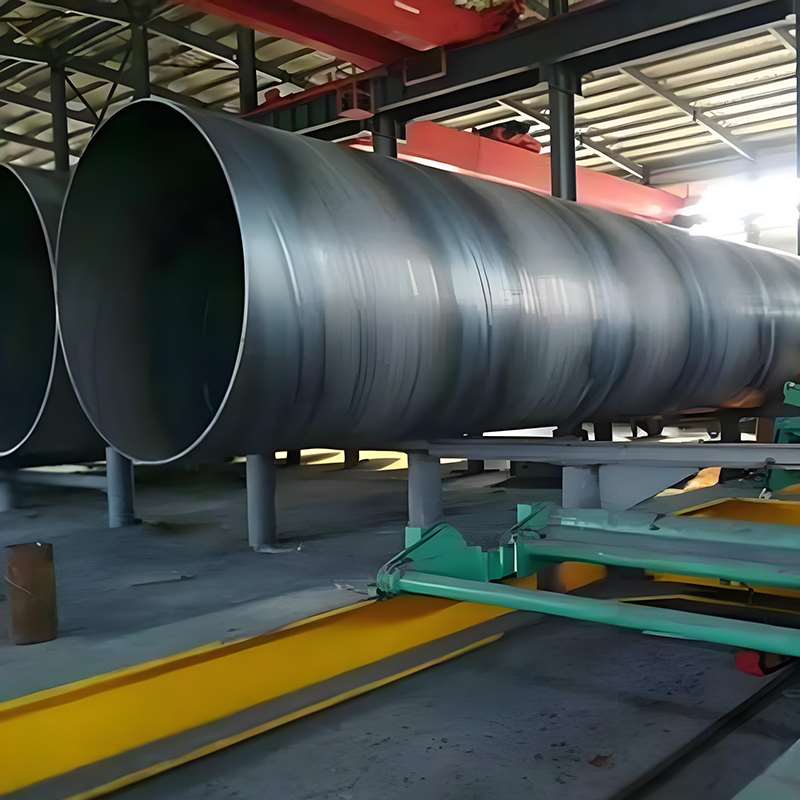
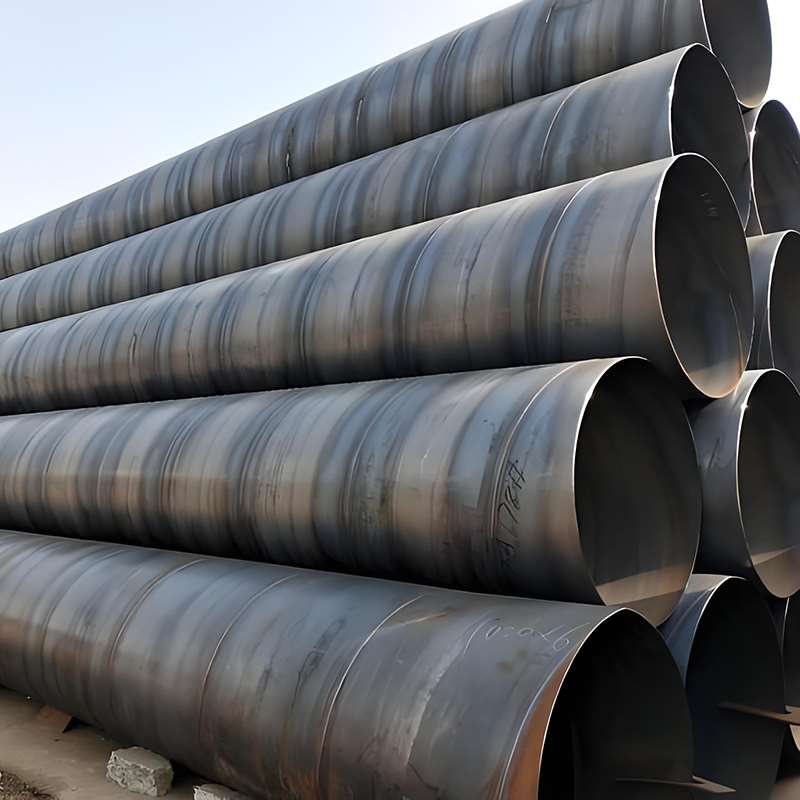
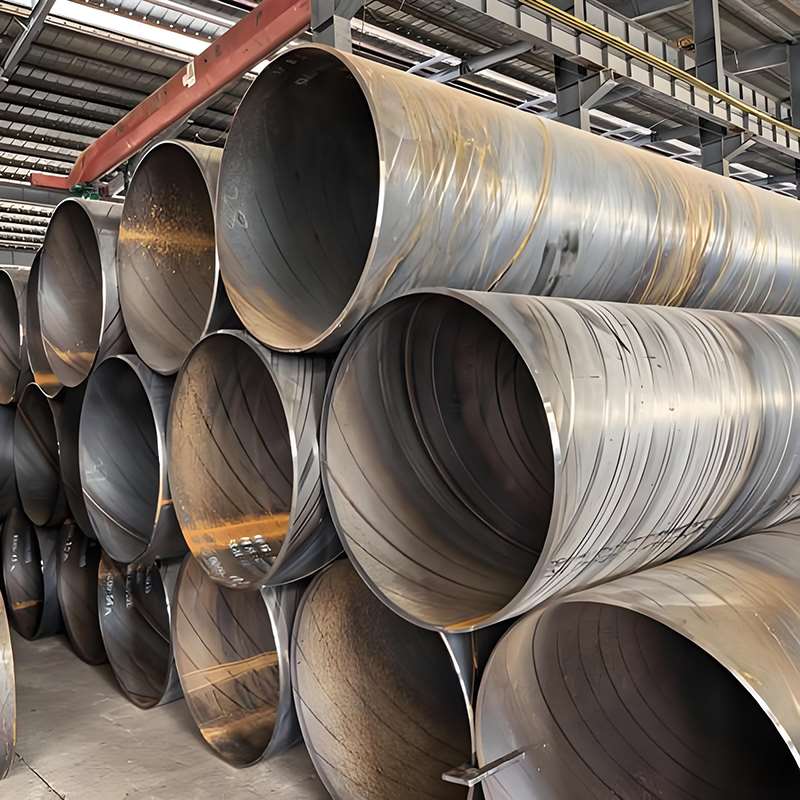
ASTM A572 Gr.50 / Gr.60 spiral steel pipe is a large-diameter steel pipe manufactured using the Spiral Submerged Arc Welding (SSAW) process, utilizing ASTM A572 high-strength low-alloy (HSLA) structural steel as its base material. It is widely utilized in steel structure projects, bridge construction, piling foundations, and heavy-load structural applications.
II. ASTM A572 Gr. 50 vs. Gr. 60 Spiral Steel Pipe Comparison Table
| Item | ASTM A572 Gr.50 Spiral Steel Pipe | ASTM A572 Gr.60 Spiral Steel Pipe |
|---|---|---|
| Grade | Gr.50 | Gr.60 |
| Minimum Yield Strength | ≥ 345 MPa (50 ksi) | ≥ 415 MPa (60 ksi) |
| Tensile Strength | 450 – 620 MPa | 520 – 700 MPa |
| Strength Level | Medium-High Strength | High Strength |
| Toughness (Impact Performance) | Good | Better (suitable for more demanding conditions) |
| Weldability | Excellent, easy to process | Good, requires slightly higher welding control |
| Applicable Diameter Range | DN300 – DN3000+ | DN300 – DN3000+ |
| Typical Applications | General steel structures, building supports, foundation piles | Bridges, high-load structures, heavy-duty engineering |
| Load-Bearing Capacity | Standard structural load | Higher load-bearing capacity |
| Cost | Lower (high cost-performance) | Higher |
| Selection Recommendation | Preferred for conventional projects | Recommended for high-safety, high-strength projects |
III. Application Fields of ASTM A572 Gr.50/Gr.60 Spiral Steel Pipes
1. Building and Steel Structure Engineering
- Applications: Factory frameworks, office buildings, industrial plant structures, lightweight bridge supports
- Key Features: Moderate load-bearing capacity, high structural stability requirements, ease of construction
- Recommended Steel Grade: Gr.50 — offers excellent cost-effectiveness and meets the majority of structural load requirements in construction.
2. Bridge Engineering
- Scope of Application: Highway bridges, railway bridges, and piers and support piles for urban overpasses.
- Key Characteristics: High load-bearing capacity; high safety factor; requires resistance to fatigue and the ability to withstand long-term loads.
- Recommended Steel Grade: Gr.60—offers high strength, ensuring the structural safety of the bridge.
3. Pile Foundation Engineering
- Scope of Application: Building foundations, load-bearing foundation piles, and support systems for deep excavation pits.
- Key Characteristics: High load-bearing requirements for deep foundations; operating environments may be complex or damp.
- Recommended Steel Grade: Gr.50—suitable for general pile foundation applications; Gr.60 is recommended for high-load conditions or challenging geological environments.
4. Municipal Infrastructure
- Applications: Water supply pipes, drainage pipes, sewage pipes, long-distance pipelines
- Features: Resistant to pressure and corrosion; typically partially buried or routed along water sources
- Recommended Steel Grade: Gr.50 (for general water pressure pipelines); Gr.60 is available as an option for long-distance or high-pressure applications.
5. Heavy-Duty Industrial Support Structures
- Applications: Heavy machinery supports, factory crane beams, industrial platform support columns
- Characteristics: Subject to heavy loads or vibrational forces; requires a high safety factor
- Recommended Steel Grade: Gr.60, to ensure structural safety and stability
6. Special Environmental Conditions
- Applications: Support structures for low-temperature/high-temperature environments, cold storage facilities, and outdoor structures in extreme environments
- Characteristics: Requires high steel toughness; may necessitate corrosion resistance or protective measures
- Recommended Steel Grade: Gr.50 or Gr.60, selected based on specific load requirements and environmental conditions
IV. Selection Considerations for ASTM A572 Gr.50/Gr.60 Spiral Steel Pipes
1. Define Project Loads and Safety Factors
Key Point: Project loads vary significantly; structures such as bridges or heavy-duty industrial supports require higher safety factors.
Recommendations:
- General Buildings and Plant Frameworks → Gr.50 is sufficient.
- High-Load Bridges and Heavy-Duty Supports → Select Gr.60 to ensure adequate load-bearing capacity.
2. Consider Operating Conditions and Environment
Key Consideration: Environmental factors—such as temperature, humidity, and chemical corrosion—directly impact the service life of steel pipes.
Recommendations:
- Indoor / Standard Environments → Black paint anti-rust coating is suitable.
- Buried, Coastal, or Chemical-Rich Environments → Internal and external plastic coating, or 3PE/FBE coating is recommended.
- High-Temperature Steam or Low-Temperature Environments → Ensure that the steel’s toughness meets the specific requirements of the operating conditions.
3. Matching Outer Diameter and Wall Thickness
Key Consideration: For applications involving large spans, deep foundations, or high-pressure environments, it is necessary to increase both the pipe diameter and wall thickness; failure to do so may result in deformation or insufficient load-bearing capacity.
Recommendation:
- Determine the appropriate wall thickness based on engineering load calculations.
- Common Outer Diameters for Spiral Steel Pipes: Φ219 – Φ1820 mm
- Reference Wall Thickness Range: 6 – 25 mm (custom dimensions can be specified based on actual project requirements).
4. Length and Requirements for Transport and Construction
Key Consideration: Transporting long pipes can be challenging, and on-site welding or installation may be difficult.
Recommendations:
- Standard lengths: 6 m / 12 m
- Custom lengths (6–18 m) are available based on project requirements
- For large-diameter or heavy-duty pipelines, plan the transport and installation strategies in advance
5. Steel Grade Selection and Weldability
Key Consideration: Poor weldability can compromise the structural integrity of the assembly.
Recommendations:
- Gr.50 → Excellent weldability; suitable for most building and piling applications
- Gr.60 → Weldability is slightly inferior to Gr.50, but is necessary for high-load applications
- Ensure that welding procedures comply with ASTM standard requirements
6. Selection of Anti-Corrosion Coating
Note: An inadequate anti-corrosion coating can lead to premature aging of the pipeline.
Recommendations:
- Indoor or Dry Environments → Black Paint or Epoxy Coating
- Buried or Coastal Environments → 3PE or Internal/External Plastic Lining
- Environments with Chemical Media → Epoxy or Specialized Corrosion-Resistant Coating
7. ASTM A572 Gr. 50 vs. Gr. 60: Spiral Steel Pipe Selection Comparison Chart
| Item | ASTM A572 Gr.50 | ASTM A572 Gr.60 | Selection Guidance |
|---|---|---|---|
| Yield Strength (MPa) | 345 | 420 | Gr.60 has higher strength, suitable for high-load or long-span structures |
| Tensile Strength (MPa) | 450–620 | 485–650 | Higher tensile capacity, suitable for high-stress pipelines or bridge structures |
| Applicable Structures | Medium-load bridges, building frames, light to medium pipelines | High-load bridges, large steel structures, high-pressure pipelines | Choose based on structural load and safety factor |
| Diameter & Wall Thickness Strategy | Small to medium diameters, standard wall thickness | Large diameters can use thinner walls | Gr.60 can reduce self-weight and lower some construction costs under equal load |
| Welding & Construction | Good weldability, easy construction | Requires control of heat-affected zone to avoid brittleness | Use Gr.50 for standard conditions; choose Gr.60 for complex or high-strength projects |
| Environmental Adaptability | General industrial environments | High-corrosion, outdoor, chemical environments | For high-corrosion scenarios, Gr.60 + anti-corrosion treatment is recommended |
| Cost | Lower, material cost is cheap | Higher, but thinner walls can reduce total weight | Total cost should consider both material and construction |
| Typical Applications | Ordinary bridges, building supports, general pipelines | Heavy-load bridges, large structures, high-pressure pipelines | Choose after clarifying project goals and safety factors |
V. Common FAQs for Product Selection
1. Q: What are the actual risks of choosing the wrong grade (Gr.50 or Gr.60)?
A: The most common problems with incorrect selection are insufficient structural strength or wasted cost.
If Gr.50 is selected when Gr.60 should be used, it may lead to:
Insufficient load-bearing capacity
Increased pile foundation deformation or safety risks
If Gr.60 is selected when Gr.50 should be used:
Significantly increased costs
Wasteful utilization of material strength
The correct principle: Focus on the “design load,” rather than simply pursuing a higher grade.
2. Q: Is it okay to only look at the steel grade (Gr.50/60) and ignore the wall thickness?
A: No, this is a very common mistake.
Many customers only focus on the steel grade, but in reality:
Wall thickness has an even greater impact on load-bearing capacity than the steel grade.
Thick-walled Gr.50 may be stronger than thin-walled Gr.60.
Engineering design must calculate “steel grade + wall thickness + outer diameter” together.
The correct approach: Select the type based on structural design parameters, not just the material grade.
3. Q: When using spiral steel pipe for piling, is Gr.60 always better?
A: Not necessarily.
In piling projects, the following factors need to be considered:
Soil structure (soft soil/sand/rock)
Impact load
Construction method
Common misconception:
“The higher the strength, the better”
In reality:
Ordinary geology → Gr.50 is sufficient
Complex geology or high load → Gr.60 is more suitable
4. Q: Are all A572 spiral welded steel pipes suitable for load-bearing structures?
A: No.
The following conditions must be confirmed:
Does it have a third-party testing report (MTC)?
Does it meet the ASTM A572 standard chemical composition?
Has it undergone ultrasonic/hydraulic testing?
Does it comply with engineering design specifications?
Many low-priced products only have “material specifications” but lack structural performance.
5. Q: Can the anti-corrosion layer (3PE/FBE) be applied later?
A: Yes, but it is strongly discouraged to arbitrarily separate the process.
Reasons: Factory prefabrication of anti-corrosion coating → better adhesion
On-site construction → unstable quality
Secondary treatment → higher cost + extended construction period
Correct approach: Determine the usage environment (buried/marine/air) during the procurement stage.
6. Q: Why is there such a large price difference for A572 spiral pipes of the same specifications?
A: The main differences are usually not in the “steel grade,” but in the following implicit factors:
Wall thickness tolerance control (how strict is it)
Weld quality (single-sided/double-sided submerged arc welding)
Corrosion resistance level (is it genuine 3PE)
Complete testing (UT/RT/Hydro test)
Strict adherence to standards (ASTM vs. factory standards)
Conclusion: Lower prices often mean “incomplete engineering-grade products.”