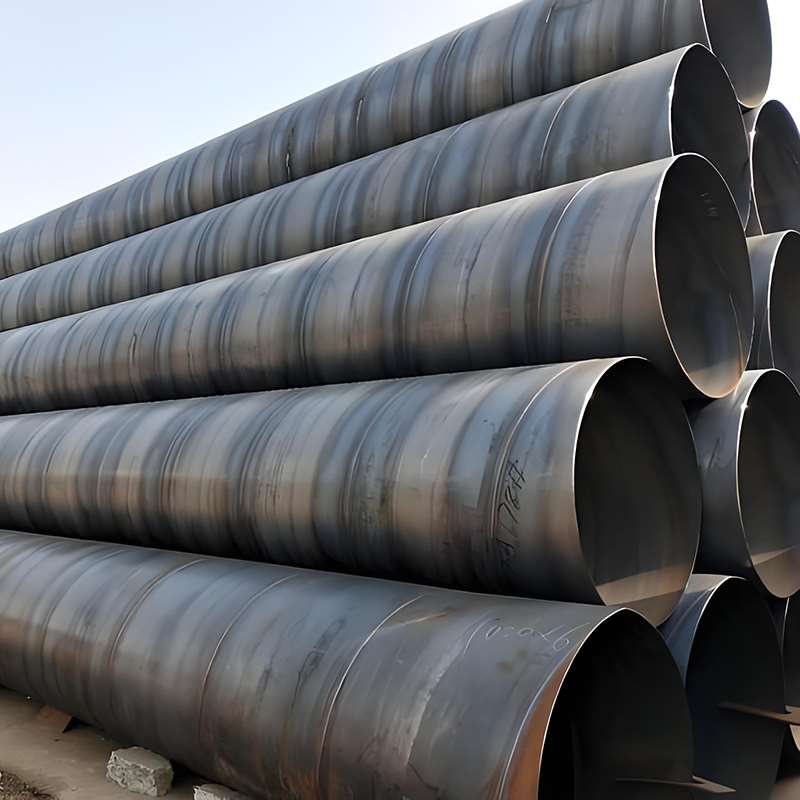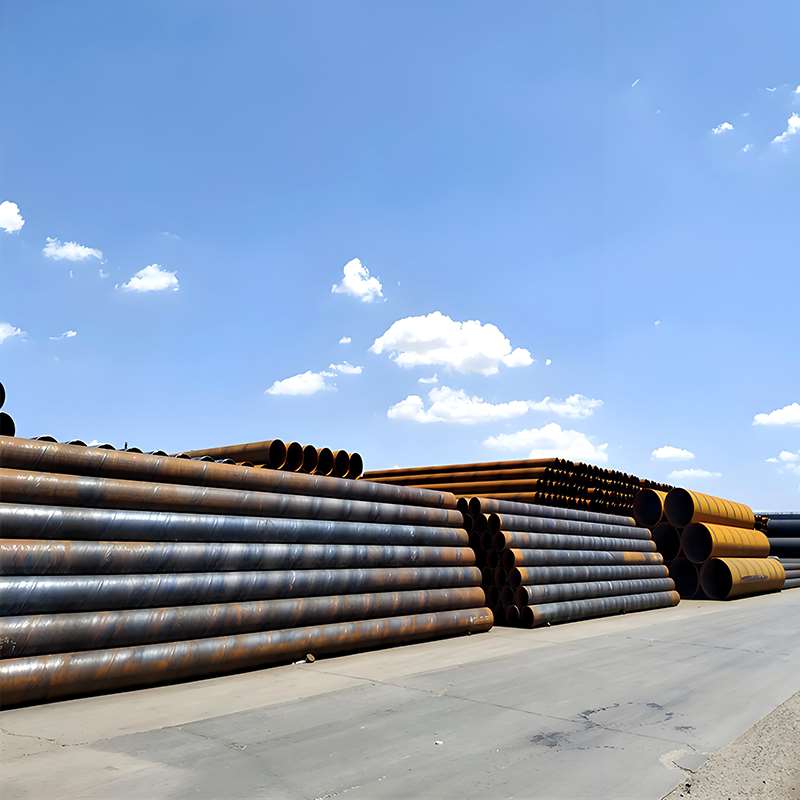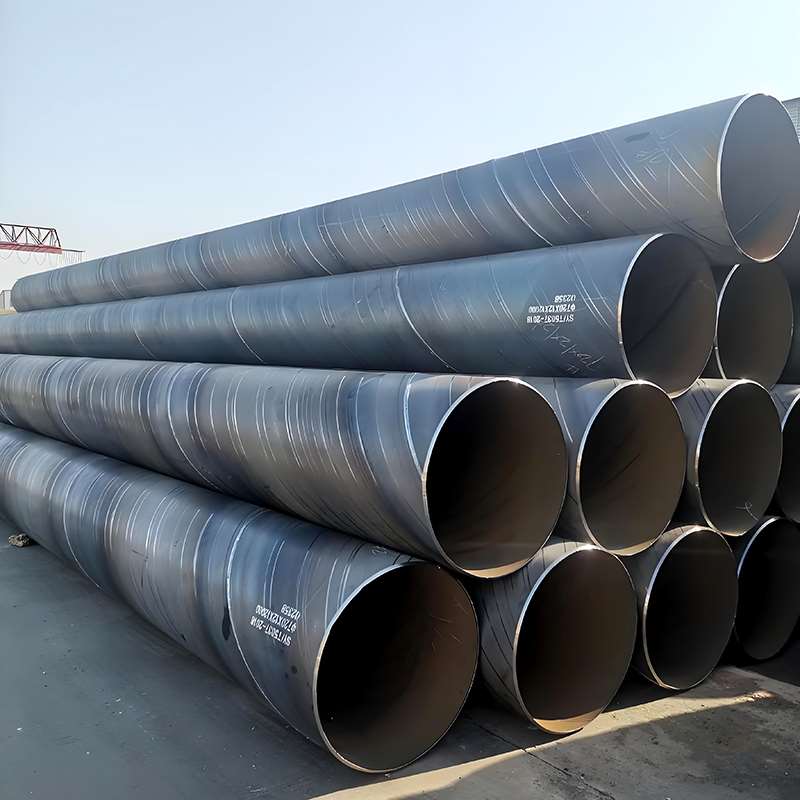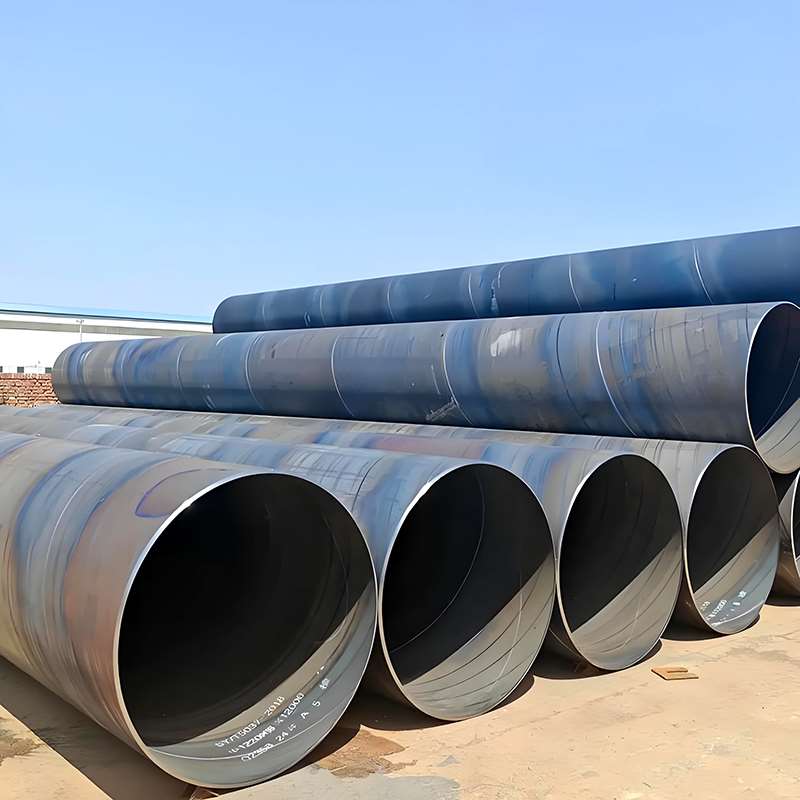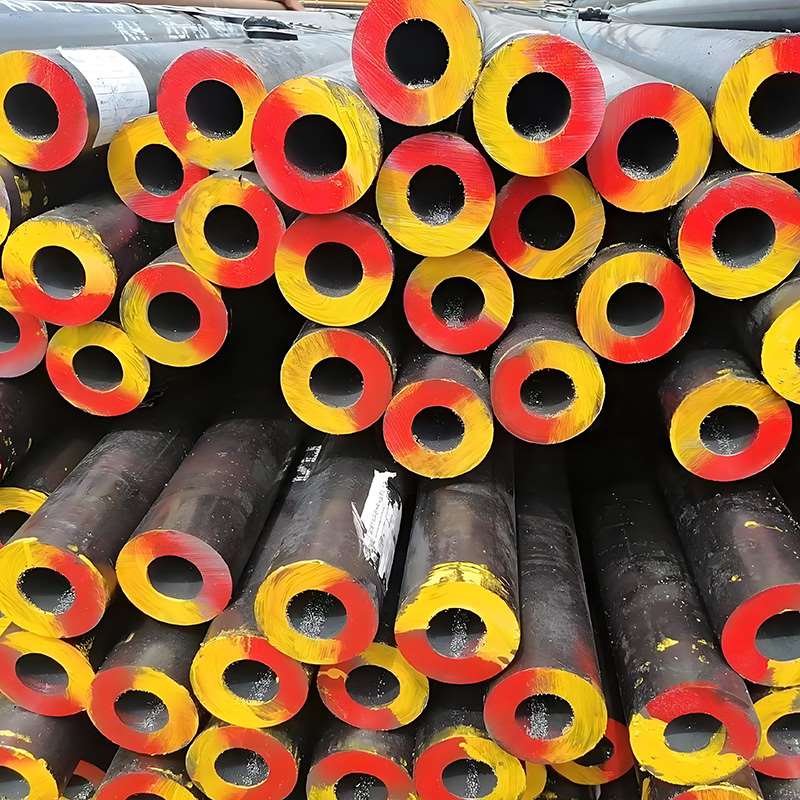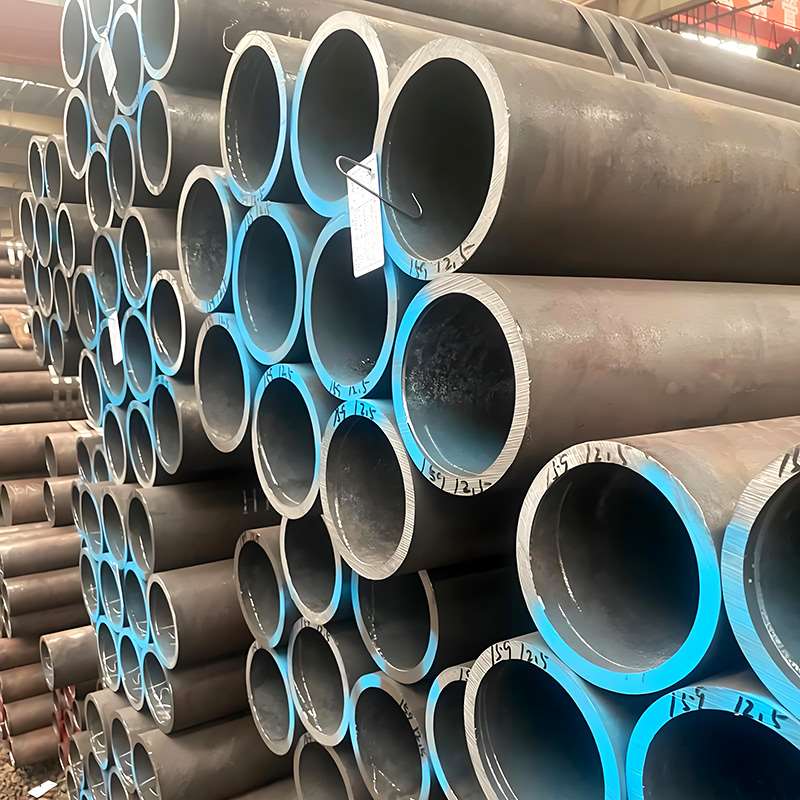
In large-scale, long-distance pipeline projects, the proper selection of pipe dimensions and specifications is key to ensuring project safety and controlling costs. Large-diameter welded steel pipes (typically referring to pipes with an outer diameter of 16 inches / 406.4 mm or greater) are widely used in the oil, natural gas, water, and structural engineering sectors due to their excellent pressure-bearing and conveyance capabilities.
To help pipeline engineers and procurement managers quickly align with international standards, this article provides a dimensional reference table and analyzes the key considerations for selecting pipes for high-standard pipelines.
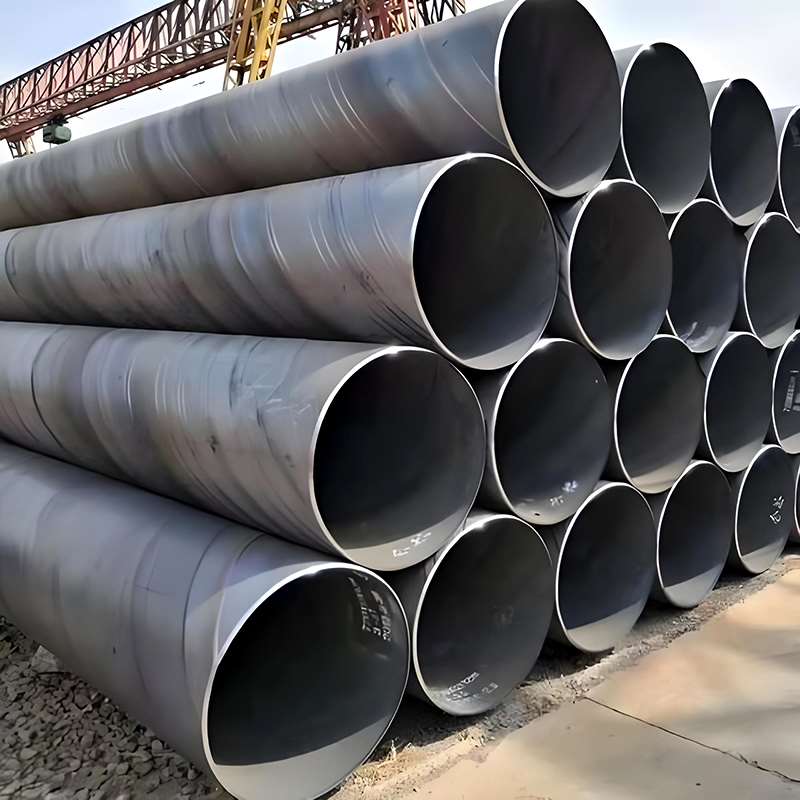
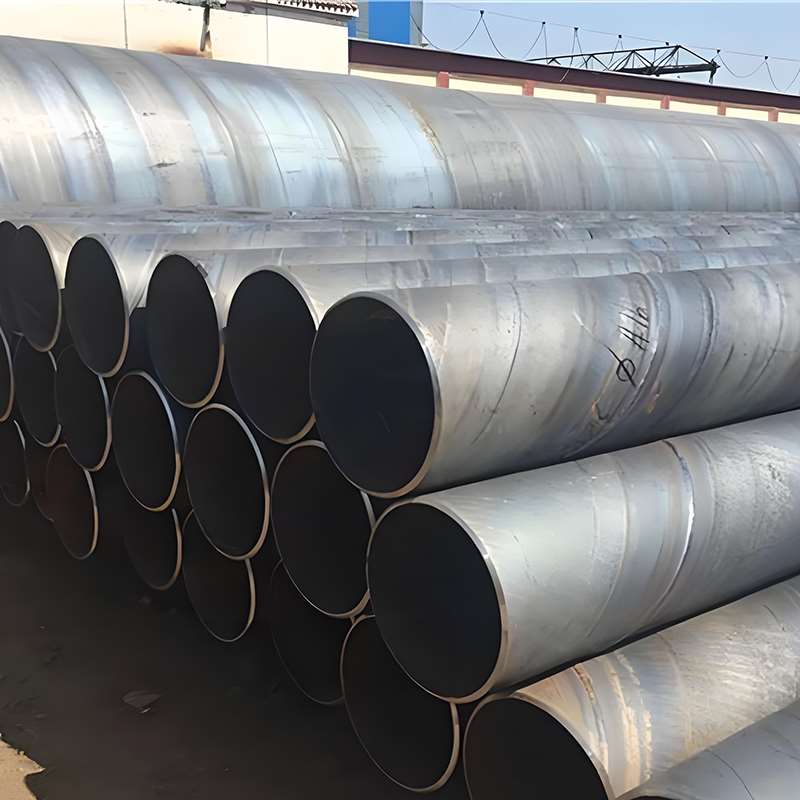
I. Large-Diameter Welded Steel Pipe Size Chart (ANSI/ASME B36.10M & API 5L)
The following lists the specifications of large-diameter steel pipes commonly used in pipeline engineering, covering nominal pipe size (NPS), actual outside diameter (OD), common wall thickness (WT), and theoretical weight.
| Nominal Pipe Size (NPS) | Actual Outside Diameter (OD) | Common Wall Thickness Grade (Schedule / Class) | Actual Wall Thickness (WT) | Theoretical Weight |
|---|---|---|---|---|
| 16″ | 406.4 mm | STD / Sch 40 | 9.53 mm | 93.27 kg/m |
| XS / Sch 80 | 12.70 mm | 123.30 kg/m | ||
| 20″ | 508.0 mm | STD | 9.53 mm | 117.15 kg/m |
| Sch 80 | 15.09 mm | 183.42 kg/m | ||
| 24″ | 609.6 mm | STD / Sch 20 | 9.53 mm | 141.02 kg/m |
| XS / Sch 40 | 17.48 mm | 255.41 kg/m | ||
| 28″ | 711.2 mm | STD | 9.53 mm | 164.89 kg/m |
| XS | 12.70 mm | 218.82 kg/m | ||
| 32″ | 812.8 mm | STD | 9.53 mm | 188.76 kg/m |
| XS | 12.70 mm | 250.64 kg/m | ||
| 36″ | 914.4 mm | STD | 9.53 mm | 212.63 kg/m |
| XS | 12.70 mm | 282.47 kg/m | ||
| 40″ | 1016.0 mm | Custom Wall Thickness | 10.00 mm | 248.10 kg/m |
| Custom Wall Thickness | 16.00 mm | 394.60 kg/m | ||
| 48″ | 1219.2 mm | Custom Wall Thickness | 12.00 mm | 357.26 kg/m |
| Custom Wall Thickness | 20.00 mm | 591.48 kg/m |
Formula for calculating the theoretical weight of carbon steel pipes:
W = (OD – WT) × WT × 0.0246615
Where:
W = Weight per meter (kg/m)
OD = Outer diameter (mm)
WT = Wall thickness (mm)
II. Why Are Spiral-Welded Steel Pipes Widely Used for Large-Diameter Pipelines?
In large-diameter pipeline applications (especially those with diameters of NPS 24 or larger), spiral-welded steel pipes are an economical and efficient choice.
- High production flexibility: Traditional longitudinally seam-welded (LSAW) pipes require steel plates as wide as the pipe diameter for rolling, whereas spiral-welded pipes can use steel strips of the same width to produce pipes of various large diameters by adjusting the forming angle.
- More Optimal Stress Distribution: During welding, the direction of the forces acting on the spiral weld forms a certain angle with the pipe’s axial direction, resulting in internal compressive stresses on the weld that are only 60%–85% of those in straight-seam pipes, thereby reducing the risk of pipeline rupture.
III. The Technical Core of High-Performance Pipelines: API 5L PSL2 Spiral-Welded Steel Pipe
If your pipeline is used to transport high-pressure, flammable media such as oil and natural gas, simply referring to a dimensional chart is insufficient; the quality control level must be explicitly specified in the technical agreement. In such cases, API 5L PSL2 spiral-welded steel pipe has become the industry standard.
Compared to the standard commercial grade (PSL1), PSL2 imposes more stringent industrial requirements:
- Chemical Composition and Carbon Equivalent: PSL2 imposes extremely strict upper limits on impurity elements such as carbon, sulfur, and phosphorus, and strictly controls the carbon equivalent to ensure on-site weldability.
- Toughness Testing: PSL2 mandates Charpy impact testing and drop weight testing (DWTT) to ensure that large-diameter pipelines will not suffer brittle fracture under extreme low temperatures or high-pressure impacts.
- Non-Destructive Testing: All pipes must undergo 100% full-length ultrasonic or X-ray non-destructive testing; it is strictly prohibited for any cracks or lack-of-penetration defects to be present in pipes upon shipment.