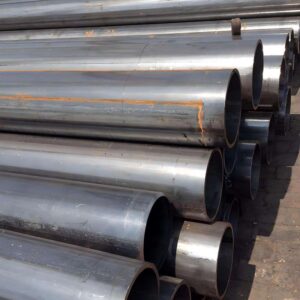
I. What is a welded steel pipe?
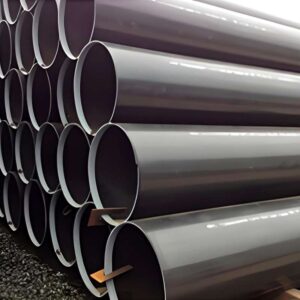
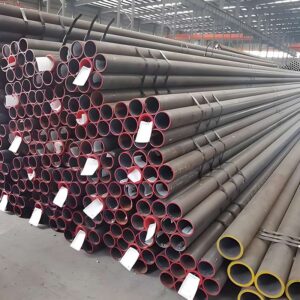
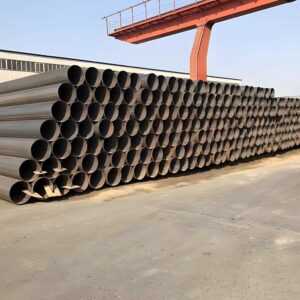
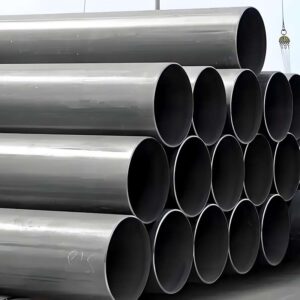
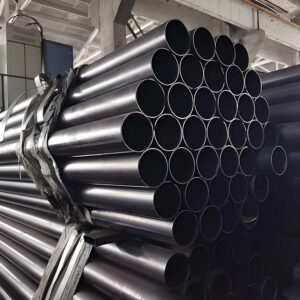
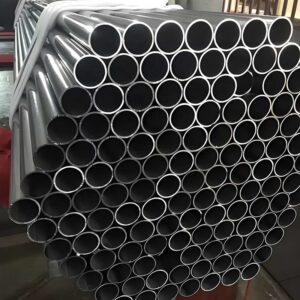
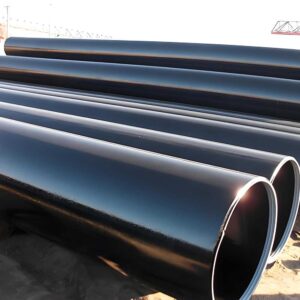
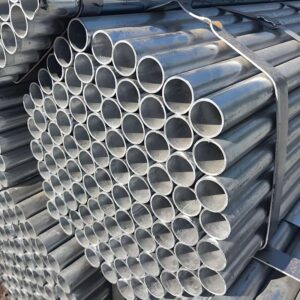
Welded steel pipe, also known as welded pipe, refers to steel pipe with a seam on its surface, produced by bending and forming steel strips or steel plates into circular, square, or other shapes and then welding them together.
It is a type of pipe widely used in modern industry and construction. Compared to seamless steel pipe, its main advantages include a relatively simple manufacturing process, high production efficiency, lower costs, and a wide variety of specifications and types.
II. Main Types of Carbon Steel Welded Pipe
1. ERW (Electric Resistance Welded) Steel Pipes
Features:
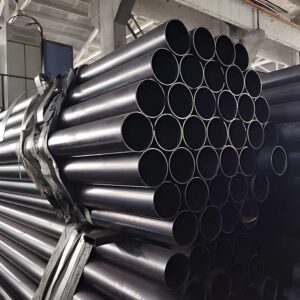
- Manufactured using high-frequency electric resistance welding (ERW)
- Straight weld seams and smooth surfaces
- High dimensional accuracy
- High production efficiency
- Relatively low cost
Common Sizes:
- Primarily small to medium diameters
- Common: 1/2“ to 24”
Main Applications:
- Water supply pipelines
- Natural gas transmission
- Building structures
- Scaffolding
- Fire protection piping
- Machinery manufacturing
Common Standards:
- ASTM A53
- ASTM A500
- EN 10219
- API 5L
2. SSAW Spiral Welded Steel Pipe
Features:
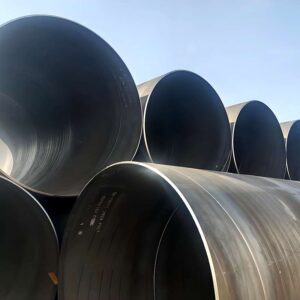
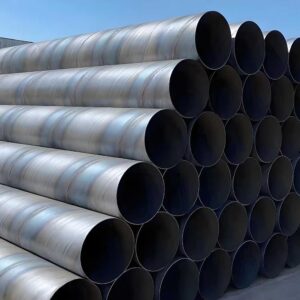
- Uses a spiral forming submerged arc welding process
- The weld seam is spiral-shaped
- Capable of producing large-diameter steel pipes
- High raw material utilization
- Suitable for long-distance transportation
Common Specifications:
- Primarily large diameters
- Common: 219 mm – 3500 mm
Main Applications:
- Oil and gas transportation
- Piling projects
- Water supply and drainage projects
- Offshore engineering
- Bridge structures
Common Standards:
- API 5L
- ASTM A252
- GB/T 9711
3. LSAW Longitudinal Submerged Arc Welded Steel Pipe (LSAW Steel Pipe)
Features:
- Manufactured by forming steel plates and then performing submerged arc welding
- The weld is a longitudinal seam
- High strength
- High pressure-bearing capacity
- Suitable for thick-walled, large-diameter steel pipes
Common Sizes:
- Medium to large diameters
- Common: 406 mm to 1422 mm
Main Applications:
- High-pressure oil and gas transmission
- Subsea pipelines
- Power engineering
- Large-scale structural engineering
Common Standards:
- API 5L
- ASTM A671
- ASTM A672
4. DSAW Double-Sided Submerged Arc Welded Steel Pipe (DSAW Pipe)
Features:
- Double-sided submerged arc welding on both inner and outer surfaces
- High-quality welds
- Excellent weld strength
- Suitable for high-pressure environments
DSAW typically includes:
- LSAW (Longitudinal Submerged Arc Welding)
- SSAW (Spiral Submerged Arc Welding)
Main Applications:
- Long-distance transmission pipelines
- Oil and gas engineering
- High-pressure fluid conveyance
5. Comparison of Different Types of Welded Steel Pipes
| Type |
Weld Seam Type |
Main Features |
Suitable Applications |
| ERW |
Straight Seam |
High dimensional accuracy, low cost |
Construction, fluid transportation |
| SSAW |
Spiral Weld Seam |
Large diameter, cost-effective |
Water transmission, piling, oil & gas |
| LSAW |
Longitudinal Submerged Arc Weld |
High strength, thick wall |
High-pressure oil & gas transmission |
| DSAW |
Double Submerged Arc Weld |
High welding quality |
Long-distance pipelines |
III. Common Materials for Welded Steel Pipes
| Material Grade |
Chinese Name |
Features |
Main Applications |
| Q195 |
Low Carbon Steel |
Low strength, good plasticity, easy to form |
General structure, low-pressure piping, guardrails |
| Q235B |
Mild Carbon Structural Steel |
Most widely used, cost-effective, good weldability |
Construction structures, scaffolding, low-pressure pipelines |
| Q355B |
Low Alloy High Strength Steel |
High strength, strong load-bearing capacity |
Bridges, steel structures, mechanical engineering |
| ASTM A53 Gr.B |
American Standard Carbon Steel Pipe |
Stable performance, wide application range |
Water, gas, oil transmission and structural use |
| ASTM A106 Gr.B |
High Temperature Carbon Steel |
Good high-temperature resistance |
High-temperature fluid transport, industrial pipelines |
| API 5L Gr.B |
Pipeline Steel |
Balanced strength and toughness, good pressure resistance |
Oil and gas long-distance pipelines |
| API 5L X42 / X52 / X60 |
High Grade Pipeline Steel |
Higher strength grades, suitable for high-pressure conditions |
High-pressure oil & gas transmission, long-distance pipelines |
| EN S235JR |
European Structural Steel |
General structural steel |
Construction and general engineering structures |
| EN S355JR |
High Strength European Steel |
Higher strength and good toughness |
Heavy structures, bridge engineering |
| ST37 / ST52 |
German Standard Steel |
Stable overall performance |
Mechanical structures, industrial pipelines |
IV. Welded Steel Pipe Specifications and Parameters Table
| Item |
Specification Range |
Description |
| Product Type |
ERW / SSAW / LSAW / DSAW |
Different welding processes |
| Outside Diameter (OD) |
21.3 mm – 3500 mm |
From small diameter to extra large diameter available |
| Wall Thickness (WT) |
1.2 mm – 40 mm+ |
Customized according to pressure rating and application |
| Length |
5.8 m / 6 m / 11.8 m / 12 m / Customized |
Standard lengths or as per customer requirements |
| Steel Grade (Material) |
Q195 / Q235 / Q355 / ASTM A53 / API 5L etc. |
Common carbon steel and pipeline steel grades |
| Production Standard |
ASTM / API 5L / EN / GB / DIN |
Complies with international standards |
| Surface Treatment |
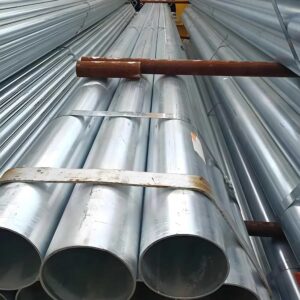
Black / Anti-rust oil / Galvanized / 3PE / FBE |
Different anti-corrosion options for various environments |
| End Finish |
Plain end / Beveled / Threaded / Flanged |
For welding or connection purposes |
| Manufacturing Process |
ERW (High Frequency Welding) / SAW (Submerged Arc Welding) |
Selected based on diameter and application |
| Inspection Standard |
UT / RT / Hydrostatic Test |
Non-destructive testing and pressure testing |
| Certification |
ISO / CE / API 5L / SGS |
International quality certifications |
V. Production Process for Welded Steel Pipes
1. ERW (Electric Resistance Welding) Steel Pipe Production Process
Steel coil uncoiling → Leveling → Slitting → Forming → High-frequency welding → Internal and external deburring → Cooling → Sizing → In-line non-destructive testing (UT) → Cutting to length → Hydrostatic testing → End finishing → Final inspection → Packaging
2. SSAW (Spiral Submerged Arc Welding) Steel Pipe Production Process
Steel strip uncoiling → Leveling → Spiral forming → Internal and external submerged arc welding → Internal and external weld finishing → Ultrasonic testing (UT) → Radiographic testing (RT) → Hydrostatic testing → Expanding → Corrosion protection treatment → End processing → Final inspection → Packaging
3. LSAW (Linear Submerged Arc Welding) Steel Pipe Production Process
Steel plate inspection → Cutting → Edge milling → JCOE/UOE forming → Pre-bending → Internal and external submerged arc welding → Weld correction → Expanding → Heat treatment → Non-destructive testing (UT/RT) → Hydrostatic testing → End machining → Corrosion protection → Final inspection → Packaging
4. DSAW Double-sided Submerged Arc Welded Steel Pipe Process Flow
Steel Plate Cutting → Forming → Internal and External Submerged Arc Welding → Weld Bead Trimming → Ultrasonic Testing (UT) → Radiographic Testing (RT) → Hydrostatic Testing → Expanding → Corrosion Protection → End Machining → Final Inspection → Packaging
VI. Main Applications of Welded Carbon Steel Pipe
1. Construction & Structural Use
Common Applications:
- Steel-frame buildings
- Steel frames
- Scaffolding
- Guardrails and fencing
- Sports venue structures
- Factory building structures
Why Use Welded Steel Pipes?
- Low cost, suitable for high-volume applications
- Sufficient strength to meet structural requirements
- Easy to process (cutting, welding, drilling)
Common Types:
- ERW Steel Pipe
- Q235 / Q355 Grade
2. Fluid Transportation Engineering (Water / Gas / Fluid Transportation)
Common Applications:
- Drinking water supply pipelines
- Industrial circulating water systems
- Air compression pipelines
- Low-pressure gas transmission
- Drainage and sewage systems
Key Requirements:
- Good sealing performance
- Smooth inner walls
- Moderate pressure
- Corrosion protection is critical
Common Types:
- ERW Steel Pipe (Low-to-medium pressure)
- SSAW Steel Pipe (Large-Diameter Water Transmission)
- Galvanized Steel Pipe / Corrosion-Resistant Steel Pipe
3. Oil and Gas Pipeline
Common Applications:
- Long-distance oil pipelines
- Natural gas transmission
- Urban gas distribution networks
- Oilfield gathering and transportation systems
Engineering Characteristics:
- High pressure
- Long-distance transmission
- Extremely high safety requirements
- Must comply with international standards (API 5L)
Common Types:
- LSAW Steel Pipe (High-Pressure Trunk Lines)
- SSAW Steel Pipe (Medium- and Low-Pressure or Large-Diameter)
- API 5L X42 / X52 / X60 / X70
4. Piling & Foundation Engineering
Common Applications:
- Bridge pile foundations
- Port and wharf pile pipes
- Offshore platform foundations
- Deep foundation engineering for buildings
Key Requirements:
- Compressive strength
- Impact resistance
- Ability to withstand soil pressure
- Capability to handle large diameters
Common Types:
5. Machinery & Equipment
Common Applications:
- Structural components for machinery and equipment
- Conveying equipment
- Industrial brackets
- Agricultural machinery
- Fitness equipment
Features:
- High dimensional accuracy requirements
- High surface quality requirements
- Easy to machine
Common Types:
- ERW Steel Pipe
- Small-diameter precision welded pipe
6. Municipal Engineering
Common Applications:
- Urban water supply systems
- Drainage systems
- Heating networks
- Underground utility tunnels
Features:
- Long service life
- High corrosion resistance requirements
- Easy installation and maintenance
Common Types:
- SSAW (large-diameter water transmission)
- ERW (branch networks)
- Corrosion-resistant steel pipes (3PE / FBE)
7. Marine & Special Projects
Common Applications:
- Subsea pipelines
- Seawater conveyance
- Offshore platform structures
- Salt fog environment engineering
Characteristics:
- Highly corrosive environments
- High corrosion protection requirements
- High structural safety standards
Common Types:
- LSAW / DSAW
- 3PE coated steel pipes
VII. Why Choose a Chinese Welded Steel Pipe Supplier?
1. Cost Advantage
China boasts a complete steel industry chain with low raw material and manufacturing costs, resulting in more competitive overall prices that are ideal for bulk purchases and engineering projects.
2. High-Volume Production Capacity
With mature ERW, SSAW, and LSAW production lines, we can reliably supply large-diameter pipes and fulfill high-volume orders to meet the demands of large-scale engineering projects.
3. Extensive Export Experience
With a long history of exporting to global markets, we are well-versed in international standards such as ASTM, API, and EN, as well as export procedures, ensuring efficient communication and delivery.
4. Fast Delivery
We maintain ample inventory of standard specifications and operate a mature production system, enabling short lead times and making us well-suited for urgent projects.
5. Custom Processing Capabilities
We support customization of outer diameter, wall thickness, and length, and provide processing services such as cutting, chamfering, galvanizing, and 3PE anti-corrosion coating.
6. International Certification Support
We can provide certifications including ISO, API 5L, CE, and SGS to meet international engineering and bidding requirements.
VIII. Quality Inspection Standards for Welded Steel Pipes
| Inspection Item |
Inspection Standard / Method |
Purpose |
Description |
| Visual Inspection |
Visual check |
Check surface defects |
Detect cracks, dents, scratches, rust, etc. |
| Dimensional Inspection |
Caliper / Micrometer / Diameter gauge |
Ensure dimensional accuracy |
OD, wall thickness, length, ovality |
| Chemical Composition Analysis |
Spectrometer |
Verify material composition |
Ensure compliance with Q235 / API 5L etc. |
| Mechanical Properties Test |
Tensile test / Impact test |
Test strength and toughness |
Tensile strength, yield strength, elongation |
| Hydrostatic Test |
High-pressure water test |
Check pressure resistance |
Ensure no leakage or deformation |
| Ultrasonic Testing (UT) |
Ultrasonic Testing |
Detect internal defects |
Check internal weld defects such as cracks or pores |
| Radiographic Testing (RT) |
Radiographic Testing |
Weld quality inspection |
Used for high-standard pipeline projects |
| Eddy Current Testing (ET) |
Eddy Current Testing |
Surface defect detection |
Commonly used for online ERW pipe inspection |
| Weld Inspection |
UT / RT / Visual inspection |
Ensure welding quality |
Focus on weld seam integrity |
| Coating Inspection |
Thickness gauge / Adhesion test |
Check anti-corrosion performance |
For coatings such as 3PE / FBE |
| End Inspection |
Visual + measuring tools |
Ensure connection accuracy |
Plain ends, beveled ends, threaded quality |
| Third-Party Inspection |
SGS / BV / TPI |
International quality certification |
Customer-designated third-party inspection |
IX. FAQ
Q1: What types of welded steel pipes can Chinese suppliers provide?
Chinese suppliers can produce a full range of welded steel pipes, including ERW (Electric Resistance Welded), SSAW (Spiral Submerged Arc Welded), LSAW (Longitudinal Submerged Arc Welded), and DSAW pipes.
These cover small-diameter structural pipes to large-diameter oil and gas transmission pipes. This wide product range allows buyers to source different pipe types from a single supplier, reducing procurement complexity.
Q2: Why are Chinese welded steel pipes cost-competitive?
The main reason is the complete industrial chain in China, from steel production to pipe manufacturing and coating. Large-scale production, automated equipment, and efficient logistics also reduce unit costs.
For buyers, this means lower overall project cost without necessarily compromising on international standards like API or ASTM.
Q3: Can China welded steel pipe suppliers meet international standards?
Yes. Most professional suppliers can produce pipes according to ASTM, API 5L, EN, and ISO standards.
Many factories also hold certifications such as ISO 9001, API 5L monogram license, and third-party inspection reports (SGS or BV), which are widely accepted in global engineering projects.
Q4: What industries commonly use welded steel pipes from China?
Chinese welded steel pipes are widely used in construction, water supply systems, oil and gas pipelines, piling projects, shipbuilding, and industrial machinery.
SSAW pipes are often used for large-diameter water and piling projects, while LSAW pipes are preferred for high-pressure oil and gas pipelines.
Q5: How do Chinese suppliers ensure product quality?
Quality control typically includes raw material inspection, dimensional checks, chemical composition testing, mechanical property testing, hydrostatic testing, and non-destructive testing (UT/RT).
Many suppliers also allow third-party inspections before shipment to ensure compliance with project requirements.
Q6: What should buyers prepare before ordering from a Chinese supplier?
Buyers should clearly define pipe specifications such as outer diameter, wall thickness, steel grade, standard, length, and coating requirements.
It is also important to confirm application conditions (pressure, temperature, environment) to ensure the supplier recommends the correct pipe type and grade for the project.