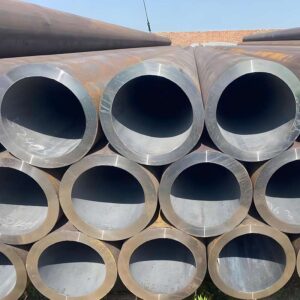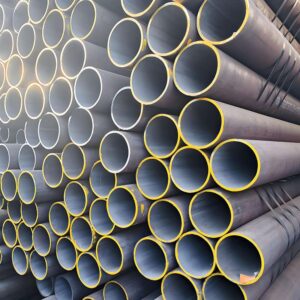
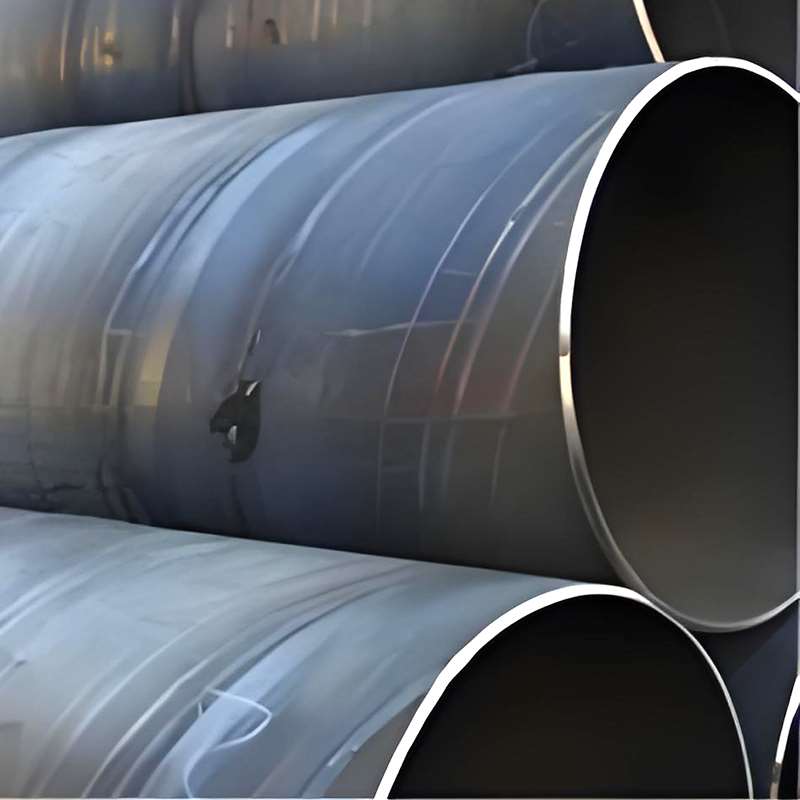
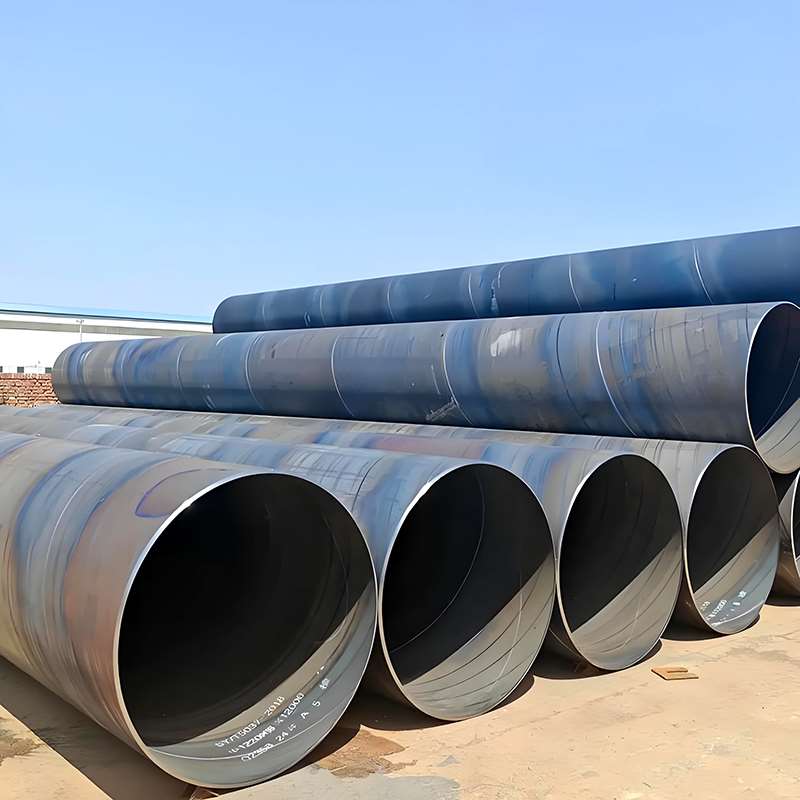
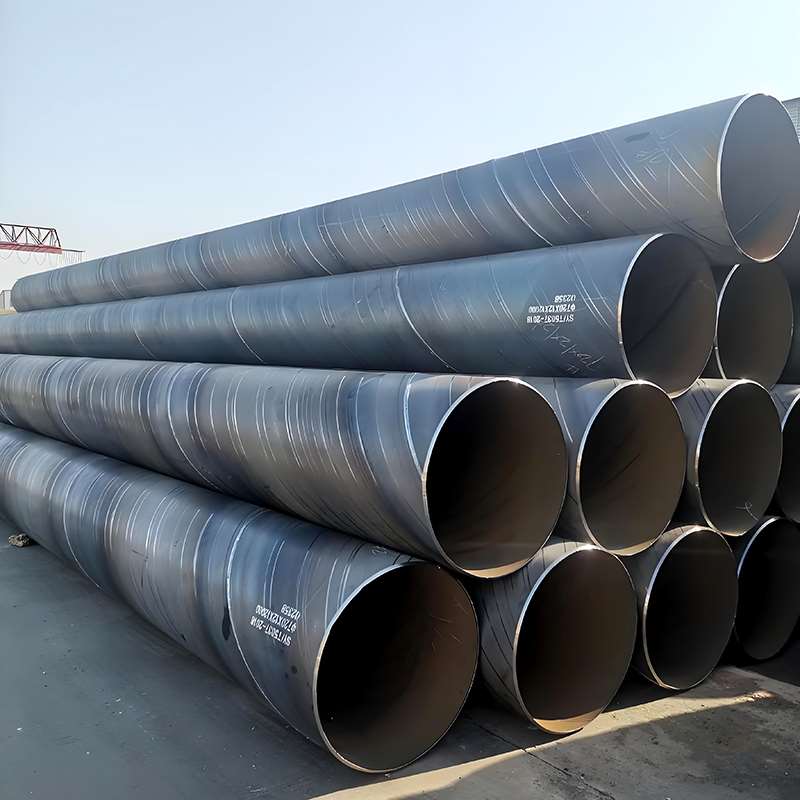

I. Product Overview
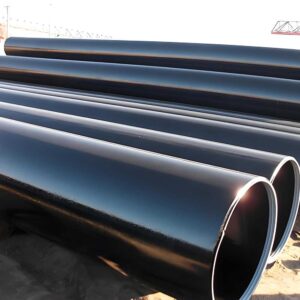
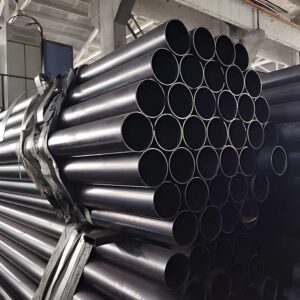
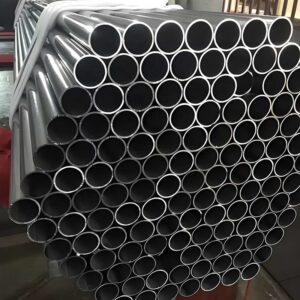
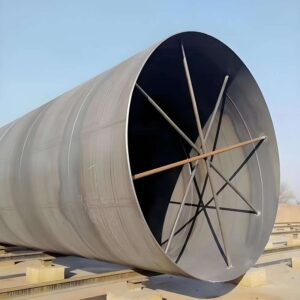
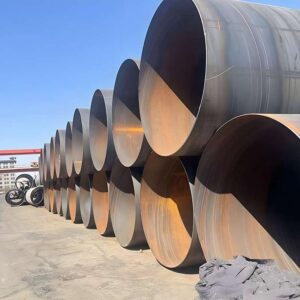
API 5L PSL2 spiral steel pipe is a high-performance line pipe manufactured in accordance with the American Petroleum Institute standard API 5L, classified under Product Specification Level 2 .
Compared with PSL1, PSL2 imposes stricter requirements on chemical composition, mechanical properties, impact toughness, non-destructive testing, and quality traceability, ensuring higher reliability and safety performance.
It is widely used in long-distance oil and natural gas transmission pipelines, as well as high-pressure fluid transportation projects requiring enhanced strength, durability, and operational safety.
API 5L spiral steel pipe PSL1 vs. PSL2 Comparison Table
| Item | PSL1 (Product Specification Level 1) | PSL2 (Product Specification Level 2) |
|---|---|---|
| Scope of Application | General transmission service with lower requirements | High-pressure and long-distance pipelines with stricter requirements |
| Steel Grade Coverage | B, X42 to X70 | B, X42 to X80 (extended to X100 in some regions) |
| Chemical Composition Control | Relaxed requirements | Stricter limits on C, Mn, P, S, and controlled micro-alloying elements (Nb, V, Ti) |
| Mechanical Properties | Basic yield and tensile strength only | Strength, elongation, and impact toughness required |
| Impact Toughness | Not mandatory | Mandatory (typically at –20 °C, some cases –40 °C) |
| Non-Destructive Testing (NDT) | Not compulsory | 100 % ultrasonic or radiographic testing to ensure weld quality |
| Hydrostatic Test | Standard hydrostatic test | More stringent hydrostatic test, each pipe tested individually |
| Dimensional Accuracy | Wider tolerances | Tighter tolerances (outer diameter, wall thickness, straightness, ovality) |
| Traceability | Batch records only | Full traceability with heat and cast numbers marked |
| Quality Consistency | Lower control requirements | Higher consistency required for chemistry and mechanical properties |
| Typical Uses | Municipal and general fluid transmission | Oil & gas, long-distance pipelines, high-pressure transmission lines |
II. API 5L PSL2 Standard and Certification Instructions for Spiral Steel Pipes
i. Overview of API 5L Standard
Standard Name: API 5L “Specification for Line Pipe.”
Issuing Organization: American Petroleum Institute (API).
Scope of Application: Primarily used for pipeline projects transporting oil, natural gas, water, and other fluids, covering types such as straight seam welded pipe, spiral welded pipe, and seamless pipe.
Grade Classification: Pipes are categorized by Product Specification Level (PSL) into PSL1 and PSL2.
ii. Certification and testing requirements
Chemical composition inspection: A chemical composition report (including the contents of elements such as C, Mn, P, S, Nb, V, and Ti) must be provided for each batch of steel.
Mechanical property tests: including yield strength, tensile strength, elongation, low-temperature impact toughness, etc.
Non-destructive Testing (NDT)
Ultrasonic testing (UT) or radiographic testing (RT) is used to inspect defects in welds and pipe bodies.
Ensure the safety and reliability of the pipeline in a high-pressure conveying environment.
Hydrostatic test: Each pipe undergoes a hydraulic test to ensure that its pressure-bearing capacity meets the design requirements.
Quality certification: Manufacturing plants usually need to obtain ISO 9001 and API Q1 quality management system certifications.
III. Suggestions for Installation and Maintenance of Spiral Steel Pipes
i. Installation suggestions
(1) Pipe material acceptance
Check the appearance: No cracks, delamination, folding or obvious rust.
Check the specifications: The outer diameter, wall thickness, length and steel grade should be consistent with the design requirements.
Check the identification: The heat number, furnace number, steel grade and anti-corrosion coating information are complete.
(2) Storage and handling
The pipes should be placed flat on the support frame to avoid direct contact with the ground.
Prevent the anti-corrosion coating from falling, colliding or being scratched.
Prevent water accumulation and prolonged exposure to direct sunlight. Cover with a tarpaulin if necessary.
(3) Welding and joint treatment
In accordance with the PSL2 welding specification, low-carbon steel can be welded at room temperature, while high-carbon steel needs to be preheated.
Welds should undergo 100% non-destructive testing (UT or RT).
Carry out joint treatment on the interface coating or anti-corrosion layer to ensure the overall anti-corrosion effect.
(4) Pipeline laying
Ensure that the support spacing complies with the design specifications to prevent the pipeline from being suspended or subjected to uneven force.
The radius of the elbow pipe should meet the minimum bending requirements to prevent deformation or cracking.
For areas with complex terrain, appropriate expansion joints or compensation devices should be adopted.
ii. Maintenance suggestions
(1) Regular inspection
Visual inspection: Check if the coating is damaged, or if there are rust spots or cracks.
Weld inspection: Focus on checking for corrosion and cracks at the joint area.
Pressure and flow monitoring: Ensure that the pipeline operates within the design parameter range.
(2) Anti-corrosion and repair
Timely repair of damaged anti-corrosion coatings can be carried out by using epoxy coatings, plastic coating or other anti-corrosion materials.
For long-term buried pipelines, regular reinforcement of the external anti-corrosion coating or cathodic protection inspection can be carried out.
(3) Pipeline cleaning and flushing
Regularly drain and clean the sediment inside the pipes to ensure the smooth flow of the conveyed medium.
For the transportation of media prone to scaling, appropriate chemical cleaning or lining maintenance should be carried out.
(4) Use records and management
Establish a pipeline maintenance file to record the situation of each inspection, repair and anti-corrosion treatment.
Assess the lifespan of the pipeline and plan for replacement or upgrade in advance.
IV. Specifications and dimensions table
| Nominal Size (NPS) | Nominal Diameter (DN) | Outside Diameter (OD, mm) | Common Wall Thickness (WT, mm) | Theoretical Weight (kg/m) |
|---|---|---|---|---|
| 8″ | DN200 | 219.1 | 6 / 8 / 10 | 31.52 / 41.63 / 51.67 |
| 10″ | DN250 | 273.0 | 6 / 8 / 10 / 12 | 39.51 / 52.51 / 65.44 / 78.30 |
| 12″ | DN300 | 323.9 | 6 / 8 / 10 / 12 / 14 | 47.08 / 62.73 / 78.31 / 93.82 / 109.26 |
| 14″ | DN350 | 355.6 | 6 / 8 / 10 / 12 / 14 | 51.73 / 69.01 / 86.22 / 103.35 / 120.41 |
| 16″ | DN400 | 406.4 | 6 / 8 / 10 / 12 / 14 / 16 | 59.28 / 79.19 / 99.04 / 118.82 / 138.54 / 158.19 |
| 18″ | DN450 | 457.0 | 6 / 8 / 10 / 12 / 14 / 16 | 66.84 / 89.39 / 111.88 / 134.31 / 156.68 / 178.99 |
| 20″ | DN500 | 508.0 | 6 / 8 / 10 / 12 / 14 / 16 / 18 | 74.39 / 99.56 / 124.68 / 149.73 / 174.73 / 199.67 / 224.55 |
| 24″ | DN600 | 609.6 | 8 / 10 / 12 / 14 / 16 / 18 / 20 | 119.42 / 149.58 / 179.69 / 209.74 / 239.73 / 269.66 / 299.53 |
| 28″ | DN700 | 711.0 | 8 / 10 / 12 / 14 / 16 / 18 / 20 | 139.31 / 174.66 / 209.95 / 245.18 / 280.35 / 315.46 / 350.51 |
| 32″ | DN800 | 813.0 | 8 / 10 / 12 / 14 / 16 / 18 / 20 | 159.20 / 199.74 / 240.21 / 280.61 / 320.96 / 361.24 / 401.46 |
| 36″ | DN900 | 914.0 | 10 / 12 / 14 / 16 / 18 / 20 / 22 | 224.82 / 269.97 / 315.06 / 360.09 / 405.06 / 449.97 / 494.82 |
| 40″ | DN1000 | 1016.0 | 10 / 12 / 14 / 16 / 18 / 20 / 22 | 250.32 / 300.78 / 351.18 / 401.52 / 451.80 / 502.02 / 552.18 |
| 48″ | DN1200 | 1219.0 | 10 / 12 / 14 / 16 / 18 / 20 / 22 | 300.46 / 361.31 / 422.10 / 482.83 / 543.50 / 604.11 / 664.66 |
V. Common problems with API 5L PSL2 spiral welded steel pipes
Q1. How do I choose the right size and wall thickness for my project?
Choosing the correct size depends on flow rate, pressure, and application scenario.
Large diameter pipes (≥ DN600) are typically used for water transmission or long-distance pipelines
Wall thickness is mainly determined by design pressure
Higher pressure → thicker wall
Recommendation:
Provide your medium (water/oil/gas), pressure, and pipeline length, and the manufacturer can suggest a suitable specification.
Q2. What is the difference between PSL1 and PSL2, and which should I choose?
PSL2 is designed for more demanding applications, especially in oil and gas projects.
Key differences:
Stricter chemical composition control
Mandatory impact testing
More rigorous non-destructive testing (NDT)
Better traceability and quality control
Simple rule:
PSL1 → general structural or low-pressure use
PSL2 → oil, gas, and high-reliability pipelines
Q3. Can spiral steel pipes be customized for special project requirements?
Yes, customization is common in engineering projects.
You can request:
Fixed lengths (e.g., 11.8m for container loading)
Special wall thickness
Large diameters beyond standard ranges
Anti-corrosion coatings (3PE, FBE, internal lining)
Tip:
Customization may affect minimum order quantity and delivery time.
Q4. What anti-corrosion coating should I choose for different environments?
The coating depends on the installation environment:
3PE coating → best for underground pipelines (oil & gas)
FBE coating → suitable for high-temperature conditions
Internal epoxy lining → ideal for water transmission
If the environment is corrosive (soil, seawater), coating is not optional — it’s critical.
Q5. What inspections are required to ensure pipeline safety?
For PSL2 spiral steel pipes, the following inspections are essential:
Hydrostatic test (pressure resistance)
Ultrasonic testing (UT) or X-ray testing (RT)
Impact testing (for toughness)
Dimensional inspection
High-quality pipes typically undergo 100% weld seam inspection.
Q6. How can I verify the quality before purchasing?
To avoid project risks, always check:
Mill Test Certificate (MTC)
Compliance with API 5L PSL2 standard
Manufacturer certifications (ISO 9001, API)
Traceability (heat number on each pipe)
Practical tip:
Ask for real project references or inspection reports, not just certificates.