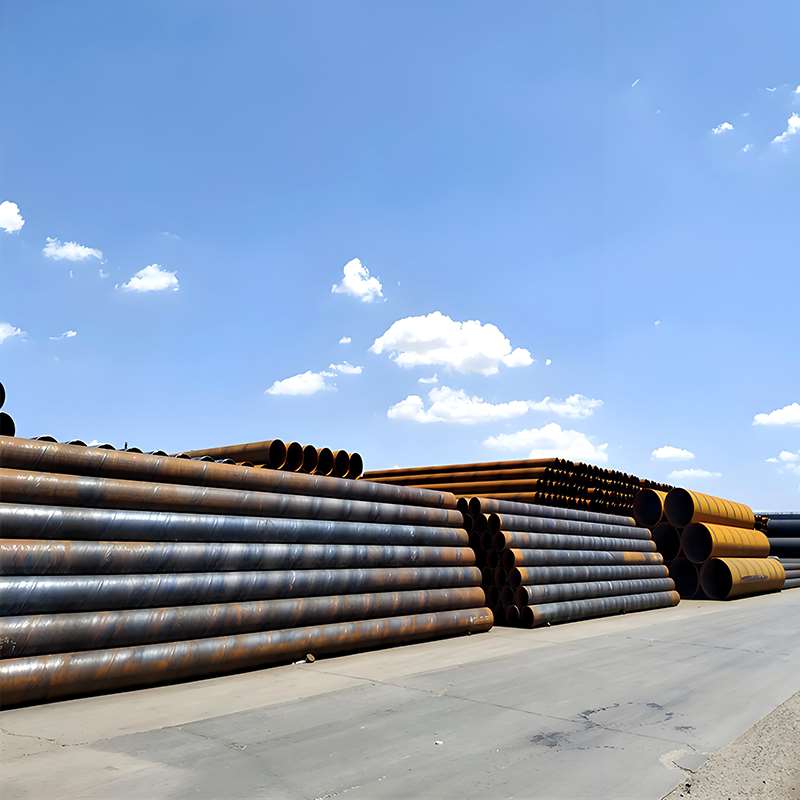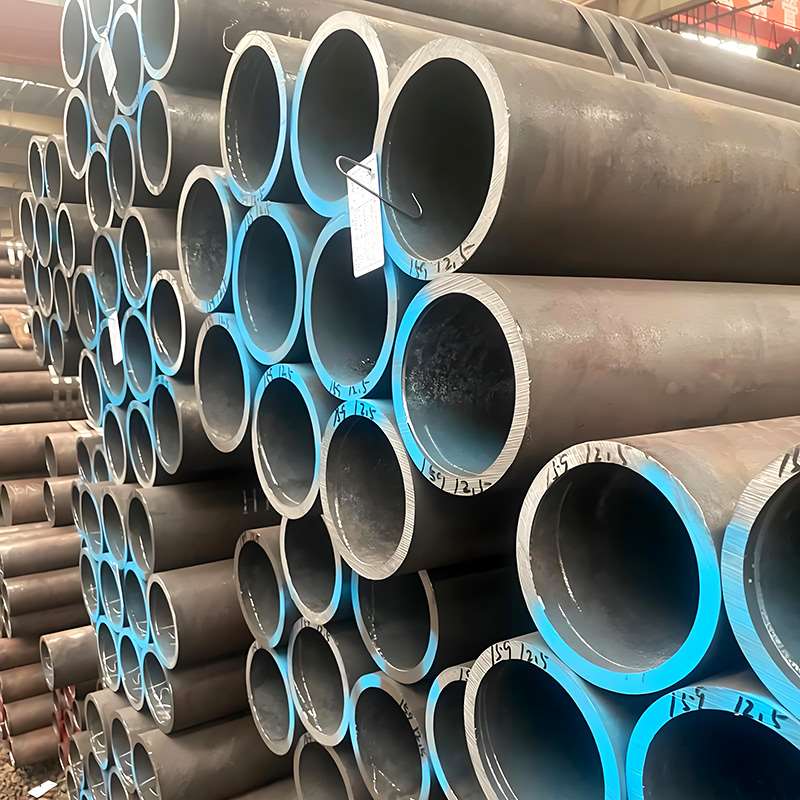
Large-diameter steel pipes (typically referring to those with a diameter of DN500 / 219 mm or larger) are widely used in infrastructure projects such as urban water supply, long-distance cross-regional water transmission, oil and gas pipelines, offshore engineering, and bridge pile driving.
For many project procurers, project managers, and pipeline designers, a common question is: Why, among the many types of steel pipes (such as seamless steel pipes, long-seam submerged-arc welded pipes (LSAW), and spiral-welded steel pipes (SSAW)), do large-diameter pipeline projects show such a clear preference for spiral-welded steel pipes?
The answer is not simply “because they are cheaper,” but rather is determined by multiple factors, including their geometric forming principles, mechanical stress distribution, wall thickness uniformity, delivery efficiency, and total life-cycle cost.
I. Producing Extra-Large-Diameter Pipes Using Narrower Steel Strips
When manufacturing straight-seam welded steel pipes, the pipe diameter is directly limited by the width of the steel strip. To produce straight-seam pipes with diameters of 2 meters or even 3 meters, expensive and scarce extra-wide medium- and heavy-gauge steel plates, as well as massive, ultra-large-capacity forming presses, are required.
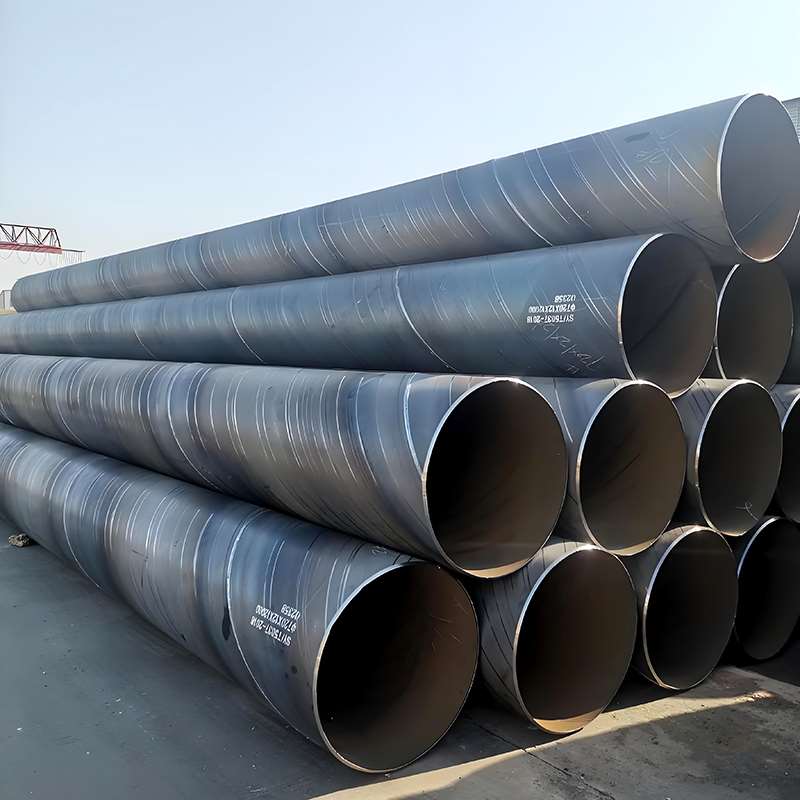
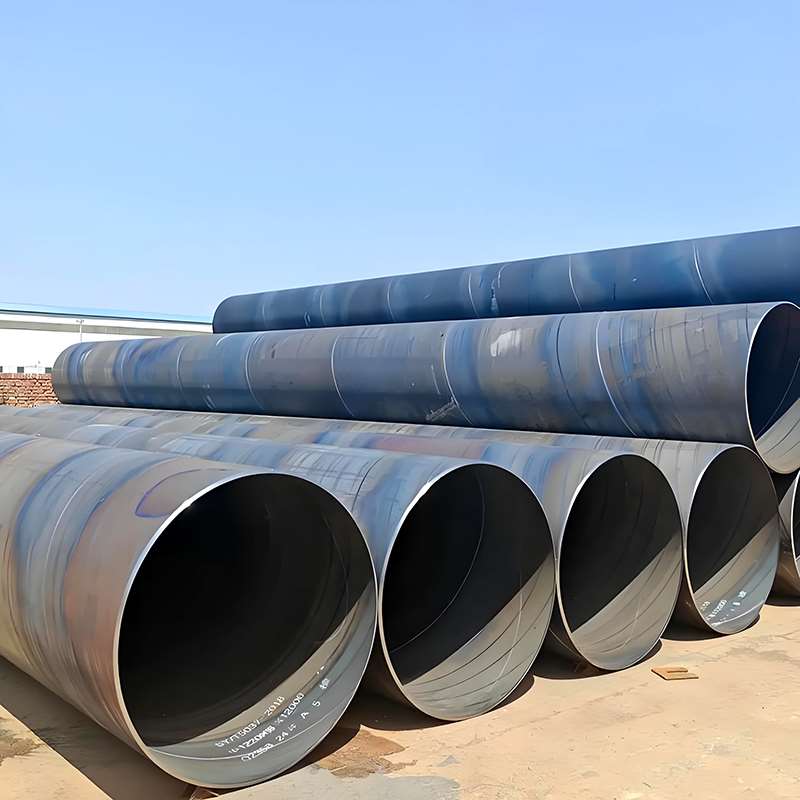
The forming principle for spiral-welded steel pipes, however, is entirely different: it involves coiling continuous hot-rolled strip steel from a coil into a circular tube at a specific spiral angle before welding.
- Flexible Diameter Control: Using steel strip of the same width, simply adjusting the spiral angle during the coiling process allows for the production of steel pipes ranging from DN500 to DN3000 or even larger diameters.
- High-Efficiency Continuous Production: Since the raw material is hot-rolled steel coils, continuous forming and welding can be achieved, resulting in higher production efficiency than that of straight-seam pipes produced by pressing individual steel plates one by one.
- This makes the large-scale industrial production of large-diameter pipes highly efficient and economical.
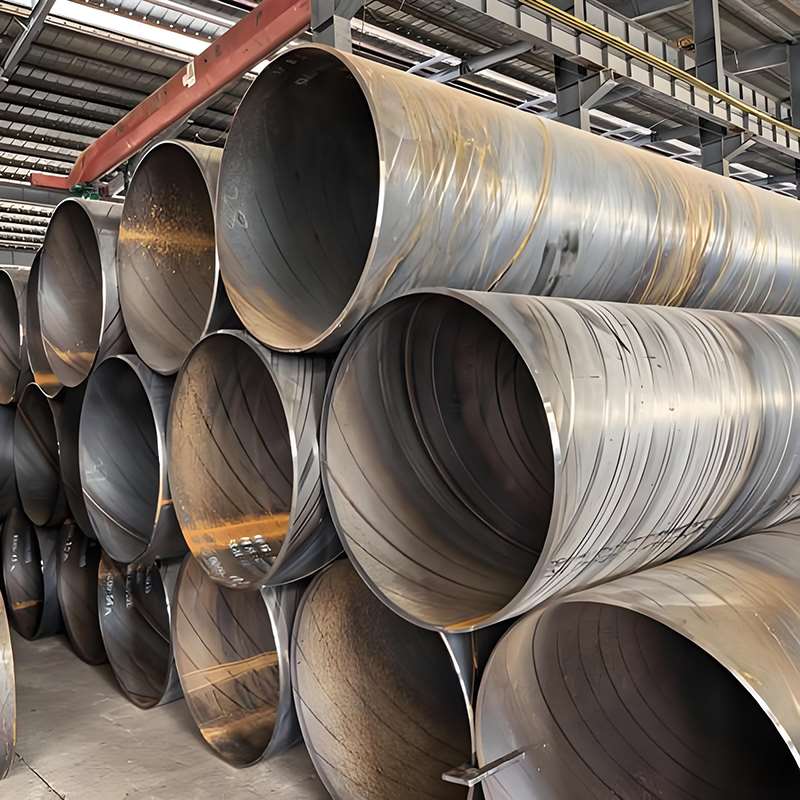
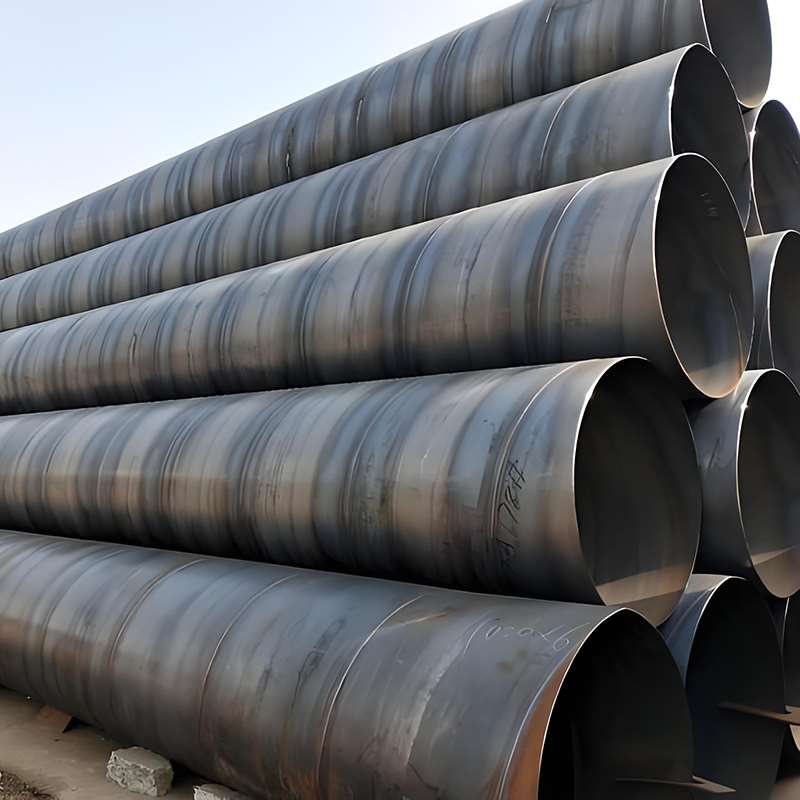
II. Structural Advantages in Mechanics: Main Stresses Avoid the Weld, Resisting Crack Propagation
Many non-experts often worry: “Since spiral-welded pipes have longer welds, does this compromise their safety?” In fact, from an engineering mechanics perspective, spiral welds actually offer unique geometric stress advantages under large-diameter, pressurized operating conditions:
- Principal stresses are directed away from the weld: When a pipe is subjected to internal fluid pressure, the maximum stress generated in the pipe wall is circumferential tensile stress (hoop stress), which is parallel to the pipe’s axis. In straight-seam pipes, the weld direction is exactly perpendicular to the maximum stress; whereas in spiral-welded pipes, the weld forms an angle of approximately 30°–35° with the axis. Consequently, the combined tensile stress borne by the spiral weld is only 60%–80% of that experienced by the weld in straight-seam pipes.
- Preventing Crack Propagation: If the pipe body is subjected to a localized, severe impact, the helically distributed weld acts as a sort of “toughness rib,” effectively preventing cracks from propagating rapidly along the axial direction.
III. High Dimensional Accuracy and Wall Thickness Uniformity Enhance Construction Efficiency
In the construction of large-diameter pipelines, the efficiency of on-site butt welding directly affects the overall project schedule. If the pipe ends are out of round or have large wall thickness tolerances, it can lead to serious misalignment issues.
- Tight Raw Material Tolerances: Spiral welded pipes are manufactured from continuous hot-rolled coil. The wall thickness tolerances of the steel strip itself are strictly controlled, ensuring uniform wall thickness along the entire length.
- Excellent Forming Roundness: During the continuous forming process, the roundness of the pipe body is easily controlled. In collaboration with a professional and experienced spiral steel pipe manufacturer, the ellipticity of the pipe ends and the groove tolerances of the finished pipes can be precisely controlled, thereby accelerating the speed of alignment and welding during on-site construction.
IV. Comparison of Core Performance and Overall Cost
When selecting equipment for a project, the purchaser typically needs to balance three dimensions: scope of application, load-bearing capacity, and procurement budget.
| Comparison Item | Spiral Welded Steel Pipe (SSAW) | Longitudinal Submerged Arc Welded Pipe (LSAW) | Seamless Steel Pipe |
|---|---|---|---|
| Weld Configuration | Spiral weld seam | Longitudinal straight weld seam | No weld seam |
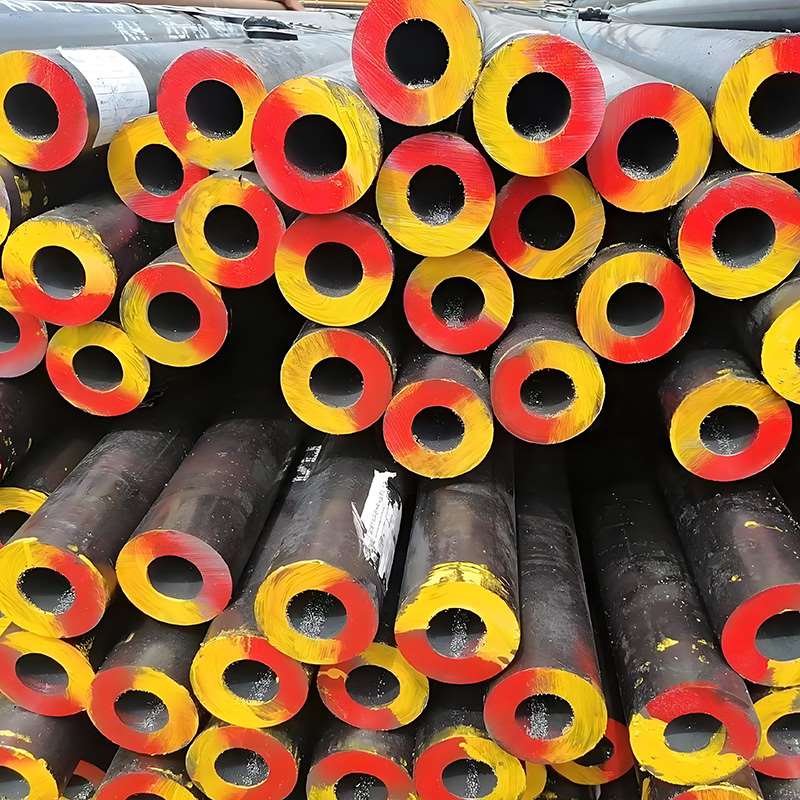
| Diameter Range | Large to extra-large diameters (219 mm–3000 mm+) | Medium to large diameters (406 mm–1422 mm) | Small to medium diameters (typically below 610 mm) |
| Pressure Resistance | Moderate to high (suitable for most pipeline applications) | High | Very high |
| Wall Thickness Uniformity | Excellent (minimal tolerance due to hot-rolled steel coil) | Good | Hot-rolled pipes are more prone to wall thickness variation |
| Production & Delivery | Fast (highly automated continuous production) | Moderate | Relatively slow |
| Overall Project Cost | Reduces procurement and transportation costs by 15%–30% | Higher | Highest |
V. Key Points for Project Selection and Procurement Control
- Standard Compliance Verification: Confirm that the product complies with industry standards such as API 5L (PSL1/PSL2), ASTM A252, GB/T 9711, or EN 10219.
- Flaw Detection and Hydrostatic Testing: Select manufacturers equipped with 100% online/offline ultrasonic flaw detection (UT), real-time X-ray imaging (RT), and full-pipe single-section hydrostatic testing.
- Corrosion Protection Selection: Buried or long-distance water transmission pipelines should be simultaneously equipped with mature anti-corrosion coatings (such as 3PE external anti-corrosion, FBE epoxy powder coating, or cement mortar lining).