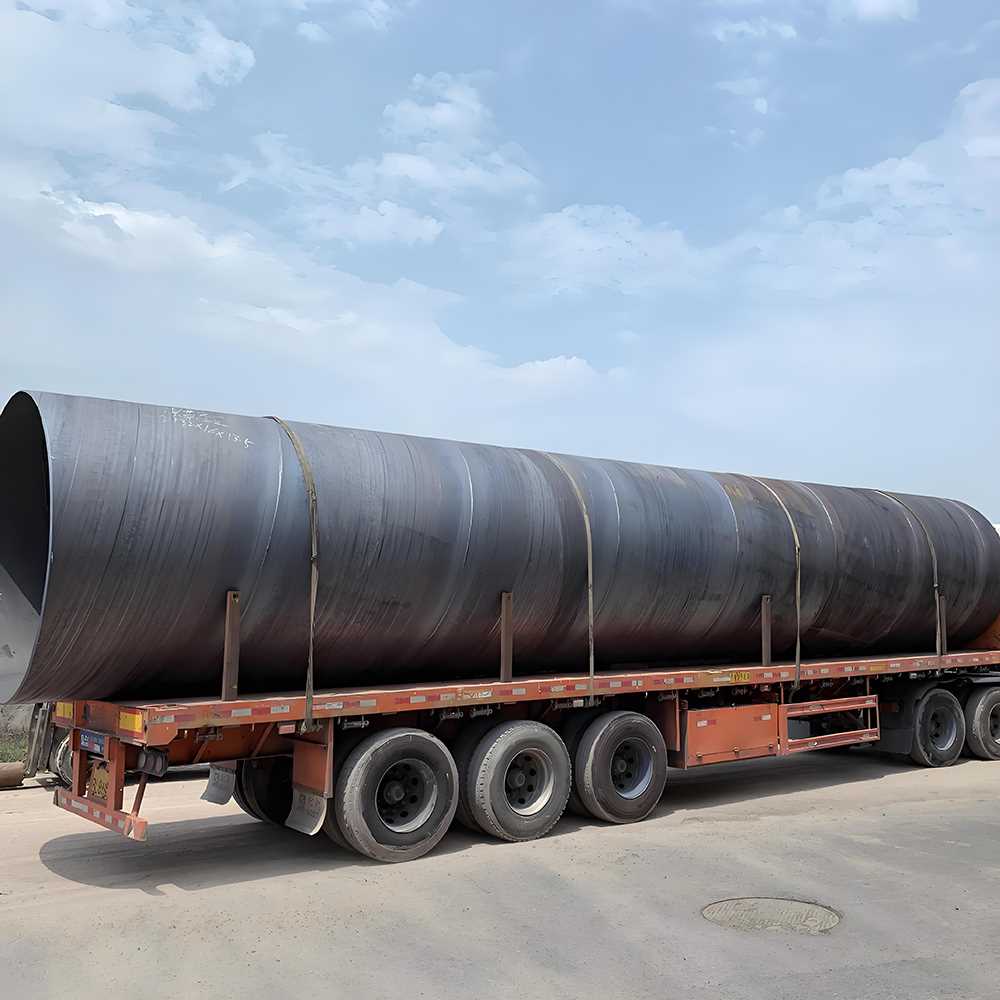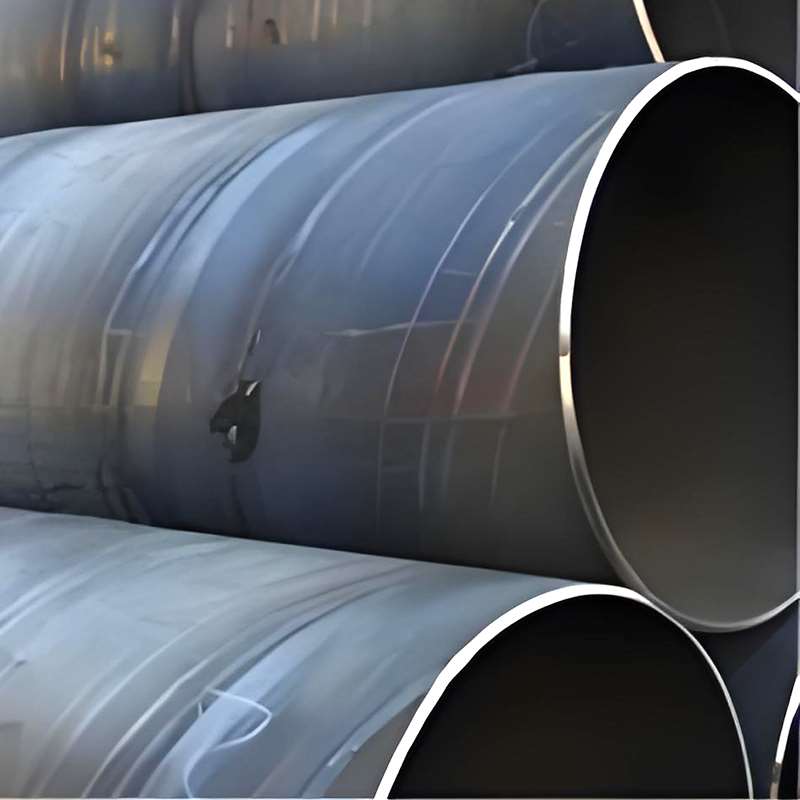
In the oil and gas, structural engineering, offshore wind, and other critical industries, LSAW steel pipes have become an essential material for transportation and load-bearing applications due to their high pressure resistance, excellent strength and toughness, and ability to accommodate large-diameter, thick-wall requirements. However, since LSAW steel pipes are typically used in demanding environments involving high pressure, corrosion, or extreme temperature variations, choosing a qualified and reliable manufacturer directly affects the safety and service life of the entire project.
Purchasing LSAW steel pipes is far more than simply requesting quotations and comparing prices. The following guide will help you systematically identify and verify the key factors when selecting an LSAW steel pipe manufacturer.
I. Why Choosing the Right LSAW Manufacturer Matters
- High technical requirements: The manufacturing of LSAW steel pipes involves forming thick steel plates using the JCOE or UOE process, followed by double-sided submerged arc welding. This places stringent requirements on forming accuracy, equipment performance, and welding heat input control.
- Far-reaching impact on quality: The pipe’s geometric tolerances, including roundness and straightness, as well as internal weld defects and residual stresses, directly affect the efficiency of fit-up and field welding during pipeline construction, as well as the safety and reliability of subsequent operation and maintenance.
- Avoiding hidden risks: Focusing blindly on low prices can easily lead to pitfalls such as inferior raw materials, excessive negative wall thickness tolerances, or inadequate inspection and testing. These issues can create significant safety risks for the entire project.
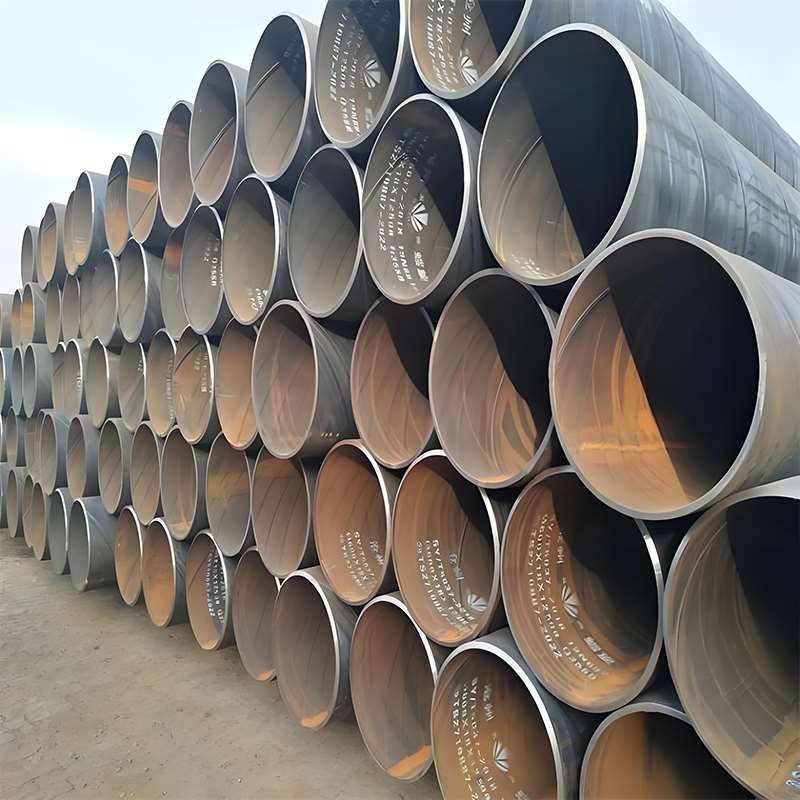
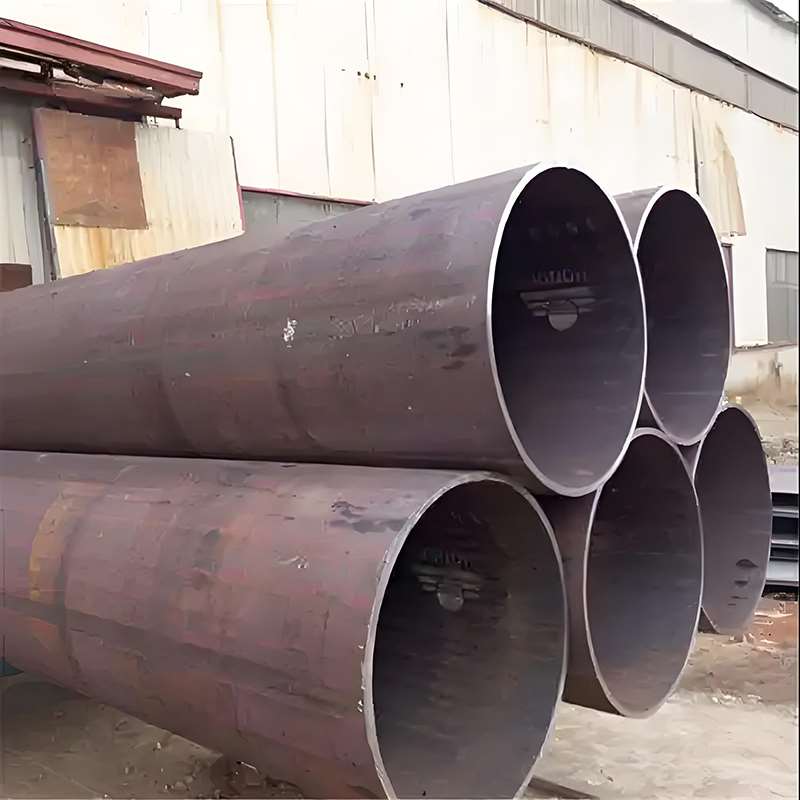
II. What Capabilities Should You Verify When Evaluating an LSAW Manufacturer?
- 1. Production Line and Forming Process: Confirm whether the manufacturer uses the mainstream JCOE or UOE forming process, as well as the level of production line automation and its mechanical expansion capabilities. Mechanical expansion not only improves the dimensional accuracy of the steel pipe but also effectively relieves residual stresses generated during the forming process.
- 2. Raw Material Quality Control: Ask about the source of the raw materials. High-quality LSAW steel pipes rely on thermomechanically controlled-rolled (TMCP) steel plates produced by large, reputable steel mills.
- 3. Specification Range: Verify the manufacturer’s maximum production capabilities in terms of wall thickness and pipe diameter, particularly its experience in manufacturing large-diameter, extra-thick-wall pipes or high-strength grades such as X70 and X80.
- 4. Welding Process Control: Check the level of automation in tack welding and internal/external double-sided submerged arc welding, as well as the availability of welding procedure qualification records (WPQRs).
III. What quality tests must a reputable manufacturer provide?
A qualified LSAW manufacturer should possess complete testing equipment and procedures to ensure that every steel pipe leaving the factory comes with comprehensive test data:
| Inspection Category | Specific Inspection Item | Purpose and Function |
|---|---|---|
| Physical & Chemical Testing | Chemical Composition Analysis | Ensures that the steel grade complies with the applicable standard and that the carbon equivalent (CEV) meets weldability requirements |
| Tensile and Bend Tests | Verifies the tensile strength, yield strength, and ductility of the base material and welds | |
| Impact Test | Verifies the material’s toughness performance under low-temperature conditions | |
| Non-Destructive Testing (NDT) | Ultrasonic Testing (UT) & Radiographic Testing (RT) | Provides 100% coverage of plate edges, pipe body, and welds to identify and eliminate internal defects |
| Hydrostatic & Dimensional Testing | Hydrostatic Test | Verifies the pressure resistance and pressure-holding capability of each individual pipe |
| Dimensional and Visual Inspection | Strictly controls outside diameter, wall thickness, roundness, straightness, and bevel angle |
IV. Standards and Certifications a Manufacturer Should Have
API 5L (PSL1 / PSL2): The core general standard for api 5l welded pipes, with particular emphasis on carbon equivalent, toughness, and stringent NDT requirements.
ASTM / ASME Standards: Applicable standards for pipes used in construction and pressure vessel applications, such as ASTM A53, A671, and A672.
EN / ISO Standards: Standards such as EN 10219, EN 10208, and ISO 3183, suitable for high-end engineering projects in Europe and international markets.
Project-Specific Technical Specifications: The manufacturer should have the capability to provide customized production for challenging service conditions, such as sour environments involving hydrogen sulfide (H₂S) and extremely low-temperature applications.
V. How to Verify a Manufacturer’s Actual Capabilities Through On-Site Evaluation
1. Review Quality Certificates and MTCs: Request material test certificates (MTCs, EN 10204 3.1/3.2) and material traceability records for previously supplied products with similar specifications. Also verify the validity of management system certifications and official certification status, such as ISO 9001 and API certificates.
2. Engage Third-Party Inspection (TPI): Confirm that the manufacturer allows international third-party inspection agencies, such as SGS, BV, and Moody, to conduct on-site supervision and random inspections during production.
3. Conduct a Factory Audit: Visit the facility to inspect the daily operation of key areas, including the steel plate warehouse, forming workshop, hydrostatic testing unit, UT/RT inspection rooms, and physical and chemical laboratories.
4. Verify Export Track Record: Evaluate whether the manufacturer has previous supply experience with major international projects or well-known energy companies such as CNPC and Sinopec.
VI. Price vs. Quality: How Should Buyers Strike the Right Balance?
During the procurement process, raw material costs account for more than 80% of the total cost of LSAW steel pipes. When a supplier’s quotation is significantly lower than the market average, buyers should be alert to the following common cost-cutting practices:
Taking advantage of negative wall thickness tolerance: The actual delivered wall thickness is kept close to the lower limit of the permissible negative tolerance, reducing the amount of steel used.
Downgrading raw materials: Using second-grade steel plates, non-controlled-rolled plates, or steel plates from smaller mills without reliable quality assurance.
Reducing inspection and testing: Lowering the percentage of non-destructive testing (NDT) or shortening the holding time during hydrostatic testing in order to increase production capacity.
VII. Final Checklist for Selecting an LSAW Steel Pipe Manufacturer
Before placing the final order, use the following checklist for a quick verification:
- Does the manufacturer hold the required API 5L or ISO certifications for the steel grade specified for the project?
- Are the steel plates sourced from large, reputable steel mills?
- Does the manufacturer have suitable mechanical expansion equipment and the capacity to produce pipes with the required heavy wall thickness?
- Does the manufacturer commit to 100% ultrasonic/radiographic testing of welds and hydrostatic testing of each individual pipe?
- Does the manufacturer support third-party inspection at the factory in accordance with EN 10204 3.2?
- Does the quotation reasonably include the costs of inspection, anti-corrosion coating, and packaging, with no hidden reductions in wall thickness?