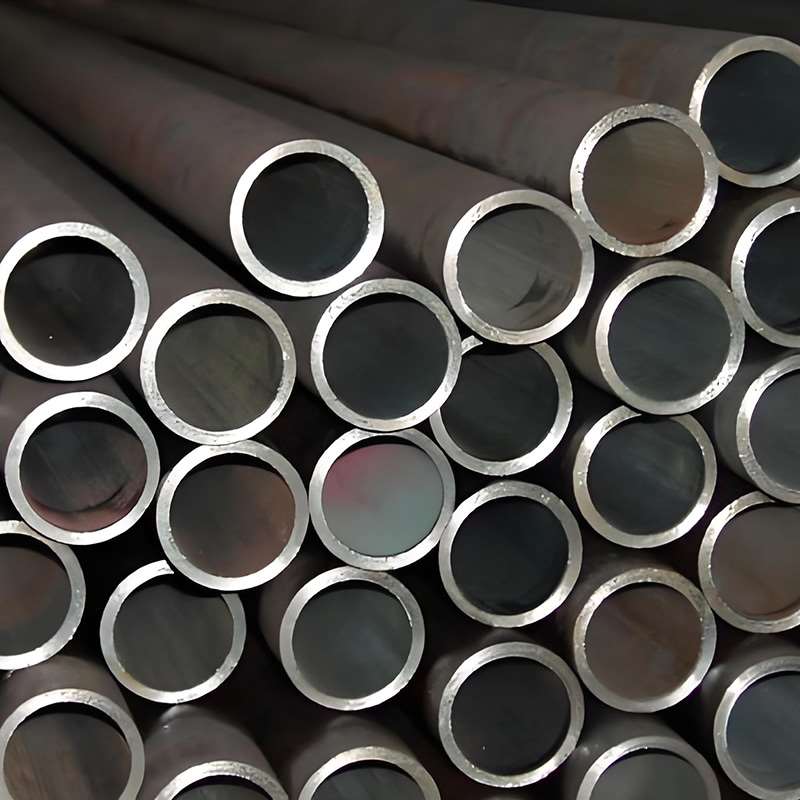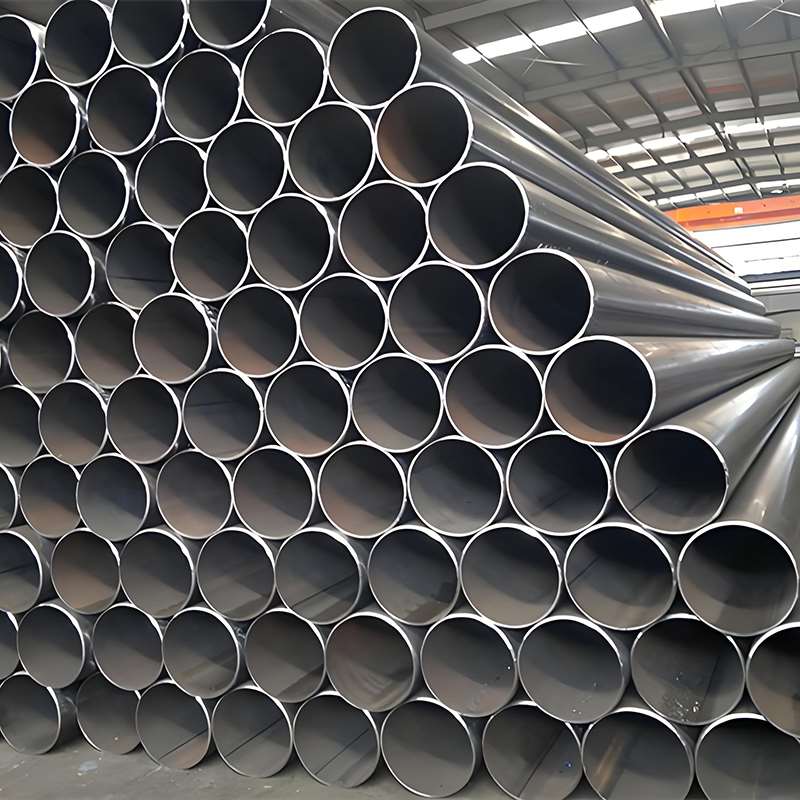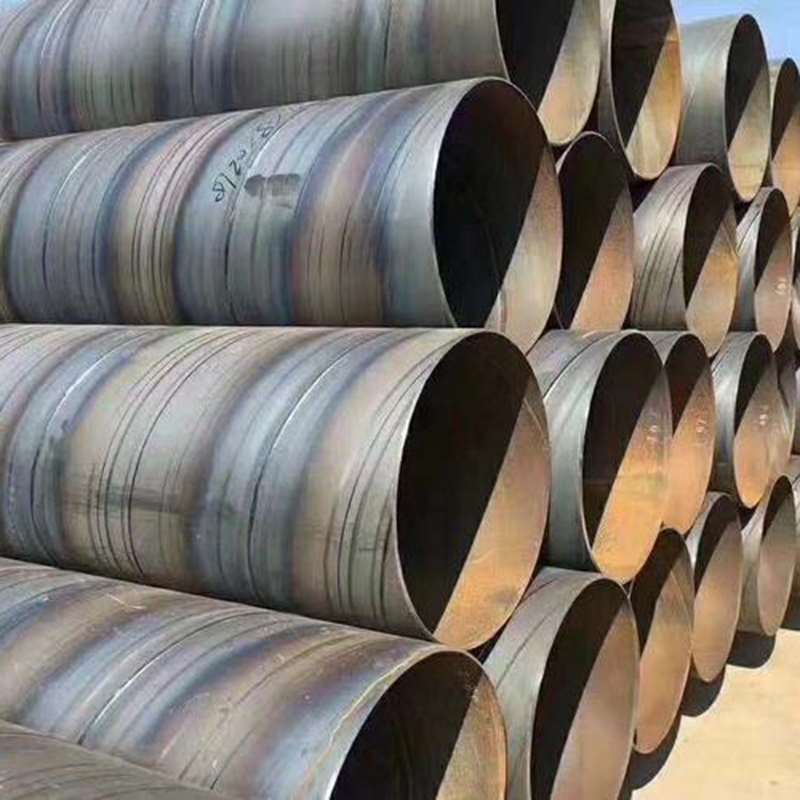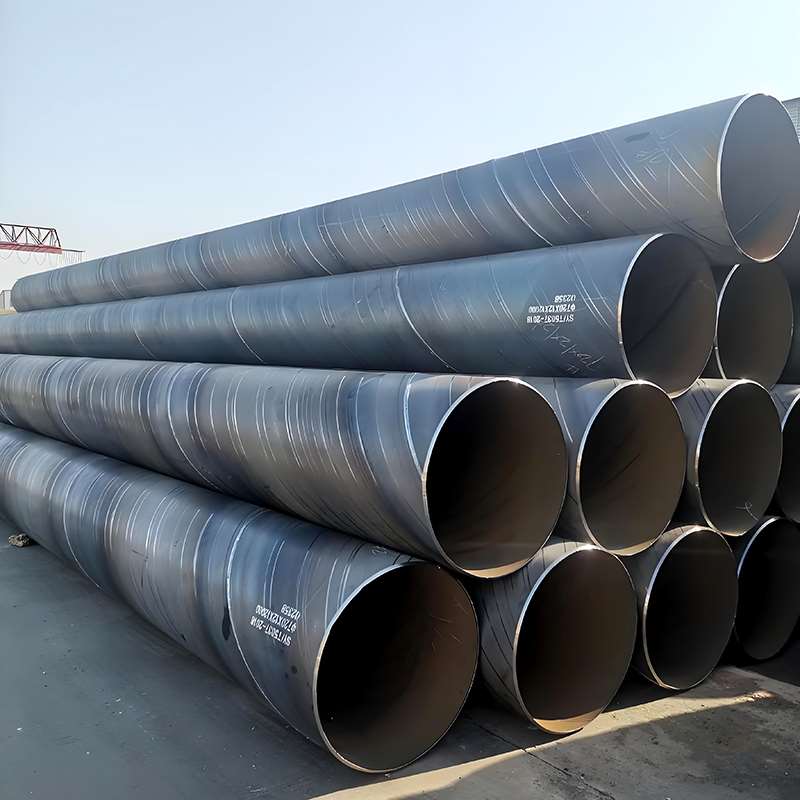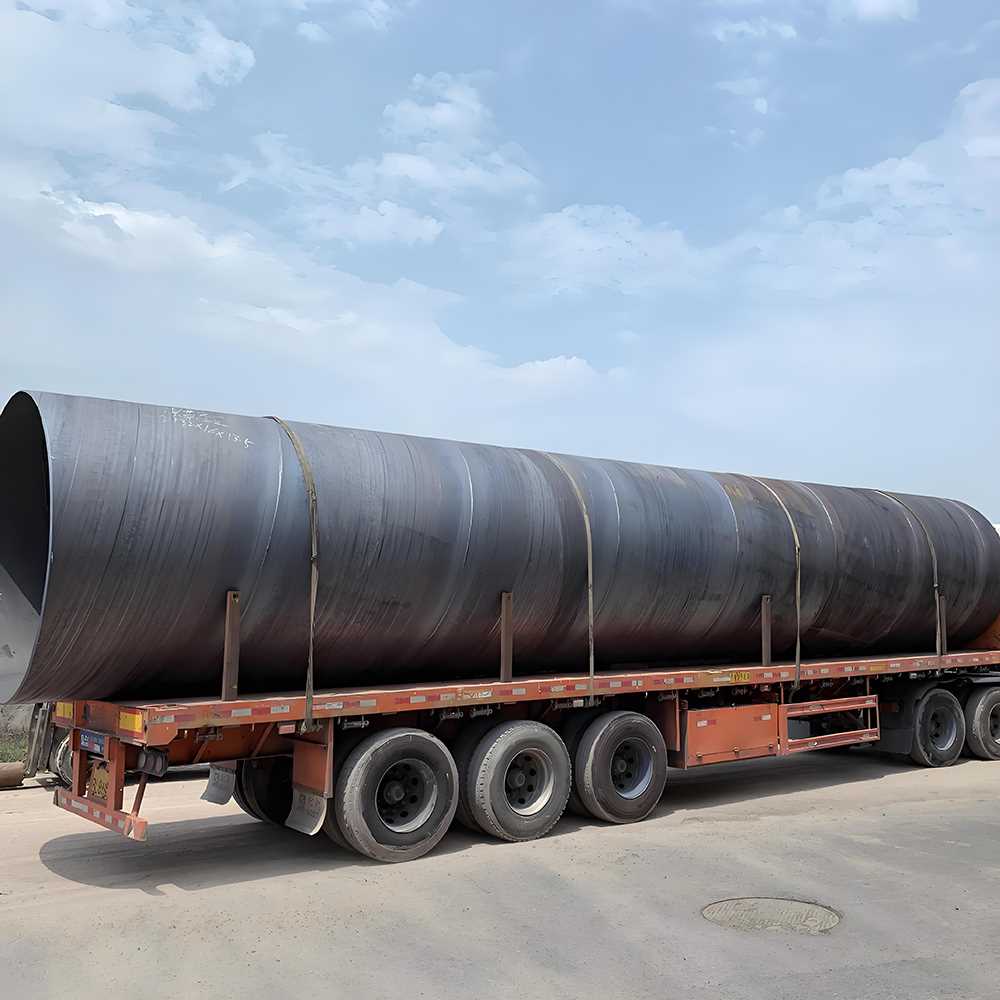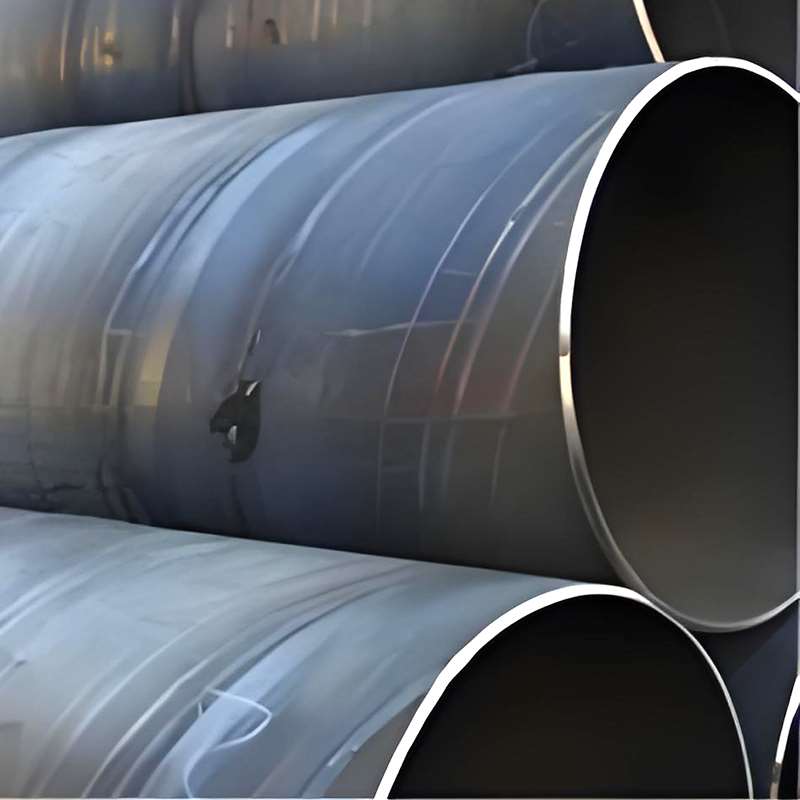
In infrastructure projects such as large-scale water conservancy projects, long-distance oil and gas pipelines, municipal water supply and drainage systems, and bridge pile driving, spiral-seam submerged-arc welded steel pipes are widely used due to their ability to produce large diameter spiral welded steel pipe and their cost-effectiveness.
This article will take you inside a modern steel pipe manufacturing workshop to reveal the complete production process, from raw hot-rolled steel coils to finished steel pipes.
I. Raw Material Preparation and Uncoiling/Leveling
The starting point of production is hot-rolled steel coils.
- Uncoiling and Leveling: Coiled hot-rolled steel strip is transported by a crane to the beginning of the production line, where it is uncoiled by an uncoiler. The strip is then flattened by a multi-roll leveling machine to remove any curvature, ensuring precise geometric dimensions for subsequent forming processes.
- Strip Cutting and Butt Welding: To achieve continuous, uninterrupted automated production, the tail end of the previous coil and the leading edge of the next coil are joined together on the production line using a cutting and butt welding machine.
II. Edge Preparation and Edge Milling and Pre-bending
To ensure the penetration depth and quality of subsequent submerged arc welding, both edges of the steel strip must undergo rigorous technical processing:
- Double-sided edge milling: Using a high-precision edge milling machine, both sides of the steel strip are machined to create X-type or V-type grooves that meet welding process requirements, while simultaneously removing scale and burrs from the edges.
- Edge Pre-bending: The edges of the steel strip are pre-bent using pre-bending rollers to match the curvature of the final pipe, thereby preventing “flat corners” or misalignment during forming.
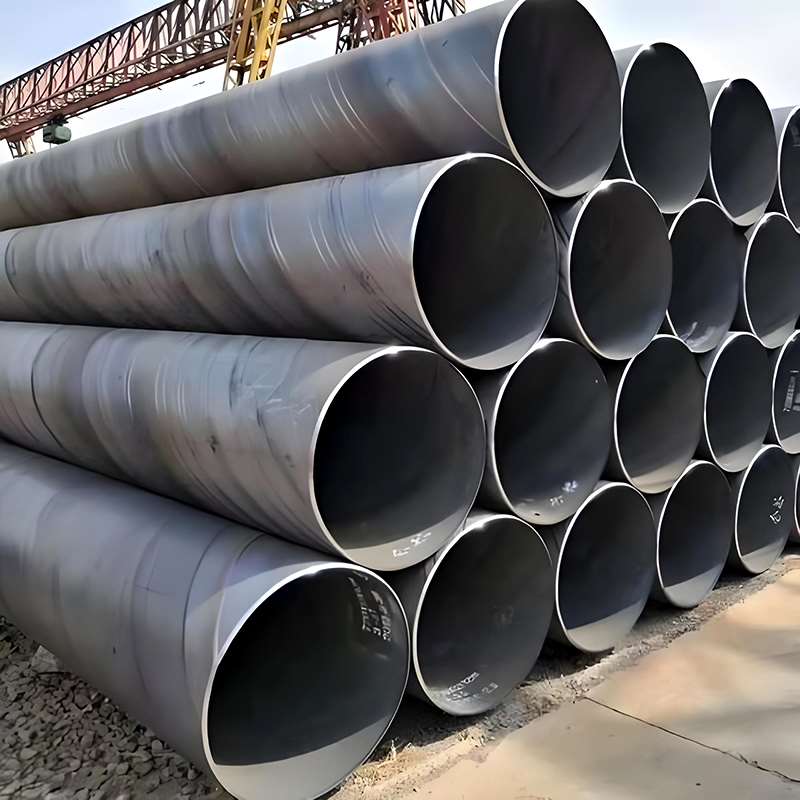
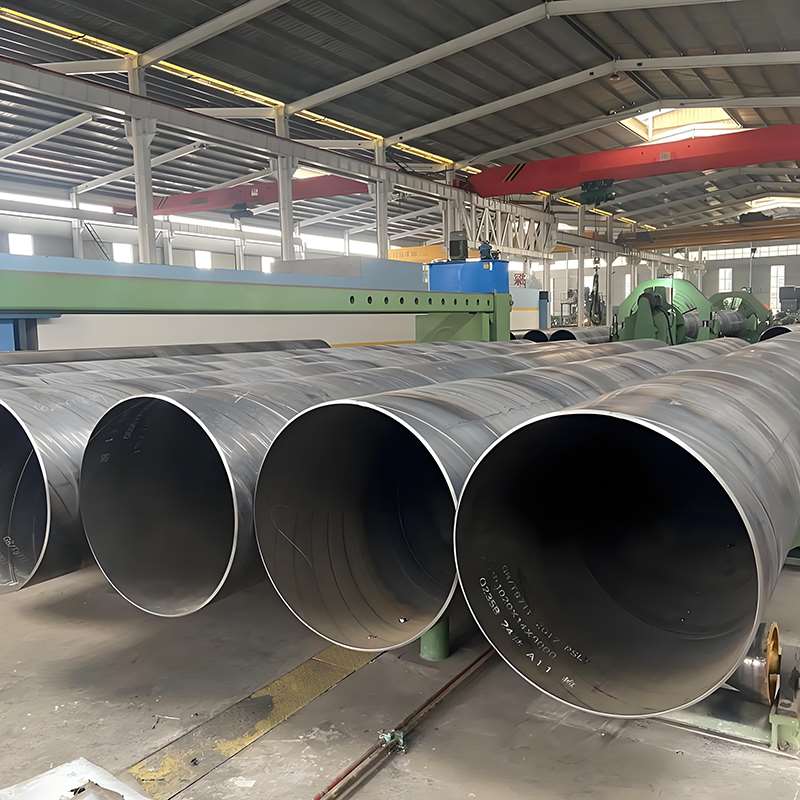
III. Spiral Forming and Double-Sided Submerged Arc Welding
Three-Roll Forming: The steel strip is fed into the forming machine and, through continuous compression by the forming roll set, is continuously coiled into a circular tube blank at a specified spiral forming angle (typically between 30° and 35°).
Double-Sided Submerged Arc Welding:
- Internal Welding: After forming, high-speed internal seam welding is first performed using multi-wire submerged arc welding along the internal seam of the pipe.
- External Welding: Subsequently, external seam submerged arc welding is performed at the corresponding positions on the outside of the pipe.
In submerged arc welding, the arc burns beneath a layer of granular flux, resulting in a spatter-free welding process that produces dense, smooth welds with deep penetration. Find a Spiral Steel Pipe Manufacturer with proven expertise, whose automated forming and double-sided submerged arc welding systems can monitor welding current and voltage in real time, eliminating defects such as lack of fusion and porosity at the source.
IV. Flying Saw Cutting and Pipe End Processing
- Fixed-Length Flying Saw Cutting: The formed and welded steel pipes are continuously elongated. Automated plasma flying saws or pipe cutters precisely cut the pipes at high speed according to customer length requirements (such as the common 12 meters or 18 meters).
- Pipe End Beveling: After cutting, the individual steel pipes enter a pipe end processing machine, where the pipe ends are flattened and processed with a standard weld bevel (usually a 30°-35° bevel and blunt edge) to facilitate subsequent pipe-to-pipe assembly and welding on the construction site.
V. Rigorous Quality Inspection and Non-Destructive Testing
Newly manufactured steel pipes must undergo rigorous quality control before they can be officially shipped from the factory:
- Ultrasonic Testing: 100% of spiral welds and end welds undergo both in-line and off-line testing to automatically detect any lack of fusion, slag inclusions, or cracks within the welds.
- Hydrostatic Testing: The steel pipes are filled with water and pressurized to the test pressure specified by the standard. The pressure is stabilized and maintained for a set period to ensure that the pipe body and welds do not leak or deform under the designed high pressure.
- X-ray Imaging Inspection: X-ray radiography and imaging verification are performed on areas identified as suspicious by UT testing or on the end welds, and traceable image records are retained.
VI. External Anti-Corrosion Coatings and Shipment
Depending on the project environment (e.g., buried, subsea, or exposed to the atmosphere), steel pipes are typically treated with both internal and external anti-corrosion coatings:
- Anti-corrosion Treatment: Common external anti-corrosion coatings include 3PE (three-layer polyethylene) or FBE (fusion-bonded epoxy powder); internal anti-corrosion coatings include solvent-free epoxy coatings suitable for drinking water or cement mortar linings.
- Final Inspection and Shipment: After passing wall thickness measurements, outer diameter tolerance checks, and electrostatic spark leakage tests on the coatings, the steel pipes are clearly stamped and spray-marked (including steel grade, specifications, standards, and lot number) before being officially loaded onto trucks for delivery.