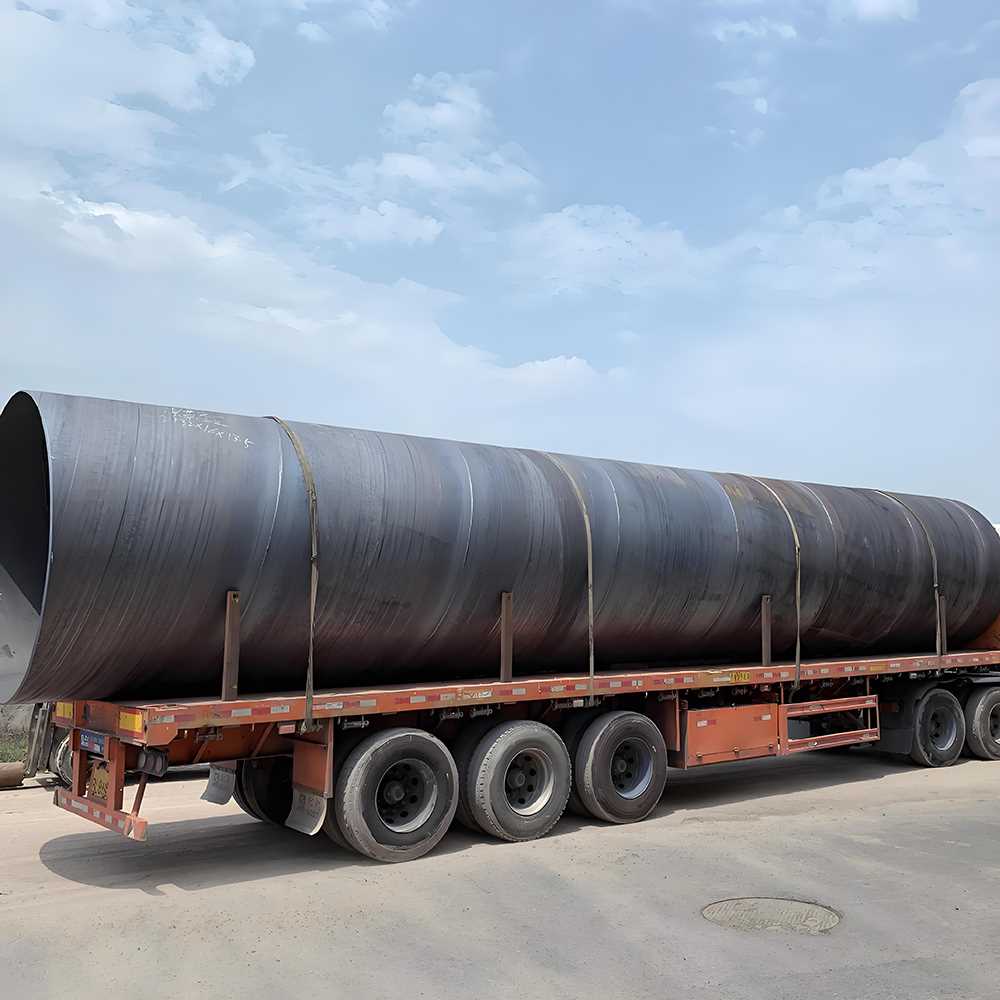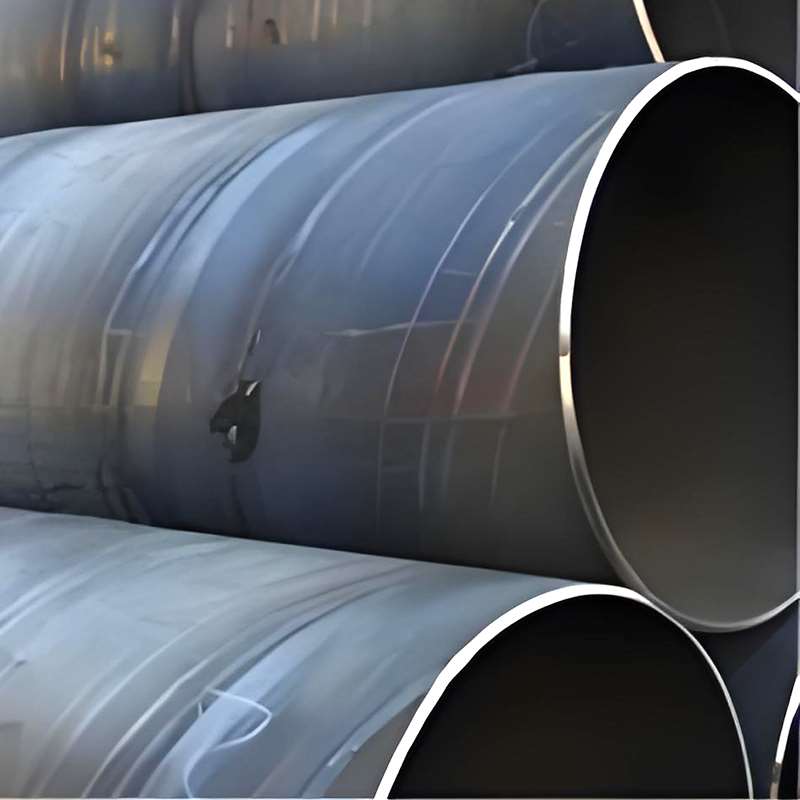
In practical procurement, the challenge is clear: how can you identify a SSAW (Spiral Submerged Arc Welded) steel pipe manufacturer that guarantees high quality, timely delivery, and reasonable pricing?
This guide breaks down the evaluation process into four core dimensions—raw materials, quality inspection capability, factory credentials, and supporting services—providing a straightforward, ready-to-use framework for supplier assessment.
I. Trace the Source: Raw Material Channels and Core Equipment Capability
High-quality pipes start with high-quality steel coils. SSAW pipes are produced by spirally forming steel coils through a pipe mill and welding the seam. The quality of the raw material determines the minimum achievable strength of the finished pipe.
1. Raw Material (Steel Coil) Procurement
A trustworthy manufacturer will never obscure the source of their steel. During evaluation, ask directly:
“Which steel mills do you typically source your coils from?”
Preferred manufacturers: Those sourcing directly from top domestic steel producers such as Baowu Steel, Ansteel, Shougang, Jianlong, or Anshan Baode. These mills provide coils with stable chemical composition, consistent mechanical properties, and uniform thickness.
Pitfall warning: Some small workshops, aiming to lower costs, may source “contract-grade scrap,” offcuts, or steel from unknown suppliers. Such coils often have inconsistent thickness, internal slag inclusions, or microcracks, leading to pipes that are prone to cracking.
2. Forming and Welding Equipment Stability
The spiral forming process is where the equipment’s capability is most critical.
Top manufacturers employ three-roll progressive forming machines equipped with automated seam-tracking systems. This ensures precise alignment of the steel edges, minimizing severe misalignment—a defect that can make on-site welding of pipe sections impossible.
Welding must be internal and external double-sided submerged arc welding (SAW). Inspect the workshop for the brand and quality of welding wire and flux. Flux must be thoroughly dried before use, as moisture can induce hydrogen cracking in welds.
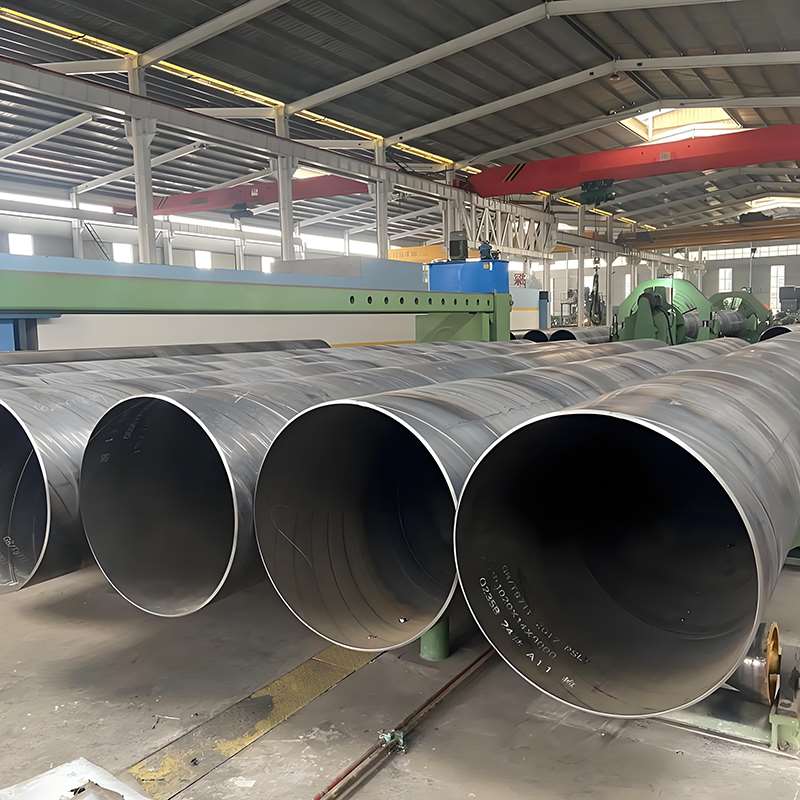
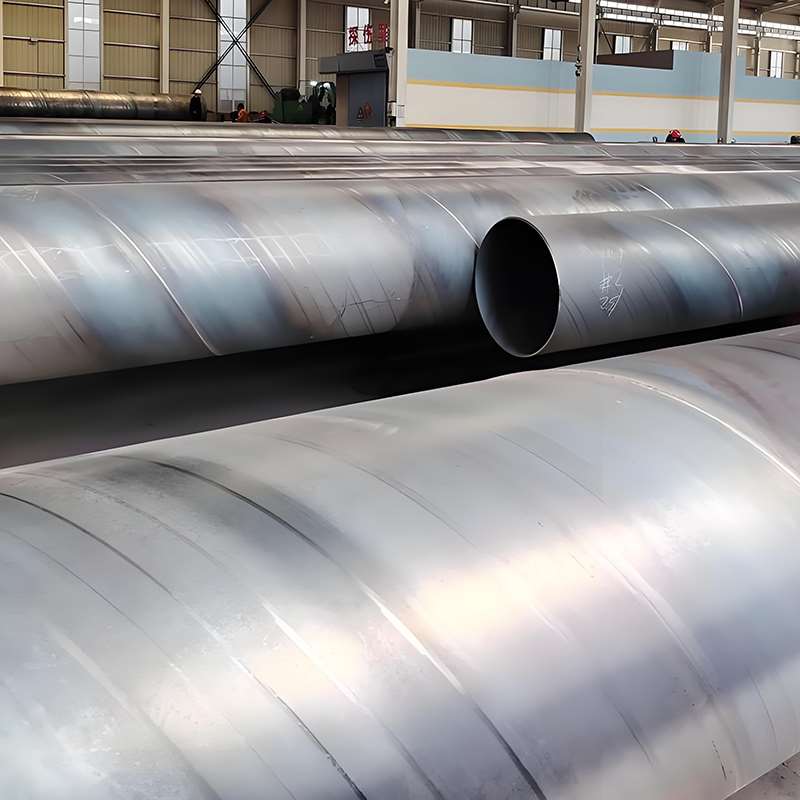
II. Non-Destructive Testing (NDT) and Inspection Equipment
Many low-quality manufacturers underinvest in testing, with equipment merely for show—or none at all. Since the spiral seam is a long continuous weld, it is particularly susceptible to porosity, slag inclusions, or incomplete penetration. Thus, a manufacturer’s testing capabilities are critical for screening suppliers.
Key machines to inspect during a factory visit or technical audit:
1. Continuous Online Ultrasonic Testing (UT) System
This is standard in reputable manufacturers. Immediately after welding, a row of ultrasonic probes must scan the seam continuously on the production line. Any internal defect invisible to the naked eye triggers an automatic alarm and ink marking.
If inspection is done only occasionally by handheld probes, it indicates serious lapses in quality control.
2. X-Ray Verification Room
Suspect points identified by UT must be verified via industrial X-ray imaging. Technicians can then distinguish minor porosity from critical crack defects. Factories lacking X-ray verification cannot reliably guarantee high-end pipe quality.
3. Hydrostatic Testing Machine
Each SSAW pipe must undergo 100% hydrostatic testing before leaving the factory—random sampling is insufficient. Inspect the workshop to ensure the machine is operational and capable of reaching the required pressure in MPa. Hydrostatic testing involves filling the pipe with high-pressure water and maintaining it for at least five seconds, effectively verifying leak-proof integrity and load-bearing capability.
III. Core Certifications and Past Project References
In industrial B2B procurement, certifications and past supply records serve as a manufacturer’s “credit reference,” allowing buyers to filter out unqualified suppliers early.
1. Verify Key Industry Certificates
Depending on project requirements, request relevant certifications and verify them on the issuing authority’s official site:
- TS (Special Equipment Manufacturing License): Mandatory for domestic pressure piping or district heating projects. Producing pressure pipes without this license is illegal.
- API 5L Certification: Required for petroleum, natural gas, or high-pressure pipelines, as well as export-oriented products. Verify whether the pipes meet PSL1 or PSL2 levels.
- ISO 9001 Quality Management System Certification: Basic factory management standard.
2. Review Real Supply Cases
Do not rely solely on sales claims. Ask for copies of contracts, MTCs, or invoices from the past two years (with sensitive information redacted if necessary).
Check whether the manufacturer has supplied major clients such as CNPC, Sinopec, municipal water authorities, or large state-owned construction enterprises (e.g., China State Construction, China Railway Construction).
If a manufacturer consistently appears on these companies’ approved supplier lists, it demonstrates reliability in product quality, financial compliance, and delivery performance.
IV. Supporting Services: Integrated Anti-Corrosion & Insulation, and Logistics
In practical installation, SSAW pipes rarely enter the field bare. Strong supporting services save significant communication costs and hidden shipping expenses.
1. Integrated Anti-Corrosion and Insulation Capability
Buried pipes often require protective coatings (e.g., 3PE, FBE epoxy powder, internal/external epoxy) or polyurethane insulation.
Prefer manufacturers with in-house coating and insulation workshops.
Why: Purchasing bare pipes from one plant and transporting them to another for coating incurs extra handling and transport costs. Worse, post-coating defects (e.g., delamination) may lead to disputes: one plant blaming the other for improper surface preparation. In-house integration reduces such risks.
2. Logistics and Delivery Capacity
Steel pipes are bulky and heavy; shipping costs can be a significant portion of total procurement.
Evaluate whether the factory is near highways or national roads, and for exports, proximity to ports or dedicated rail lines. Confirm the manufacturer’s daily production and inventory capacity. For urgent projects, ensure sufficient coil stock is available to meet deadlines.
Practical Buyer Tips
During calls or on-site visits, to demonstrate expertise and avoid being “taken advantage of,” ask these technical questions:
- “What is the typical maximum misalignment of your spiral welds? Can it be controlled within 10% of wall thickness?”
Reason: Misalignment is the most frequently exceeded process indicator in SSAW pipes; knowledgeable buyers always check this. - “Are pipe ends beveled using a chamfering machine or manually cut with a torch?”
Reason: Professional manufacturers use dedicated chamfering machines, resulting in smooth, consistent bevels. Small workshops often use manual cutting, producing uneven pipe ends that significantly slow down on-site welding.
This approach enables buyers to identify SSAW spiral steel pipe manufacturers capable of delivering high-quality, compliant products on time, while minimizing procurement risk and hidden costs.