In oil and gas transportation, building structures, and municipal engineering, welded steel pipes have become the mainstream choice due to their cost advantages, flexible specifications, and stable supply. However, for procurement personnel and engineers, the real challenge lies in:
How to select steel pipes that meet standards, satisfy operating conditions, and possess long-term reliability in a complex market?
This article will systematically explain the selection process from the perspectives of type, size, standards, applications, and selection logic, and combine practical procurement experience to help you achieve the optimal balance between safety, cost, and feasibility.
I. Main Types of Welded Steel Pipes
| Type | Full Name | Process Characteristics | Advantages | Applicable Scenarios |
|---|---|---|---|---|
| ERW | Electric Resistance Welded | High-frequency resistance welding | Low cost and high efficiency | Small to medium diameters |
| LSAW | Longitudinal Submerged Arc Welded | Longitudinal submerged arc welding | High strength and reliable weld seam | Medium to large diameters, high pressure |
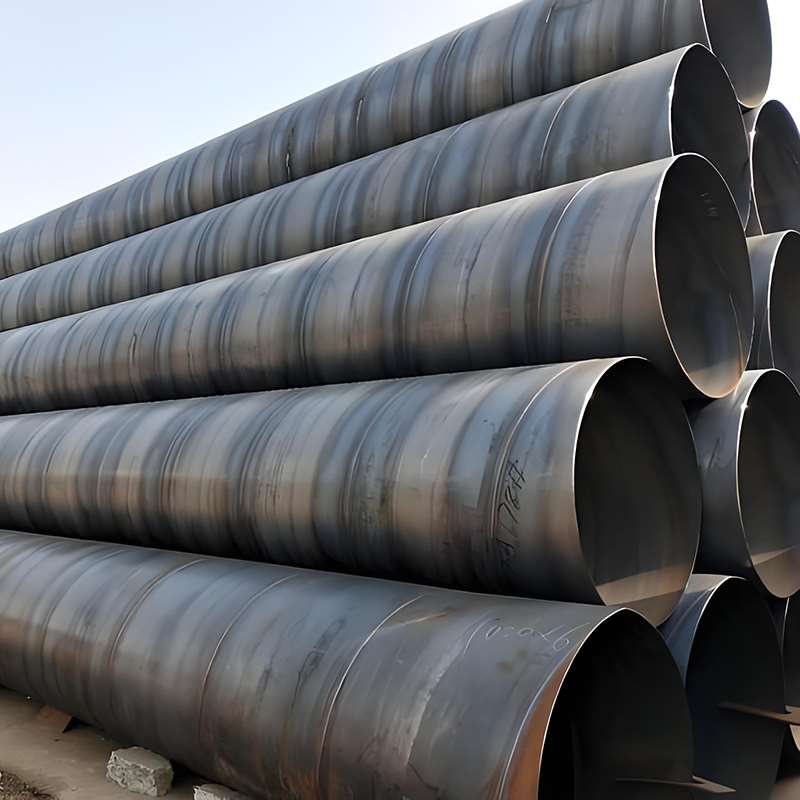
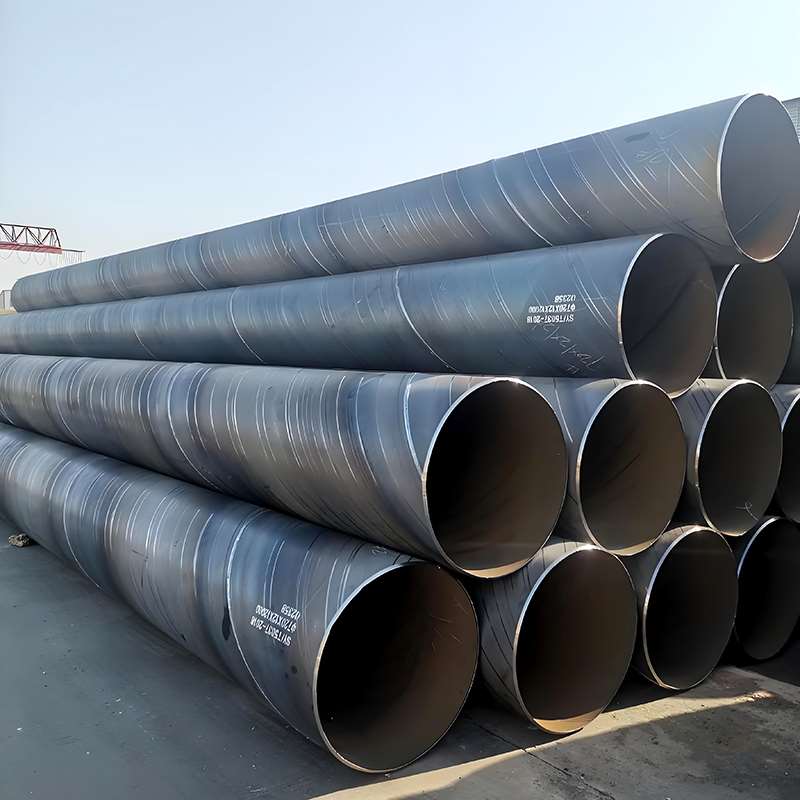
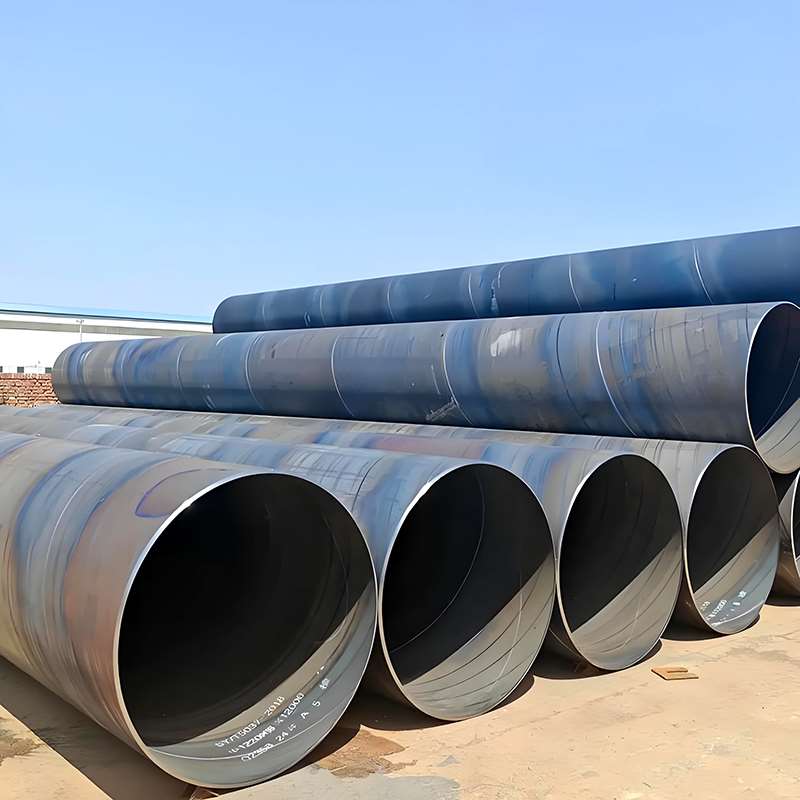
| SSAW | Spiral Submerged Arc Welded | Spiral welding | Suitable for large diameters, moderate cost | Water transmission, piling |
Practical Selection Experience:
- City Gas / Building / General Fluids → ERW (Highest Cost-Effectiveness)
- Long-Distance Oil and Gas Pipelines / High-Pressure Pipelines → LSAW (Higher Safety)
- Large-Diameter Water Conveyance / Foundation Engineering → SSAW (More Economical)
II. Welded Steel Pipe Dimension System
- Key Dimensional Parameter Description
| Parameter | Meaning | Function / Role |
|---|---|---|
| NPS | Nominal Pipe Size | Identifies the pipe size/specification |
| OD | Outside Diameter | Determines the connection method |
| WT | Wall Thickness | Determines the pressure-bearing capacity |
| Length | Length | Affects installation and construction |
| Weight | Weight | Impacts cost and transportation |
- Commonly Used Welded Steel Pipe Dimensions Table
| NPS (inch) | Outside Diameter OD (mm) | Sch10 (mm) | Sch40 (mm) | Sch80 (mm) |
|---|---|---|---|---|
| 1/2″ | 21.3 | 2.11 | 2.77 | 3.73 |
| 3/4″ | 26.7 | 2.11 | 2.87 | 3.91 |
| 1″ | 33.4 | 2.77 | 3.38 | 4.55 |
| 1 1/2″ | 48.3 | 2.77 | 3.68 | 5.08 |
| 2″ | 60.3 | 2.77 | 3.91 | 5.54 |
| 3″ | 88.9 | 3.05 | 5.49 | 7.62 |
| 4″ | 114.3 | 3.05 | 6.02 | 8.56 |
| 6″ | 168.3 | 3.40 | 7.11 | 10.97 |
| 8″ | 219.1 | 3.76 | 8.18 | 12.70 |
| 10″ | 273.0 | 4.19 | 9.27 | 12.70 |
| 12″ | 323.9 | 4.57 | 9.53 | 12.70 |
III. Core International Standards
- Oil and Gas Standards (High Pressure Preferred)
- API 5L
Key Points:
- PSL1 (Basic) vs PSL2 (Higher Requirements)
- Forced Impact Test (Resistance to Brittle Fracture)
- Stricter Chemical Composition Control
Conclusion: PSL2 is mandatory for high-pressure projects
- General Industrial Standards
- ASTM A53
- ASTM A500
Applicable to:
- Building Structures
- Low and Medium Pressure Fluids
- European Standards
- EN 10219
- EN 10217
Features:
- Fineer Classification
- Higher Consistency Requirements
IV. Common Inspection Methods for Welded Steel Pipes
| Inspection Method | Testing Principle | Main Detection Content | Advantages |
|---|---|---|---|
| Ultrasonic Testing | Uses ultrasonic wave reflection to detect defects | Internal cracks, inclusions, lack of fusion | Full-length inspection, high efficiency, automation possible |
| Radiographic Testing | Uses radiation penetration imaging | Weld porosity, slag inclusion, lack of fusion | Intuitive results, traceable |
| Magnetic Particle Testing | Uses magnetic field and particles to reveal defects | Surface and near-surface cracks | Low cost, simple operation |
| Penetrant Testing | Uses penetrant liquid to reveal defects | Fine surface cracks | High sensitivity, suitable for various materials |
| Hydrostatic Testing | Applies pressure to check for leaks | Pressure resistance, sealing performance | Most direct verification of safety |
V. Application Scenarios and Selection Recommendations
| Application Field | Recommended Type | Recommended Standard |
|---|---|---|
| Oil / Natural Gas | LSAW / ERW | API 5L PSL2 |
| Structural Engineering | ERW | ASTM A500 |
| Water Supply & Drainage | ERW / SSAW | ASTM A53 |
| Piling Engineering | SSAW | EN / ASTM |
| Industrial Fluids | ERW | ASTM |