Choosing the right welded steel pipes for gas pipelines is not only a technical task, but also a core decision concerning project safety and cost control. For purchasers and engineers, the real challenge lies in finding steel pipe grades that meet local regulatory pressure requirements while offering high cost-effectiveness within a complex array of international standards.
This guide will delve into the three core dimensions of gas pipeline selection: standards system, material grade, and pressure matching.
I. Core Standards System: API 5L vs. National Standards
Gas transmission is a high-risk field, therefore, choosing the right standards is the first step. Currently, two main systems are followed globally:
- API 5L (American Petroleum Institute Standard)
This is the “gold standard” in the global oil and gas industry.
Difference between PSL1 and PSL2: PSL2 is a mandatory standard for gas pipelines (especially high-pressure trunk lines). PSL2 has stricter requirements for chemical composition, mechanical properties, and impact toughness, and requires non-destructive testing.
Applicable scenarios: Multinational projects, export trade, and long-distance pipeline networks with extremely high safety requirements.
- GB/T 9711 (Chinese National Standard)
This standard is largely equivalent to API 5L, but it is more adaptable to domestic projects.
L245/L360, etc. Naming: This naming directly reflects the yield strength of the steel pipe (in MPa), facilitating mechanical calculations by engineers.
II. Logic for Selecting Material Grade
| Common Grade | Strength Level (Yield Strength) | Recommended Applications |
|---|---|---|
| Grade B / L245 | Low strength | Urban low- to medium-pressure gas distribution networks, branch lines, and indoor piping. Excellent weldability. |
| X42 – X52 / L290 – L360 | Medium strength | Urban trunk gas networks and industrial gas supply systems. The “mainstream choice” in the gas industry. |
| X60 – X80 / L415 – L555 | High strength | High-pressure long-distance transmission pipelines. Higher strength allows reduced wall thickness, lowering material costs in large-scale projects. |
III. Pressure Requirements and Pipe Type Matching
- Pressure Rating Classification and Selection Recommendations
Low Pressure (< 0.01 MPa) & Medium Pressure (0.01 – 0.4 MPa):
- ERW High-Frequency Resistance Welded Pipe: Low cost, high dimensional accuracy, ideal for urban gas distribution.
Sub-High Pressure (0.4 – 1.6 MPa):
- ERW or LSAW (Straight Seam Submerged Arc Welding): Higher requirements for seismic resistance and weld quality begin to emerge.
High Pressure (> 1.6 MPa) / Long-Distance Trunk Lines:
- LSAW (Straight Seam Submerged Arc Welding): Most stable weld quality, capable of withstanding extremely high longitudinal and circumferential stresses.
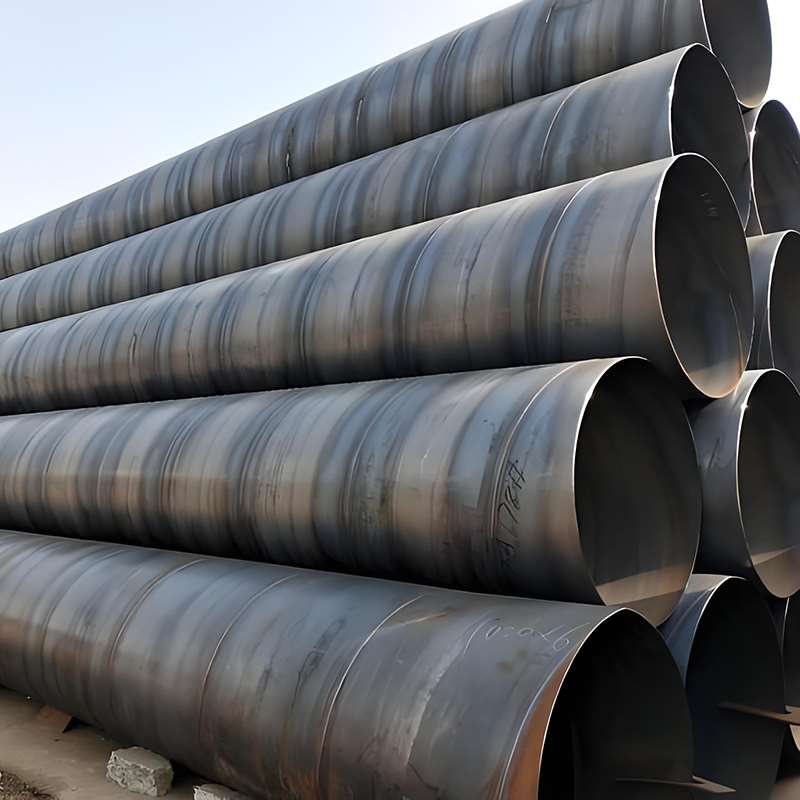
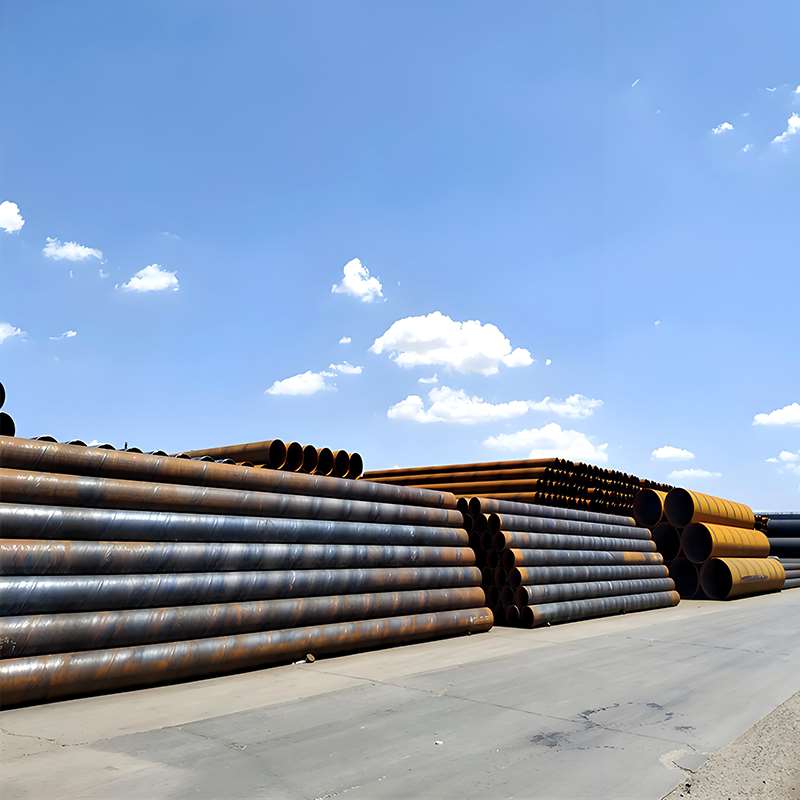
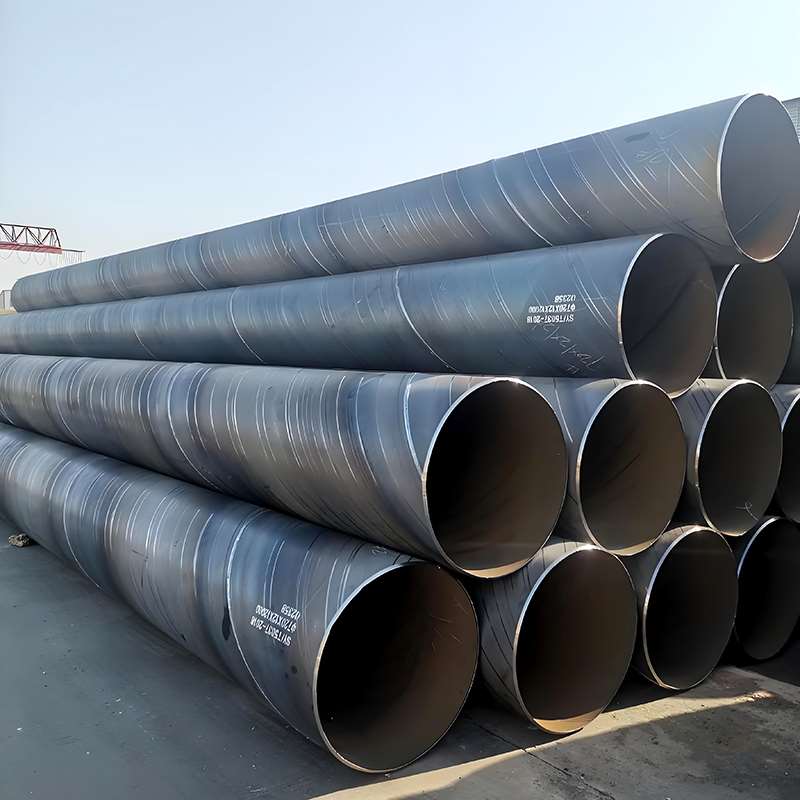
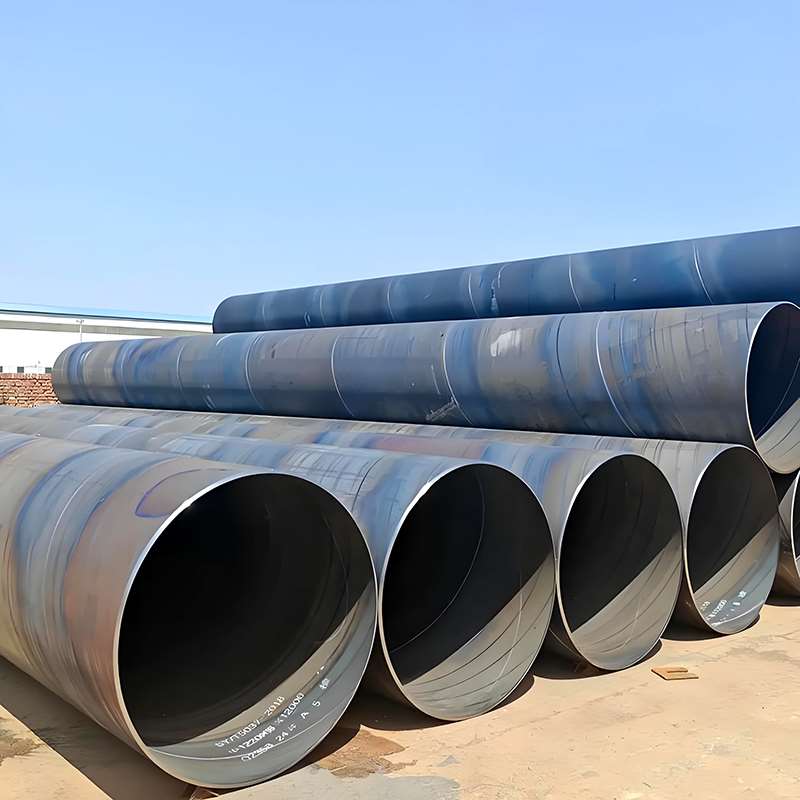
- SSAW (Spiral Seam Submerged Arc Welding): Significant cost advantage in large-diameter, medium- and high-pressure pipelines, but in extremely harsh environments (such as fracture zones), straight seam pipes are usually preferred.
IV. Four Tips to Avoid Pitfalls in Pipe Selection
- Pay Attention to Wall Thickness Tolerances:
Pressure calculation formulas (such as the Barlow formula) rely on accurate wall thickness. When selecting pipes, be sure to confirm whether the supplier provides “negative tolerance” or “positive tolerance,” as this directly affects the pipeline’s maximum allowable operating pressure (MAOP). - Corrosion Protection is Key to Lifespan:
Welded steel pipes for gas are mostly buried underground. Simply choosing the right steel material is not enough. 3PE anti-corrosion coating or FBE (fusion-bonded epoxy powder) is currently the standard configuration and must be requested during the selection stage. - Impact Energy and Temperature:
If the project is located in a frigid northern region, an additional “low-temperature impact test” requirement must be added to the standard to prevent brittle fracture. - Certificate Verification:
Ensure the supplier has an MTC (Material Certificate of Conformity). If it is PSL2 grade, the certificate must include detailed chemical composition analysis and hydrostatic test data.