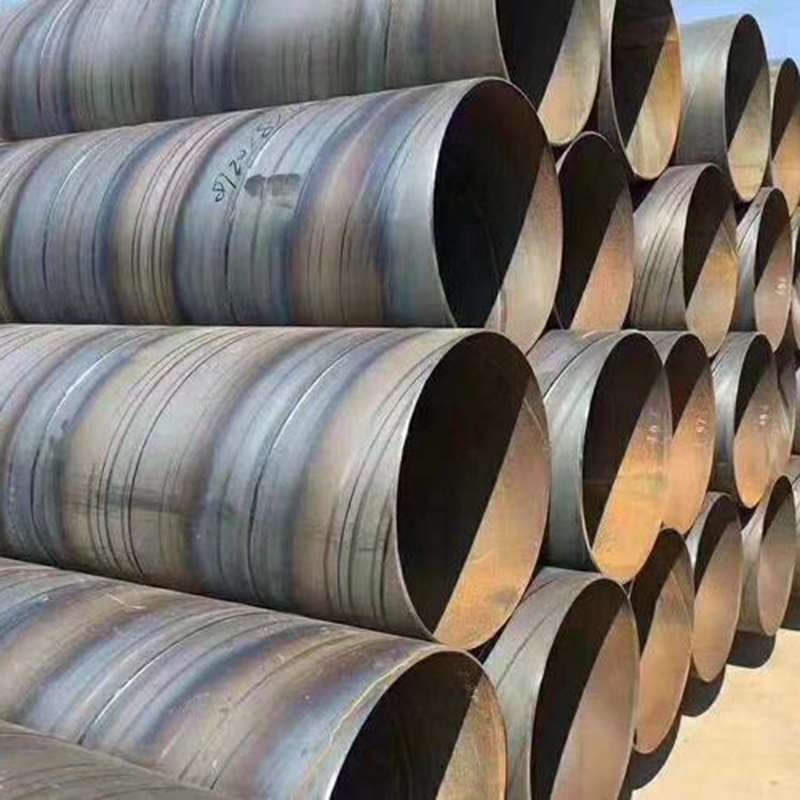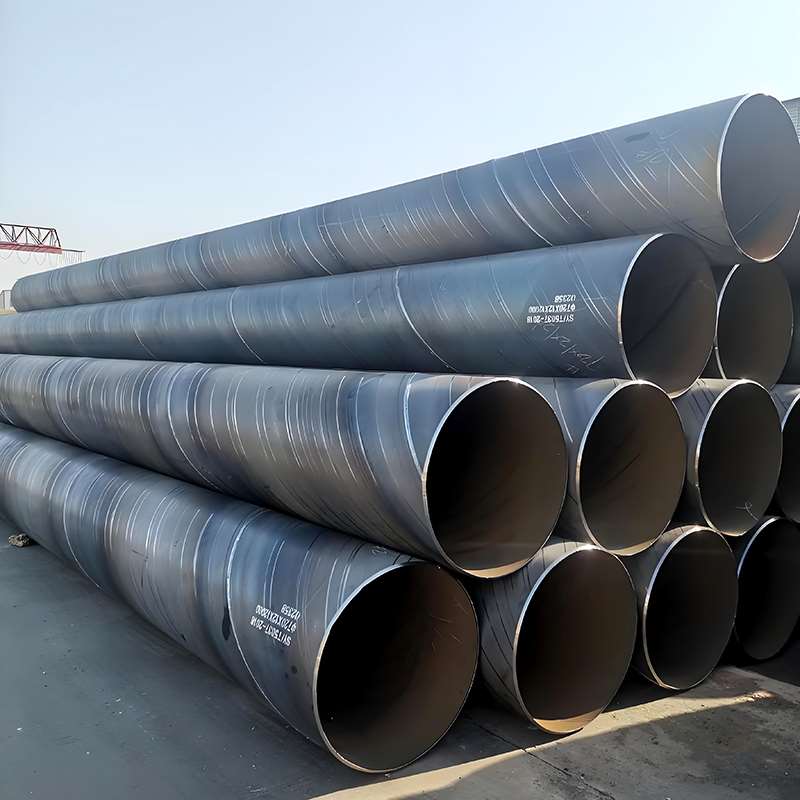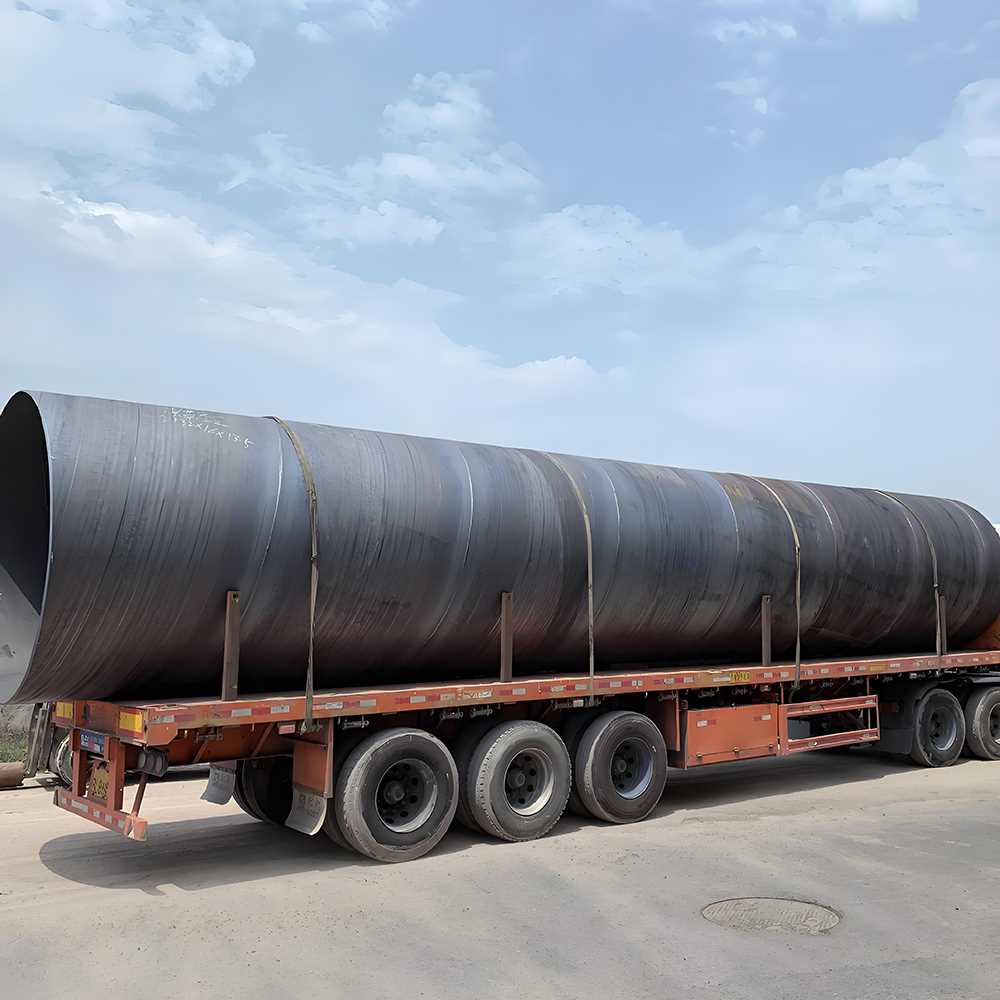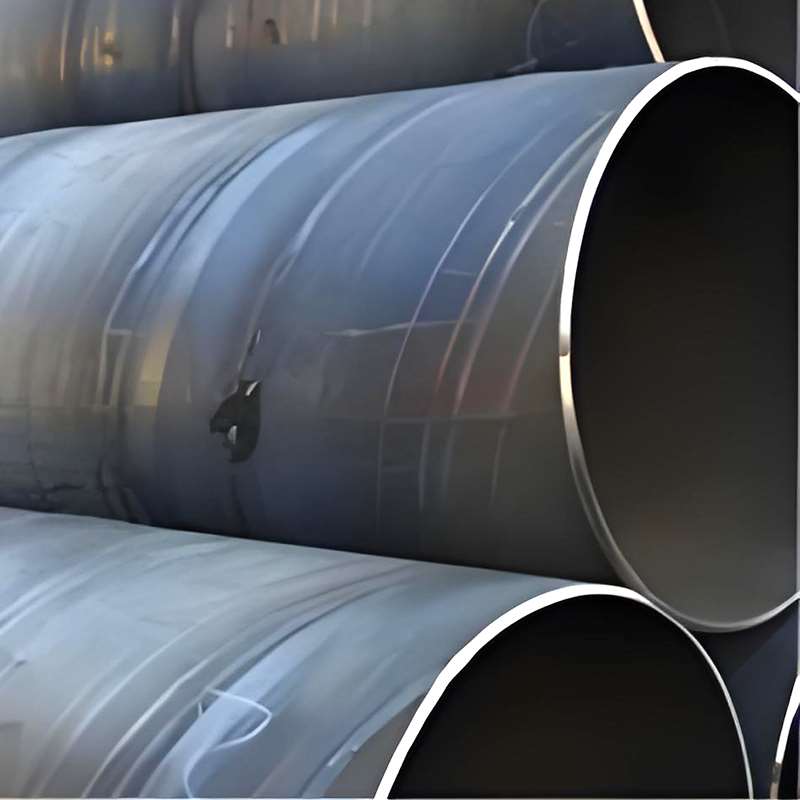
The specifications for spiral welded steel pipes (SSAW) cannot be determined simply by stating a “DN value.” Any ambiguity regarding the outer diameter, wall thickness, length, steel grade, standard, tolerances, or inspection requirements may result in inaccurate quotes, disputes during acceptance, or the inability to install the pipes on-site.
I. Key Dimensional Parameters of Spiral Welded Steel Pipes
| Parameter | Description | Why It Matters in Procurement |
|---|---|---|
| Outside Diameter (OD) | Outside diameter of the steel pipe (mm) | Determines fitting compatibility, installation space, and flow capacity |
| Wall Thickness (WT) | Thickness of the pipe wall (mm) | Determines pressure-bearing capacity, structural strength, unit weight, and cost |
| Length | Length of each steel pipe (mm) | Affects transportation, the number of welded joints, and on-site construction efficiency |
| Nominal Diameter (DN) | Nominal bore size used for engineering designation; not the actual dimension | Used for system selection and cannot directly replace OD |
| Steel Grade | Q235B, Q355B, L245, X52, etc. | Determines mechanical properties and suitability for specific service conditions |
| Pipe End Type | Plain ends, beveled ends, flanged ends, etc. | Affects on-site welding and connection methods |
1. The Difference Between OD and DN
- OD (Outside Diameter): The actual outside diameter of a steel pipe, such as 1020 mm.
- DN (Nominal Diameter): This is merely a system designation; DN1000 does not mean that the steel pipe’s outside diameter is 1000 mm.
Pitfalls to Avoid in Procurement: If you only specify “DN1000 spiral-welded pipe” to a supplier, they may quote based on an outer diameter of 1020, 1016, or some other value—and the price and technical specifications will not be equivalent. You must also provide the OD.
2. Why You Cannot Specify Only DN or Only the Outer Diameter
- Specifying Only DN: The outer diameter is uncertain, making it impossible to match pipe fittings, flanges, anti-corrosion coatings, and lifting plans.
- Providing only the outer diameter: The wall thickness is unknown, making it impossible to determine pressure-bearing capacity or calculate weight and pricing.
- Providing only “φ1020”: This could refer to 1020 × 8 or 1020 × 14, resulting in a significant cost difference.
The correct notation is: outer diameter × wall thickness × length, for example, 1020 × 12 × 12,000 mm.
II. Reference Guide to Common Sizes and Specifications
1. Common Outer Diameters (OD)
| Small-Diameter Series | Medium-Diameter Series | Large-Diameter Series |
|---|---|---|
| 219 mm | 630 mm | 1220 mm |
| 273 mm | 720 mm | 1422 mm |
| 325 mm | 813 mm | 1620 mm |
| 426 mm | 1016 mm | 1820 mm |
| 529 mm | — | 2020 / 2220 / 2420 / 2620 mm |
The typical outer diameter range in the industry is approximately 219 mm to 3,620 mm. Larger diameters can be customized, but forming capabilities and equipment limitations must be confirmed in advance.
2. Common Wall Thicknesses (WT)
Reference for common wall thicknesses:
6, 8, 10, 12, 14, 16, 18, 20, 22, 25 mm
- Low-pressure water supply: Typically 6–10 mm
- Municipal main pipelines: Typically 8–14 mm
- Medium- and high-pressure pipelines: Typically 10–20 mm or greater
- Pile foundation/structural pipes: Thicker than standard, based on stress calculations
3. Common Lengths
- 6 m (commonly used for branch pipes and structural pipes)
- 9 m
- 12 m (most common fixed length)
- 15 m / 18 m (large-diameter and long-distance transmission projects)
- Custom fixed lengths
When purchasing, specify whether the length is a fixed length or a “fixed length + allowable tolerance,” e.g., 12 m fixed length with a tolerance of 0 to +50 mm (as per specific standards).
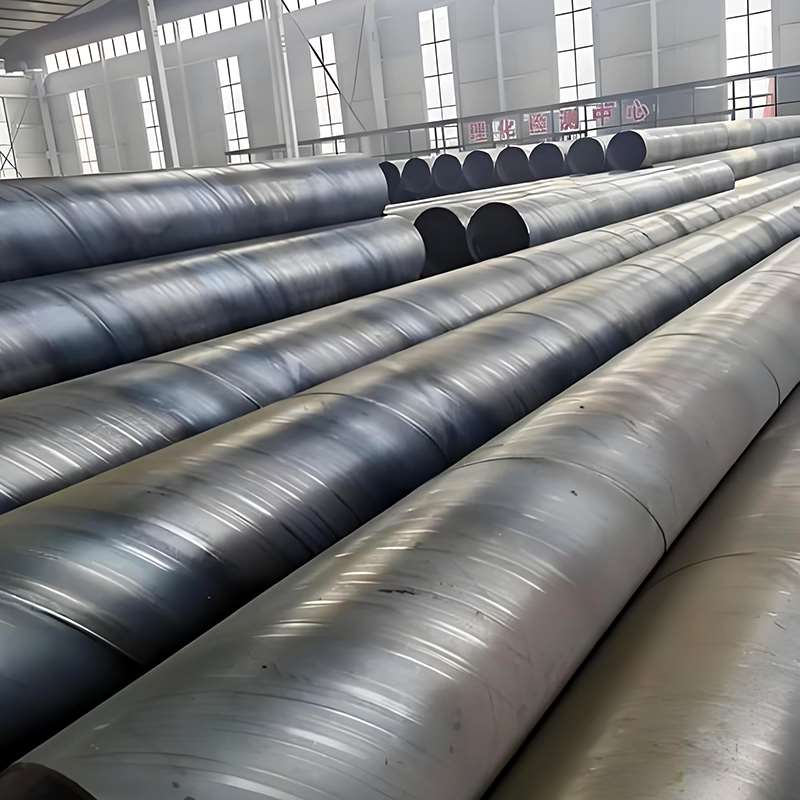
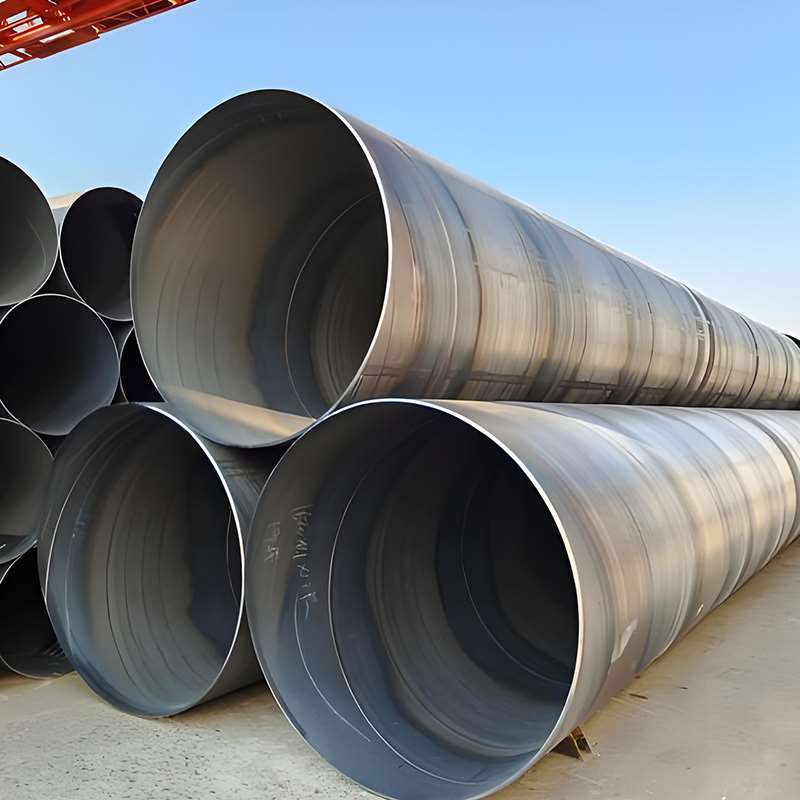
III. How to Select the Outer Diameter and Wall Thickness
1. Determine the Outer Diameter Based on the Application
| Application | Selection Considerations |
|---|---|
| Water Transmission / Water Supply | Calculate the required internal diameter based on the design flow rate and flow velocity, then select a standard outside diameter |
| Drainage / Sewage | Consider flow rate, burial depth, and external loads; a high-pressure steel grade is not necessarily required |
| Steel Pipe Piles | Give greater consideration to diameter, wall thickness, and straightness rather than internal pressure |
| Industrial Pipelines | Select based on the conveyed medium, pressure, temperature, and applicable standards |
| Structural Engineering | Select based on bending resistance and compressive stability calculations; selection should not be based on flow rate alone |
When transporting fluids, the general procedure is as follows:
- Determine the flow rate Q
- Determine the economical flow velocity v (typically 1.5–3 m/s for liquids)
- Calculate the required inner diameter
- Add the wall thickness and calculate the outer diameter
- Match the standard series
2. Pipe wall thickness should not be determined arbitrarily; the following factors should be considered:
- Design internal or external pressure
- Pipe diameter
- Buried loads, soil pressure, and vehicular loads
- Installation method (buried, overhead, river crossing, pipe jacking)
- Corrosion allowance (e.g., in soil corrosion environments)
- Applicable design codes (GB/T 9711, API 5L, SY/T 5040, etc.)
3. Relationship between Outer Diameter, Wall Thickness, and Inner Diameter
- ID = OD − 2 × WT
Example:
- Outer diameter 1020 mm, wall thickness 12 mm
- Inner diameter = 1020 − 2 × 12 = 996 mm
IV. Steel Grades and Manufacturing Standards
1. Common Steel Grades
| Type | Common Steel Grades | Typical Applications |
|---|---|---|
| Carbon Structural Steel | Q235B, Q355B | Water supply and drainage, structural applications, and piling |
| Line Pipe Steel | L245 / Grade B, L290 / X42, L360 / X52, L415 / X60 | Oil and gas transmission |
| High-Grade Steel | X65, X70, X80 | Long-distance, high-pressure pipelines (subject to confirmation of manufacturing capabilities) |
2. Common Standards
| Standard | Applicable Applications |
|---|---|
| GB/T 3091 | Welded steel pipes for low-pressure fluid service, including water, gas, and structural applications |
| SY/T 5037 | Spiral welded steel pipes for general fluid transmission |
| GB/T 9711 | Steel line pipes for the petroleum and natural gas industries, classified into PSL1 and PSL2 |
| API 5L | International standard for steel line pipes used in the oil and gas industry, classified into PSL1 and PSL2 |
V. How to Calculate the Weight of Spiral Welded Pipes
1. Formula for Theoretical Weight
W = 0.02466 × (OD − WT) × WT
- W: Theoretical weight per meter, kg/m
- OD: Outer diameter, mm
- WT: Wall thickness, mm
2. Calculation Example: 1020 × 12 mm
- W = 0.02466 × (1020 − 12) × 12
- W = 0.02466 × 1008 × 12 ≈ 298.49 kg/m
Theoretical weight of a single 12-meter length:
- 298.49 × 12 ≈ 3581.88 kg ≈ 3.58 t
3. Theoretical weight ≠ actual weighed weight
Factors affecting actual weight:
- Deviations in actual outer diameter and wall thickness
- Differences in steel density
- Length errors
- Amount of material removed during beveling
- Weight of anti-corrosion coatings (3PE and FBE increase weight)
- Whether pipe end fittings are included
The procurement contract must clearly specify the settlement method:
- Theoretical weight calculation
- Actual weighed weight
- Permissible deviation from theoretical weight (e.g., ±7.5%)
VI. How to Write a Purchase Order Without Errors
1. Required Technical Information
- Product Name: SSAW Steel Pipe / Spiral Submerged Arc Welded Steel Pipe
- Outer Diameter (OD)
- Wall Thickness (WT) (Specify negative tolerance requirements, e.g., “In accordance with API 5L PSL2, negative tolerance not exceeding -8%”)
- Length and Length Tolerance (e.g., “12,000 mm, tolerance 0 to +50 mm”)
- Steel Grade
- Applicable Standard and Version (e.g., GB/T 9711-2017 PSL2)
- Quantity (number of pipes / metric tons)
- Pipe End Preparation (bevel angle, blunt end)
2. Requirements for On-Demand Replenishment
- Internal and External Corrosion Protection: 3PE / FBE / TPEP / Epoxy Coal Tar
- Coating Thickness and Leak Detection Voltage
- NDT Requirements: UT Ratio, RT Ratio
- Hydrostatic Test Pressure and Pressure Holding Time
- Third-Party Inspection (SGS / BV / TÜV)
- Material Certificates, Furnace Batch Number Traceability
- Spray-Painted Markings, Packaging, End Protection
3. Example of Complete Specifications
| Item | Specification |
|---|---|
| Product | SSAW Steel Pipe |
| Outside Diameter (OD) | 1020 mm |
| Wall Thickness (WT) | 12 mm (negative tolerance in accordance with API 5L PSL2) |
| Length | 12,000 mm (tolerance: 0 to +50 mm) |
| Steel Grade | Q355B |
| Standard | As per the edition specified in the contract |
| Pipe Ends | Beveled ends, bevel angle: 30°–35°, root face: 1.6 mm |
| Corrosion Protection | As per project requirements |
| Inspection | 100% ultrasonic testing (UT); hydrostatic testing of each pipe; Mill Test Certificates (MTCs) to be provided |
VII. FAQ: Common Procurement Questions
1. What is the maximum diameter for spiral welded pipes?
The common industry upper limit is approximately 3,620 mm. Larger diameters are possible for special projects, but this depends on the manufacturer’s forming equipment and transportation conditions.
2. What is the minimum wall thickness?
The common lower limit for production is approximately 4–6 mm. However, forming large-diameter pipes with thin walls is challenging and must be confirmed based on the steel grade and applicable standards.
3. What are the standard lengths?
Standard lengths are 6 m, 9 m, and 12 m; 12 m is the most common, but custom lengths can be produced based on project requirements.
4. What is the difference between DN and OD?
DN is the nominal diameter, not the actual dimension; OD is the actual outer diameter of the steel pipe. Purchasing must specify the OD.
5. How is the weight calculated?
Use the formula:
- W = 0.02466 × (OD – WT) × WT
The result is the theoretical weight per meter; settlement is based on the weight calculation method specified in the contract.
6. Can non-standard dimensions be customized?
Outer diameter, wall thickness, length, beveling, and corrosion protection can be customized, but equipment capacity, dies, delivery time, and compliance with standards must be confirmed in advance.