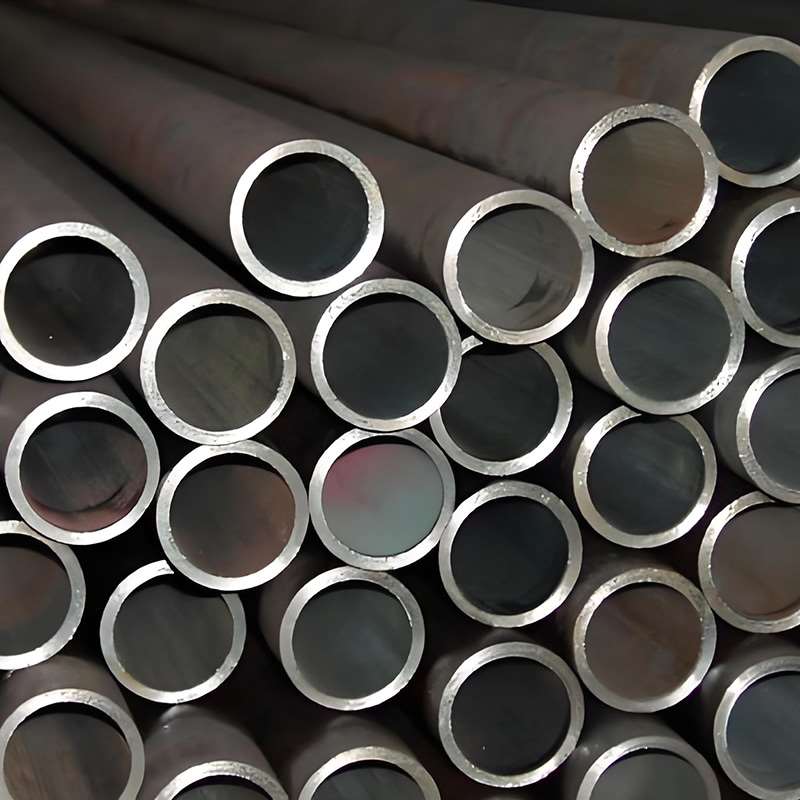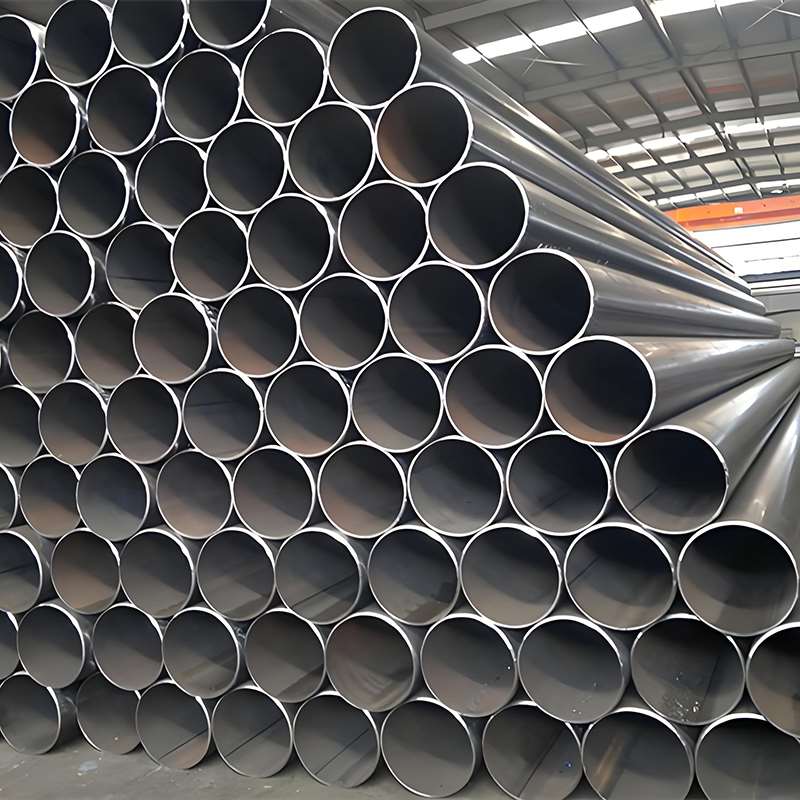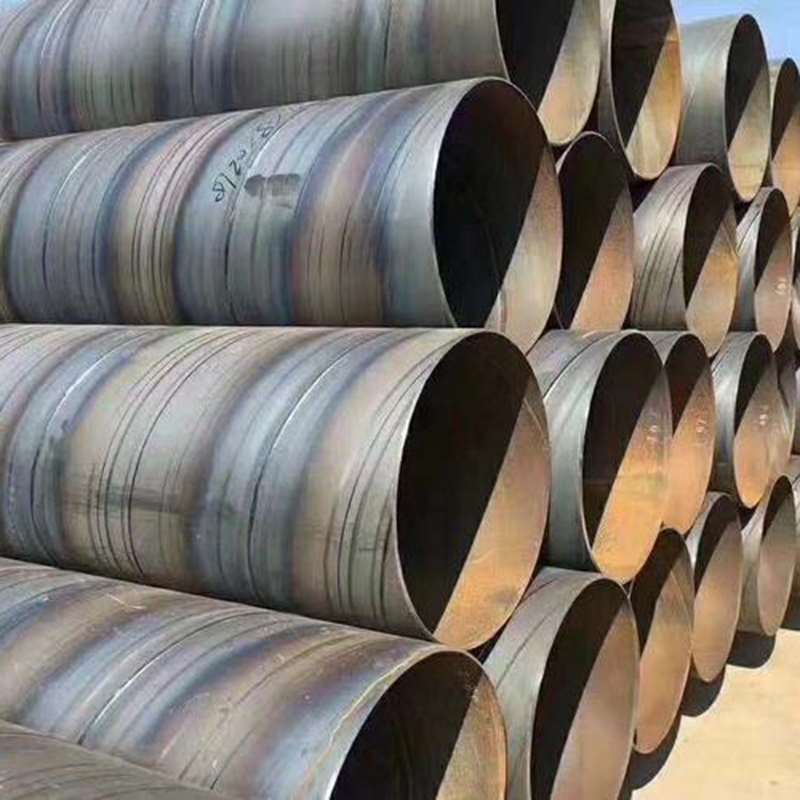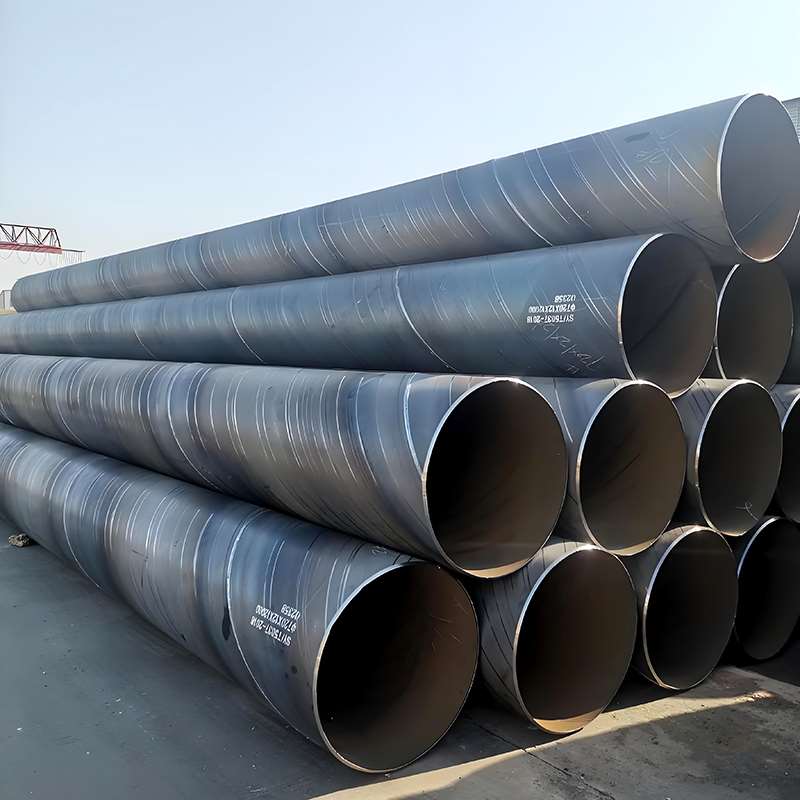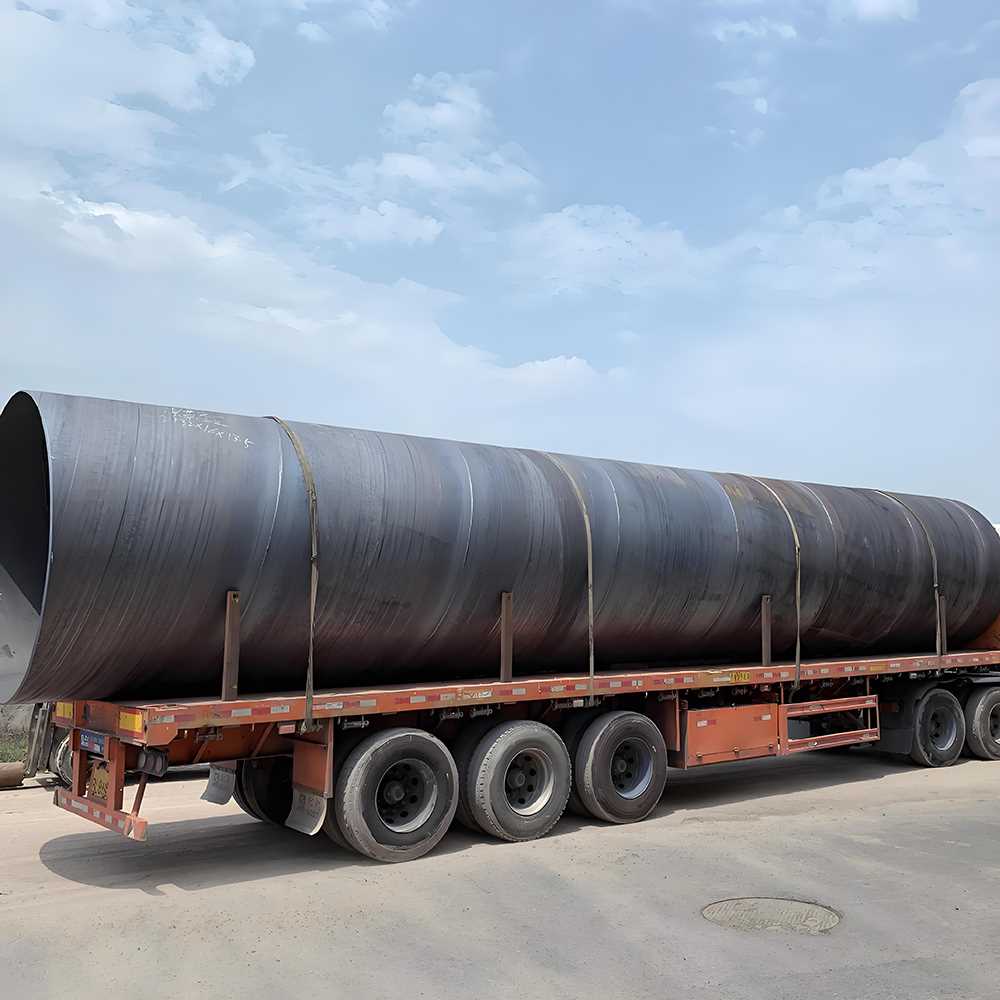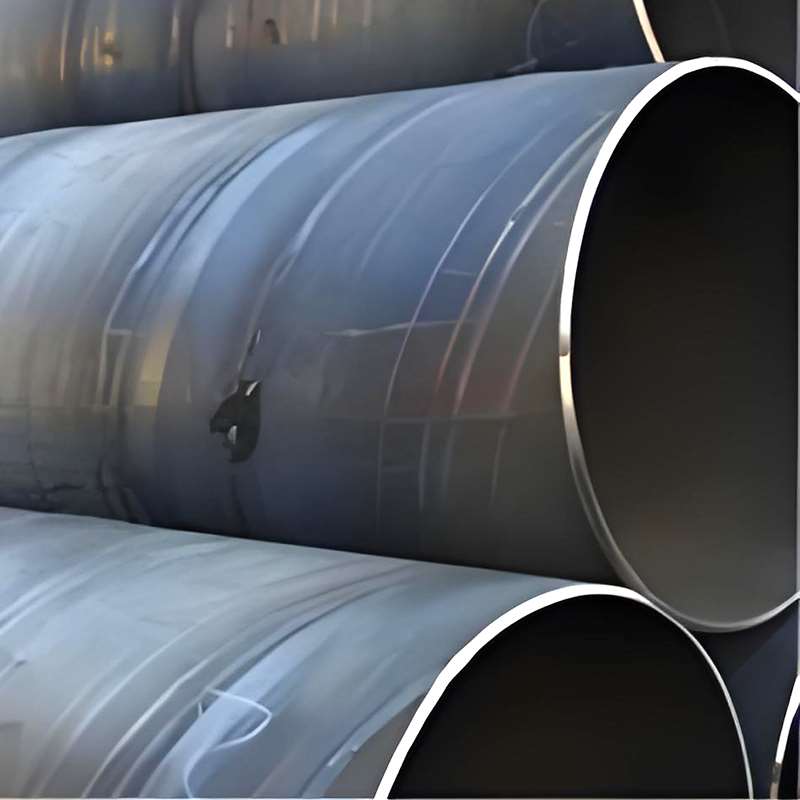
In modern urban infrastructure, energy transportation, and large-scale hydraulic engineering, there is a type of steel pipe that appears almost everywhere: it features an extra-large diameter and a weld seam spiraling around the pipe body like a vortex. This is known as a Large Diameter Spiral Welded Steel Pipe (Spiral Submerged Arc Welded Pipe, abbreviated as SSAW).
For those new to pipeline engineering or involved in project procurement, understanding its characteristics, manufacturing process, and applications not only enhances technical knowledge but also directly impacts project safety and cost efficiency.
1. What Is a Spiral Welded Pipe?
The manufacturing process of spiral welded pipes is highly distinctive. If traditional longitudinal welded pipes are made by “rolling a steel plate and welding it into a straight seam,” then spiral welded pipes are produced by forming low-carbon structural steel or low-alloy structural steel strips into a pipe blank at a specific helical angle (also known as the forming angle), followed by welding along the spiral seam.
The core process is Submerged Arc Welding (SAW). This welding method is performed beneath a layer of granular flux, meaning the arc is not exposed. As a result, the welding quality is extremely stable, producing dense and aesthetically uniform weld seams.
2. Core Advantages: Why Is It Preferred for Large Diameters?
Large diameter spiral welded steel pipes dominate municipal and industrial pipeline networks due to several irreplaceable advantages:
1. Flexibility of “Producing Large Diameters from Narrow Coils”
This is the most distinctive technical advantage. In LSAW pipe production, the pipe diameter is limited by the width of the steel plate. For example, producing a pipe with a diameter of 2.5 meters requires an extremely wide plate.
In contrast, spiral welded pipes can adjust the forming angle of the steel strip to produce large-diameter pipes from relatively narrow coils. This flexibility makes them far more cost-effective and practical for ultra-large diameters (such as DN2000 and above).
2. Continuous Production and High Efficiency
Spiral welded pipes are manufactured through a continuous process of “dynamic forming and static welding.” As long as steel coils are continuously fed into the system, finished pipes of fixed lengths (such as 12 meters or 18 meters) can be produced without interruption. This highly automated process significantly reduces labor and production time.
3. Enhanced Structural Strength
The spiral weld seam is evenly distributed along the pipe body. From a mechanical perspective, when internal pressure is applied, stress is distributed in both circumferential and axial directions. The angled spiral seam avoids alignment with the principal stress direction that bears the highest load. In addition, the spiral weld acts as a form of reinforcement, improving the overall rigidity of the pipe.
3. Technical Specifications and Standards: The “Passport” for Selection
Understanding applicable standards is essential when selecting large diameter spiral welded steel pipes, as standards define quality levels and application boundaries:
SY/T 5037 (Industry Standard):
Primarily used for low-pressure fluid transportation, such as general water supply, drainage, and dredging pipelines.
GB/T 9711 (Chinese National Standard):
Applicable to the oil and gas industry. It imposes strict requirements on chemical composition, mechanical properties, and non-destructive testing (such as radiographic and ultrasonic inspection).
API 5L (American Standard):
An internationally recognized standard for oil and gas transmission pipelines. It is essential for entering global markets and participating in large-scale energy projects.
4. Anti-Corrosion Systems: The “Protective Armor” of Pipelines
Since large diameter spiral welded steel pipes are often buried underground or exposed to humid environments, corrosion protection is critical to service life. Common anti-corrosion systems include:
3PE Coating:
A three-layer system consisting of epoxy powder, adhesive, and polyethylene. It offers the best overall performance, with a service life of 30 to 50 years.
Coal Tar Epoxy (Potable Water Grade):
Cost-effective and fast to apply, commonly used in municipal water supply systems.
TPEP Coating:
Combines an external 3PE layer with an internal fusion-bonded epoxy coating, providing both internal and external protection. It significantly reduces flow resistance and prevents internal scaling.
5. Practical Application Scenarios
If you are managing a project, how do you determine whether to use large diameter spiral welded steel pipes?
1. Municipal Water Supply and Sewage Systems
For primary urban water transmission pipelines (diameters ranging from 800 mm to 3000 mm), spiral welded pipes are a cost-effective choice. Their long single-pipe length reduces the number of weld joints, minimizing leakage risks.
2. Energy Transportation (Oil & Gas)
In medium- to low-pressure natural gas branch lines or crude oil transportation, spiral welded pipes are widely used. Although LSAW pipes may be preferred for ultra-high-pressure trunk lines, the application scope of spiral welded pipes continues to expand as quality improves.
3. Structural Piling Applications
In bridge construction, port foundations, and high-rise building piling systems, spiral welded pipes are used as steel pipe piles. They not only bear vertical loads but also increase friction with the surrounding soil due to the spiral seam, enhancing load-bearing capacity.
6. Procurement and Inspection: Key Considerations
When purchasing large diameter spiral welded steel pipes, pay close attention to the following factors:
Weld Misalignment (Hi-Lo):
Improper control during forming may result in misalignment. National standards impose strict limits, as excessive deviation can significantly reduce weld strength.
Non-Destructive Testing Reports:
For large-diameter pipelines, suppliers must provide proof of 100 percent radiographic inspection or automated ultrasonic testing. Internal defects such as slag inclusions or porosity pose serious safety risks.
Wall Thickness Tolerance:
Some low-end manufacturers may use steel strips with negative thickness tolerance. Procurement contracts should clearly specify actual wall thickness requirements to avoid the risk of pipe failure due to insufficient thickness.