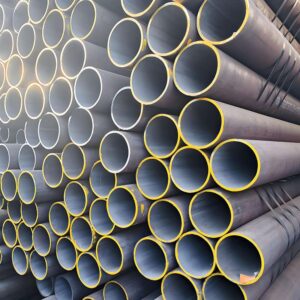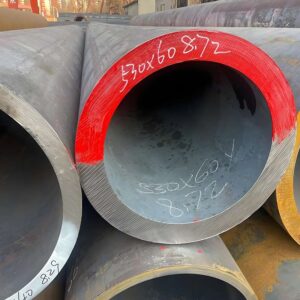
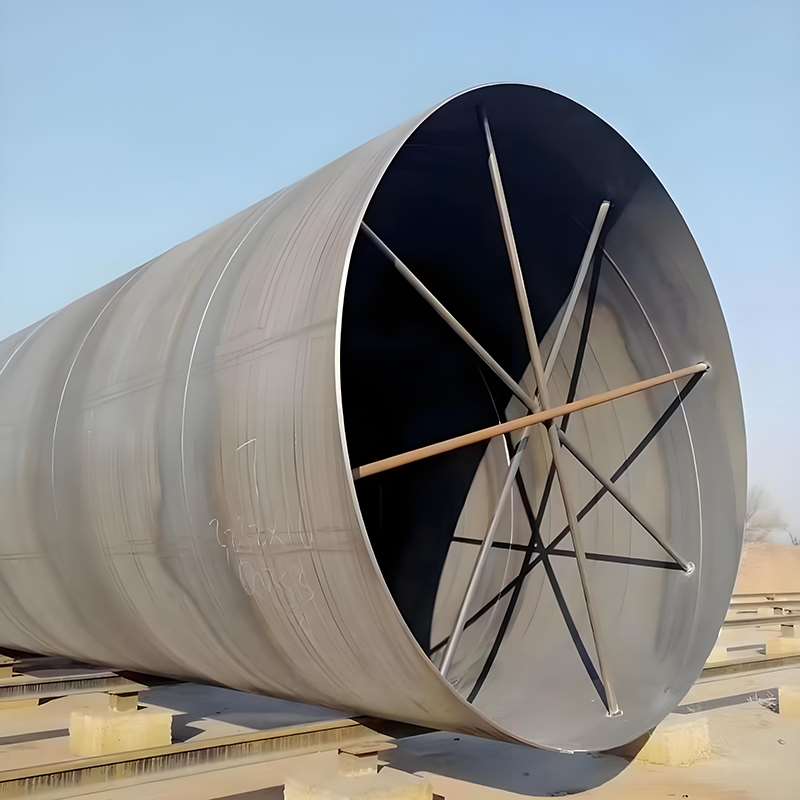
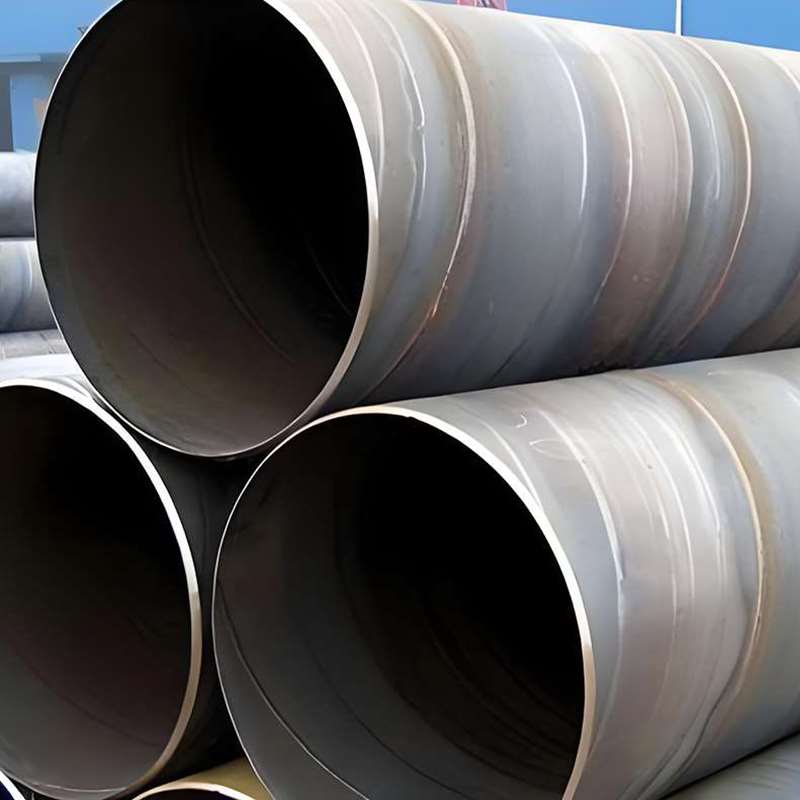
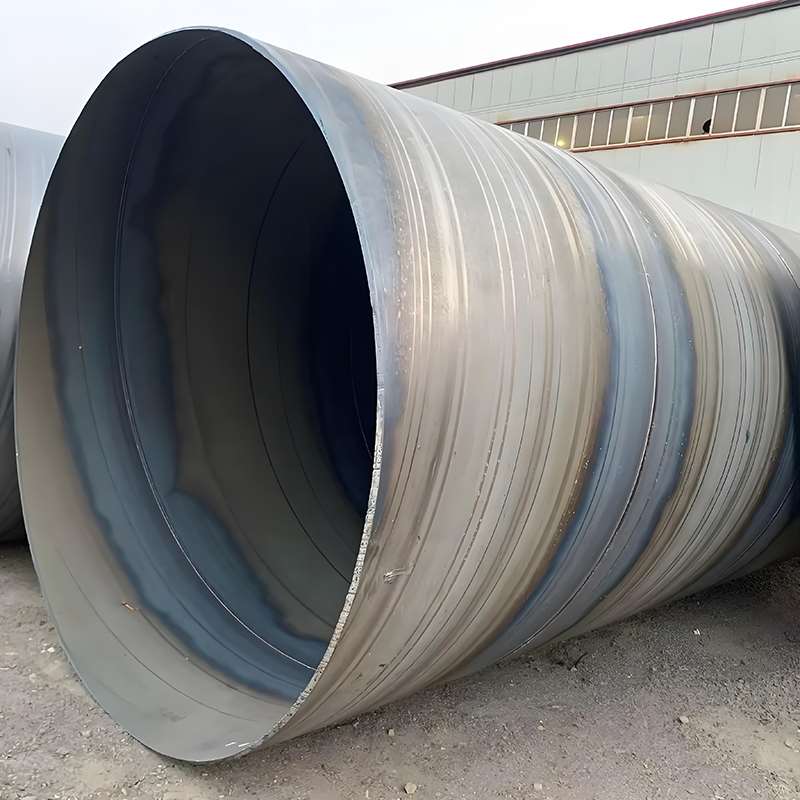
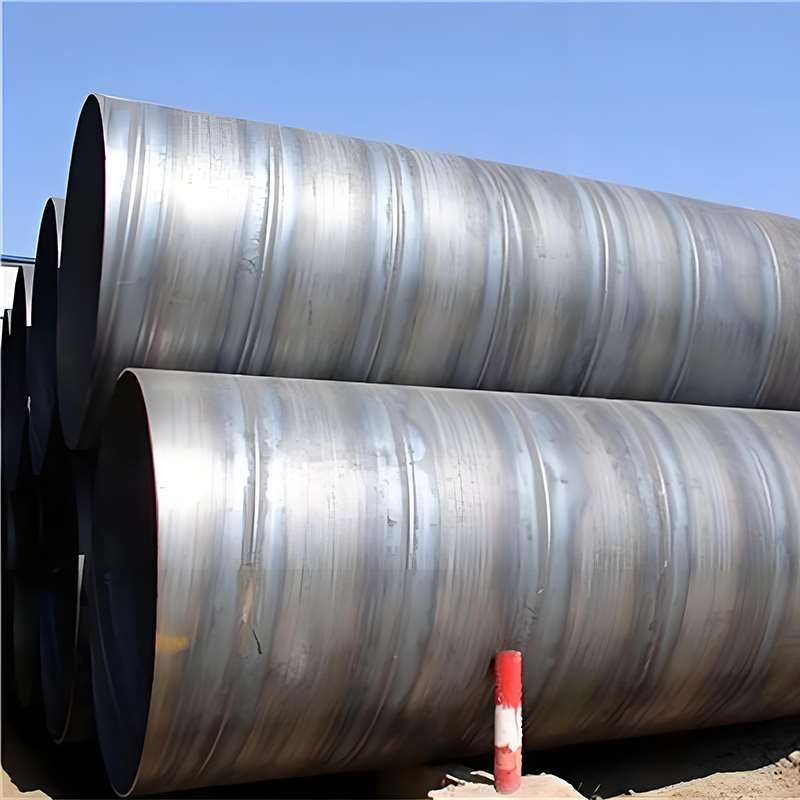
I. Definition of Large-Diameter Spiral Welded Steel Pipe
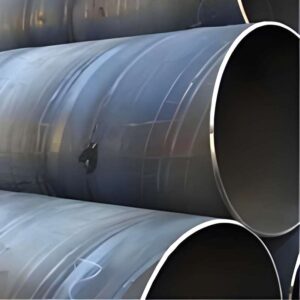
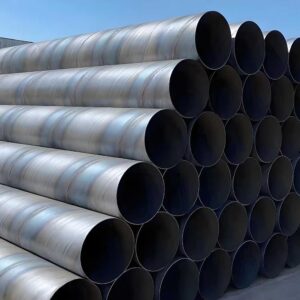
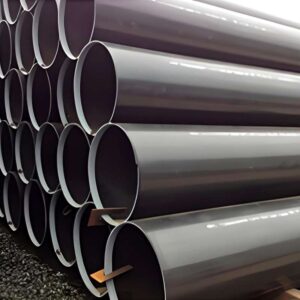
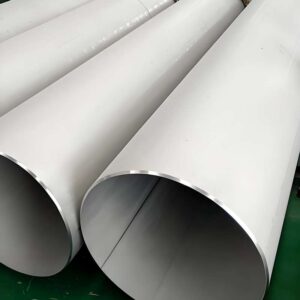
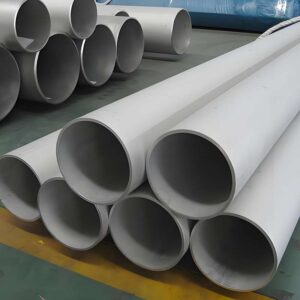
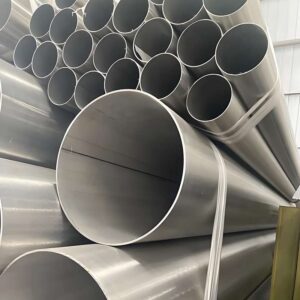
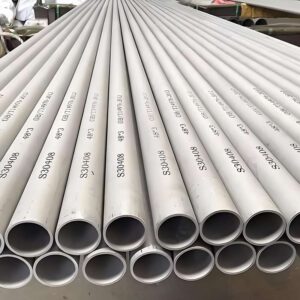
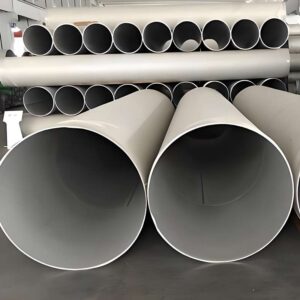
Large-diameter spiral welded steel pipe is a type of circular steel pipe produced by winding steel strips or steel plates into pipe blanks along a spiral direction, followed by automatic welding to form continuous spiral welds. It is a type of welded steel pipe characterized by its ability to produce pipes of extremely large diameters, and is widely used in engineering fields such as water supply, gas transmission, oil transportation, petrochemicals, and building structures.
Core Features:
Production Process: Steel plate rolling → Forming → Automatic spiral welding → Annealing/Straightening → Surface treatment.
Diameter Range: Typically outer diameter 500mm – 3000mm, customizable for larger sizes.
Wall Thickness Range: Commonly 6mm – 50mm, customizable according to project requirements.
Material grades: Q235B, Q345B, X42–X70, etc., to meet different pressure and strength requirements.
Weld characteristics: Welds are arranged in a spiral pattern along the pipe body, with continuous and uniform welding, ensuring high strength.
Applicable standards: GB/T 9711, API 5L, ASTM A252, etc.
Key advantages:
Large diameter: Large pipes with a diameter of over 3 meters can be easily produced.
High strength: The spiral welds are uniform and the mechanical properties are reliable.
High adaptability: Suitable for high-pressure, medium-pressure, or low-pressure transmission pipes.
Cost-effectiveness: Compared with seamless pipes of the same diameter, the production cost is low, and it can meet the needs of long-distance transmission.
II. Common types of corrosion protection for large-diameter spiral welded steel pipes
| No. | Anti-corrosion Type | Characteristics | Application Scenarios |
|---|---|---|---|
| 1 | Fusion Bonded Epoxy (FBE) | Strong adhesion, abrasion resistance, chemical corrosion resistance | Buried pipelines, oil pipelines, natural gas pipelines |
| 2 | Bitumen Coating | Waterproof, corrosion resistant, highly resistant to soil chemicals | Buried pipelines, water pipelines |
| 3 | Polyethylene (PE) Coating | Excellent insulation, corrosion and impact resistance | Buried pipelines, chemical medium transport |
| 4 | Epoxy-Polyethylene Dual-layer Coating (3PE / 2PE) | Inner epoxy layer for rust prevention, outer PE layer for protection, superior overall performance | High-pressure oil and gas pipelines |
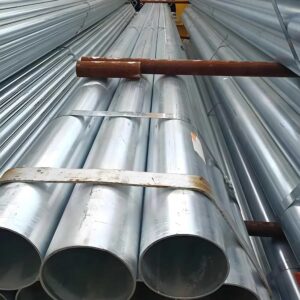
| 5 | Hot-dip Galvanizing | Economical, resistant to atmospheric corrosion | Overhead pipelines, structural pipes |
| 6 | Plastic Coating (PE / Epoxy Liner) | Dual-layer anti-corrosion inside and outside, anti-fouling | Drinking water, chemical medium pipelines |
| 7 | Epoxy Coal Tar | Chemical and soil moisture corrosion resistance | Seawater and sewage transport pipelines |
III. Common connection methods for large-diameter spiral welded steel pipes
(1) Butt welding: The most commonly used connection method, where the pipe ends are directly welded together. This method offers high weld strength and good sealing properties, making it suitable for high-pressure oil, gas, and water pipelines.
(2) Flange connection: This method uses flanges and bolts for connection, allowing for disassembly and easy maintenance. It is suitable for valve, pump, and equipment interfaces.
IV. Mechanical Properties Table for Large Diameter Spiral Welded Steel Pipes
| No. | Parameter | Q235B | Q345B | X42 | X52 | X60 | X70 | Description |
|---|---|---|---|---|---|---|---|---|
| 1 | Yield Strength (MPa) | 235 | 345 | 290 | 360 | 415 | 480 | Stress at which the pipe begins to deform plastically |
| 2 | Tensile Strength (MPa) | 375–500 | 470–630 | 450–580 | 480–620 | 510–670 | 540–710 | Maximum load-bearing capacity before fracture |
| 3 | Elongation (%) | ≥26 | ≥21 | ≥22 | ≥20 | ≥20 | ≥18 | Percentage elongation before fracture in tensile test |
| 4 | Impact Toughness (J) | ≥27 (20 °C) | ≥27 (−20 °C) | ≥27 (−20 °C) | ≥27 (−20 °C) | ≥27 (−20 °C) | ≥27 (−20 °C) | Impact resistance ensuring safety at low temperatures |
| 5 | Bend Performance | Good | Good | Good | Good | Good | Good | No cracks after pipe bending |
| 6 | Hardness (HB) | 120–180 | 140–200 | 130–190 | 140–210 | 150–220 | 160–230 | Influences machinability and weldability |
| 7 | Weldability | Good | Good | Good | Good | Good | Good | Suitable for spiral automatic or manual welding |
| 8 | Density (kg/m³) | 7850 | 7850 | 7850 | 7850 | 7850 | 7850 | Basic physical property of steel |
| 9 | Elastic Modulus (GPa) | 200 | 200 | 200 | 200 | 200 | 200 | Elastic deformation capability |
| 10 | Allowable Stress (MPa) | 117.5 | 172.5 | 145 | 180 | 207.5 | 240 | Service pressure calculated with safety factor |
V. Pressure Rating Table for Large Diameter Spiral Welded Steel Pipes
| Material | Wall Thickness (mm) | Nominal OD ≤1000 mm | Nominal OD 1000–2000 mm | Nominal OD 2000–3000 mm | Remarks |
|---|---|---|---|---|---|
| Q235B | 6 | 0.6 MPa | 0.5 MPa | 0.4 MPa | Low-pressure water transmission or general structural use |
| Q235B | 8 | 0.8 MPa | 0.7 MPa | 0.6 MPa | Common for low-pressure pipelines |
| Q235B | 10 | 1.0 MPa | 0.9 MPa | 0.8 MPa | Building and structural pipe |
| Q345B | 8 | 1.2 MPa | 1.0 MPa | 0.9 MPa | Medium-pressure water or gas transmission |
| Q345B | 10 | 1.5 MPa | 1.3 MPa | 1.1 MPa | General engineering pipeline |
| Q345B | 12 | 1.8 MPa | 1.5 MPa | 1.3 MPa | High-demand pipeline |
| X42 | 10 | 2.0 MPa | 1.7 MPa | 1.5 MPa | High-strength oil transmission pipe |
| X42 | 12 | 2.5 MPa | 2.0 MPa | 1.8 MPa | High-pressure pipeline |
| X52 | 12 | 3.0 MPa | 2.5 MPa | 2.0 MPa | Common for oil & gas transmission |
| X52 | 14 | 3.5 MPa | 3.0 MPa | 2.5 MPa | High-pressure engineering project |
| X60 | 14 | 4.0 MPa | 3.5 MPa | 3.0 MPa | High-strength oil & gas transmission |
| X60 | 16 | 4.5 MPa | 4.0 MPa | 3.5 MPa | High-pressure pipeline |
| X70 | 16 | 5.0 MPa | 4.5 MPa | 4.0 MPa | Special high-pressure engineering |
| X70 | 18 | 5.5 MPa | 5.0 MPa | 4.5 MPa | Extremely high-pressure environment |
Notes:
(1) Pressure capacity is calculated based on the design safety factor. Actual use may be adjusted slightly according to specific project requirements.
(2) The table lists only commonly used wall thickness ranges. Customization is available for extra-large wall thicknesses or special requirements.
(3) Q series pipes are suitable for low- and medium-pressure pipelines, while X series pipes are suitable for medium- and high-pressure pipelines.
(4) Pressure capacity decreases slightly with increasing outer diameter. Selection should be based on wall thickness and material.
VI. Procurement Guide for Large-Diameter Spiral Welded Steel Pipes
(1) Determine the Application and Pressure Rating
Determine the type of pipe based on the project application: water supply, gas transmission, oil transmission, or structural use.
Determine the working pressure and select the appropriate material and wall thickness.
(2) Select the Material
Common materials: Q235B, Q345B, X42, X52, X60, X70.
The Q series is suitable for low-pressure and structural pipes, while the X series is suitable for medium- and high-pressure transmission pipes.
(3) Confirm Specifications and Dimensions
Outer diameter: 500 mm – 3,000 mm, customizable for special requirements.
Wall thickness: 6 mm – 50 mm, selected based on pressure rating and length.
Pipe length: 6 m – 12 m, project-specific splicing or customization available.
(4) Corrosion Protection Requirements
Buried pipelines commonly use: FBE, 3PE, polyethylene coating.
Overhead or general environments: epoxy asphalt or hot-dip galvanizing.
High-pressure or special medium pipelines: double-layer or composite coating.
(5) Selection of Connection Methods
High-pressure and large-diameter pipelines use: butt welding.
Equipment interfaces or valve locations may use: flange connections.
(6) Inspection Standards and Certifications
Domestic standards: GB/T 9711, GB/T 18248, etc.
International standards: API 5L, ASTM A252, EN 10219.
Verify that the supplier has product inspection reports and quality certifications.
(7) Quality Inspection
Mandatory inspections: ultrasonic testing, hydrostatic testing, and visual defect inspection.
Ensure weld quality is uniform with no porosity or cracks.
(8) Supplier Selection
Prioritize suppliers with extensive experience, timely delivery, and comprehensive after-sales service.
Confirm whether they can provide custom specifications, corrosion protection treatment, and transportation solutions.
(9) Logistics and Installation
Large-diameter pipes are heavy; transportation requires flat support to avoid collisions.
Inspect the coating and corrosion protection layer for integrity before installation.
(10) Price and Contract Considerations
Pay attention to unit price, transportation costs, and processing fees.
Clarify delivery time, quality standards, and after-sales service.