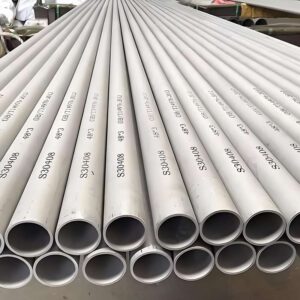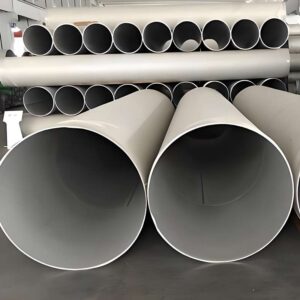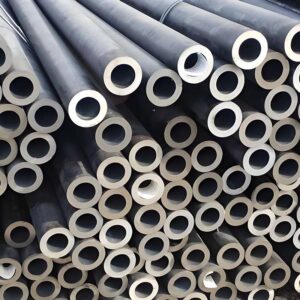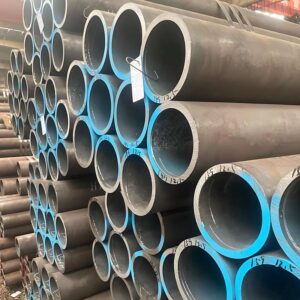
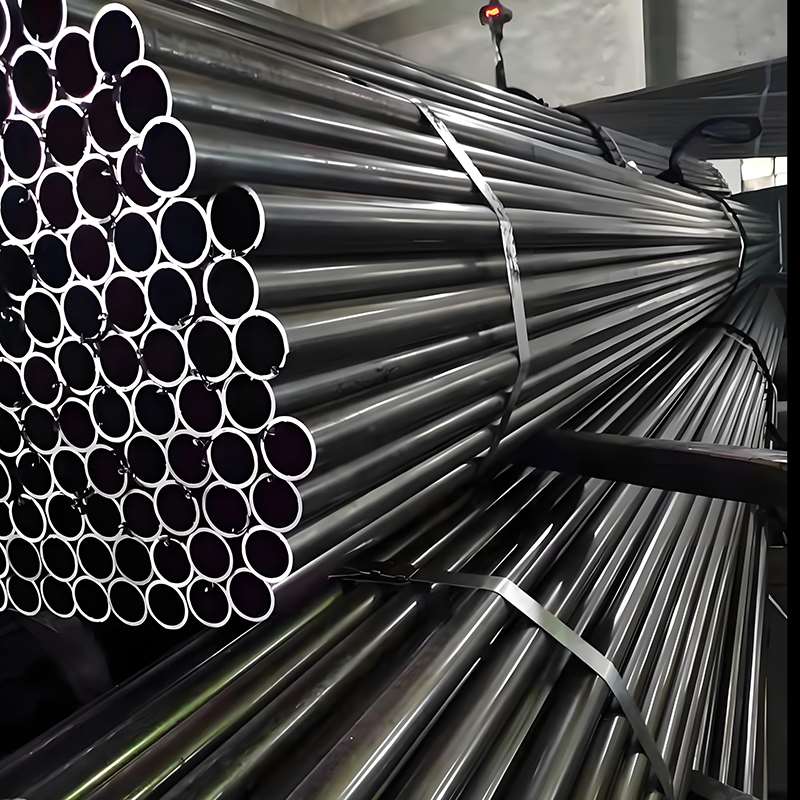
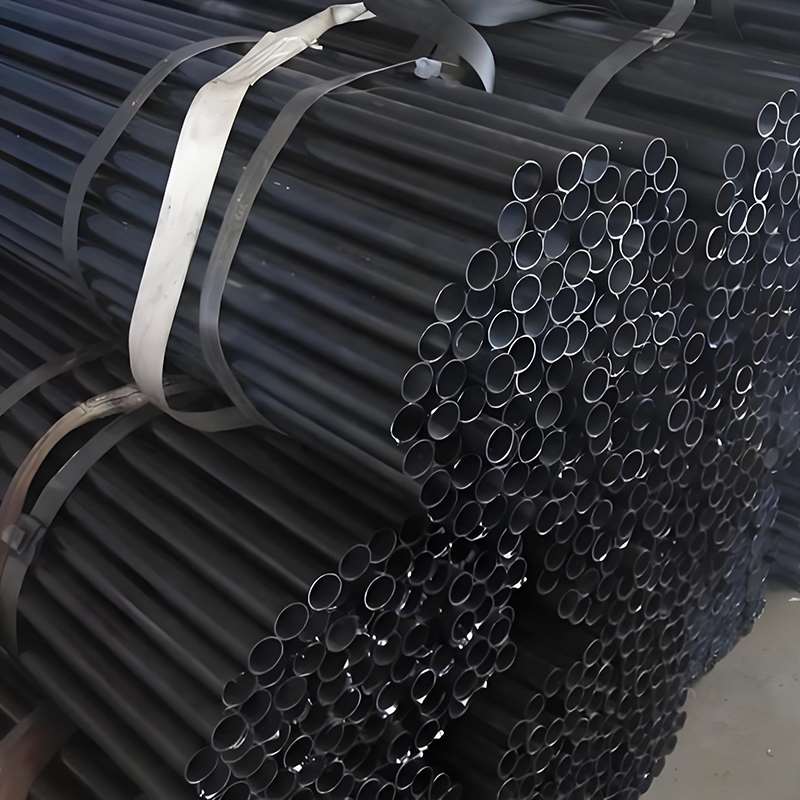
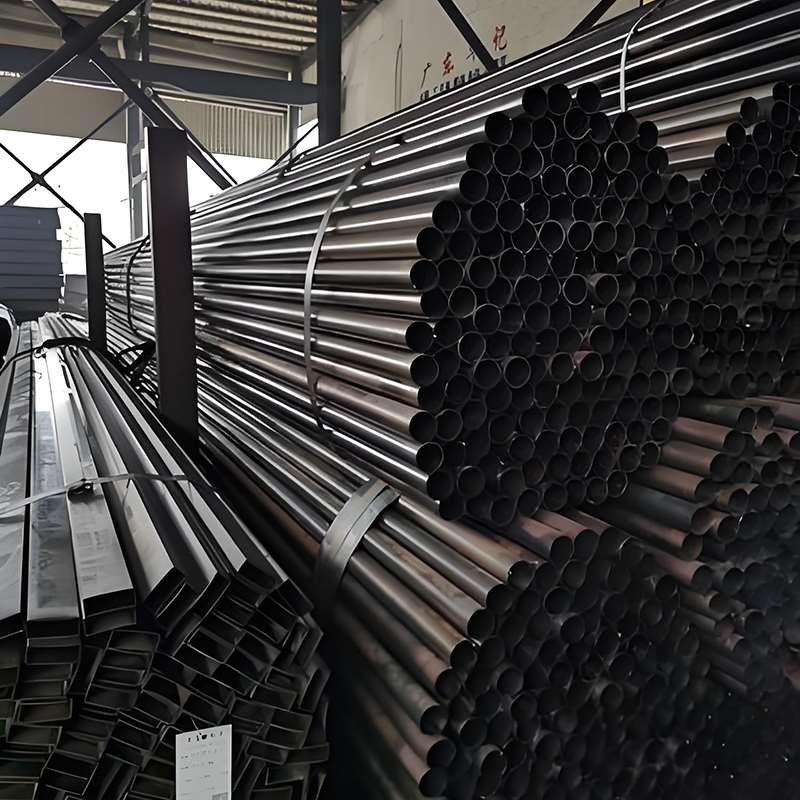
I. What is black welded pipe?
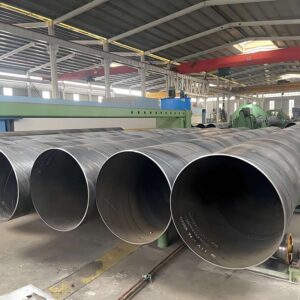
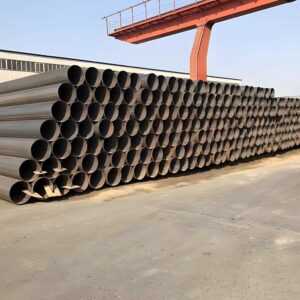
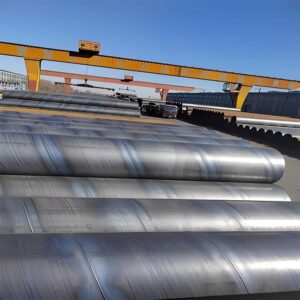
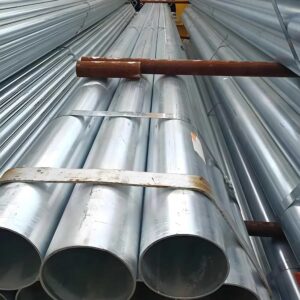
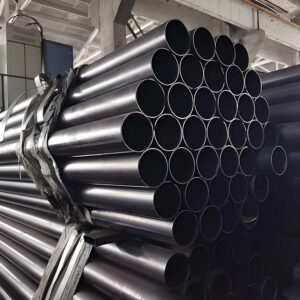
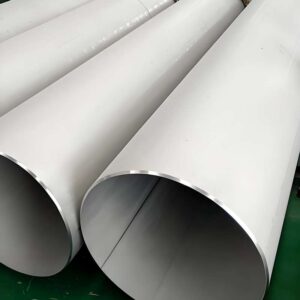
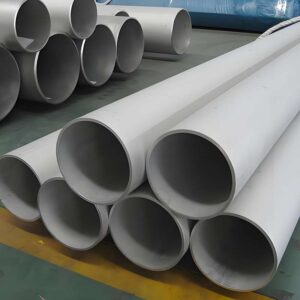
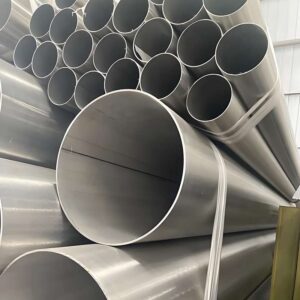
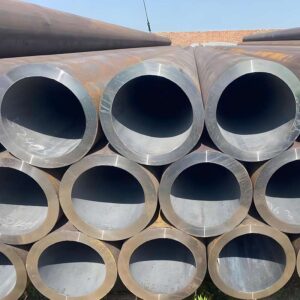
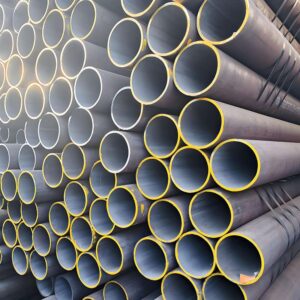
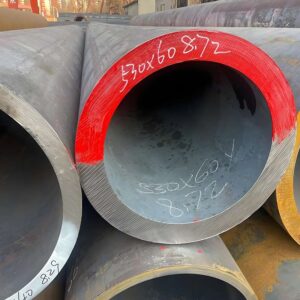
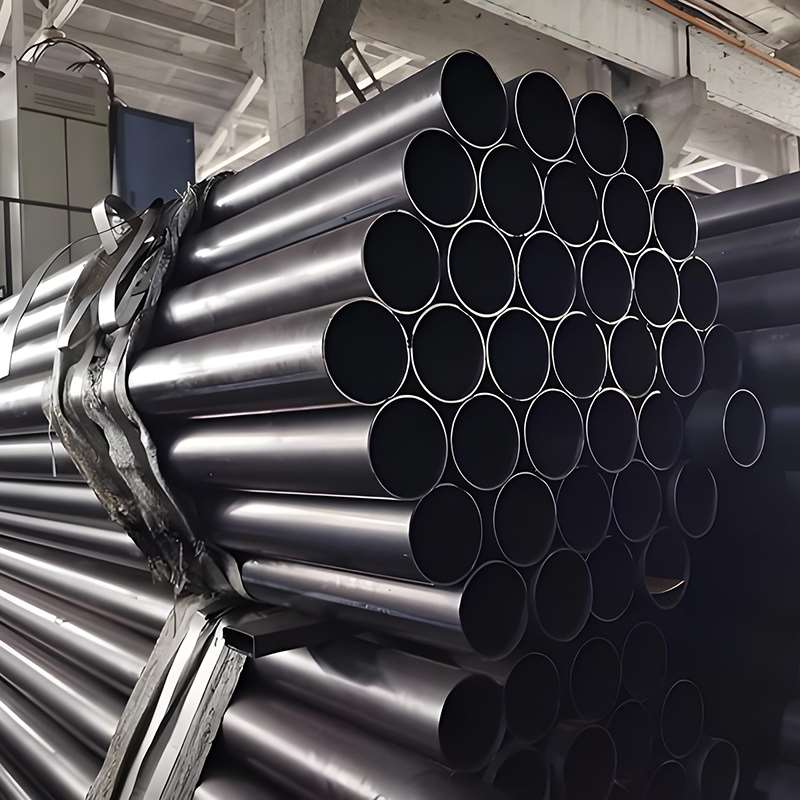
Black welded pipe refers to welded steel pipe that has not undergone galvanization or coating treatment. Its surface typically has a dark gray or black oxide layer, hence the name “black pipe” or “black welded pipe.”
II. Black welded pipe standards and materials
| Standard No. | Standard Name / Scope | Commonly Used Grades |
|---|---|---|
| GB/T 3091 | Welded steel pipes for low-pressure fluid delivery | Q195, Q215, Q235 |
| GB/T 13793 | Longitudinal electric resistance welded steel tubes | Q195, Q215, Q235, Q345 |
| GB/T 6728 | Cold-formed hollow structural sections | Q235, Q345 |
| ASTM A53 | Black and hot-dip galvanized welded and seamless steel pipe | Gr.A, Gr.B |
| ASTM A500 | Cold-formed welded and seamless carbon steel structural tubing | Gr.A, Gr.B, Gr.C |
| ASTM A252 | Steel pipe piles | Gr.1, Gr.2, Gr.3 |
| EN 10219 | Cold-formed welded structural hollow sections of non-alloy and fine grain steels | S235JR, S275JR, S355JR |
| EN 10255 | Non-alloy steel tubes suitable for welding and threading; commonly used for water, gas, and other low-pressure applications | S195T, S235 |
| JIS G3444 | Carbon steel tubes for general structural purposes | STK290, STK400, STK490 |
| JIS G3452 | Carbon steel pipes for ordinary piping | SGP |
III. The difference between black welded pipes, galvanized pipes, and seamless steel pipes
| Comparison Item | Black Welded Pipe | Galvanized Pipe | Seamless Steel Pipe |
|---|---|---|---|
| Definition | Welded steel pipe with black mill scale only, no zinc coating | Welded steel pipe with zinc layer (hot-dip or electro-galvanized) | Pipe produced from solid billet by hot-rolling, cold-rolling or cold-drawing, no weld seam |
| Production Process | ERW longitudinal seam, SAW spiral seam | Black welded pipe followed by hot-dip or electro galvanizing | Piercing → rolling → sizing → annealing → straightening |
| Surface Condition | Black mill scale, not corrosion-resistant | Silver-white zinc coating, excellent corrosion resistance | Bright or acid-pickled black surface |
| Corrosion Resistance | Moderate, requires additional coating | Excellent, suitable for outdoor & humid environments | Depends on grade; generally good corrosion resistance |
| Pressure Rating | Low–medium pressure | Low–medium pressure | High, suitable for high temp & high pressure |
| Strength & Toughness | Ordinary carbon welded pipe, moderate strength | Same as black pipe (same substrate) | Higher strength, toughness and reliability than welded pipe |
| Length Range | 6–12 m, cut-to-length available | 6–12 m, cut-to-length available | 6–12 m, cold-drawn pipes can be cut-to-length |
| End Finish | Plain, beveled, or threaded | Plain, beveled, or threaded | Plain or threaded, machined as required |
| Cost | Lowest | Higher than black pipe due to galvanizing cost | Highest |
| Main Applications | Structural tubing, welded structures, non-pressure conveyance | Water supply, fire protection, HVAC, outdoor pipelines | Oil & gas, high-pressure boilers, mechanical machining |
| Typical Standards | GB/T 3091, ASTM A53 | GB/T 3091 + galvanizing standards (e.g., ASTM A53) | ASTM A106, ASTM A53, GB/T 8163 |
| Applicable Fields | General structure, low-pressure conveyance | Water, heating, fire-fighting pipelines | High-temperature & high-pressure fluid conveying, precision mechanical structures |
IV. Main Applications of Black Welded Steel Pipes
(1) Structural Pipes
Used in steel structure engineering for columns, trusses, and frame structures, serving as load-bearing or non-load-bearing components, offering high cost-effectiveness.
(2) Low-Pressure Fluid Conveyance
Suitable for conveying low-pressure media such as water, gas, and oil, commonly used in industrial plant pipelines and agricultural irrigation systems.
(3) Mechanical Manufacturing
Used for components in mechanical structures, automobile manufacturing, and agricultural machinery manufacturing, such as brackets, bushings, and connectors.
(4) Construction Engineering
Used for scaffolding pipes, formwork support pipes, and auxiliary components in construction facilities.
(5) Pipe Fitting Manufacturing
Serves as raw material pipes for welded fittings such as flanges, tees, elbows, and reducers.
V. Black welded pipe inspection checklist
| No. | Inspection Item | Inspection Content & Purpose |
|---|---|---|
| 1 | Visual Inspection | Check pipe surface for cracks, dents, indentations, scratches, weld spatter, rust, or other defects. |
| 2 | Dimensional Check | Measure outside diameter, wall thickness, and length to confirm compliance with standards and customer requirements. |
| 3 | Weld Visual Check | Inspect weld profile for porosity, slag inclusion, lack of penetration, or other surface imperfections. |
| 4 | Chemical Analysis | Verify chemical composition of raw material (steel strip/plate) against specified grade requirements. |
| 5 | Tensile Test | Determine yield strength, tensile strength, and elongation of the pipe. |
| 6 | Bend Test | Evaluate plasticity and bond integrity of the weld and base metal. |
| 7 | Flattening Test | Assess plastic deformation capacity and weld quality under flattening conditions. |
| 8 | Impact Test | Measure impact toughness for products intended for low-temperature service. |
| 9 | Hardness Test | Determine hardness of pipe body and weld to ensure process compliance. |
| 10 | NDT (UT) | Ultrasonic testing to detect internal defects in the weld. |
| 11 | NDT (RT) | Radiographic examination of the weld in accordance with applicable standards. |
| 12 | Hydrostatic Test | Verify pressure capacity and leak-tightness of the pipe. |
| 13 | Ovality Check | Measure roundness deviation of the pipe cross-section. |
| 14 | Straightness Check | Determine longitudinal bending along the entire pipe length. |
| 15 | ID/OD Measurement | Precisely measure inside and outside diameters at pipe ends. |
| 16 | Weld Metallography | Examine microstructure of weld and heat-affected zone to assess welding quality. |
| 17 | Weld Hardness Test | Determine hardness distribution in weld and heat-affected zone. |
| 18 | Coating Inspection | If anti-corrosion coating is applied, check thickness, adhesion, and perform holiday (pinhole) testing. |
| 19 | Marking Check | Verify stenciling, embossing, and identification markings meet shipping requirements. |
| 20 | Packaging Check | Confirm bundling, end protectors, and sealing comply with transport standards. |
VI. Analysis of the Advantages and Disadvantages of Black Welded Pipes
i. Advantages
(1) Cost-effective
Low price and low production costs, suitable for large-scale procurement and use.
High cost-effectiveness, especially suitable for projects with limited budgets.
(2) High strength and load-bearing capacity
High structural strength, capable of withstanding significant pressure and loads.
Suitable for applications with high load-bearing requirements, such as building frameworks and mechanical supports.
(3) Easy to Process
Easy to cut, weld, and bend, suitable for on-site processing and customized requirements.
High process adaptability, compatible with various connection methods (such as bolts, welding).
(4) Wide Range of Applications
Suitable for building structures (such as scaffolding, steel structures), furniture manufacturing, guardrails, low-pressure pipelines, etc.
Performs well in dry or temporary construction projects.
ii. Disadvantages
(1) Poor corrosion resistance
The surface lacks galvanized or coated protection and is prone to rusting when exposed to water or humid environments.
Long-term exposure to outdoor or high-humidity environments accelerates corrosion.
(2) Limited environmental applicability
Not suitable for high-pressure pipelines or highly corrosive media (e.g., chemical or marine environments).
Long-term use may compromise structural safety due to rusting.
(3) Rough appearance
The surface has a black oxide layer, resulting in low aesthetic appeal and unsuitability for decorative applications.
(4) Additional corrosion protection required
If used outdoors or in humid environments, anti-rust paint or corrosion-resistant coatings (e.g., epoxy resin) must be applied.
This increases post-installation maintenance costs and labor requirements.
VII. Storage Recommendations for Black Welded Steel Pipes
(1) Storage Environment
Store in a well-ventilated, dry warehouse or shed to avoid exposure to rain and moisture, preventing oxidation and rusting.
The ground should be flat with no standing water, and moisture-proof wooden pads or supports should be used to elevate the steel pipes off the ground by ≥ 200mm.
(2) Categorized Stacking
Stack according to specifications, material, and batch number, with clear labeling for easy management and retrieval.
The stacking height should be reasonable, generally not exceeding 2m, to prevent deformation of the bottom layer of pipes due to pressure.
(3) Protective Measures
When temporarily stored outdoors, cover with a waterproof tarp and ensure adequate ventilation below to prevent moisture condensation.
Avoid storing with corrosive items (such as acids, alkalis, or salts).
(4) Regular Inspection
Regularly inspect the surface condition of the steel pipes. If rust is detected, perform rust removal and oil coating treatment.
VIII. Black Welded Pipe Transportation Guidelines
(1) Loading and Unloading Precautions
Use lifting straps or specialized clamps for loading and unloading to avoid direct contact between steel wires and the pipe body, preventing indentations and damage to the coating (if the pipe has a corrosion-resistant coating).
During loading and unloading, handle with care; do not drop, strike, or drag the pipes.
(2) Transportation Methods
Transportation can be conducted via truck, train, or ship. During transportation, pipes must be securely fastened to prevent sliding, rolling, or colliding with one another.
(3) End Protection
If the pipe ends have threads, plastic protective caps should be installed to prevent damage from impacts.
(4) Corrosion Prevention Measures
For long-distance transportation or sea export, steel pipes should be protected with oil or anti-rust paint and packaged with moisture-proof materials.
(5) Loading Requirements
Steel pipes should be arranged neatly. If necessary, wooden blocks or rubber spacers should be used as layers to prevent surface damage caused by transportation vibrations.