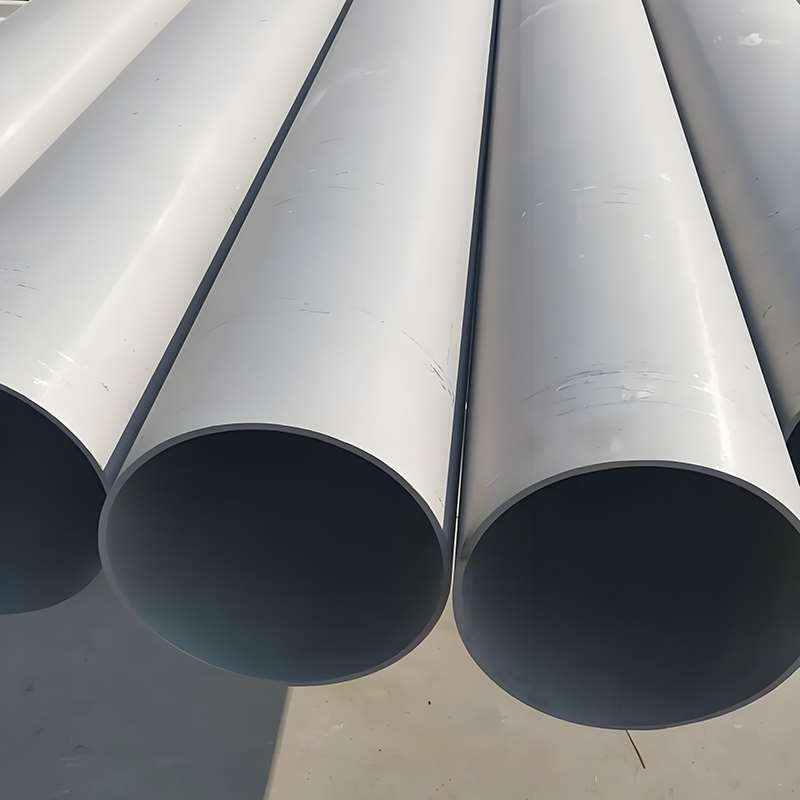
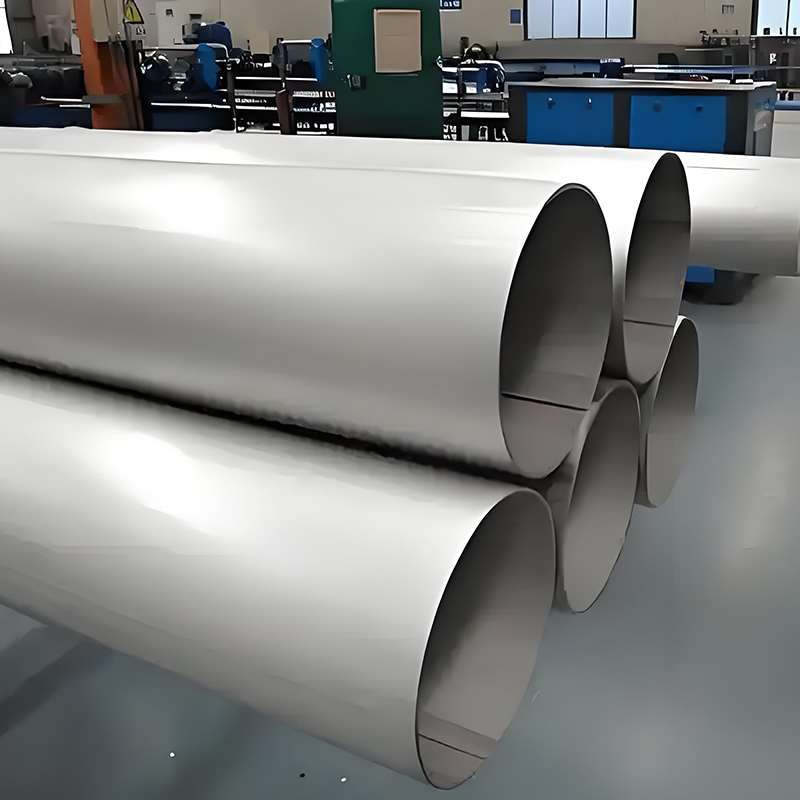
I. Market Value of Stainless Welded Steel Pipes
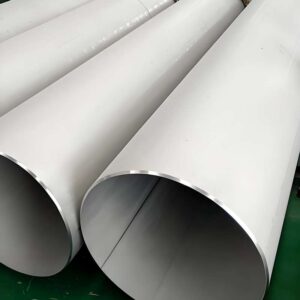
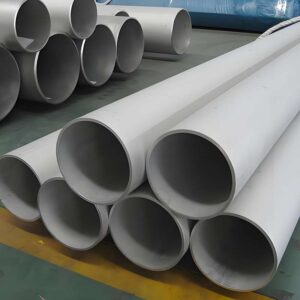
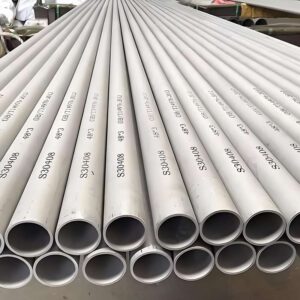
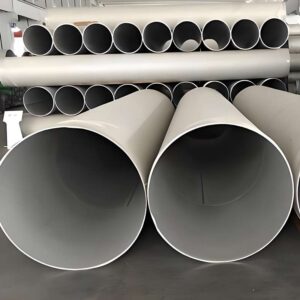
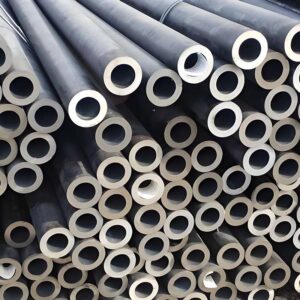
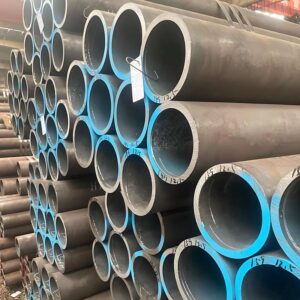
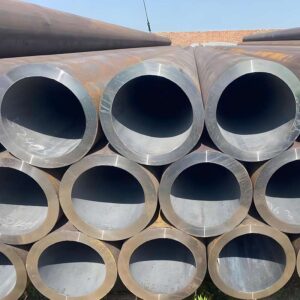
Stainless welded steel pipes are widely used in the petroleum, chemical, construction, and food industries due to their excellent corrosion resistance and mechanical properties.
However, users often face multiple challenges during the selection and procurement process:
How do you choose the appropriate specifications for specific operating conditions?
How do you distinguish between good and bad welded pipe quality?
And how do you strike a balance between performance and cost?
This article aims to provide a one-stop selection guide to help users address these core issues.
II. Detailed explanation of key parameters of stainless welded steel pipes
i. Outside diameter (OD)
Definition: The external diameter of the pipe.
Function: Affects pipeline flow, installation space, and pipe fitting matching.
Common range: 6 mm – 610 mm.
ii. Wall Thickness (WT)
Definition: The thickness of the pipe wall.
Purpose: Determines the pipe’s pressure resistance and mechanical strength.
Common range: 0.5 mm – 25 mm.
iii. Nominal Diameter (DN)
Definition: The standard size of pipe design used to match fittings and valves.
Common range: DN6 – DN600.
iv. Material Grades
Common materials: 201 / 202 / 304 / 304L / 316 / 316L / 321 / 347.
Function: Determines corrosion resistance, temperature resistance, and mechanical properties.
v. Theoretical Weight (kg/m)
Calculation Formula: W = 0.02466 × (D − t) × t
Purpose: Used in engineering design, transportation, and cost estimation.
vi. Allowable Deviation
Outer Diameter Deviation: ±1%
Wall Thickness Deviation: ±8%-10%
Purpose: Ensures pipe installation accuracy and project quality.
vii. Surface Treatment
Types: Glossy, Brushed, Sanded, Mirror.
Purpose: Improves corrosion resistance, appearance, and fluid contact performance.
viii. Welding Methods
Types: TIG, MIG, ERW, SMAW.
Function: Affects weld quality, mechanical strength, and service life.
ix. Applicable Standards
Chinese Standards: GB/T 12771, GB/T 13296
International Standards: ASTM A269, ASTM A312, EN 10217-7
Purpose: Ensures pipe performance meets engineering specifications and safety requirements.
x. Operating Temperature
Range: -196°C – 800°C (depending on material)
Purpose: Determines the pipe’s suitability for low- or high-temperature applications.
III. How to choose the appropriate specifications based on the application?
Case 1: Municipal Water Supply Pipeline
Application: Water supply pipe in an urban residential area, operating pressure 1.0 MPa, water temperature 5–50°C.
Selection Considerations:
Low pressure → Wall thickness does not need to be excessive
Flow rate requirements → Select outer diameter based on water supply volume
Corrosion resistance → Choose 304 stainless steel
Recommended specifications: DN150 × 4 mm, 304 material, bright finish
Case 2: Acid and Alkali Liquid Transport in a Chemical Plant
Operating Conditions: From a chemical reactor to a storage tank, transporting sulfuric acid with a concentration of <10%, operating temperature 60–80°C.
Selection Considerations:
Highly Corrosive → 316/316L Material
Medium Pressure → Moderate Wall Thickness
Pipe Diameter Calculated Based on Flow Rate
Recommended Specifications: DN100 × 6 mm, 316L Material, Mirror Finish
Case 3: Hot Water Transportation in a Food Processing Plant
Working Conditions: Hot water transportation to cleaning equipment, water temperature 90°C, operating pressure 1.6 MPa.
Selection Considerations:
High Temperature → Choose 321 heat-resistant stainless steel
Medium Pressure → Wall Thickness 5–6 mm
Smooth Surface → Meets Food Hygiene Standards
Recommended Specifications: DN80 × 6 mm, 321 material, mirror finish inside and outside
Case 4: Petrochemical High-Pressure Pipeline
Operating Conditions: Transporting light petroleum, pressure 4–6 MPa, temperature 60–120°C.
Selection Considerations:
High pressure → Thick-walled pipe
Moderate corrosion → 316 steel
High weld requirements → TIG/MIG welding
Recommended specifications: DN200 × 12 mm, 316 steel, TIG welding
IV. Methods for identifying the quality of stainless welded steel pipes
i. Appearance inspection
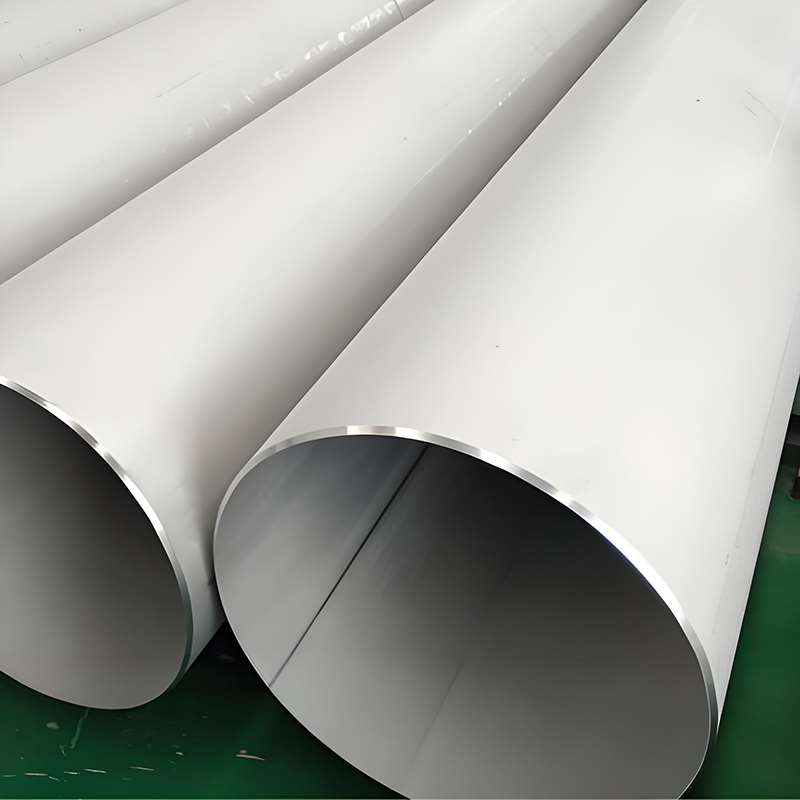
The surface should be flat and smooth, without obvious scratches, dents, cracks, pores or weld bumps.
The inner wall should be clean, without welding slag, oxide scale or decarburization layer.
The surface treatment (bright surface, brushed surface, mirror surface) should be uniform.
ii. Material Identification
Check the material certificate (MTC/test report) to confirm the material grade (304, 316L, etc.).
Convenient method: Use a magnet to test.
Austenitic stainless steel (304, 316) is essentially non-magnetic.
Martensitic stainless steel (410, 420) is magnetic.
Chemical composition testing: Use a spectrometer or chemical reagents to test for key elements (Cr, Ni, Mo).
iii. Weld Quality
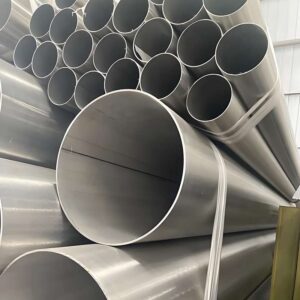
The weld seam should be uniform, straight, and free of porosity, cracks, or weld bumps.
High-quality welded pipes are generally welded using TIG or MIG welding, and the weld seam should have no noticeable height difference from the base material.
Weld seam strength can be tested using ultrasonic testing (UT) or radiographic testing (RT).
iv. Dimensions and Tolerances
Outer diameter and wall thickness must comply with design requirements and standards (e.g., GB/T 12771, ASTM A312, etc.).
Measuring Method:
Outer Diameter: Vernier Caliper or Steel Tape
Wall Thickness: Ultrasonic Thickness Gauge or Caliper
Tolerance Reference Standards:
Outer Diameter ±1%
Wall Thickness ±8%–10%
v. Mechanical Property Verification
Tensile strength, yield strength, and elongation must meet standard requirements.
You can refer to the material certificate or commission testing at a third-party laboratory.
vi. Corrosion Resistance Inspection
Salt spray testing and acid/base immersion testing can be performed to quickly verify corrosion resistance.
For food or water pipe projects, the passivation treatment can be checked to ensure compliance.