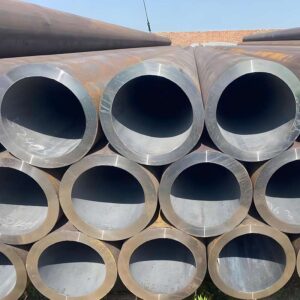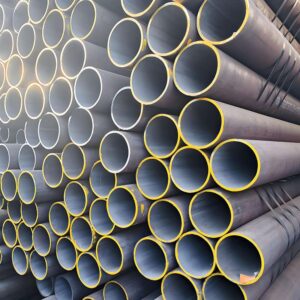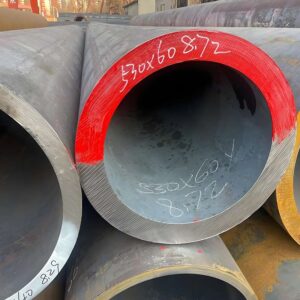
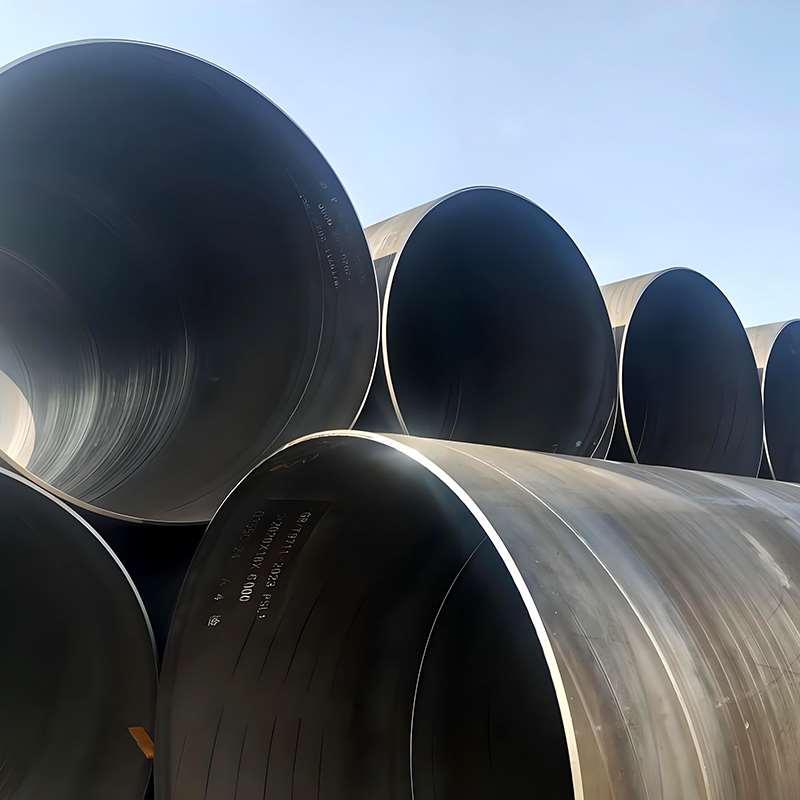
I. Definition of Large-Diameter Welded Steel Pipe
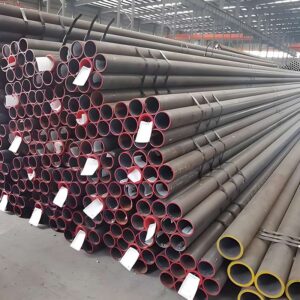
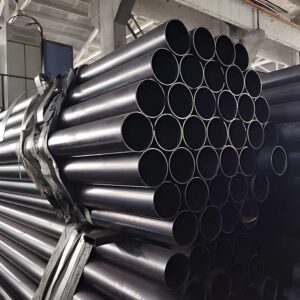
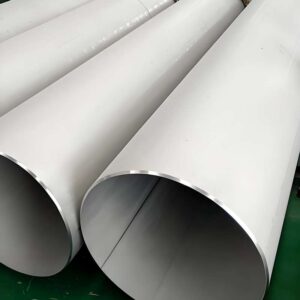
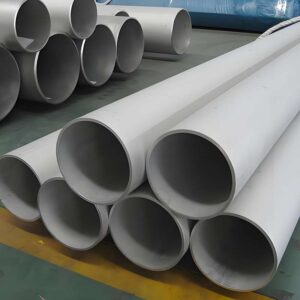
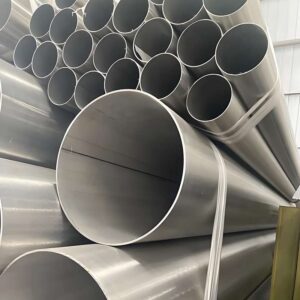
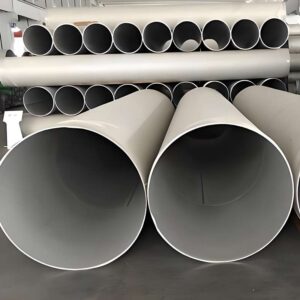
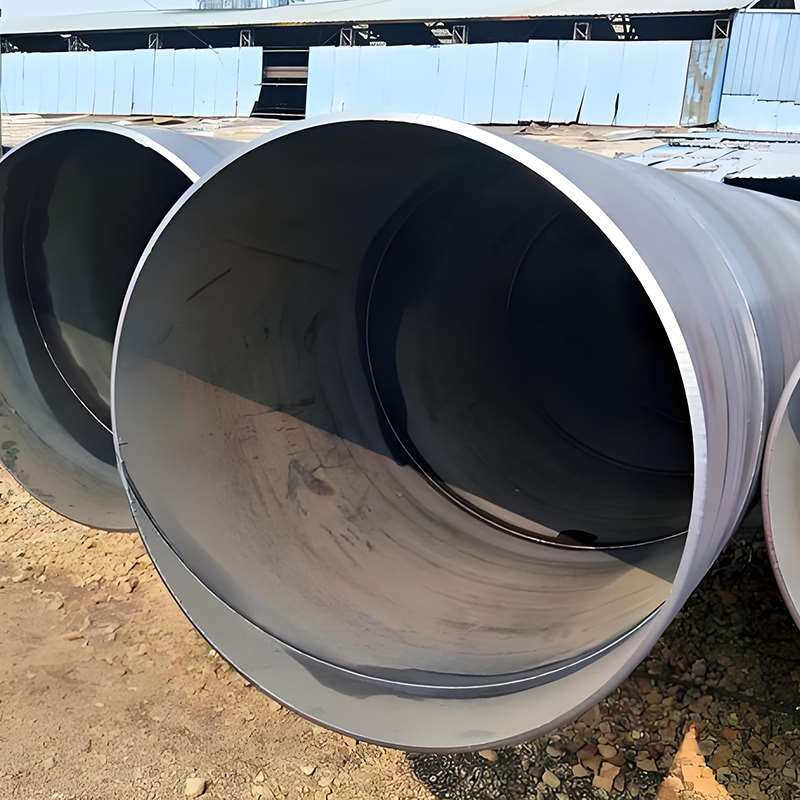
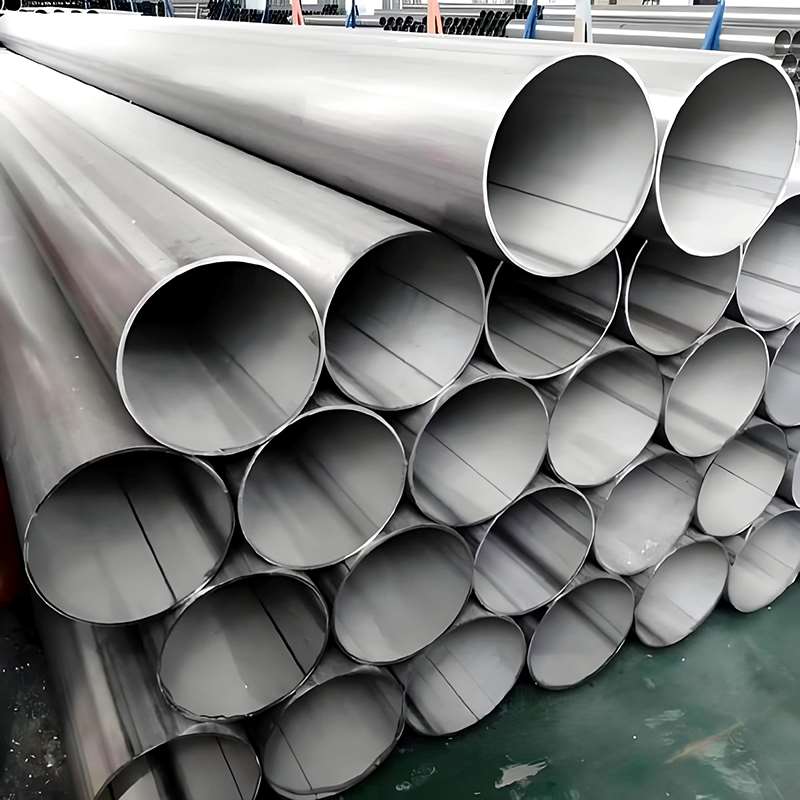
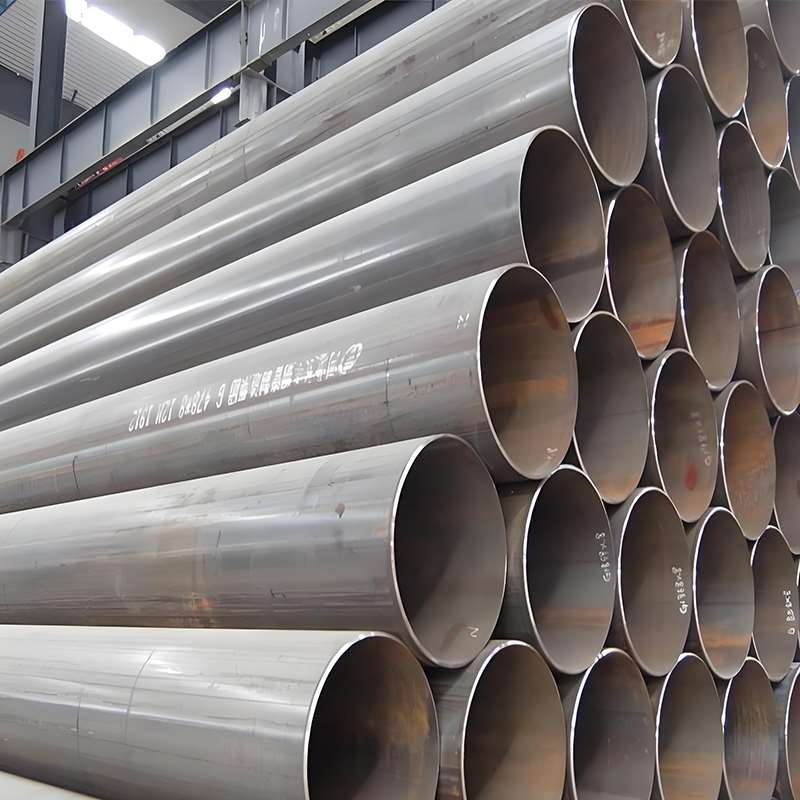
Large-diameter welded steel pipe refers to welded steel pipe with an outer diameter typically exceeding 406 mm. It is formed from rolled steel sheets or strips and then welded.
Due to its large diameter, it is primarily used in oil and gas transportation, long-distance water supply and drainage projects, structural support, and pile foundation pipes.
Its primary production methods are spiral welding and straight seam welding (UOE, JCOE, etc.).
II. Classification of large diameter welded pipes
i. Classification by welding method
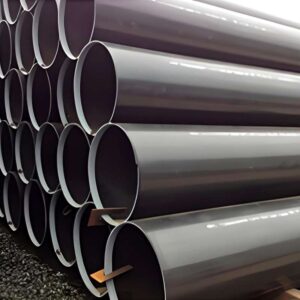
Long seam submerged arc welded steel pipe (LSAW)
Process: Steel plate is pre-bent, formed, and welded inside and outside.
Features: High dimensional accuracy and good strength, suitable for high-pressure and high-strength transmission pipelines.
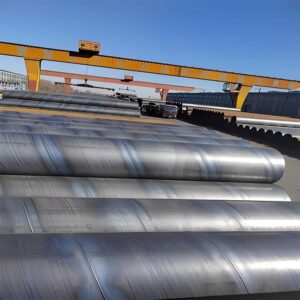
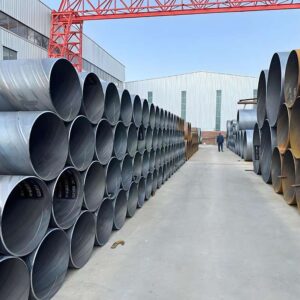
Spiral submerged arc welded steel pipe (SSAW)
Process: Steel strip is spirally rolled and welded at a certain angle.
Features: Can produce large diameter and long length steel pipes, suitable for low and medium pressure transmission projects.
ii. Classification by use
Large diameter welded pipes for transportation
Used for oil, natural gas, tap water, drainage, heating, and steam transportation.
Large diameter welded pipes for structures
Used for bridges, docks, steel structure buildings, pile foundations, and supports.
iii. Classification by implementation standards
Domestic standards: GB/T 9711 (oil and natural gas transmission steel pipes), SY/T 5037 (spiral welded pipes), SY/T 5040 (long seam submerged arc welded pipes). International standards: API 5L (oil and gas transportation), EN 10219/10217 (European standards), ASTM A252 (pile pipe).
III. Large Diameter Welded Steel Pipe Production Process
Raw Material Inspection → Cutting and Milling → Pre-Bending → Forming → Internal and External Welding → Weld Inspection → Expansion and Sizing → Hydrostatic Testing → Flaw Detection → Anti-Corrosion Treatment → Finished Product Storage
| Seq. | Operation (EN) | Operation (CN) | Description / Main Content |
|---|---|---|---|
| 1 | Raw-material inspection | 原料检验 | Check chemical composition, mechanical properties and surface quality of plate / coil. |
| 2 | Cutting & edge milling | 下料与铣边 | Cut to required dimension; mill plate edges to ensure accurate weld fit-up. |
| 3 | Pre-bending | 预弯成型 | Give plate (or coil) an initial bend to facilitate subsequent forming. |
| 4 | Forming | 成型 | LSAW: press plate into round shape. SSAW: spiral-form coil into cylindrical shape. |
| 5 | Inside & outside welding | 内外焊接 | Automatic SAW completes inside pass and outside pass to form the weld seam. |
| 6 | Weld testing & repair grinding | 焊缝检测与修磨 | Ultrasonic (UT) and radiographic (RT) inspection; grind and repair any defects. |
| 7 | Expanding & sizing | 扩径与定径 | Mechanical expansion to secure roundness, diameter and dimensional accuracy. |
| 8 | Hydrostatic test | 水压试验 | Pressure-test each pipe to verify pressure-tightness (≥ 1.5 × design pressure). |
| 9 | Final NDT | 最终探伤检验 | Full-body ultrasonic and/or RT inspection to confirm absence of cracks or flaws. |
| 10 | Anti-corrosion & coating | 防腐与涂层处理 | Apply 3PE, FBE, coal-tar epoxy, internal plastic lining, etc. as specified. |
| 11 | Final inspection & stocking | 成品检验与入库 | Visual and dimensional re-check, stencil marking; accepted pipes warehoused / shipped. |
IV. Large diameter welded steel pipe standard comparison table of various countries
| Country / Region | Standard Designation | Type | Scope of Application | Common Grades / Materials | Remarks |
|---|---|---|---|---|---|
| China (CN) | GB/T 9711.1-2022 | LSAW / SSAW welded pipe | Oil & gas transmission | X42 – X80 | Line-pipe steel grades; suitable for buried and above-ground lines |
| GB/T 3091-2020 | Welded steel pipe | General structural use | Q195 – Q345 | Used in industrial, building and mechanical structures | |
| GB/T 13793-2009 | Longitudinal welded large-diameter pipe | Conveyance of oil, gas, liquids | L245 – L555 | Covers both SAWL and SAWH pipes | |
| United States (US) | ASTM A53 / A252 | Carbon-steel welded pipe | General piping & structural | Grade A / B | Suitable for water, gas, steam services |
| ASTM A135 / A795 | Electric-resistance-welded pipe | Thermal/power piping | Grade A / B | Common in power plants and boiler lines | |
| API 5L | LSAW / SSAW welded pipe | Petroleum & natural-gas transmission | PSL 1 / PSL 2, X42 – X80 | Internationally accepted line-pipe standard | |
| Europe (EU) | EN 10217-1 / EN 10217-2 | Industrial welded steel tubes | Pressure vessels & industrial piping | P235 – P355 | EN standards emphasize mechanical properties & weldability |
| EN 10208-2 | Steel pipes for oil & gas pipelines | Petroleum & natural-gas transmission | L245 – L555 | Strict requirements on chemistry & pressure ratings | |
| Japan (JP) | JIS G3454 / G3455 | Welded steel pipes | Oil, gas & water lines | STK400 – STK500 | Frequently adopted in domestic oil-&-gas projects |
| South Korea (KR) | KS B 3502 / B 3503 | LSAW / SSAW welded pipe | Transmission pipelines | SS400 – SM400 | Grades can be cross-referenced to API 5L equivalents |
V. Application areas of large diameter welded steel pipes
| Application Area | Typical Scenario | Recommended Anti-corrosion / Thermal-insulation System | Key Benefits (Problems Solved) |
|---|---|---|---|
| Municipal Water & Sewer | Urban potable-water mains, sewage outfalls, storm drains | Internal epoxy lining + external 3PE or coal-tar epoxy | Smooth bore prevents secondary water contamination; external layer resists soil corrosion and prolongs buried-pipe life |
| Oil & Gas Long-distance Transmission | Inter-regional crude-oil, natural-gas or field-gathering lines | 3PE/3PP external + internal fusion-bonded epoxy (FBE) | Outer layer withstands soil corrosion and mechanical damage; inner layer reduces friction and guarantees safe high-pressure, long-haul transport |
| Power & District Heating | City-wide district heating, steam networks, power-plant piping | Steel-jacketed steam pipe (external corrosion coating + PUR insulation) | Excellent thermal insulation, rated for high-temperature steam, minimizes energy losses |
| Offshore & Harbour Works | Subsea pipelines, dock piles, offshore wind-farm foundations | External 3PE or epoxy-ceramic coating + Zn-Al alloy spray | Resists seawater corrosion and marine fouling, ensuring long-term service in marine environments |
| Piling & Structural | Bridge piles, tunnel supports, harbour foundations | Coal-tar epoxy or hot-dip galvanizing | Enhances durability against groundwater and salt-spray corrosion, securing structural safety |
| Chemical & Industrial Piping | Chemical feed lines, metallurgical recirculating-water systems | Internal plastic lining (PE, PO) + external 3PE/epoxy coating | Inner liner resists acids, alkalis and salts; external coating prevents corrosion—ideal for aggressive media and industrial water |
VI. Common problems in daily applications of large diameter welded steel pipes
i. Are large-diameter welded steel pipes prone to rust?
Answer: If they are not treated with anti-corrosion, they will rust. 3PE, epoxy coating or plastic lining are usually used to effectively prevent corrosion, which can extend the service life by more than 30 years.
ii. Can this type of steel pipe withstand high-pressure transmission?
Answer: Yes. Longitudinal submerged arc welded (LSAW) steel pipe offers high strength, meeting the requirements of high-pressure natural gas and oil pipelines, and has passed rigorous hydraulic and flaw detection testing.
iii. Will it break easily when buried?
Answer: No. Large-diameter welded pipes undergo expansion and sizing, as well as hydrostatic testing, before leaving the factory. They also have an external anti-corrosion coating, making them suitable for long-term underground transportation.
iv. Can it transport corrosive media (such as chemical liquids)?
Answer: Yes. As long as it uses plastic lining or epoxy coating, it can be resistant to acids, alkalis and salts and is suitable for chemical and industrial pipelines.
v. Why are large-diameter welded pipes often chosen over seamless pipes in construction projects?
Answer: Large-diameter welded pipes offer a larger diameter, lower cost, and faster delivery, making them particularly suitable for long-distance pipelines and high-flow transport. Seamless pipes are too expensive for large-diameter applications.