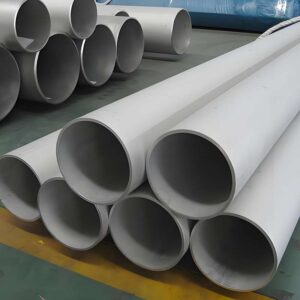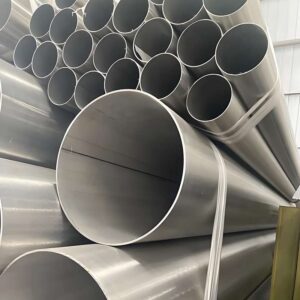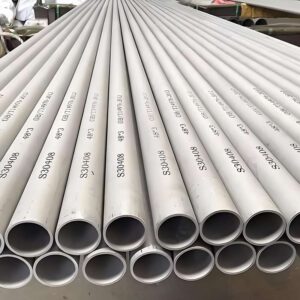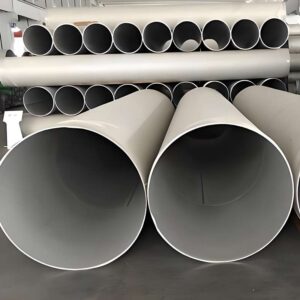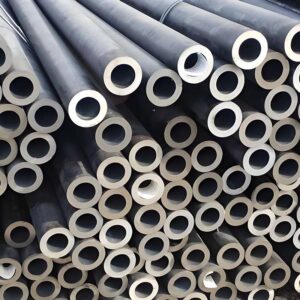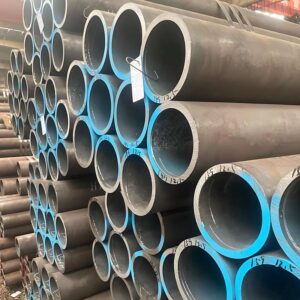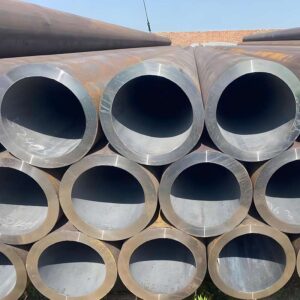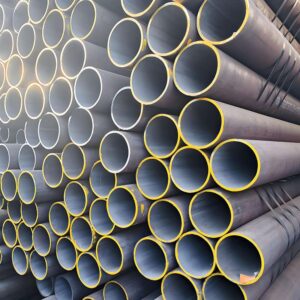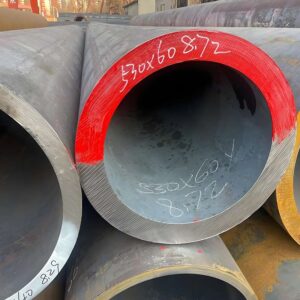
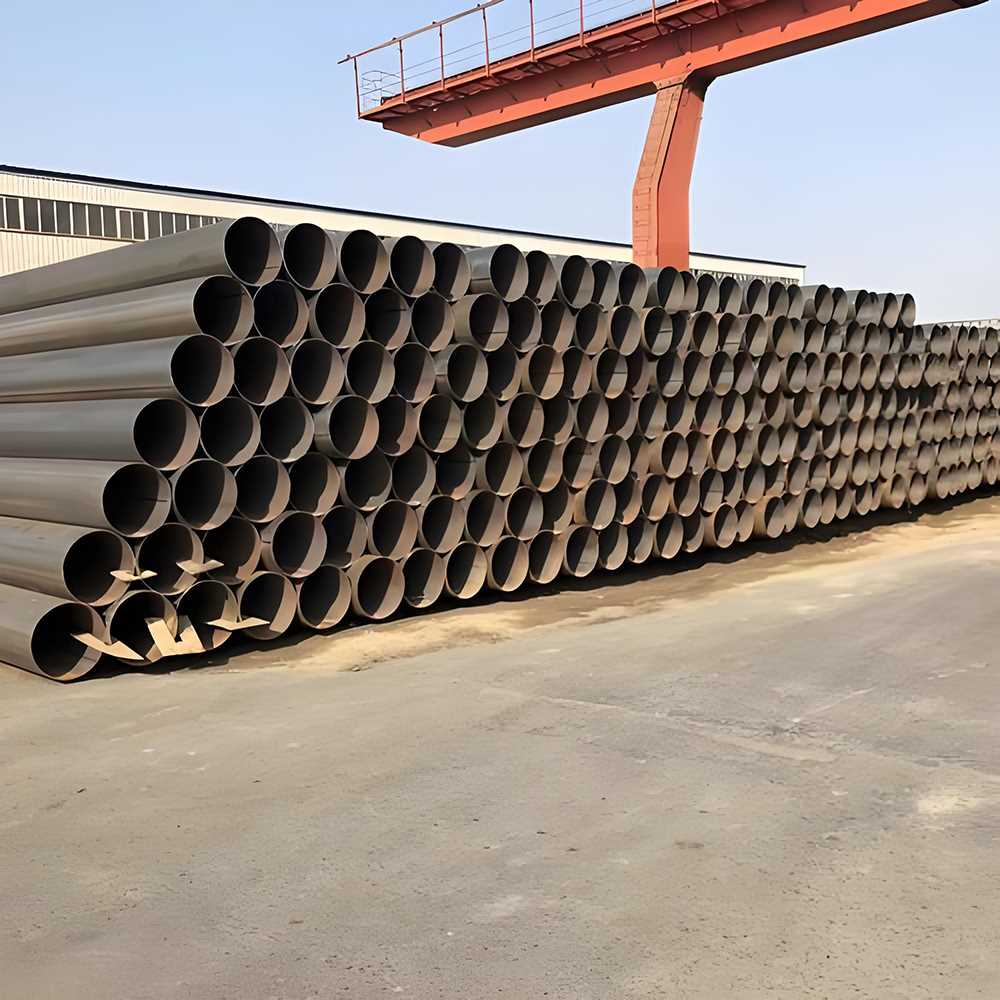
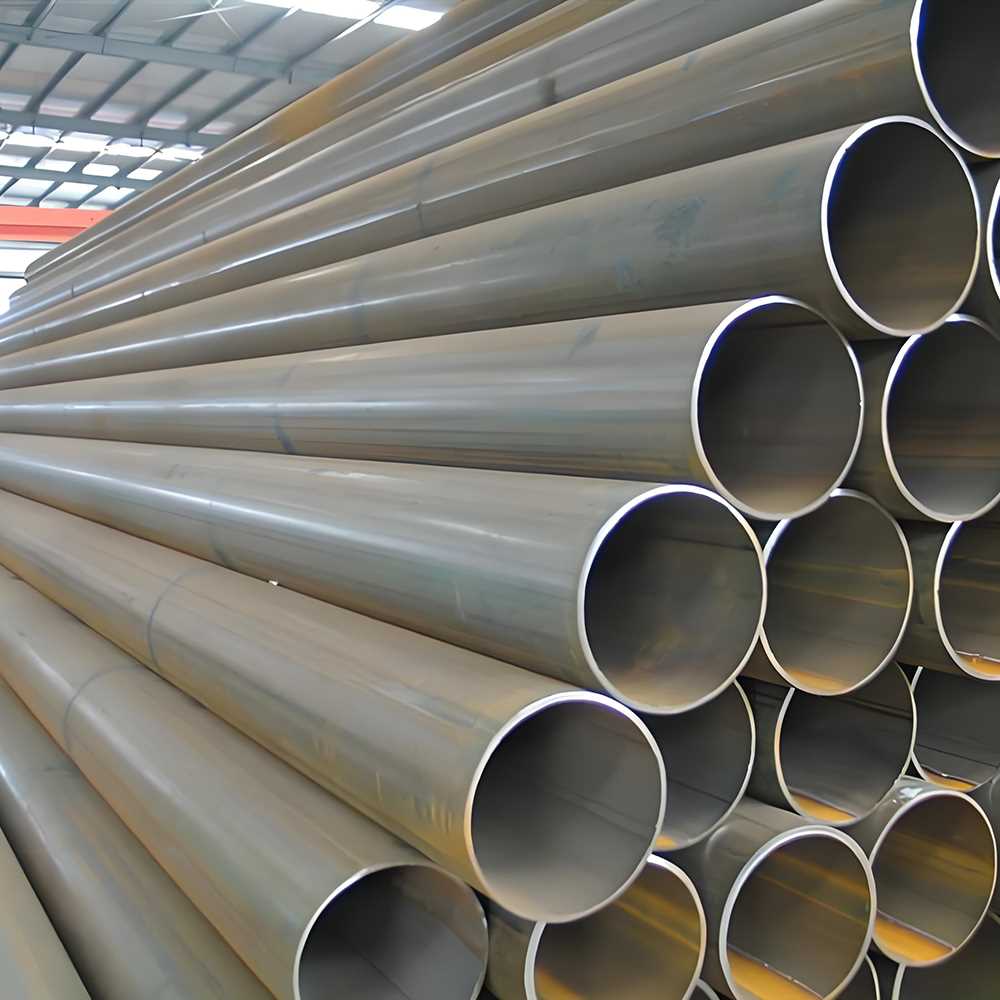
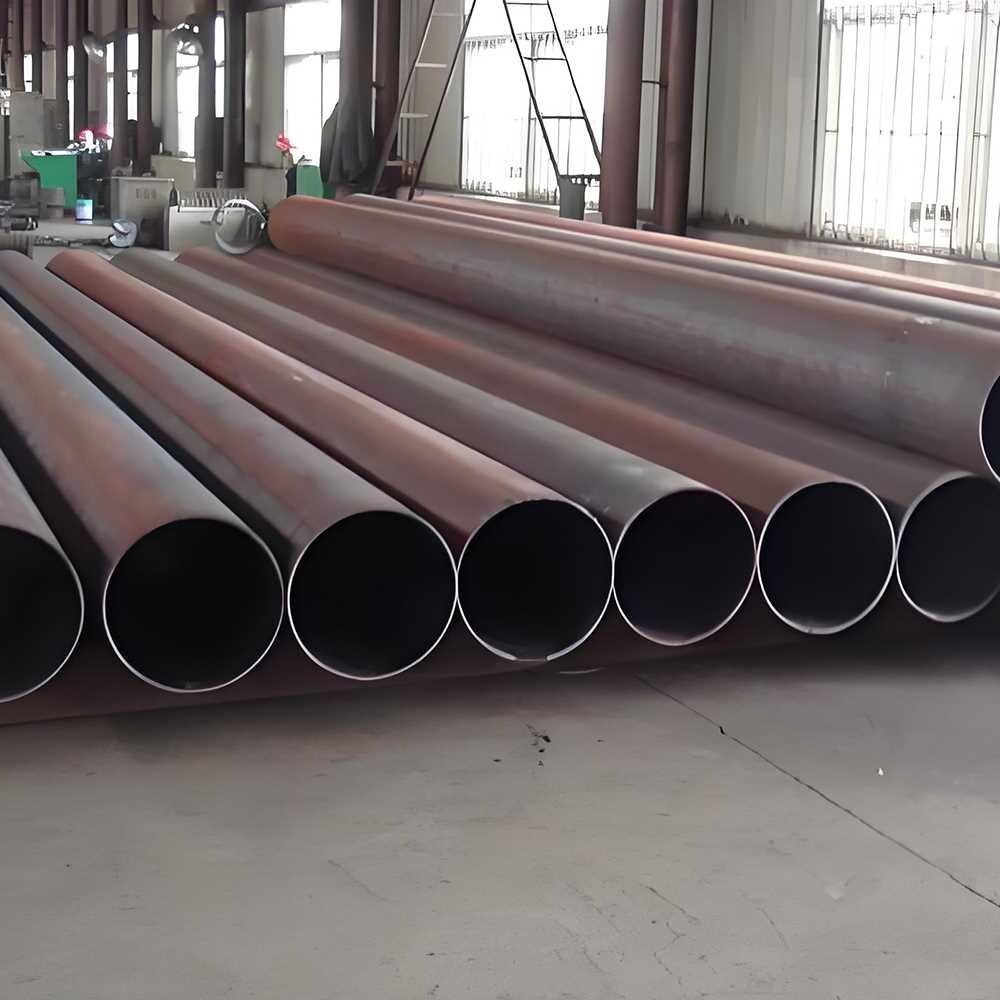
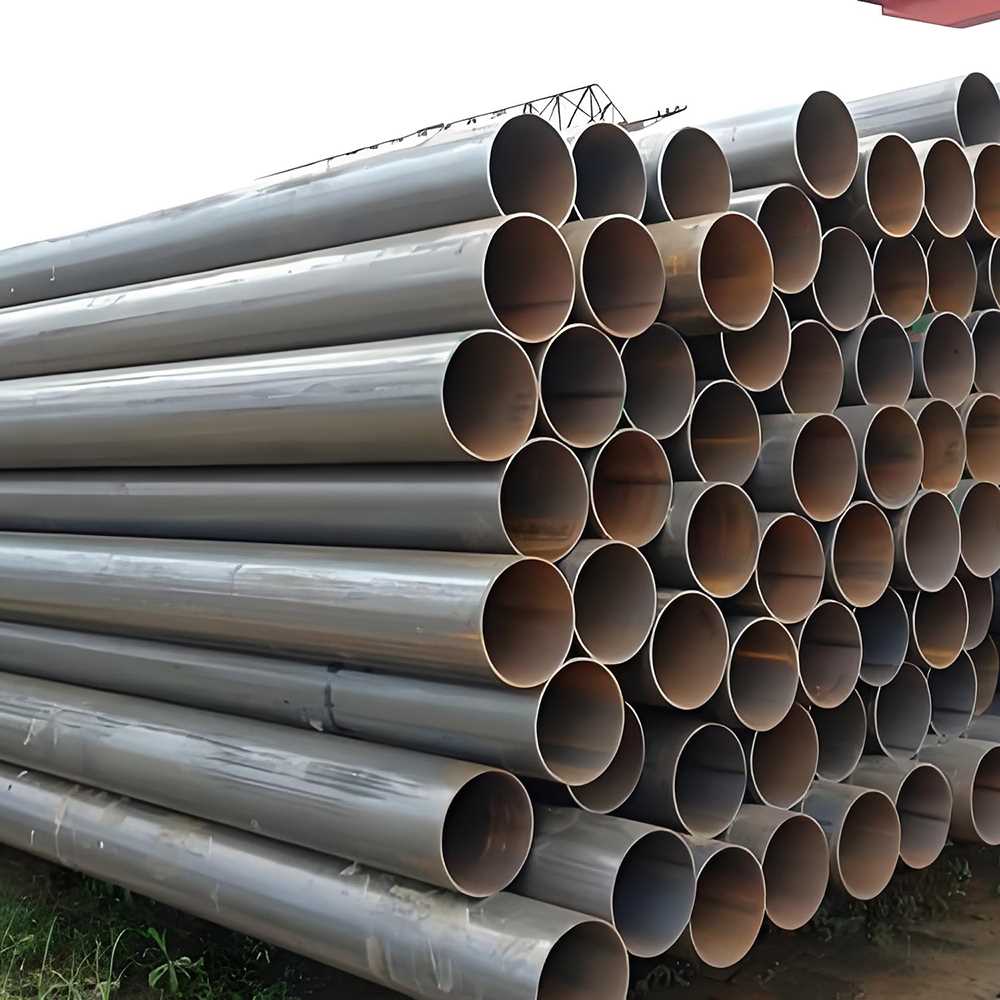
I. What is ERW steel pipe?
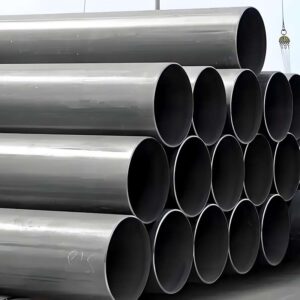
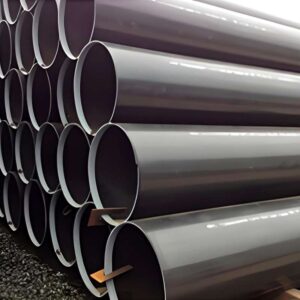
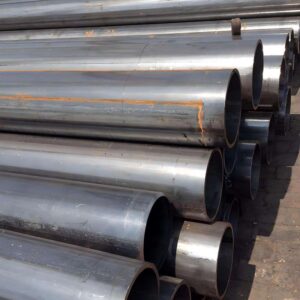
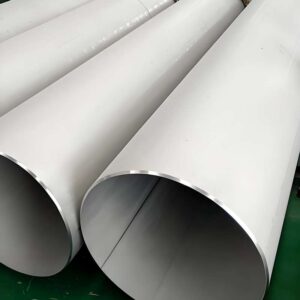
ERW steel pipe is short for electric resistance welded steel pipe. It is a type of steel pipe formed by heating and melting the edges of steel strips (coiled plates) using electric resistance heat and then pressing them together to weld them.
II. How is the theoretical weight of ERW steel pipes calculated?
Theoretical weight (kg/m) = (Outer diameter – Wall thickness) × Wall thickness × 0.02466
Specific details:
Outer diameter and wall thickness are measured in millimeters (mm)
0.02466 is the density conversion factor for steel (steel density is approximately 7850 kg/m³)
This formula applies to round tubes.
Example:
Outer diameter = 100 mm, wall thickness = 5 mm
Theoretical weight = (100 – 5) × 5 × 0.02466 = 95 × 5 × 0.02466 ≈ 11.7 kg/m
III. Differences between ERW steel pipes and seamless steel pipes
| Comparison Dimension | ERW Steel Pipe (Electric Resistance Welded Pipe) | Seamless Steel Pipe |
|---|---|---|
| Manufacturing Process | Steel strip rolling + High-frequency resistance welding (longitudinal straight seam) | Solid steel billet piercing/ extrusion/ oblique rolling (no seam) |
| Raw Materials | Hot-rolled or cold-rolled steel strip (coil) | Round steel billet (solid steel ingot) |
| Seam | One longitudinal seam | No seam |
| Production Efficiency | High (continuous forming, fast speed) | Low (complex process, long cycle) |
| Production Cost | Lower (high material utilization, low energy consumption) | Higher (high raw material and processing costs) |
| Wall Thickness Uniformity | Good (high precision of strip rolling) | Generally (deviations may occur due to piercing process) |
| Outer Diameter/Wall Thickness Range | Advantage in small to medium diameters (commonly Φ6-24 inches) | Extremely wide coverage (Φ micro-tubes to ultra-large diameters) |
| Typical Wall Thickness | Thin to medium thickness (cost-effective) | Full range (especially good at thick/extra-thick walls) |
| Pressure Resistance | Moderate to low pressure (seam is a potential weak point) | High/ultra-high pressure (uniform structure with no seam) |
| Defect Risk | Possible defects in the seam area (e.g., incomplete fusion, slag inclusion) | Center segregation, inner folding, etc. (rolling defects) |
| Surface Quality | Smooth and flat (seam treated) | May have rolling oxide scale or slight unevenness |
| Non-Destructive Testing Focus | Seam area (ultrasonic/turbulent flow testing) | Entire pipe body (especially stress concentration areas) |
| Heat Treatment | Seam annealing often required to relieve stress | Depends on requirements (normalizing, quenching, etc.) |
| Main Application Fields |
|
|
| Cost-Effectiveness | High (preferred for conventional applications) | Low (irreplaceable for special needs) |
IV. Detailed explanation of the ERW steel pipe production process
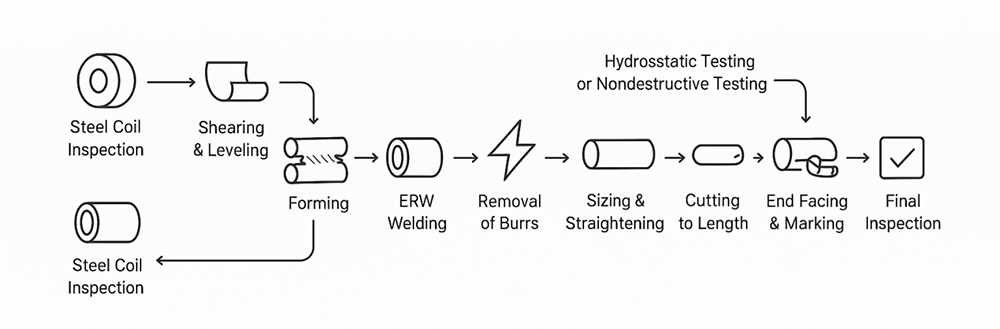
[Raw material preparation] → [Shearing and flattening] → [Forming] → [ERW welding] → [Deburring] → [Heat treatment] → [Sizing and straightening] → [Inspection] → [Cutting] → [End face treatment] → [Inspection and storage]
(1) Raw Material Preparation
Material Selection: Select hot-rolled steel coils (steel strips) that meet the specified standards.
Inspection: Conduct rigorous quality inspections on the appearance, dimensions, and chemical composition of the steel coils to ensure they meet the production requirements for welded steel tubes.
(2) Steel Strip Cutting and Flattening
Unroll the qualified steel coils and cut them into steel strips of the required width using a precision cutting machine.
Use a flattening machine to eliminate internal stresses in the steel strip, ensuring its flatness, laying the foundation for subsequent high-quality forming.
(3) Forming
Forming method: Use a multi-pass roll forming machine to gradually and precisely bend the flat steel strip into a circular tube shape (distinct from the spiral forming method used for spiral steel pipes).
Key control points: Forming quality is critical to ensuring precise weld seam alignment and producing high-quality ERW steel pipes.
(4) High-frequency resistance welding (ERW)
Heating principle: Utilizes high-frequency current to generate concentrated resistance heat at the edges of the steel strips, instantly heating the metal to a plastic or molten state.
Squeeze welding: Under high temperature conditions, squeeze rollers apply strong pressure to force the atoms at the edges of the metal to diffuse and fuse together, forming a strong weld without the need for additional filler material. This is the core manufacturing process for ERW steel pipes.
(5) Removal of weld burrs
External burr removal: Immediately remove protrusions from the outer side of the weld to ensure a smooth outer surface of the ERW steel pipe.
Internal burr removal (as required): According to process requirements, use specialized tools to remove protrusions at the weld inside the pipe, ensuring a smooth inner wall (this step is particularly important for ERW black steel pipes).
(6) Weld Heat Treatment (as required)
To optimize the microstructure of the weld zone and significantly enhance the strength, toughness, and fatigue resistance of the welded joint, localized heat treatment (e.g., induction annealing) is performed on the weld.
(7) Dimension Correction and Sizing
The outer diameter tolerance and roundness (ellipticity control) of ERW steel pipes are precisely adjusted using a sizing machine to fully comply with standard specifications.
(8) Hydrostatic Testing or Non-Destructive Testing
Hydrostatic Testing: Each steel pipe is subjected to a hydrostatic test at specified pressure to verify its pressure-bearing capacity and seal integrity.
Non-Destructive Testing: Techniques such as ultrasonic testing (UT) or eddy current testing (ET) are applied to perform 100% online or offline inspection of the welds, ensuring no internal defects and guaranteeing reliable weld quality.
(9) Cutting to length
According to customer order requirements, inspected and qualified steel pipes are precisely cut to standard lengths (e.g., 6m, 12m) or other specified lengths.
(10) End Face Processing and Marking
Grind or bevel the ends of the steel pipes to ensure that the end face quality meets connection requirements.
Clearly spray-print necessary information such as product specifications, applicable standards, furnace batch number, and manufacturer identification on the surface of the steel pipes.
(11) Final Inspection and Storage
Conduct a comprehensive final inspection of appearance, dimensions, specified mechanical properties (e.g., tensile strength, bending), and chemical composition (if required).
All ERW steel pipes that pass all inspection items are sorted, stacked in accordance with specifications, stored in the warehouse, and await shipment.
V. ERW Steel Pipe Standards and Common Specifications Table
i. Standards
| Country / Region | Standard Number | Standard Name / Applicable Description |
|---|---|---|
| China | GB/T 3091 | Welded Steel Pipe for Low-Pressure Fluid Conveyance |
| China | GB/T 13793 | Electric Welded Steel Pipe with Longitudinal Seam |
| USA | ASTM A53 | Steel Pipe, Black and Hot-Dipped, Zinc-Coated, Welded and Seamless |
| USA | ASTM A252 | Piling Pipe, Welded and Seamless |
| USA | ASTM A500 | Carbon Steel Structural Tubing, Electric Welded |
| Japan | JIS G3444 | Carbon Steel Pipe for Structural Purposes |
| Japan | JIS G3452 | Carbon Steel Pipe for General Purposes |
| European Union | EN 10217 | Welded Steel Pipe for Pressure Purposes |
| United Kingdom | BS 1387 | Steel Pipe for Pipelines (Galvanized or Ungalvanized) |
| International | ISO 3183 | Steel Pipe for Petroleum and Natural Gas Industries |
ii. Specification sheet
| Outer Diameter (mm) | Wall Thickness Range (mm) | Notes |
|---|---|---|
| 21.3 | 2.0 – 3.0 | Commonly used for small-diameter pipes |
| 26.9 | 2.0 – 3.0 | - |
| 33.7 | 2.0 – 3.2 | - |
| 42.4 | 2.0 – 4.0 | - |
| 48.3 | 2.0 – 4.0 | Scaffolding, structural pipes |
| 60.3 | 2.0 – 5.0 | - |
| 76.1 | 2.0 – 5.0 | - |
| 88.9 | 2.0 – 6.0 | - |
| 101.6 | 3.0 – 6.0 | - |
| 114.3 | 3.0 – 6.0 | - |
| 139.7 | 3.0 – 8.0 | - |
| 168.3 | 3.2 – 10.0 | Commonly used for structural pipes, water and gas transmission |
| 219.1 | 4.0 – 12.0 | - |
| 273.0 | 5.0 – 14.0 | - |
| 323.9 | 6.0 – 16.0 | - |
| 355.6 | 6.0 – 16.0 | - |
| 406.4 | 6.0 – 20.0 | Large-diameter structural pipes, piling pipes |
| 457.2 | 6.0 – 20.0 | - |
| 508.0 | 6.0 – 20.0 | - |
VI. What is the service life of ERW steel pipes?
The service life of ERW steel pipes is influenced by various factors. Under normal conditions:
(1) In general usage environments: The service life of ERW steel pipes is approximately 15 to 30 years.
(2) With proper corrosion protection measures, such as coatings, rust prevention treatments, and regular maintenance, the service life can be extended to over 30 years.
(3) In harsh environments: such as highly corrosive environments, underground, or marine environments, the lifespan may be reduced, and special protective measures are required.
The primary factors affecting lifespan include:
(1) Material quality and manufacturing process
(2) Usage environment (such as humidity, corrosion, and temperature)
(3) Corrosion prevention and maintenance conditions
(4) The pressure and mechanical stress the pipeline is subjected to