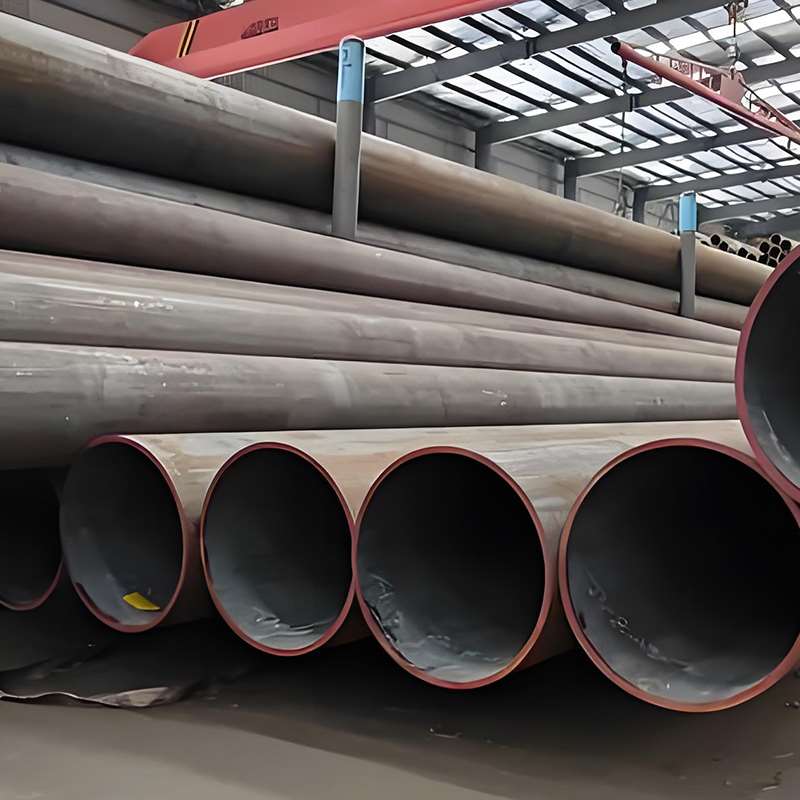
I. Why is API 5L welded steel pipe central to energy transportation?
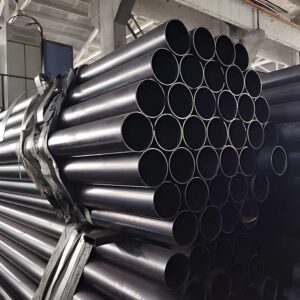
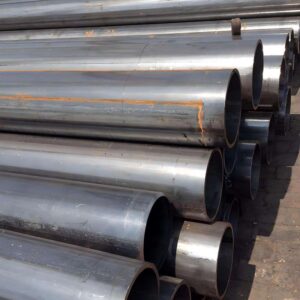
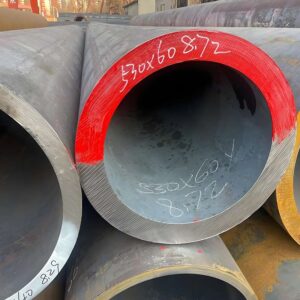
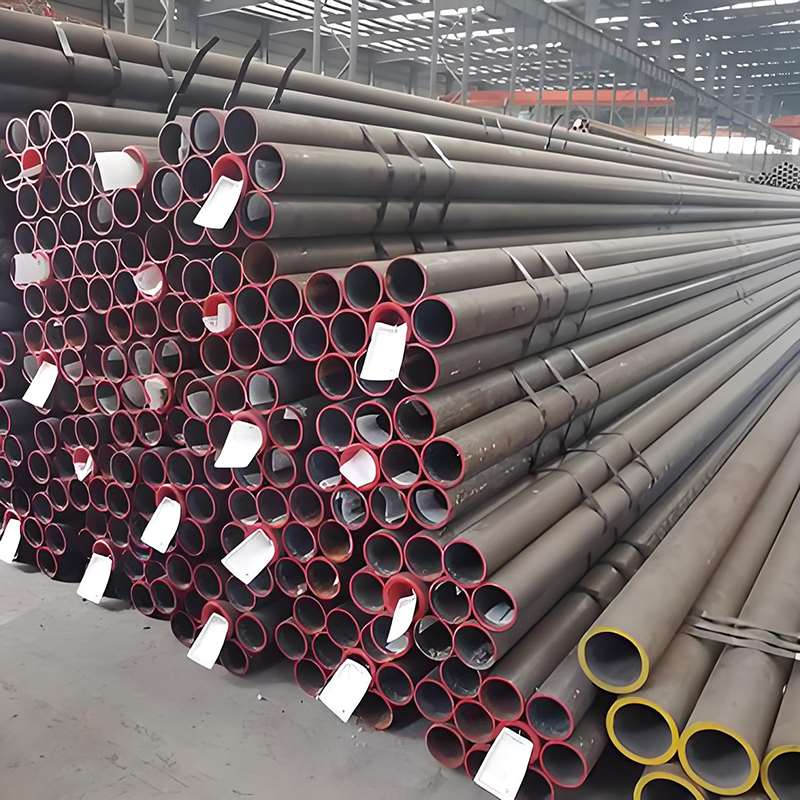
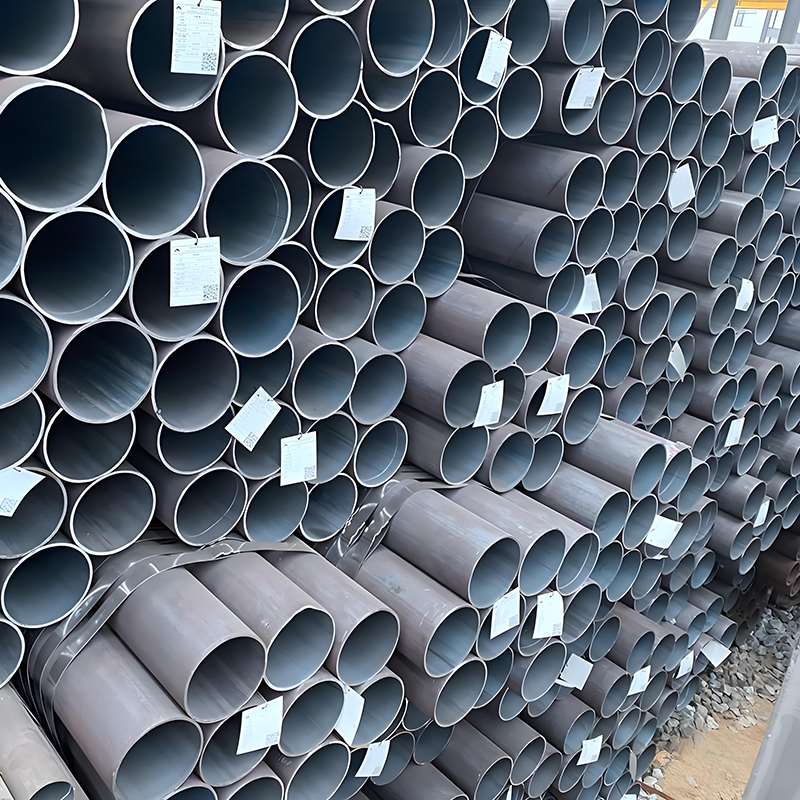
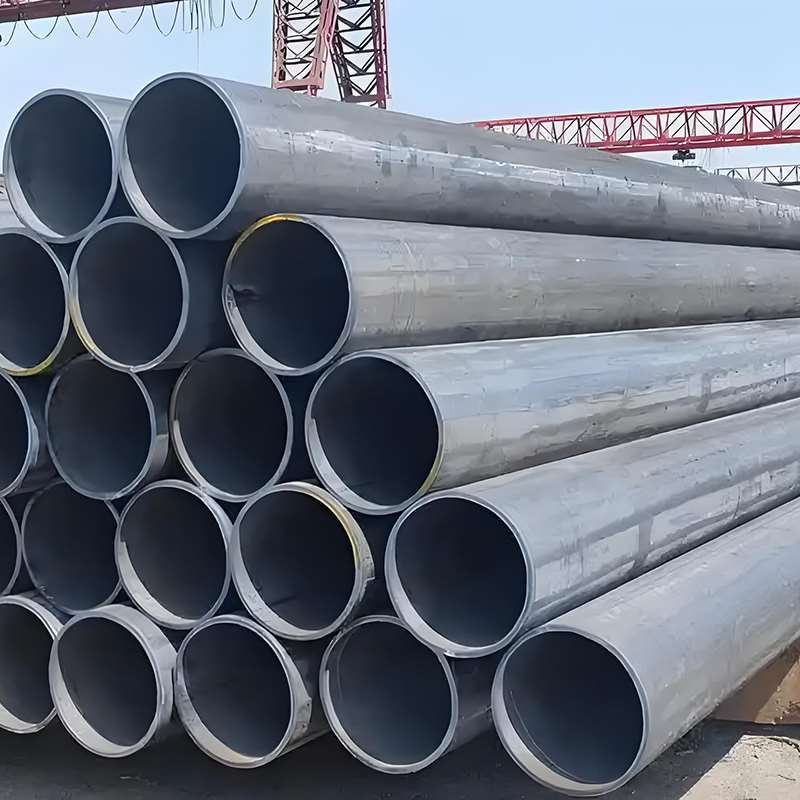
API 5L welded steel pipe is central to energy transportation because of its high strength, corrosion resistance, ease of construction, and global standardization. It ensures the safe and efficient transportation of oil, natural gas, and other energy sources through long-distance pipelines.
II. Standard Positioning of API 5L Welded Steel Pipe
i. Global Energy Transmission Pipeline Standard
API 5L is a pipeline steel standard issued by the American Petroleum Institute (API). It is mainly used for long-distance pipelines for media such as oil, natural gas, and water.
It is widely adopted internationally and is the standard of choice for long-distance, high-pressure energy transmission pipelines.
ii. API 5L welded steel pipe grade and performance requirements
| Steel Grade | Yield Strength (MPa) | Tensile Strength (MPa) | Impact Performance | Remarks |
|---|---|---|---|---|
| X42 | ≥ 290 | 415 – 560 | 27 J / –20 °C | Suitable for low- and medium-pressure pipelines |
| X46 | ≥ 320 | 455 – 605 | 27 J / –20 °C | Commonly used for oil & gas transmission lines |
| X52 | ≥ 345 | 455 – 605 | 27 J / –20 °C | Popular grade for medium-pressure pipelines |
| X56 | ≥ 380 | 485 – 635 | 27 J / –20 °C | For medium- to high-pressure service |
| X60 | ≥ 415 | 485 – 635 | 27 J / –20 °C | Frequent choice for long-distance pipelines |
| X65 | ≥ 450 | 510 – 690 | 27 J / –20 °C | Suitable for high-pressure pipelines |
| X70 | ≥ 485 | 535 – 720 | 27 J / –20 °C | High-pressure, long-distance transmission |
| X80 | ≥ 550 | 585 – 760 | 27 J / –20 °C | Ultra-high-pressure or special-engineering projects |
III. Analysis of the Four Major Processes for Welding Steel Pipes
i. ERW (Electric Resistance Welding)
Features: The pipe is welded by heating the edge of the pipe blank with resistance and applying pressure.
Advantages: High production efficiency, good dimensional accuracy, low cost, and suitable for small and medium diameter pipes.
Applications: Municipal pipelines, low and medium pressure oil and gas transportation, and pipes for mechanical structures.
ii. LSAW (Longitudinal Submerged Arc Welded Pipe)
Features: Welding is performed along the length of the pipe, with submerged arc protection and high weld strength.
Advantages: Suitable for large-diameter, high-pressure pipelines, with customizable wall thickness and uniform structure.
Applications: Long-distance oil and gas pipelines, high-pressure industrial pipelines.
iii. SSAW (Spiral Submerged Arc Welded Pipe)
Features: The pipe is rolled at a spiral angle, the weld is spiral, and the weld is protected by submerged arc.
Advantages: It can produce ultra-large diameter and long-distance pipelines, with flexible manufacturing and relatively low cost.
Applications: Long-distance water pipelines, oil and gas pipelines, and port engineering pipelines.
iv. HFW (High Frequency Welded Pipe)
Features: High-frequency current is used to locally heat the edges of the pipe, resulting in high welding speeds.
Advantages: Suitable for small and medium-sized diameters, resulting in smooth welds and excellent surface quality.
Applications: Pipes for machinery, structural applications, and medium- and low-pressure transmission pipelines.
IV. API 5L Welded Steel Pipe Selection Reference
i. Select steel grade based on working pressure
| Operating-Pressure Range | Recommended Steel Grade (X-Grade) | PSL Level |
|---|---|---|
| ≤ 4 MPa | X42 / X46 | PSL1 |
| 4 – 6 MPa | X52 / X56 | PSL1 / PSL2 |
| 6 – 8 MPa | X60 / X65 | PSL2 |
| 8 – 10 MPa | X70 / X80 | PSL2 |
Tip: The higher the pressure, the higher the steel grade required, and PSL2 stringent grade is recommended to ensure safety.
ii. Pipe diameter and wall thickness reference
| Outside Diameter (OD) | Common Wall Thickness (WT) | Welding Process |
|---|---|---|
| 21.3 – 114.3 mm | 2.77 – 6.35 mm | ERW / HFW |
| 139.7 – 323.9 mm | 6.35 – 12.7 mm | LSAW / SSAW |
| 355.6 – 1219 mm | 12.7 – 25.4 mm | LSAW / SSAW |
| 1220 – 1422 mm | 16 – 40 mm | SSAW |
Tip: Small diameter, medium and low pressure → ERW / HFW; large diameter, high pressure → LSAW / SSAW
iii. Anti-corrosion layer selection
| Application / Environment | Anti-corrosion System | Service Conditions |
|---|---|---|
| Buried pipelines | 3PE (3-layer polyethylene) | Long-term buried oil/gas service; design life ≥ 20 years |
| Offshore or humid environments | FBE (fusion-bonded epoxy) | Combined corrosion & water protection; suitable for marine or high-moisture areas |
| High-temperature service | Internal epoxy / polyurethane lining | Corrosion-resistant & scale-resistant at elevated temperatures; for hot oil or steam lines |
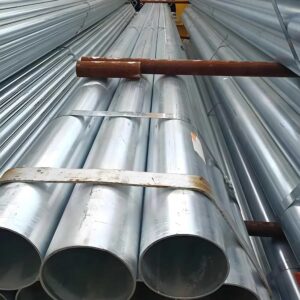
| Above-ground / exposed installations | Hot-dip galvanizing | General corrosion & rust protection for overhead or outdoor piping |
iv. Welding process selection
| Nominal Diameter | Operating Pressure | Recommended Manufacturing Process |
|---|---|---|
| ≤ 323.9 mm | ≤ 6 MPa | ERW / HFW |
| 323.9 – 1219 mm | 4 – 8 MPa | LSAW |
| ≥ 1220 mm | ≥ 6 MPa | SSAW |
v. Construction and environmental considerations
Low temperature environment: Steel grade with good low temperature toughness (such as X52–X70 PSL2)
Long-distance pipelines: PSL2 grade is recommended, and the steel grade is selected according to the pressure
Corrosive media: Select FBE, 3PE or inner lining anti-corrosion layer
vi. Comprehensive selection example
City natural gas medium and low pressure pipelines:
Steel grade: X42 PSL1
Outer diameter: 89 mm
Wall thickness: 3 mm
Corrosion protection: hot-dip galvanizing
Long-distance oil and gas high pressure pipelines:
Steel grade: X65 PSL2
Outer diameter: 914 mm
Wall thickness: 18 mm
Corrosion protection: 3PE
Offshore oil and gas platform pipelines:
Steel grade: X70 PSL2
Outer diameter: 609 mm
Wall thickness: 14 mm
Corrosion protection: FBE or inner lining epoxy
V. API 5L Welded Steel Pipe Inspection Standards
i. Inspection Process
Raw Materials → Dimensions/Appearance → Mechanical Properties → Weld/Base Material NDT → Hydrostatic Test → Corrosion Testing → Marking and Reporting
ii. API 5L Welded Steel Pipe Inspection Items Summary
| Test Category | Test Item | Test Standard / Method | Typical Result / Requirement |
|---|---|---|---|
| Visual & Dimensional | Surface defects | Visual inspection | No cracks, pores, pits, spatter, etc. |
| OD, WT, length | Measuring instruments | OD ±1 % / WT ±10 % / Length ±50 mm | |
| Chemical Composition | C | OES / Wet chemistry | 0.12–0.28 % |
| Mn | OES / Wet chemistry | 0.80–1.50 % | |
| P | OES / Wet chemistry | ≤ 0.025 % | |
| S | OES / Wet chemistry | ≤ 0.015 % | |
| Mechanical Properties | Yield Strength (YS) | Tensile test | X42: ≥290 MPa; X52: ≥345 MPa; X65: ≥450 MPa |
| Tensile Strength (TS) | Tensile test | X42: 415–560 MPa; X52: 455–605 MPa; X65: 510–690 MPa | |
| Elongation (EL) | Tensile test | ≥ 22 % | |
| Impact toughness (KV) | Charpy impact test | ≥ 27 J at –20 °C | |
| Bend properties | Bend test | No cracks | |
| Non-Destructive Testing | Weld seam & base metal | UT / RT | No cracks, lack of penetration, porosity, etc. |
| Hydrostatic Test | Static pressure | Hydrostatic test | ≥ 1.5 × design pressure; no leakage |
| Anti-corrosion Coating (if applied) | Coating thickness | Magnetic / eddy-current gauge | FBE: 250–400 µm; 3PE: 500–700 µm |
| Adhesion | Pull-off / dolly test | ≥ 15 MPa | |
| Impact resistance | Impact test | ≥ 20 J | |
| Corrosion resistance | Salt spray / chemical immersion | No rust after ≥ 500 h | |
| Marking & Certification | Product marking | Stencil / tag | Grade, PSL, heat number complete |
| Inspection documents | Chemical & Mechanical Test Report, NDT Report | Conformity / PASS |