I. Overview of High-Temperature Alloy Steel Seamless Tubes
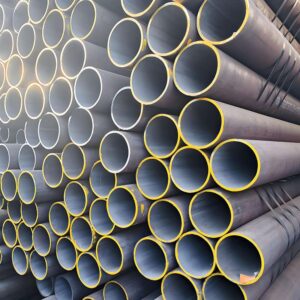
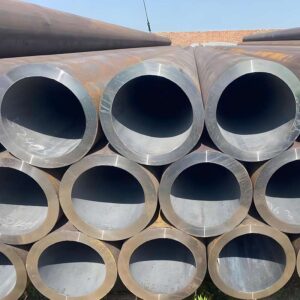
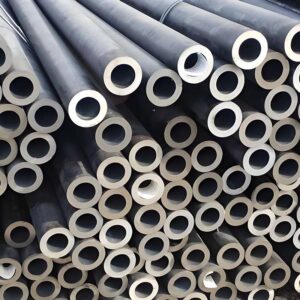
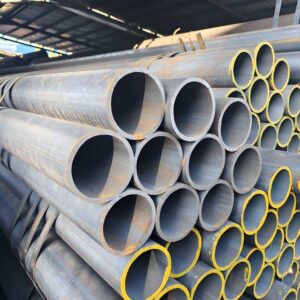
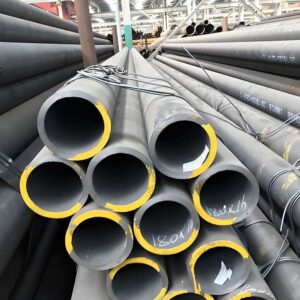
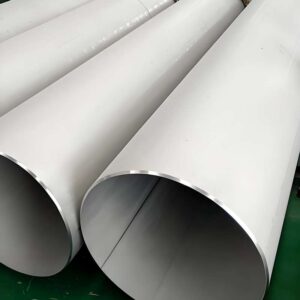
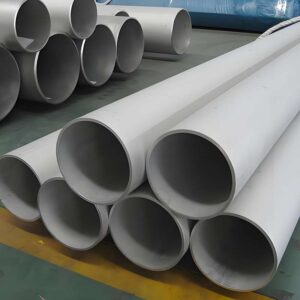
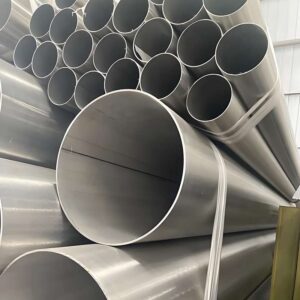
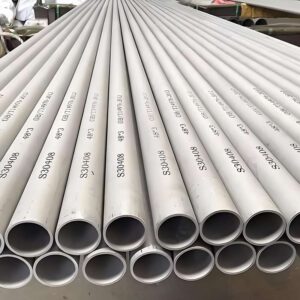
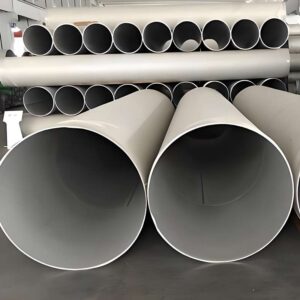
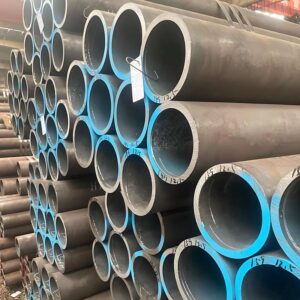
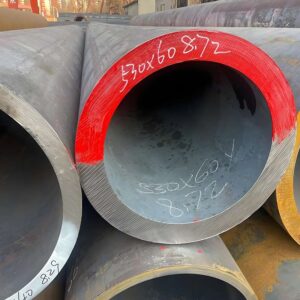
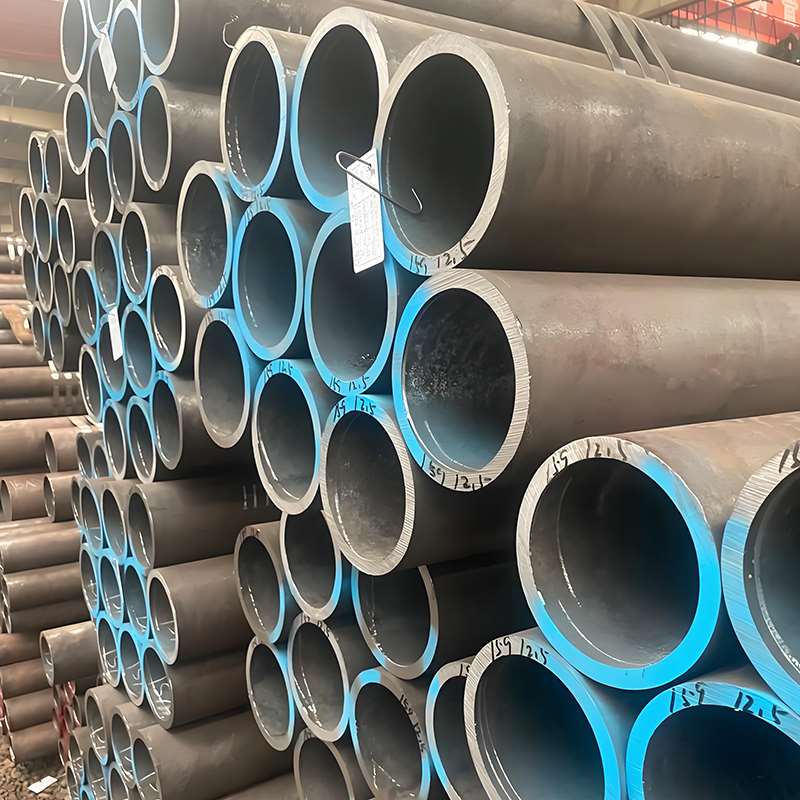
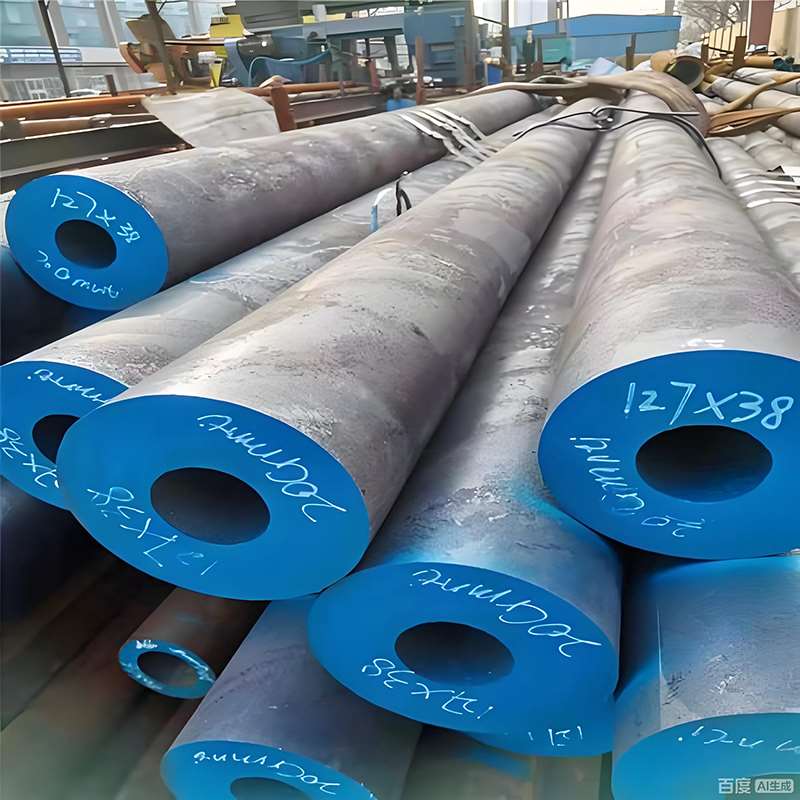
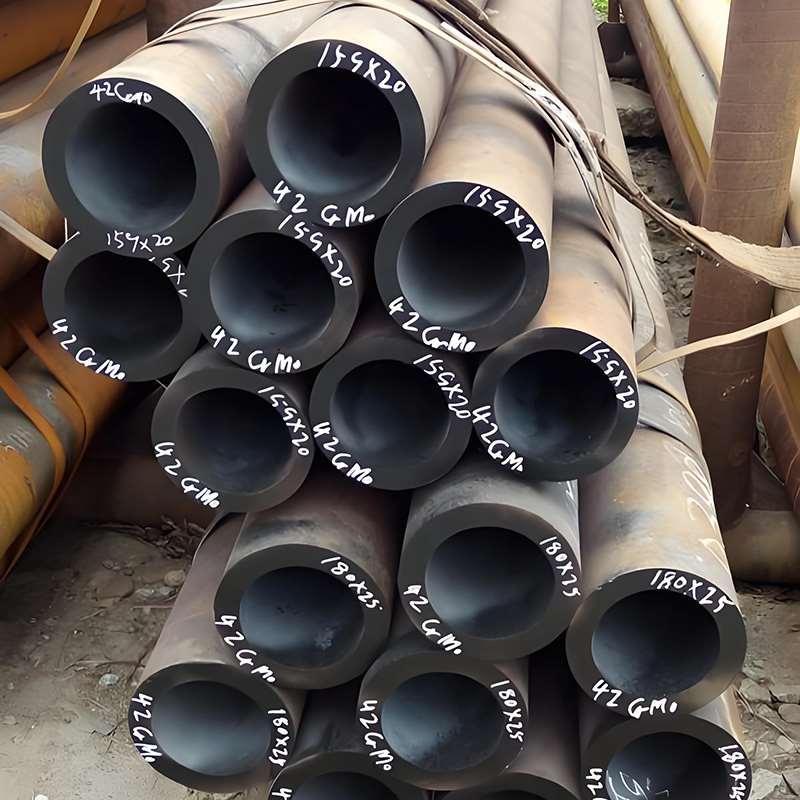
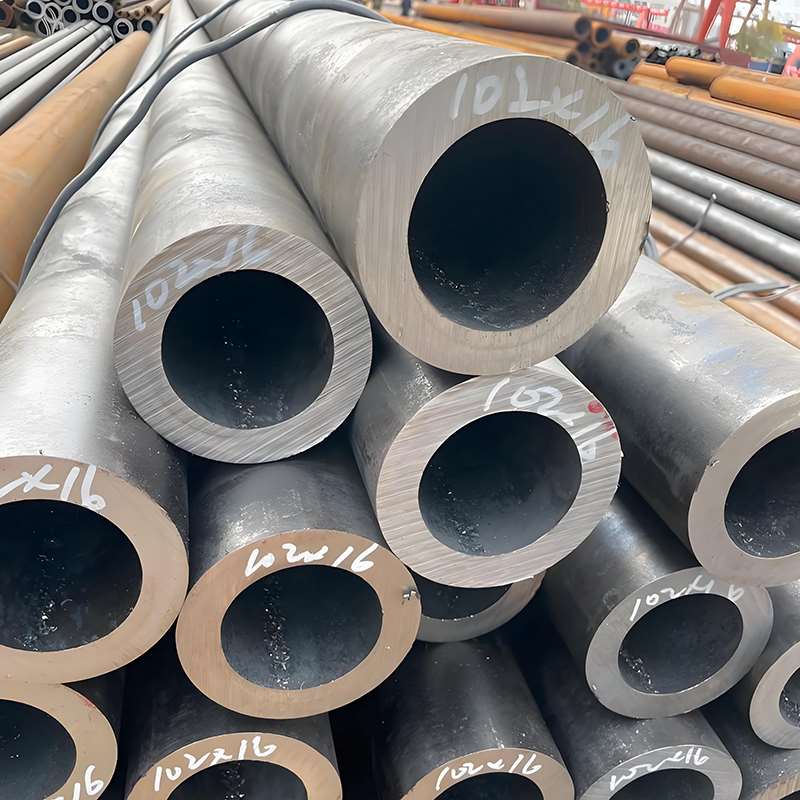
High-temperature alloy steel seamless pipes are specifically engineered to withstand high-temperature and high-pressure environments. Manufactured from high-quality alloy steel through processes such as hot rolling, normalizing, or quenching and tempering, these seamless pipes ensure overall structural integrity and durability.
This pipe type exhibits outstanding mechanical properties, corrosion resistance, and high-temperature stability, enabling safe, long-term operation in high-temperature steam pipelines, power plant boilers, petrochemical equipment, and industrial heat exchange systems.
II. Materials and Standards for High-Temperature Alloy Steel Seamless Tubes
i. Primary Materials and Distinctions
| Steel Grade | Chemical Composition Features | Applicable Temperature Range | Main Applications | Characteristics & Differences |
|---|---|---|---|---|
| P1 | Low-carbon carbon steel with minor alloying elements | ≤ 450 °C | General low-pressure steam piping | Low strength, limited temperature resistance; suited for low-temperature & low-pressure service |
| P5 | Medium Cr, Mo alloying additions | 450 – 525 °C | Medium/low-pressure boilers & steam lines | Higher strength than P1, better temperature capability |
| P9 | Medium-Cr, Mo alloy steel | 450 – 540 °C | Medium-pressure boiler tubes, heat exchangers | Improved high-temperature & pressure resistance, good impact toughness |
| P11 | Cr, Mo alloy steel | 500 – 550 °C | Medium/high-pressure steam piping | Excellent high-temperature strength for power-plant & petrochemical hot piping |
| P22 | Cr, Mo, V alloy steel | 500 – 600 °C | High-temperature/high-pressure boilers & steam lines | High strength at elevated temperature, good creep resistance for long-term service |
| P91 | High-Cr, high-Mo, high-V, N alloy steel | 550 – 650 °C | Ultra-high-pressure boilers, heat exchangers | Outstanding creep strength for prolonged high-temperature/high-pressure duty |
| P92 | High-Cr, high-Mo, high-V, N alloy steel—improved version of P91 | 550 – 650 °C | Ultra-high-pressure boilers, petrochemical equipment | Even higher creep resistance than P91, longer service life |
ii. Standards for High-Temperature Alloy Steel Seamless Pipes
| Standard Category | Standard Number | Standard Title | Scope / Description |
|---|---|---|---|
| International | ASTM A335 / ASME SA335 | Standard Specification for Seamless Ferritic Alloy-Steel Pipe for High-Temperature Service | For high-temperature/high-pressure steam lines, boiler tubes, heat-exchangers, etc., used in power, petrochemical and industrial high-temperature systems. |
| Chinese | GB/T 5310 | Seamless alloy-steel tubes for high temperature service | Design, manufacture and inspection requirements for boiler, steam and chemical piping operating at high temperatures. |
| German | DIN 17175 / DIN EN 10216-2 | Seamless steel tubes for pressure purposes | High-temperature/high-pressure steam tubing; widely used in European power plants and industrial systems. |
| Japanese | JIS G 4103 / JIS G 3459 | Alloy steel pipes for boiler and pressure vessel | High-temperature steam, boiler and pressure-vessel piping. |
| British | BS 3059 / BS EN 10216-2 | Alloy steel seamless tubes | High-temperature/high-pressure steam lines, boilers and industrial heat-exchange systems. |
iii. Chemical Composition
| Steel Grade | C % | Mn % | Si % | Cr % | Mo % | V % | N % | Remarks |
|---|---|---|---|---|---|---|---|---|
| P1 | 0.10–0.20 | 0.30–0.60 | 0.10–0.30 | ≤0.30 | ≤0.15 | — | — | Low-carbon steel, moderate temperature resistance |
| P5 | 0.10–0.20 | 0.30–0.60 | 0.10–0.30 | 0.50–1.00 | 0.50–0.60 | — | — | Suitable for medium-temperature steam; strength slightly higher than P1 |
| P9 | 0.05–0.12 | 0.30–0.60 | 0.10–0.30 | 1.90–2.50 | 0.80–1.05 | — | — | Commonly used for medium-pressure boiler tubing |
| P11 | 0.05–0.15 | 0.30–0.60 | 0.10–0.30 | 0.90–1.40 | 0.45–0.65 | — | — | Standard grade for high-temperature steam piping |
| P22 | 0.07–0.13 | 0.30–0.60 | 0.10–0.30 | 1.90–2.60 | 0.85–1.05 | 0.06–0.12 | — | For high-temperature/high-pressure boilers and steam lines |
| P91 | 0.08–0.12 | 0.30–0.60 | 0.20–0.50 | 8.00–9.50 | 0.85–1.05 | 0.18–0.25 | 0.03–0.06 | High-Cr–Mo–V–N steel with excellent creep resistance |
| P92 | 0.08–0.12 | 0.30–0.60 | 0.20–0.50 | 8.50–9.50 | 0.85–1.05 | 0.18–0.25 | 0.03–0.06 | Improved version of P91; even stronger creep resistance |
III. Application Fields of Alloy Steel Seamless Pipes for High-Temperature Use
(1) Power Industry
Boiler Steam Piping: High-temperature, high-pressure steam transport pipelines require pipe materials with high-temperature creep strength and pressure resistance.
Heat Exchanger and Reheater Piping: For long-term stable operation in high-temperature steam environments, steel grades such as P22, P91, and P92 should be selected.
Steam systems in coal-fired/gas-fired power plants: P11 and P22 grades are suitable for medium-to-high pressure, high-temperature steam pipelines to ensure safety and reliability.
(2) Petrochemical and Chemical Industry
High-temperature reactor piping: Concurrent exposure to chemical media and high temperatures necessitates alloy steel pipes with excellent corrosion resistance and high strength.
Heat exchangers and thermal oil pipelines: For transporting high-temperature liquids or gases, P91/P92 steel grades can be selected to guarantee long-term stable operation.
Petrochemical refining steam pipelines: P11/P22 steel grades are used for medium-to-high-temperature steam pipelines to extend equipment lifespan and reduce maintenance costs.
(3) Metallurgy and Steel Industry
High-temperature furnace piping and steam lines: Frequent thermal cycling within furnaces demands high-strength, high-toughness tubing.
Heat treatment equipment piping: High-temperature oil or gas transport lines should utilize heat-resistant grades like P9 or P11.
(4) Industrial Boilers and Heating Systems
District heating pipelines: P1/P5/P9 steel grades adequately meet low-to-medium pressure, long-distance steam transmission requirements.
Industrial high-temperature steam piping: For applications in papermaking, chemical, food, and pharmaceutical industries, P11/P22/P91 steel grades ensure safety and reliability under high-temperature, high-pressure conditions.
(5) High-Temperature, High-Pressure Fluid Conveyance Systems
Hot water, thermal oil, and chemical medium pipelines: Piping materials must possess temperature resistance, pressure resistance, and adequate corrosion resistance. Material selection is based on operating temperature and pressure rating.
Customized industrial equipment piping: Different steel grades (P11, P22, P91, P92) are selected according to temperature, pressure, and medium characteristics to ensure long-term stable equipment operation.
IV. Testing Methods for High-Temperature Alloy Steel Seamless Tubes
1. Chemical Composition Testing
Purpose: Verify steel composition meets design and standard requirements (e.g., ASTM A335/P series)
Testing Methods:
Optical Emission Spectroscopy (OES)
Chemical Analysis (Wet Chemical Method)
Test Items: Primary alloying elements including C, Mn, Si, Cr, Mo, V, N, etc.
Notes: Specifications for Cr, Mo, V, and N content vary by steel grade; strictly adhere to standards.
2. Mechanical Properties Testing
Purpose: Ensure pipe strength and toughness under high-temperature, high-pressure conditions
Testing Methods:
Tensile Test: Measure yield strength, tensile strength, and elongation
Impact Test: Measure low-temperature toughness
Hardness Test: Brinell hardness, Rockwell hardness
Applicable Standards: ASTM A370 or corresponding steel grade standards
3. Dimension and Tolerance Inspection
Purpose: To ensure outer diameter, wall thickness, and length meet design requirements for pipeline installation.
Inspection Methods:
Outer Diameter: Vernier caliper, laser diameter gauge
Wall Thickness: Ultrasonic thickness gauge, mechanical thickness gauge
Length: Tape measure, length gauge
Key Metrics: OD, WT, nominal length, straightness
4. Surface Quality Inspection
Purpose: Prevent cracks, defects, oxidation, and corrosion from affecting service life
Inspection Methods:
Visual inspection
Magnetic particle testing (MT)
Eddy current testing (ET)
Ultrasonic testing (UT)
Inspection Items: Surface cracks, porosity, slag inclusions, pitting, etc.
5. High-Temperature Performance Testing
Purpose: Evaluate creep performance and stability under prolonged high-temperature conditions
Test Methods:
Creep test
High-temperature tensile test
High-temperature pressure test
Scope of Application: P22, P91, P92, and other tubing materials used in high-temperature, high-pressure steam systems
6. Welding and End Processing Inspection
Purpose: Ensure quality of pipe end machining or welded joints
Test Methods:
Ultrasonic Weld Inspection
Liquid Penetrant Testing (PT)
Thread Dimension and Fit Inspection
7. Certification and Supplementary Documentation
Purpose: Ensure procurement and usage compliance
Documents:
Material Test Certificate (MTC)
ISO 9001 Quality Management System Certification
Test Reports conforming to ASTM / ASME / GB standards
V. Ordering Guide for High-Temperature Alloy Steel Seamless Pipes
1. Determine Operating Conditions
Operating Temperature: Select appropriate steel grades based on steam, thermal oil, or other high-temperature medium temperatures.
≤450°C → P1, P5
450–550°C → P9, P11, P22
550–650°C → P91, P92
Operating Pressure: Determine the maximum pressure the pipeline will endure and select the corresponding steel grade and wall thickness.
2. Select Steel Grade and Material
Reference Standards: ASTM A335 / ASME SA335 / GB/T 5310
Steel Grade Selection: Choose the most suitable steel grade based on temperature, pressure, and medium properties.
Corrosion Resistance Requirements: For corrosive media, select high-chromium steel grades or apply corrosion-resistant treatments.
3. Dimensioning
Outer Diameter (OD): Determined based on pipeline design and flow requirements.
Wall Thickness (WT): Selected according to pressure rating and temperature, referencing ASME B31.1/B31.3 or design specifications.
Length: Standard 6m or 12m, customizable per site construction needs.
Tolerance Requirements: Confirm straightness, OD tolerance, and end machining accuracy with the design unit.
4. Pipe Ends and Surface Treatment
End Form: Plain ends (PE), threaded ends (TE), or flanged connections.
Surface Treatment: Pickling, rust-preventive oil coating, sandblasting, or special coatings to prevent rust during transportation and storage.
5. Quality Certification and Inspection
Material Test Certificate (MTC): Proof of steel grade, chemical composition, and mechanical properties must be provided.
Third-Party Testing: May require chemical composition analysis, dimensional inspection, mechanical property testing, and non-destructive testing (UT/MT/PT).
Quality Standards: Compliant with international standards such as ASTM / ASME / GB.
6. Purchase Quantity and Delivery
Purchase Quantity: Calculated based on total pipeline project volume, with allowance for material wastage.
Delivery Lead Time: Standard grades: approx. 15–30 days; Custom grades and lengths require prior coordination.
Packaging Requirements: Wooden crates, steel banding, rust-proof coating for long-distance transport.
7. Technical Communication Recommendations
Provide suppliers with complete operating conditions: temperature, pressure, medium type, pipeline length, and installation requirements.
Compare performance and pricing across different steel grades to select cost-effective materials.
For high-temperature/high-pressure pipelines or critical equipment piping, consider high-performance steels like P91/P92 to ensure long-term stable operation.