I. What is SSAW Steel Pipe?
(1) Definition of spiral welded pipe
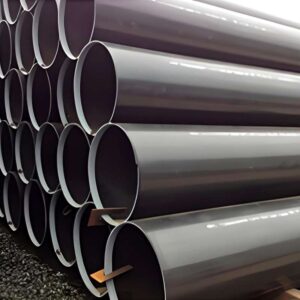
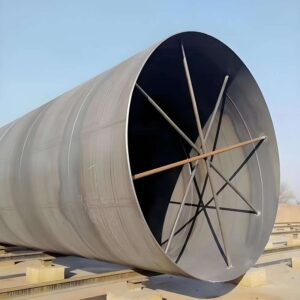
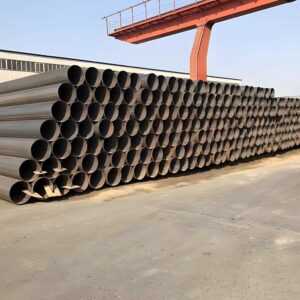
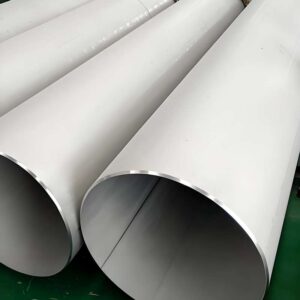
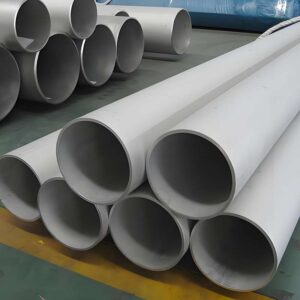
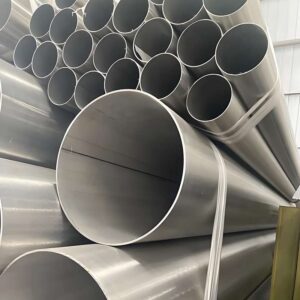
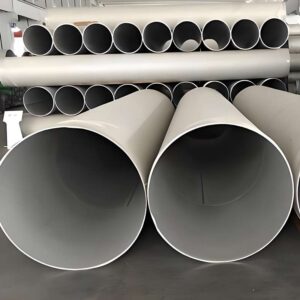
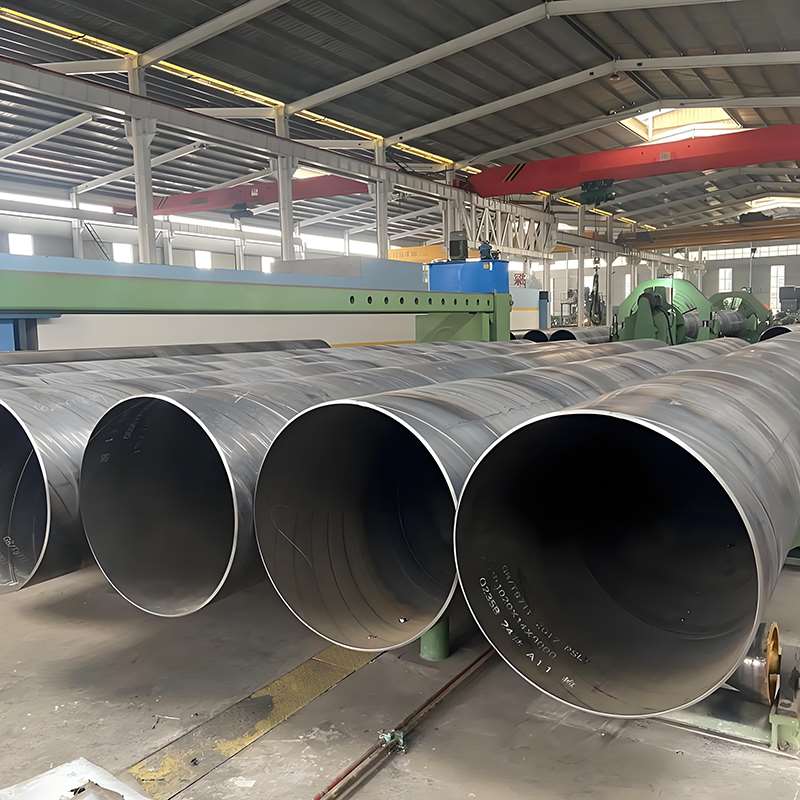
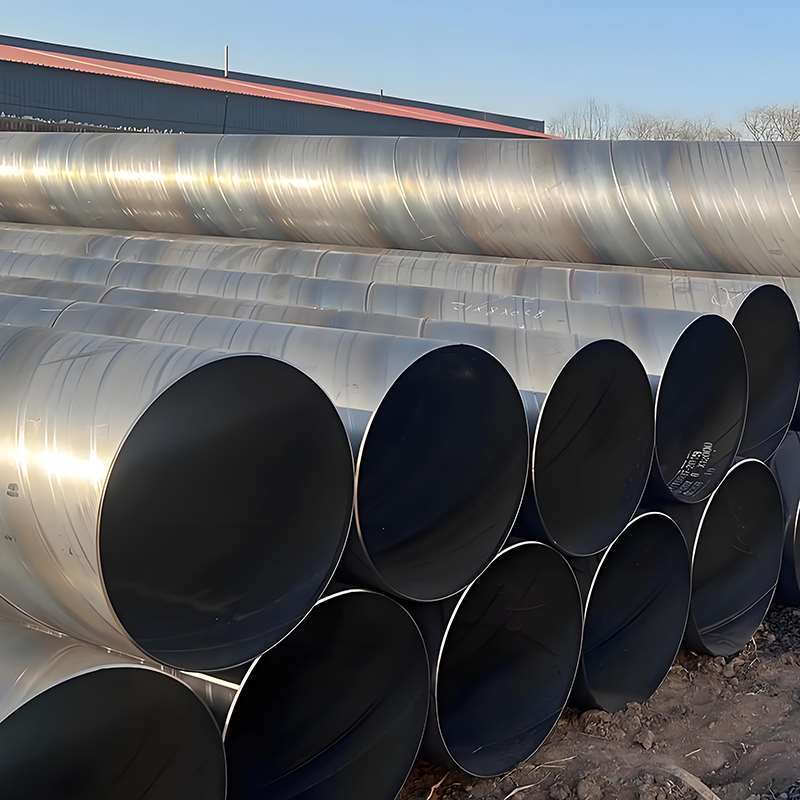
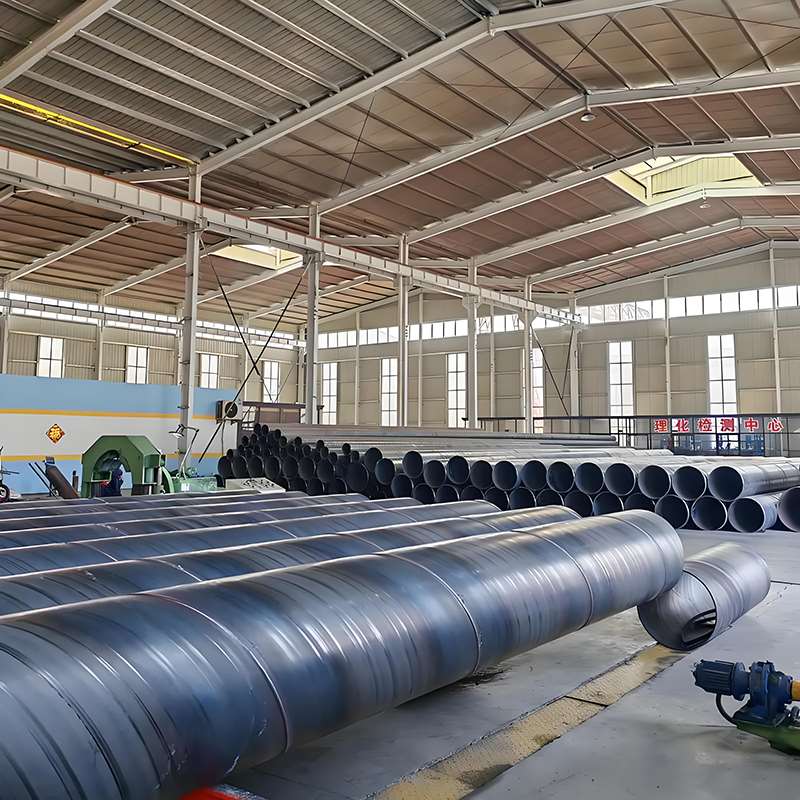
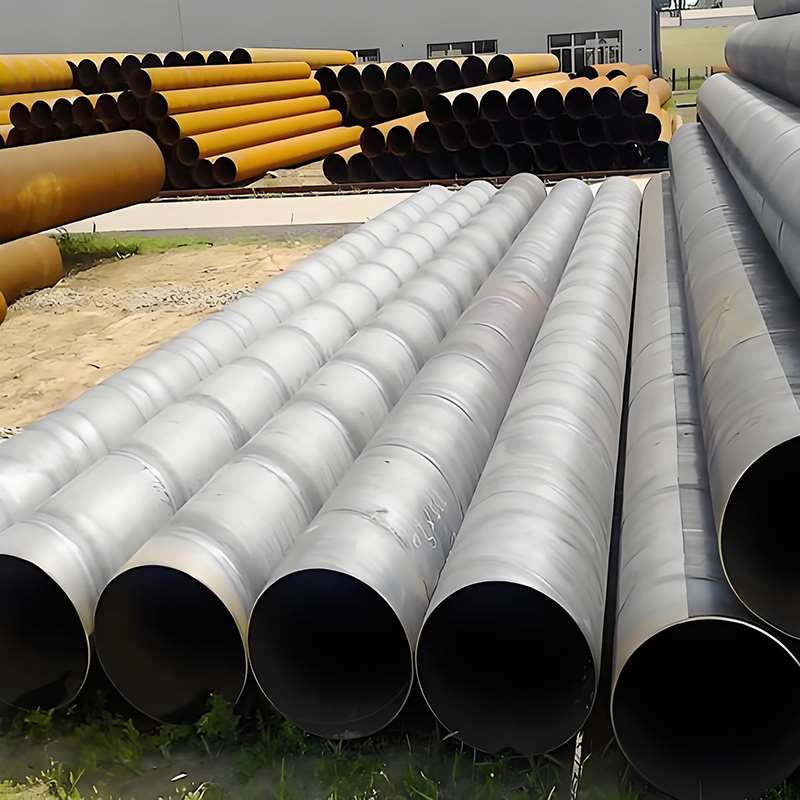
Spiral submerged arc welded steel pipe refers to steel pipe manufactured using steel coil as raw material. The steel coil is formed into a pipe blank using a spiral forming machine at a specific spiral angle, and then the pipe seam is welded using the submerged arc welding process.
“Spiral”: refers to the weld seam of the steel pipe being distributed in a spiral pattern on the surface of the pipe body, rather than in a straight line.
“Submerged arc welding”: is an efficient welding method where the arc is submerged under a layer of flux during welding, effectively protecting the weld pool and improving weld quality.
(2) Comparison with straight seam welded pipes (LSAW)
| Feature | Spiral Submerged-Arc Welded (SSAW) Pipe | Longitudinal Submerged-Arc Welded (LSAW) Pipe |
|---|---|---|
| Raw Material | Hot-rolled coil (usually narrow strip) | Single or multiple medium-thick steel plates |
| Forming Method | Continuous spiral bending of strip into pipe blank | Plate bent or UOE-formed into straight pipe blank under pressure |
| Weld Count | One spiral weld | One or two straight welds |
| Diameter Range | Wide range; diameter easily changed by adjusting forming angle, versatile for equipment | Diameter limited by plate width; typically for large-diameter pipes |
| Defect Characteristics | Spiral weld avoids stress concentration but total weld length is longer | Straight weld with good linearity, but prone to residual welding stresses |
| Production Efficiency | Continuous process, higher efficiency | Batch process, relatively lower efficiency |
| Application | Medium-to-large diameter water, oil, gas pipelines, piling, structural pipe | Large-diameter, high-pressure, high-quality oil & gas trunk lines |
| Wall Thickness | Relatively thin; capable of large-diameter thin-wall pipes | Usually for thick-wall pipes |
(3) SSAW steel pipe standard parameter comparison table
| Standard No. | Common Grades / Materials | OD Range (mm) | Wall Thickness Range (mm) | Length Range (m) | Features / Applications |
|---|---|---|---|---|---|
| SY/T 5037 | Q235B, Q345B | 219 – 3 620 | 5 – 25 | 6 – 18 | General-purpose pipes for medium-pressure fluid transport. |
| SY/T 5040 | L245, L290 | 406 – 1 420 | 6 – 20 | 6 – 18 | Oil-casing and high-pressure service lines. |
| GB/T 9711 | L245, L360 (PSL1/PSL2) | 219 – 2 032 | 6 – 30 | 5 – 18 | Oil & natural-gas transmission pipelines. |
| API 5L | Gr.B, X42–X80 (PSL1/PSL2) | 219 – 2 540 | 6 – 30 | 5.8 – 18 | International standard for oil & gas line pipes. |
| JIS G 3457 | STPY400, STPY500 | 318 – 2 540 | 5 – 20 | 6 – 12 | Industrial piping, water supply, drainage, and pressure vessels. |
| EN 10219 | S235JRH, S355J2H | 219 – 2 540 | 5 – 25 | 6 – 12 | Structural hollow sections for buildings and steel frameworks. |
II. Manufacturing Process of Spiral Submerged Arc Welded Steel Pipes
(1) Raw Material Preparation
Steel plate cutting: Hot-rolled steel coils are cut into steel plates of specified lengths (typically 1.2–2.5 meters wide) according to requirements.
Pre-treatment:
Shot blasting for rust removal (Sa2.5 grade, surface free of oxide scale)
Application of anti-rust primer (thickness 10–20 μm)
(2) Spiral Forming
Equipment: Three-roll bending machine or JCO forming machine
Process:
The steel plate is gradually bent into a spiral shape by the forming rolls
Weld angle controlled at 50–75° (to ensure welding stability)
Forming speed: 3–5 meters per minute
(3) Submerged arc welding
Welding method: Double-sided submerged arc welding (DSAW)
Parameters:
Current: 800-1200 A (positive polarity)
Voltage: 30-38 V
Welding wire diameter: 3.2-4.0 mm (H08MnA material)
Flux: HJ431 (melting type)
Features: Deep weld penetration, no porosity/slag inclusions
(4) Heat treatment
Normalizing process:
Heated to 890-930°C (holding time: 1.5 minutes per mm wall thickness)
Air-cooled to below 300°C
Purpose: Eliminate welding stresses and refine grain size (improve toughness)
(5) Dimension Adjustment
Straightening: Seven-roll straightening machine to eliminate spiral deformation (straightness error ≤2 mm/m)
Sizing: Adjust outer diameter using conical sizing rolls (tolerance ±1%D)
Cutting of ends: Sawing machine removes unpenetrated areas at both ends (length ≥ 200 mm)
(6) Inspection and marking
Non-destructive testing:
X-ray inspection of internal weld defects (sensitivity ≥ 2%)
Ultrasonic testing (UT) covering 100% of the pipe body
Hydrostatic test: Pressure ≥ 1.5 times nominal pressure (holding time ≥ 5 seconds)
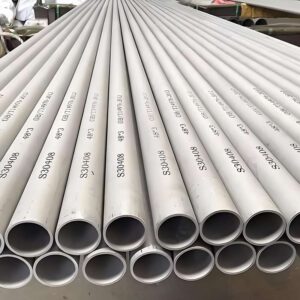
Marking: Spray-code marking of specifications, standards, and production date (e.g., Φ820×12mm API 5L PSL2)
(7) Corrosion protection treatment (optional)
3PE corrosion protection layer: Bottom layer of epoxy powder + intermediate adhesive layer + outer layer of polyethylene (thickness ≥2.5mm)
Application scenarios: Buried oil and gas pipelines (e.g., West-to-East Gas Pipeline branch lines)
III. Analysis of the Advantages and Disadvantages of SSAW Steel Pipe
| Advantages | Disadvantages |
|---|---|
| High production efficiency: suitable for large-diameter pipes with flexible and efficient manufacturing. | Weld quality issues: improper welding may lead to defects such as pores and cracks. |
| Strong adaptability: capable of producing pipes in various sizes and wall thicknesses. | Internal wall defects: irregular weld seams on the inner wall may affect fluid flow. |
| High weld strength: the welded seam has strong compressive resistance, suitable for high-pressure environments. | Heat-affected zone issues: the heat-affected zone during welding may affect the metal properties of the pipe. |
| Lower cost: economical for producing large-diameter pipes. | Localized corrosion: the weld area may become a weak point for corrosion. |
| Good sealing: suitable for transporting media requiring high sealing performance. | High equipment and technical requirements: requires high-precision equipment and advanced welding technology. |
| Suitable for long-distance transport: widely used in oil and gas transmission. |
IV. Application Areas of Spiral Submerged Arc Welded Steel Pipes
(1) Oil and Natural Gas Transportation
Energy Arteries: SSAW is an important material for onshore and some offshore oil and gas pipelines.
Large Diameter High Pressure: Suitable for the efficient transportation of crude oil, natural gas, and refined oil products.
(2) Municipal Engineering
Urban Lifelines: Widely used as large-diameter rainwater, sewage, heating, and gas main pipelines.
Ensuring Operation: Ensures the smooth and safe operation of urban drainage, heating, and gas supply systems.
(3) Bridge Piles and Dock Casing
Foundation Supports: Used for piles in deep water or soft soil foundations for bridges, high-rise buildings, etc.
Port Construction: Used as cofferdams or temporary support structures in docks.
(4) Water Supply Pipelines and Water Conservancy Projects
Source of Life: Ideal for long-distance urban water supply and industrial water transmission pipelines.
Water Conservancy Hubs: Used for large-diameter pipelines in reservoirs, dams, and water diversion projects.
(5) Underground Structure Support Pipes
Tunnel Support: Used for support in tunnels and mines to reinforce surrounding rock and prevent cave-ins.
Trenchless Engineering: Used as jacking pipes or casings to minimize impact on ground traffic and the environment.