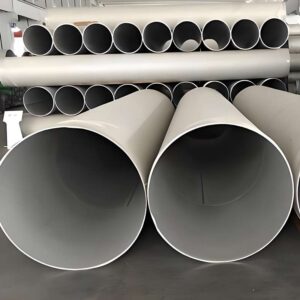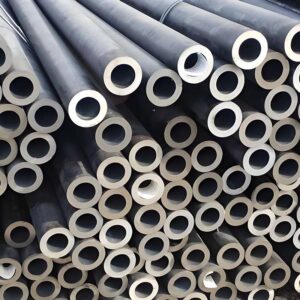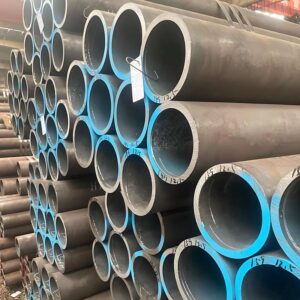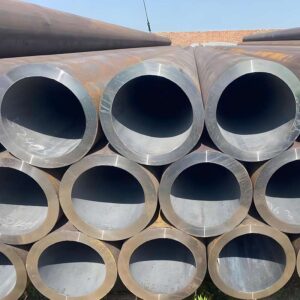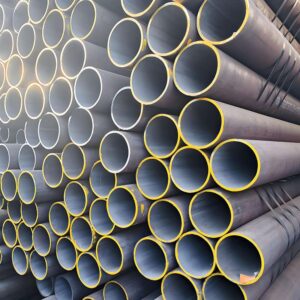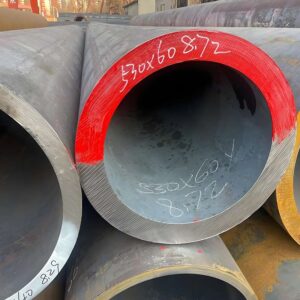
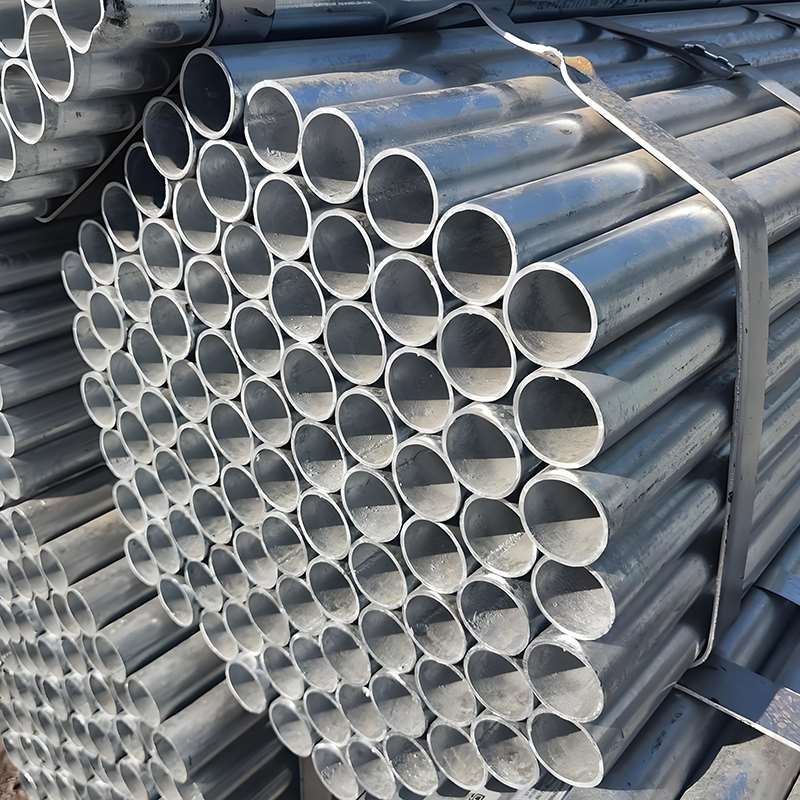
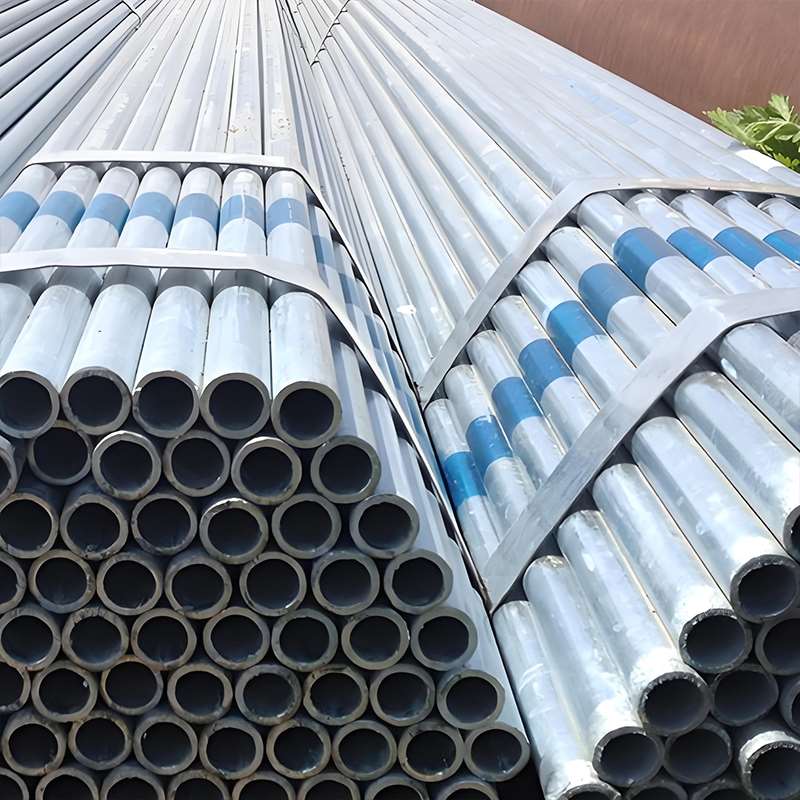
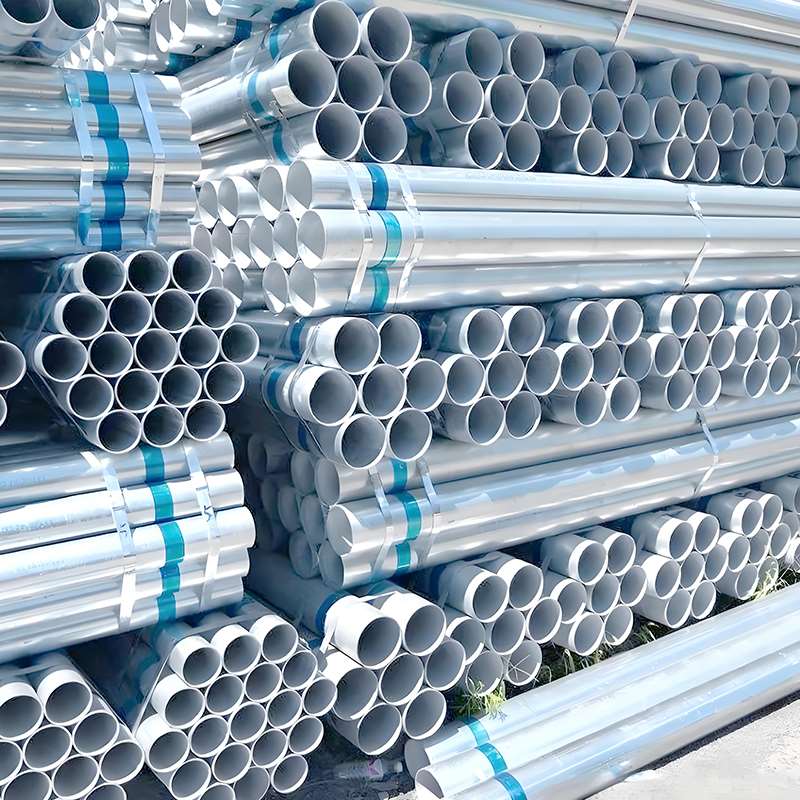
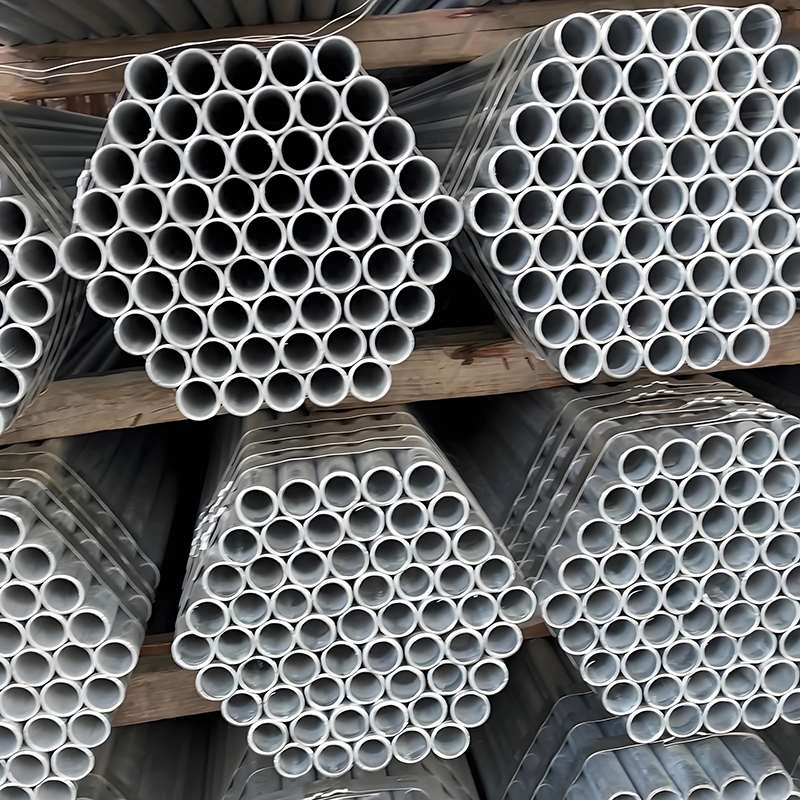
Galvanized welded steel pipe is a common and practical material used in construction projects, municipal pipe networks, and industrial piping. Combining strength, corrosion resistance, and cost-effectiveness, it is widely used in water supply and drainage, fire protection, HVAC, agricultural irrigation, and other applications.
Many procurement professionals encounter issues such as model selection, pricing, transportation, and construction during actual projects.
This article will provide a practical procurement and application guide based on practical application scenarios.
I. Basic Knowledge of Galvanized Welded Steel Pipe
Galvanized welded steel pipe is a product that is galvanized on both the outer and inner surfaces of welded steel pipe. The zinc coating effectively prevents corrosion and extends its service life.
Compared to ordinary welded steel pipe, it is more suitable for conditions involving long-term exposure to water, moisture, and outdoor environments.
Common galvanizing methods:
Hot-dip galvanizing: offers a thick coating and a long service life, often used outdoors and in locations with long-term use.
Electrogalvanizing: offers a thin coating and a bright appearance, suitable for projects requiring aesthetically pleasing finishes.
II. Galvanized Welded Steel Pipe Specifications
Refer to GB/T 3091-2015. Applicable to water supply and drainage, fire protection, HVAC, and other projects.
| Nominal Diameter (DN) | Inch (in) | Outside Diameter (mm) | Common Wall Thickness (mm) | Common Standards |
|---|---|---|---|---|
| 15 | 1/2" | 21.3 | 2.5–3.25 | GB/T 3091, ASTM A53, BS 1387 |
| 20 | 3/4" | 26.9 | 2.5–3.25 | GB/T 3091, ASTM A53, BS 1387 |
| 25 | 1" | 33.7 | 2.5–3.25 | GB/T 3091, ASTM A53, BS 1387 |
| 32 | 1-1/4" | 42.4 | 2.75–3.5 | GB/T 3091, ASTM A53, BS 1387 |
| 40 | 1-1/2" | 48.3 | 2.75–3.5 | GB/T 3091, ASTM A53, BS 1387 |
| 50 | 2" | 60.3 | 2.75–3.75 | GB/T 3091, ASTM A53, BS 1387 |
| 65 | 2-1/2" | 76.1 | 3.0–4.0 | GB/T 3091, ASTM A53, BS 1387 |
| 80 | 3" | 88.9 | 3.0–4.0 | GB/T 3091, ASTM A53, BS 1387 |
| 100 | 4" | 114.3 | 3.25–4.5 | GB/T 3091, ASTM A53, BS 1387 |
| 125 | 5" | 139.7 | 3.25–5.0 | GB/T 3091, ASTM A53, BS 1387 |
| 150 | 6" | 168.3 | 3.5–7.0 | GB/T 3091, ASTM A53, BS 1387 |
| 200 | 8" | 219.1 | 4.0–8.0 | GB/T 3091, ASTM A53, BS 1387 |
| 250 | 10" | 273.0 | 4.5–9.0 | GB/T 3091, ASTM A53, BS 1387 |
| 300 | 12" | 323.9 | 6.0–10.0 | GB/T 3091, ASTM A53, BS 1387 |
Instructions:
DN15–DN150: Most widely used, commonly in building water supply and drainage, fire protection piping, and HVAC systems.
DN200–DN300: Mostly used in municipal pipe networks and factory transmission piping.
DN300 and above: Rarely used in the market, usually replaced by corrosion-resistant steel pipe or plastic-coated composite steel pipe.
III. Price reference for galvanized welded steel pipe (unit: yuan/ton)
| Nominal Diameter (DN) | Outside Diameter (mm) | Wall Thickness (mm) | Price Range (CNY/ton) |
|---|---|---|---|
| 15 | 21.3 | 2.5–3.25 | 3,500–4,200 |
| 20 | 26.9 | 2.5–3.25 | 3,600–4,300 |
| 25 | 33.7 | 2.5–3.25 | 3,700–4,400 |
| 32 | 42.4 | 2.75–3.5 | 3,800–4,500 |
| 40 | 48.3 | 2.75–3.5 | 3,900–4,600 |
| 50 | 60.3 | 2.75–3.75 | 4,000–4,700 |
| 65 | 76.1 | 3.0–4.0 | 4,100–4,800 |
| 80 | 88.9 | 3.0–4.0 | 4,200–4,900 |
| 100 | 114.3 | 3.25–4.5 | 4,300–5,000 |
| 125 | 139.7 | 3.25–5.0 | 4,400–5,100 |
| 150 | 168.3 | 3.5–7.0 | 4,500–5,200 |
| 200 | 219.1 | 4.0–8.0 | 4,600–5,300 |
| 250 | 273.0 | 4.5–9.0 | 4,700–5,400 |
| 300 | 323.9 | 6.0–10.0 | 4,800–5,500 |
Note: The above prices are for reference only. Actual prices may vary depending on factors such as region, supplier, and purchase volume.
Factors Affecting Prices:
Raw Material Cost: Fluctuations in steel prices directly impact the cost of galvanized welded steel pipe.
Production Process: Different galvanizing methods (e.g., hot-dip galvanizing, electroplating) and wall thickness requirements affect production costs.
Market Demand: Fluctuations in demand in industries like construction, water supply and drainage, and fire protection can influence market prices.
Transportation Costs: Factors like distance, transportation method, and fuel prices can influence the final price.
Regional Differences: Production costs and market competition levels in different regions can lead to price differences.
IV. Implementation Standards for Galvanized Welded Steel Pipes
| Standard Type | Standard No. | Standard Title | Scope of Application | Remarks |
|---|---|---|---|---|
| GB (Chinese National) | GB/T 3091-2015 | Welded steel pipes for low-pressure fluid delivery | Construction, water supply & drainage, fire-fighting, HVAC | Most widely used GB standard for galvanized welded pipes |
| GB | GB/T 6728-2002 | Welded steel pipes for water supply | Potable-water pipelines | Applicable to hot-dip galvanized welded pipes |
| GB | GB/T 13793-2008 | Welded steel pipes for indoor water supply | Building water-supply systems | Suitable for hot-dip galvanized pipes |
| ASTM (American) | ASTM A53 / A53M | Pipe, Steel, Black and Hot-Dipped, Zinc-Coated, Welded and Seamless | Industrial & construction piping | Hot-dip galvanized welded pipes can be manufactured to this spec |
| ASTM | ASTM A795 / A795M | Standard Specification for Black and Hot-Dipped Zinc-Coated (Galvanized) Welded and Seamless Steel Pipe for Fire Protection | Fire-protection piping systems | Galvanized welded pipes for fire services |
| BS (British) | BS 1387 | Steel pipes and tubes, welded and seamless, for water and gas | Water and gas distribution lines | Galvanized welded pipes produced to this standard are common for export |
| Industry | CJ/T 123-2010 | Welded steel pipes for fire-fighting water supply | Fire-sprinkler & hydrant networks | Frequently adopted in domestic fire-protection projects |
| Industry | HG/T 20592-2009 | Hot-dip galvanized welded steel pipes | Industrial process piping | Widely used in chemical plants and factory pipelines |
V. How to choose a galvanized welded steel pipe manufacturer
i. Production capacity and equipment level
Production equipment: High-quality manufacturers are usually equipped with advanced welding pipe production lines and galvanizing lines, which can ensure the dimensional accuracy and uniformity of the pipes.
Production capacity: Based on the project requirements, determine whether the manufacturer can provide large quantities and continuous supply on time.
Technical support: Manufacturers with R&D or technical teams can provide customized pipe diameters, wall thicknesses, galvanizing thicknesses and other special requirements.
Note: Small workshops or manufacturers with outdated equipment may not be able to guarantee large-scale delivery and product consistency.
ii. Product Quality and Certification
Standard Implementation: Choose manufacturers that can implement GB/T 3091, ASTM A53, BS 1387, etc.
Test Report: Check the test reports for chemical composition, mechanical properties, galvanized layer thickness, weld quality, etc.
Certification Qualification: ISO9001, ISO14001, etc. quality management system certification can be used as a reference.
Tip: Try to ask the manufacturer to provide a third-party inspection report to avoid quality risks.
iii. Galvanizing process and corrosion resistance
Hot-dip galvanizing vs. electrogalvanizing: Hot-dip galvanizing has a thicker layer and higher corrosion resistance, making it suitable for outdoor and long-term use.
Coating thickness: Typically 40–100 μm, with uniform thickness being key.
Galvanizing uniformity: Check pipe ends and welds for zinc deficiency, bubbles, or detachment visually or with specialized testing instruments.
Tip: For outdoor, fire protection, and water supply pipes, it is recommended to choose a hot-dip galvanized welded steel pipe manufacturer.
iv. Delivery Time and After-Sales Service
Delivery Time: High-quality manufacturers typically offer bulk delivery plans and support for urgent orders.
After-Sales Service: Look for services such as transportation, installation guidance, and after-sales warranty.
Project Support: Large projects may require on-site technical support and installation training.
Note: Manufacturers with untimely delivery and inadequate after-sales service increase project construction risks.
v. Price and Value
Reasonable Quote: A low price may indicate insufficient galvanizing thickness or substandard material.
Value: Considering price is not solely based on unit price, but rather a comprehensive evaluation based on quality, delivery time, and after-sales service.
Bulk Purchase Discounts: Long-term partnerships may offer price discounts or free shipping.
vi. Company Reputation and Customer Case Studies
Market Reputation: Analyze the manufacturer’s reliability through customer reviews and industry reputation.
Project Case Studies: Review the manufacturer’s completed municipal, construction, or industrial projects.
Brand Influence: Manufacturers with established reputations and export experience generally offer more standardized and consistent quality.