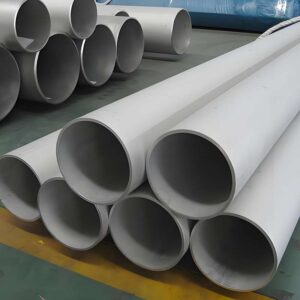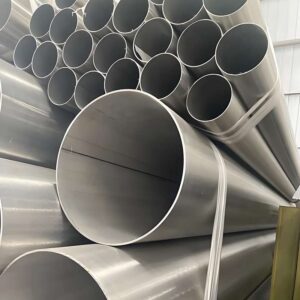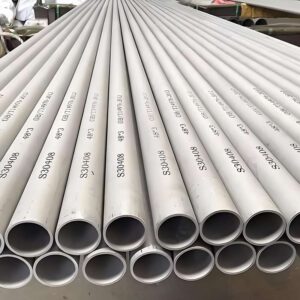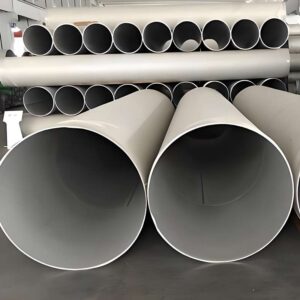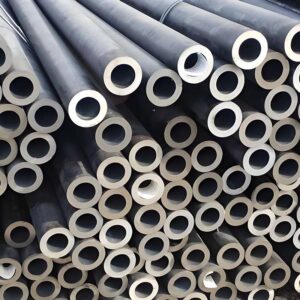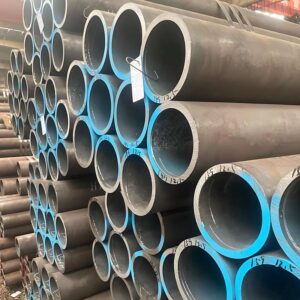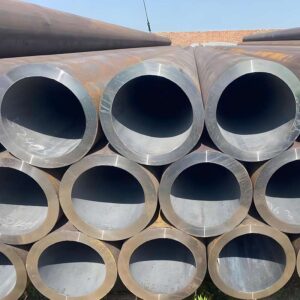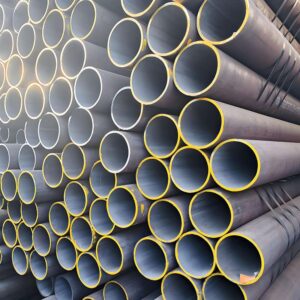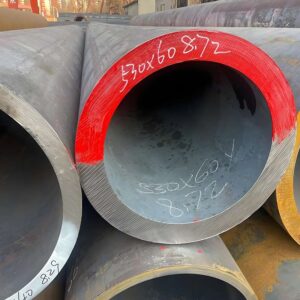
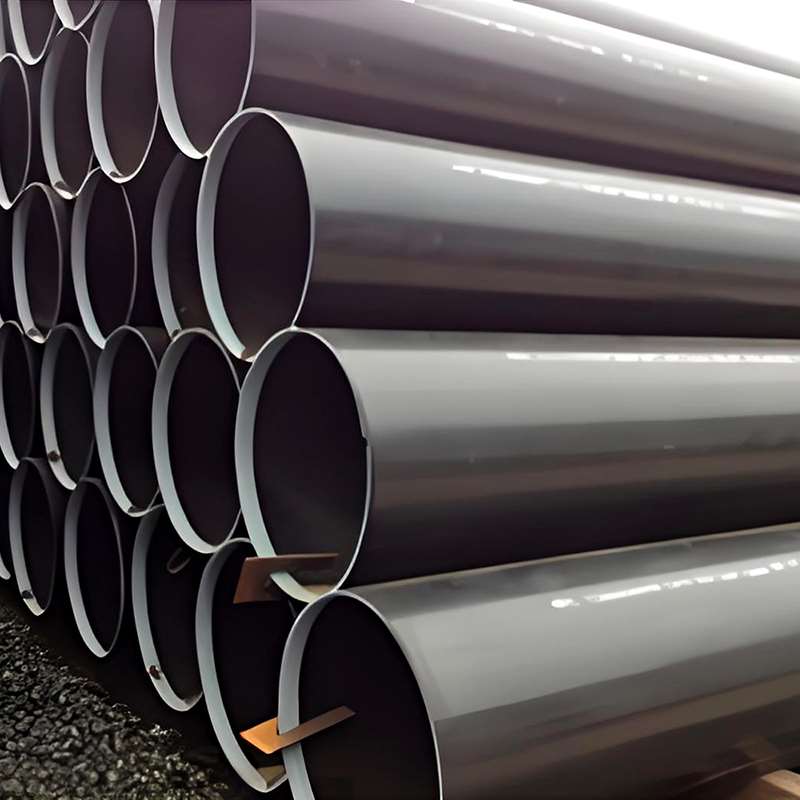
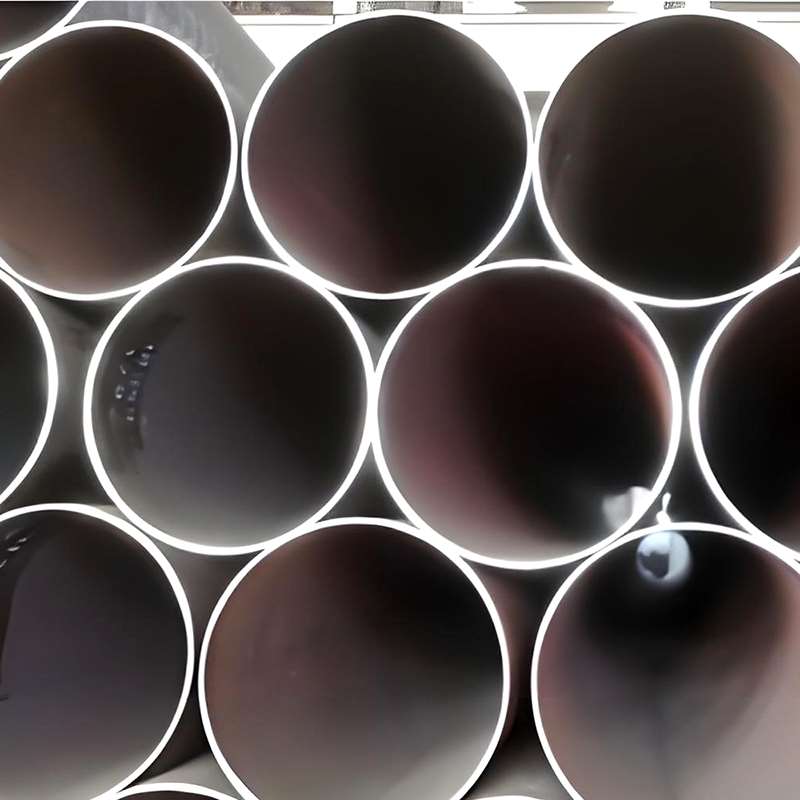
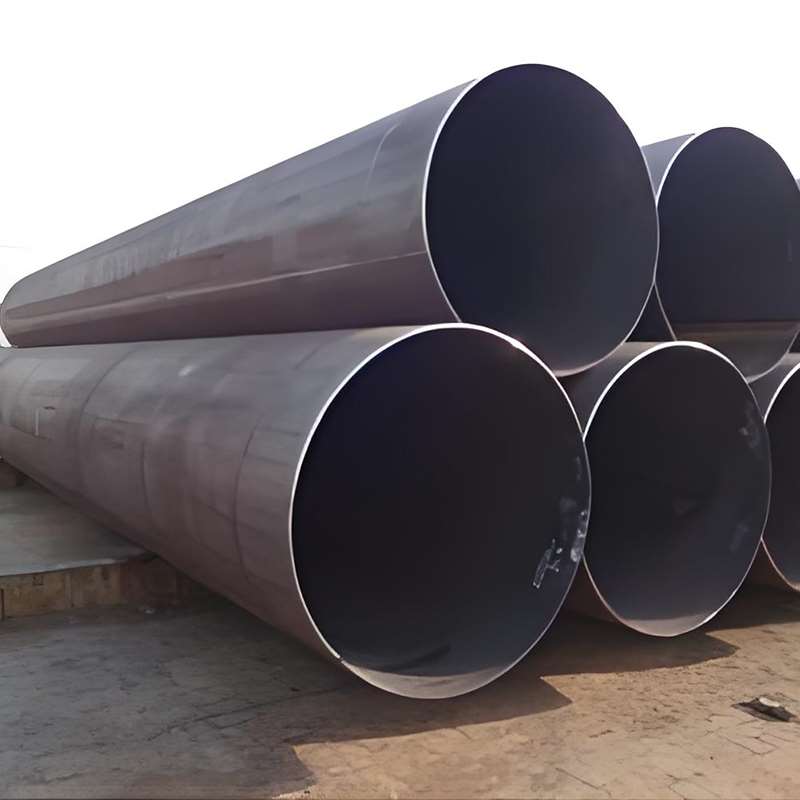
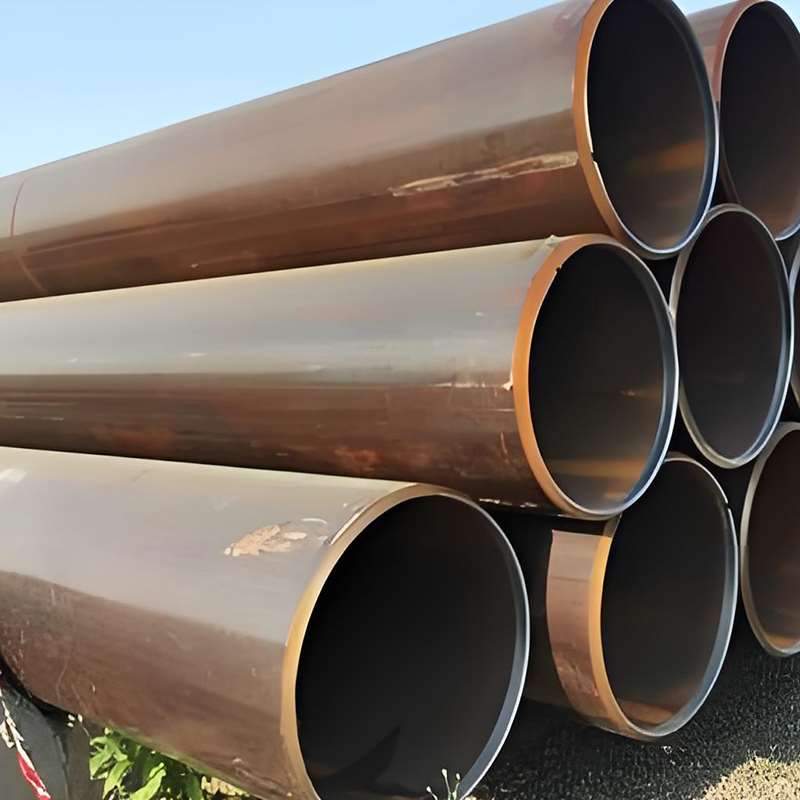
I. Definition of ERW welded steel pipe
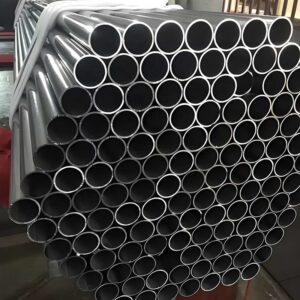
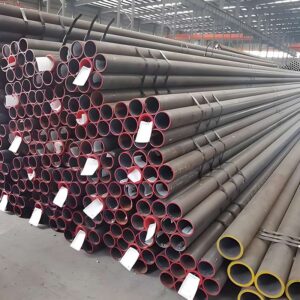
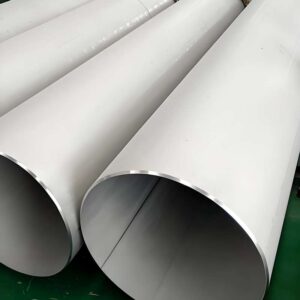
ERW welded steel pipe, also known as resistance welded steel pipe, is a pipe formed by heating the edges of steel strips or plates to a weldable state and then welding them under pressure.
II. Classification of ERW welded steel pipes
i. Classified by welding process
(1) High frequency resistance welded pipe (HFW-ERW)
Features: Using high-frequency current (100-500kHz) heating, the weld seam is short, the dimensional accuracy is high, the wall thickness is uniform, the surface is smooth, and the pressure bearing capacity is strong.
Classification:
Induction welding: Heating the edge of the steel strip by generating eddy currents through an induction coil.
Contact welding: The electrode directly contacts the edge of the steel strip and is heated by resistance heating.
Application: Suitable for DN5-DN700 small-diameter pipelines (outer diameter 5-711mm), commonly used for low-pressure fluid transportation such as urban gas, water, and oil.
(2) Low frequency/medium frequency resistance welded pipe
Features: Using low frequency (<1kHz) or medium frequency (1-100kHz) current, slow heating speed, but low equipment cost.
Application: Suitable for occasions with low precision requirements, such as structural supports and ordinary fluid transportation.
ii. Classify by current type
(1) AC Welded Steel Pipe (AC-ERW)
Features: Using AC power supply, the welding process is stable, but the skin effect is weak and the heating efficiency is slightly lower.
Application: Used for ordinary low-pressure fluid transportation pipelines.
(2) DC welded steel pipe (DC-ERW)
Features: Using DC power supply, significant skin effect, high heating efficiency, but high equipment cost.
Application: Suitable for the production of small-diameter, high-precision steel pipes, such as automotive transmission shafts and hydraulic cylinders.
iii. Classify by frequency range
(1) Low frequency welded pipe (<1kHz)
Slow heating speed, but strong penetration, suitable for thick walled steel pipes.
Used for manufacturing thick walled structural pipes or pressure vessels.
(2) Medium frequency welded pipe (1-100kHz)
Balancing heating speed and penetration, suitable for medium wall thickness steel pipes.
Used for building brackets, mechanical components, etc.
(3) High frequency welded pipe (100-500kHz)
Fast heating speed, high weld quality, and high equipment cost.
Used for thin-walled or ordinary thick steel pipes, such as urban pipe networks and low-pressure boiler pipes.
(4) Ultra high frequency welded pipe (>500kHz)
High heating efficiency, high technical difficulty, and relatively few applications.
Production of ultra-thin wall steel pipes for special scenarios.
iv. Classified by caliber and purpose
(1) Small and medium-sized ERW pipes (DN15-DN150)
Outer diameter 5-150mm, wall thickness 2.0-6.0mm, length 4-10m.
Used for low-pressure fluid transportation such as urban gas, water, heating, etc., such as GB/T 3091 standard welded steel pipes.
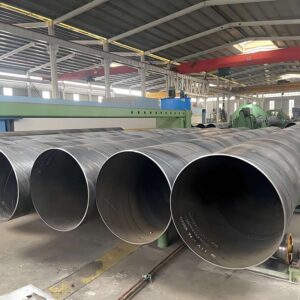
(2) Large caliber ERW pipe (diameter ranging from Ø 406.4 to Ø 1422.4mm)
Due to process limitations, the maximum diameter of ERW pipes is about 711mm; the demand for large diameters is generally met by spiral welded pipes or straight seam submerged arc welded pipes.
Used for medium and low pressure transmission pipelines in some special projects.
v. Specialized ERW pipe
Galvanized ERW pipe: Enhanced corrosion resistance through hot-dip galvanizing or electroplating, suitable for outdoor or humid environments.
Coated ERW pipe: The inner or outer wall is coated with a plastic layer to improve anti-corrosion performance, suitable for chemical and marine engineering.
Anti corrosion coating ERW pipe: using epoxy powder, three-layer PE and other coatings to extend the service life of the pipeline.
III. ERW Welded Steel Pipe Specification Table
| Parameter Category | Specification / Description |
|---|---|
| Outer Diameter (OD) | 16 mm – 914 mm (commonly 20 – 610 mm) |
| Wall Thickness (WT) | 1.5 mm – 25 mm (commonly 2.0 – 12.5 mm) |
| Length | 6 m, 12 m; custom-cut lengths available on request |
| Nominal Diameter (DN) | DN15 – DN800 |
| Material | Q195, Q215, Q235, Q345, low-alloy steel |
| Chemical Composition | In accordance with GB/T 3091, ASTM A53, API 5L |
| Welding Process | ERW (Electric Resistance Welding) |
| Surface Treatment | Hot-dip galvanized, plastic coating, painted, anti-rust oil |
| Standards | GB/T 3091, GB/T 3092, ASTM A53/A53M, API 5L |
| Length Tolerance | ±50 mm (for standard 6 m / 12 m) |
| Outer-Diameter Tolerance | ±1 % |
| Wall-Thickness Tolerance | ±12.5 % (adjustable per standard) |
| Tensile Strength | 370 – 500 MPa (depending on material) |
| Yield Strength | 235 – 345 MPa (depending on material) |
| Application | Water, oil & gas transmission; mechanical & structural tubing; general industrial use |
IV. Comparison Table of Materials and Uses of ERW Welded Steel Pipes
| Material | Chemical Composition (%) | Main Applications | Common Standards | Remarks |
|---|---|---|---|---|
| Q195 | C≤0.22, Si≤0.30, Mn 0.30–0.60, P≤0.045, S≤0.045 | Low-pressure water pipes, general structural tubing | GB/T 3091 | Low-carbon steel; excellent weldability & formability |
| Q215 | C≤0.22, Si≤0.30, Mn 0.30–0.80, P≤0.045, S≤0.045 | Water pipes, general structural tubing, mechanical supports | GB/T 3091 | Slightly higher strength; suitable for moderate mechanical loads |
| Q235 | C≤0.22, Si≤0.30, Mn 0.30–0.70, P≤0.045, S≤0.045 | Building & mechanical structures, general industrial pipelines | GB/T 3091 | Most common structural grade; stable performance & economical |
| Q345 | C 0.12–0.20, Si≤0.35, Mn 0.80–1.60, P≤0.035, S≤0.035, micro Cr/Ni possible | High-strength structural tubing, pressure piping | GB/T 1591 | Low-alloy high-strength steel for load-bearing & pressure service |
| API 5L Gr.B | C 0.26–0.28, Si≤0.35, Mn 0.60–1.20, P≤0.030, S≤0.030 | Oil & natural-gas transmission lines | API 5L | Line-pipe grade; medium to high pressure capability |
| 20# Carbon Steel | C 0.18–0.24, Si≤0.35, Mn 0.35–0.65, P≤0.045, S≤0.045 | Medium/low-pressure water lines & structural tubing | GB/T 8162 | Popular low-carbon grade; good weldability |
| 16Mn Low-Alloy Steel | C 0.12–0.20, Si≤0.35, Mn 0.70–1.00, P≤0.035, S≤0.035, optional micro Mo/Ni | Pressure piping, boiler structures | GB/T 8162 | High strength & good pressure resistance for medium/high-pressure lines |
V. What are the anti-corrosion types of ERW welded steel pipes
i. External wall anti-corrosion
(1) 3PE anti-corrosion (three-layer structure polyethylene)
Structure: The bottom layer is coated with epoxy powder to enhance adhesion, the middle layer is adhesive to bond epoxy and polyethylene, and the outer layer is high-density polyethylene to resist mechanical damage and chemical corrosion.
Features: Strong chemical corrosion resistance, good insulation, high mechanical strength, and a service life of over 30 years.
Application: External anti-corrosion of buried or underwater steel oil, gas, water, and heating pipelines, such as natural gas pipelines and oil pipelines.
(2) Epoxy coal tar anti-corrosion
Ingredients: Composed of epoxy resin and coal tar pitch, it is a two-component coating.
Features: Low requirements for surface treatment of steel pipes, convenient construction, and low cost; The appearance is usually black.
Application: Urban underground pipelines, small water supply pipelines.
(3) Polyethylene anti-corrosion
Features: Good low-temperature resistance, high chemical stability, able to withstand most acid and alkali corrosion, low water absorption.
Application: In situations where anti-corrosion requirements are not high, such as small water supply pipelines or temporary pipelines.
(4) Polyurea anti-corrosion
Features: High construction efficiency, good protective performance, can resist mechanical damage and chemical corrosion, long service life; But the material cost is high, and there are high requirements for construction equipment and technology.
Application: High corrosion environments such as marine engineering and chemical equipment.
ii. Inner antisepsis
(1) IPN8710 anti-corrosion
Features: Specially designed for drinking water pipelines, non-toxic, environmentally friendly, with excellent water resistance and chemical corrosion resistance.
Application: Anti corrosion of the inner wall of urban water supply pipelines.
(2) Epoxy resin coating
Features: Strong adhesion, good alkali resistance, excellent insulation performance, can form smooth inner walls, and reduce fluid resistance.
Application: Inner walls of oil and gas pipelines, as well as drinking water pipelines.
(3) Polyurethane coating
Characteristics: The paint film is hard, flexible, wear-resistant, corrosion-resistant, and resistant to oil, acid, chemicals, and industrial waste gases.
Application: Anti corrosion of the inner wall of corrosive liquid and gas pipelines in oil fields.
(4) Liquid epoxy coating
Features: Single component coating, easy to apply, fast drying, strong chemical corrosion resistance.
Application: Anti corrosion of inner walls of small and medium-sized pipelines, such as urban gas pipelines.
iii. Special anti-corrosion process
(1) Hot dip galvanizing for corrosion prevention
Process: Immerse the steel pipe into molten zinc to form a zinc iron alloy layer.
Features: Strong resistance to atmospheric corrosion and long service life; But after welding, the weld seam needs to be treated with zinc supplementation (such as brushing zinc rich coating).
Application: Outdoor installation of pipelines and fire protection pipelines.
(2) Coating and anti-corrosion
Process: Spray polyethylene (PE) or epoxy resin (EP) powder on the inner and outer walls of the steel pipe, and then melt and solidify at high temperature to form a plastic layer.
Features: It has both anti-corrosion and wear-resistant properties, with smooth inner walls and reduced fluid resistance.
Application: Chemical pipeline, slurry transportation pipeline.
(3) TPEP anti-corrosion (hot-melt bonded epoxy polyethylene composite anti-corrosion)
Structure: The inner layer is made of hot-melt epoxy powder, and the outer layer is made of high-density polyethylene.
Features: Combining the adhesion of epoxy coatings with the mechanical resistance of polyethylene, suitable for complex environments.
Application: Long distance water pipelines, urban heating pipelines.
VI. Welding steps and weld treatment of ERW welded steel pipes
i. Welding steps
Open coil forming: Roll the steel strip into a circular tube through a forming machine, aligning the edges.
Mid compression: Ensure that the edges of the two steel strips are tightly connected and ready for welding.
High frequency electric heating: using high-frequency current to heat the edge of the tube blank until it melts.
Pressure welding: The molten steel edge is pressed into a weld seam by pressure.
Welding seam cooling and shaping: By shaping and cooling with a shaping roller, the welding seam is made smooth and strong.
ii. Weld seam treatment
Surface polishing: Remove welding protrusions or burrs to ensure a smooth surface.
Ultrasonic or radiographic testing: Check for porosity, slag inclusions, or cracks inside the weld seam.
Weld leveling and straightening: Ensure the overall straightness and smoothness of the pipeline.
Anti corrosion treatment: Painting, hot-dip galvanizing, or plastic coating should be applied to the weld area to prevent corrosion.
Weld seam identification: Mark the position of the weld seam and the inspection qualification mark when necessary.
iii. Quality requirements for welds
The weld seam should be continuous, uniform, and without obvious depressions or protrusions.
The strength of the weld seam should be equivalent to that of the base material to ensure the pressure safety of the pipeline.
For pipelines transporting media such as water, oil, and natural gas, welds must undergo non-destructive testing for confirmation.
VII. Related standards for ERW welded steel pipes
| Standard System | Standard No. | Type | Industry | Pressure Level | Common Grades | Remarks |
|---|---|---|---|---|---|---|
| China GB | GB/T 3091-2008 | Low-pressure fluid delivery | Water, oil, gas pipelines | Low | Q195, Q215, Q235 | Domestic standard for low-pressure service |
| GB/T 3092-2008 | Structural welded pipe | Building & mechanical structures | General | Q195, Q215, Q235 | Focus on strength & mechanical properties | |
| GB/T 8162-2008 | General structural seamless pipe | Mechanical & building structures | General | 20#, 16Mn | Occasionally applied to ERW pipes | |
| ASTM (USA) | ASTM A53/A53M | Pipe & structural use | Fluid transport & structural | Low-medium | Grade A/B | International standard; covers black & galvanized pipe |
| ASTM A500 | Structural tubing | Construction structures | General | Grade B, C | Square, rectangular & round structural tubes | |
| API (Oil & Gas) | API 5L | Line pipe steel | Petroleum & natural-gas pipelines | Medium-high | Gr.B, X42–X70 | High-strength standard for oil & gas transmission |
| Europe EN | EN 10219 | Cold-formed welded hollow sections | Building & mechanical structures | General | S235, S275, S355 | Strict tolerances; weld strength equals base metal |
VIII. Comparison Table of ERW Welded Steel Pipe Selection
| Material | Outer Diameter (OD) mm | Wall Thickness (WT) mm | Application | Applicable Standard | Remarks |
|---|---|---|---|---|---|
| Q195 | 20 – 159 | 2.0 – 6.0 | Low-pressure water & gas pipes | GB/T 3091 | Low-carbon steel, excellent weldability |
| Q215 | 20 – 219 | 2.0 – 8.0 | Water pipes & structural tubing | GB/T 3091 / GB/T 3092 | Slightly higher strength for general structures |
| Q235 | 20 – 323 | 2.5 – 10.0 | Building & mechanical structural tubing | GB/T 3091 / GB/T 3092 | Common structural grade, economical & versatile |
| Q345 | 32 – 426 | 3.0 – 12.5 | Pressure piping & high-strength structural tubing | GB/T 1591 | Low-alloy high-strength steel for pressurized service |
| API 5L Gr.B | 48 – 610 | 3.0 – 16.0 | Oil & natural-gas transmission lines | API 5L | Medium- to high-pressure petroleum & gas pipelines |
| 20# Carbon Steel | 16 – 219 | 2.0 – 8.0 | Medium/low-pressure water lines & structural tubing | GB/T 8162 | Popular low-carbon grade with good weldability |
| 16Mn Low-Alloy Steel | 32 – 426 | 3.0 – 12.5 | Medium- to high-pressure pressure piping | GB/T 8162 | High strength & excellent pressure resistance |
IX. Selection of ERW welded steel pipe suppliers
i. Qualification certification
When selecting suppliers, we should give priority to companies that have ISO 9001 quality management system certification, special equipment manufacturing license if it involves high-pressure pipelines, and industry certifications (such as API 5L, ASTM A53), which can ensure controllable product quality.
When checking the authenticity of these certifications, we can verify the certification numbers through the official website.
ii. Production capacity
When assessing the production capacity of suppliers, it is important to focus on the weld depth of the ERW high-frequency resistance welding process. Ideally, the weld depth should exceed 80% of the base metal thickness to ensure structural strength.
In actual procurement, priority should be given to suppliers with inventory, such as those with a regular specification inventory of ≥ 300 tons, so that urgent orders can be shipped in a timely manner within 48 hours.
iii. Quality control
In order to purchase qualified products, the supplier we choose should be equipped with testing equipment such as ultrasonic flaw detectors, metallographic microscopes, and chemical composition analyzers.
The products produced by suppliers must strictly comply with standards such as GB/T 3091 (Low Pressure Fluid Transport) and API 5L (Petroleum and Natural Gas), and be able to provide corresponding testing reports.
iv. After sales service
If encountering problems such as abnormal product parameters or dimensional deviations, relevant technical personnel can respond within 1 hour and arrive on site within 24 hours.
In terms of construction, suppliers should also be able to provide technical consultation, on-site guidance, and free training and other related services.
v. Business reputation
By conducting peer evaluations and case studies, we can understand the reputation of suppliers and avoid selecting companies with a bad record of contract fraud or being ordered to suspend operations in the past two years.
In my contract, we need to specify the delivery period (such as within 30 days), breach of contract liability (such as 0.5% compensation per day for delayed delivery), payment method (such as 30% advance payment+60% payment upon arrival+10% warranty deposit), etc.