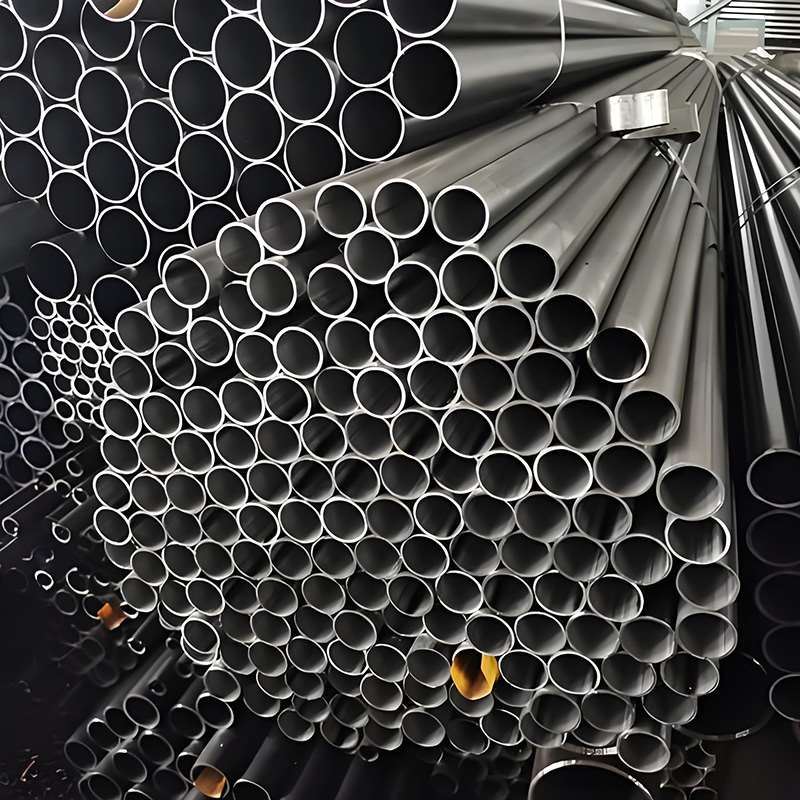
I. Cold-drawn welded tubes: definition, differences, and process
(1) What are cold-drawn welded tubes?
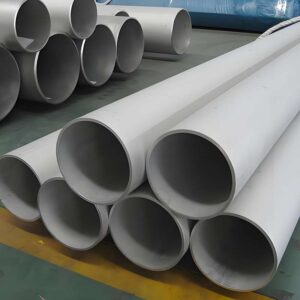
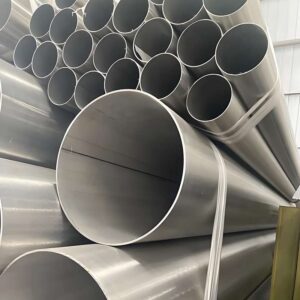
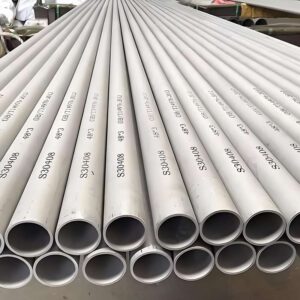
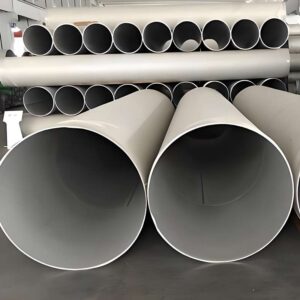
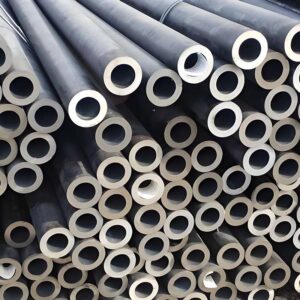
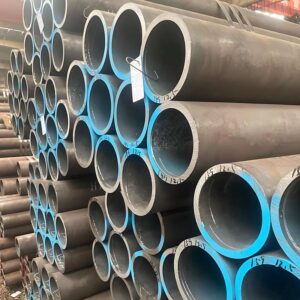
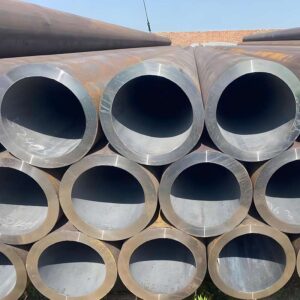
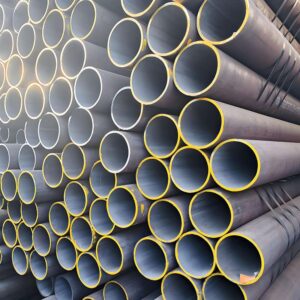
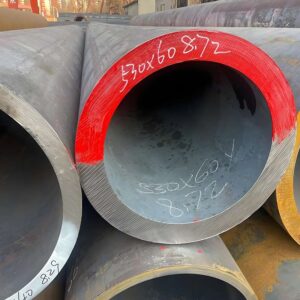
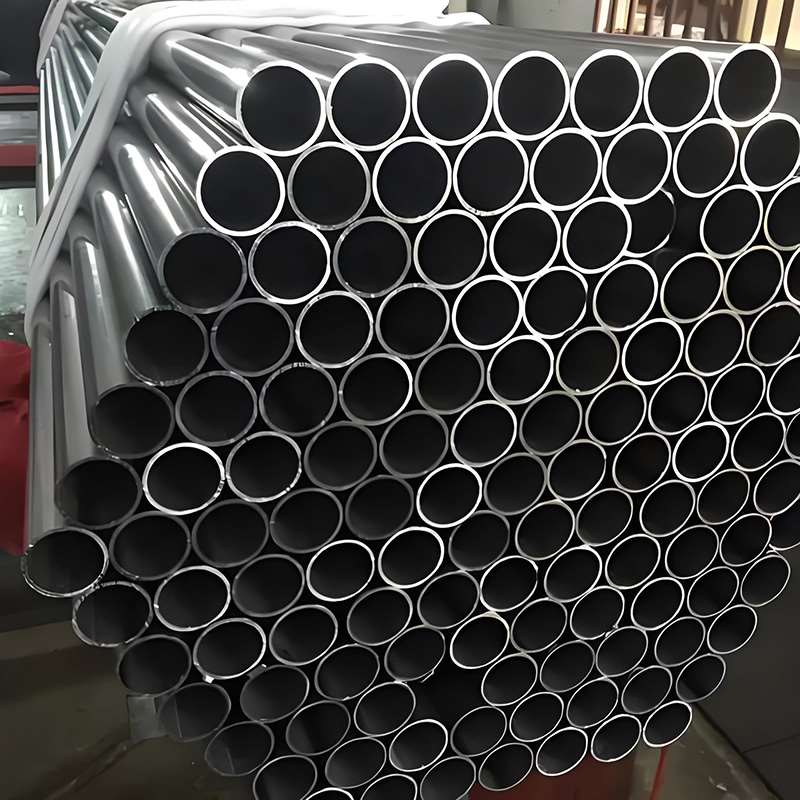
Cold-drawn welded tubes are tubes that are first formed by rolling and welding steel plates or steel strips (to obtain welded tubes), and then undergo secondary processing through a cold-drawing process.
This secondary processing is carried out at room temperature, using a die to stretch the welded tubes, thereby making their dimensions more precise, their surfaces smoother, and improving their mechanical properties.
(2) Differences from ordinary welded tubes and cold-drawn seamless tubes
| Characteristic | Cold-drawn Welded Tube | Ordinary Welded Tube | Cold-drawn Seamless Tube |
|---|---|---|---|
| Weld Seam | Welded seam (after cold-drawing treatment) | Welded seam (as-formed or hot-rolled) | No weld seam |
| Manufacturing Flow | Welding → Cold-drawing | Welding only | Billet piercing → Cold-drawing |
| Dimensional Accuracy | High (significantly improved by cold-drawing) | Moderate | Very high |
| Surface Quality | Good (smooth finish after cold-drawing) | Moderate, may have scale or weld scars | Excellent (bright or pickled finish) |
| Mechanical Properties | Better (strength increased by cold-drawing) | Moderate | Superior (more uniform and dense microstructure) |
| Cost | Medium | Lowest | Highest |
| Applications | Structural parts and fluid lines requiring good precision and surface finish but low sensitivity to weld seams | General structures and low-pressure fluid transport | High-pressure, high-temperature, precision, and weld-sensitive environments |
(3) Brief description of the cold drawing process
Raw material preparation: Use ordinary welded pipes as blank pipes.
Pre-treatment: Acid wash (remove oxide scale) and phosphorize or saponify the welded pipes to form a lubricating layer for subsequent drawing.
Cold Drawing: The treated welded tubes are passed through a drawing machine and forced through a die with a smaller diameter than the tube itself (drawing die). Under strong tensile force, the tube’s diameter decreases, the wall thickness thins, and the length elongates. This process may be repeated multiple times.
Heat treatment: After cold drawing, the tubes typically undergo annealing or normalizing heat treatment to eliminate internal stresses caused by work hardening and restore or improve the mechanical properties of the tubes.
Straightening and cutting: The tubes are straightened and cut to specified lengths as required.
Inspection and packaging: The finished products are inspected for dimensions, surface quality, and performance. Those that pass inspection are packaged and stored in the warehouse.
II. Product Features of Cold-Drawn Welded Tubes
(1) High Dimensional Accuracy
Cold drawing is a precision forming process.
Through die stretching, the outer diameter and wall thickness tolerances of welded tubes can be strictly controlled within a narrow range.
(2) Excellent Surface Finish
The cold drawing process involves mechanical compression and friction on the tube surface.
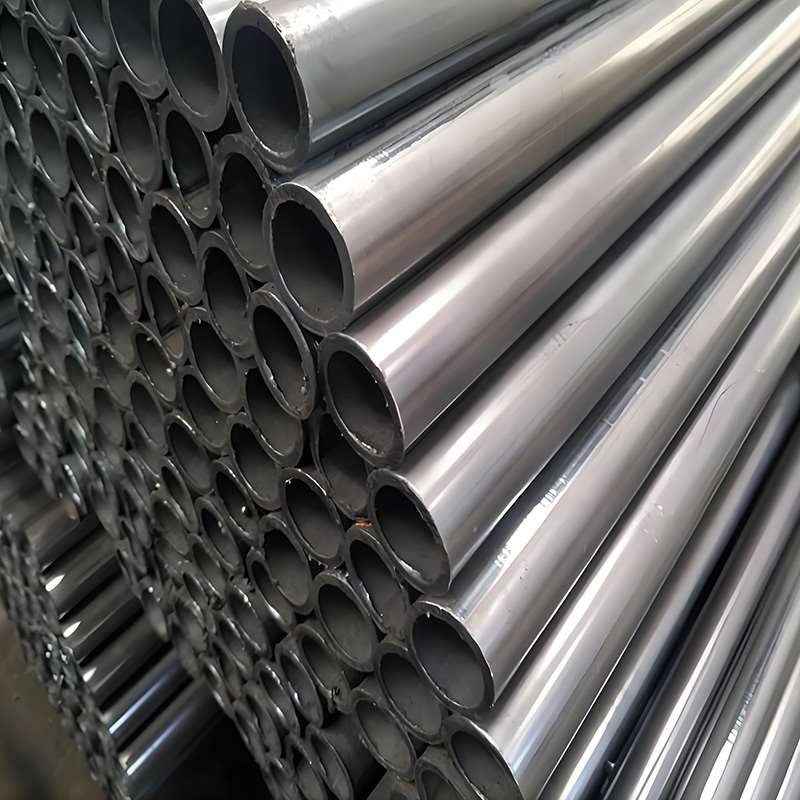
This effectively improves the surface roughness of both the inner and outer surfaces, making them smoother.
(3) No Oxidation Layer on the Inner Wall (Suitable for Hydraulic Systems)
This is a key advantage of cold-drawn welded tubes for hydraulic systems.
After precision machining and standard acid washing and phosphating treatments, the inner wall of cold-drawn welded tubes can achieve a clean, oxidation-free state.
(4) Easy to cut, form, and weld
The cold drawing process typically eliminates some internal stress and refines the grain structure, improving the ductility of the tubing.
This makes cold-drawn welded tubing easier to handle during subsequent cutting, bending, flaring, or reducing operations, minimizing the risk of cracking or deformation.
Additionally, its uniform material properties ensure good weldability, contributing to high-quality welds.
III. Common materials and applicable standards for cold-drawn welded pipes
(1) Common materials
| Material Category | Typical Grades | Main Features | Common Applications |
|---|---|---|---|
| Carbon Structural Steel | Q195, Q235B, Q345B | Low cost, good plasticity, easy to process, moderate strength | General mechanical structures, furniture, bicycle frames, etc. |
| Quality Carbon Structural Steel | 10#, 20#, 35#, 45# | Higher strength and hardness, can be strengthened by heat treatment | Automotive parts, hydraulic cylinders, precision machinery parts, shafts |
| Alloy Structural Steel | 20Cr, 40Cr, 15CrMo | Higher strength, wear resistance or toughness; suitable for heat treatment | Heavy machinery, hydraulic props, high-pressure pipelines, etc. |
(2) Implementation standards
| Standard Type | Standard Code | Main Content & Application | Remarks |
|---|---|---|---|
| China National Standard (GB) | GB/T 31315 | Cold-drawn or cold-rolled precision welded steel tubes for mechanical structures | Specifically for mechanical-structure cold-drawn welded tubes; sets clear requirements on dimensional accuracy, surface quality, and mechanical properties. |
| GB/T 3639 | Cold-drawn or cold-rolled precision seamless steel tubes | Primarily a seamless-tube standard, yet its precision or partial performance indices may be referenced for non-pressure cold-drawn welded tubes when extreme accuracy is required. | |
| GB/T 13793 | Electric-welded (ERW) steel tubes – dimensions & tolerances for general welded tubes | May serve as the base-tube standard for cold-drawn welded tubes; after cold-drawing the accuracy is higher than this baseline. | |
| International Standards | ASTM A513 | Electric-resistance-welded carbon and alloy steel mechanical tubing (U.S. standard) | Widely used in automotive and mechanical manufacturing, covering cold-drawn welded tubes. |
| EN 10305-2 | Steel tubes for precision applications – cold-drawn electric-welded tubes (European standard) | European standard providing detailed requirements on dimensional accuracy and surface quality for precision cold-drawn welded tubes. | |
| Industry Standard | YB/T 5057 | Cold-drawn shaped steel tubes (some cold-drawn welded shaped tubes may refer to this standard) | Applicable to specifically shaped cold-drawn steel tubes, including certain welded shaped tubes. |
IV. How to select cold-drawn welded pipes?
(1) Choose the right material
Consider the usage environment:
High pressure, high temperature, or low temperature? Select high-strength, temperature-resistant materials such as 45# steel or alloy structural steel.
Corrosive environment? Consider materials with good corrosion resistance.
General structural use? Carbon steels like Q235B or Q345B are sufficient and more economical.
Refer to standard grades: Understand the corresponding national standards (e.g., 10#, 20#, 45#, Q345B) or international standards (e.g., ASTM A513) for the material.
Balance performance and cost: The stronger and more specialized the material, the higher the cost. Avoid blindly pursuing “high-spec” options—sufficient performance is sufficient.
(2) Assessing precision
The advantage of cold-drawn welded tubes lies in their precise dimensions, with precision determined by the tolerance range.
Understanding tolerances: These represent the permissible deviations in dimensions. For example, for an outer diameter of ϕ20mm with a tolerance of ±0.1mm, an actual outer diameter between 19.9mm and 20.1mm is considered acceptable.
Refer to applicable standards: Standards such as GB/T 31315 or EN 10305-2 provide detailed lists of tolerance ranges for different precision grades.
Select based on requirements:
Hydraulic systems or precision machinery: Choose high-precision or ultra-high-precision grades with very small tolerances.
General structural components: With less stringent requirements, choose standard precision grades for lower costs.
Pay attention to surface quality: High-precision tubes should have smooth inner and outer walls, with no oxide layers on the inner wall—especially critical for hydraulic systems.
(3) Selecting the Right Supplier
Reviewing Quality Certificates:
ISO 9001 Certification: This certifies that the supplier has a mature quality management system.
Material Test Certificate (MTC): This must be requested for each purchase. The MTC is a critical document verifying product composition and performance data, used for inspection and traceability.
Assessing Service Capabilities:
Response Speed: Can the supplier provide timely professional answers and technical support?
On-Time Delivery: Can they deliver goods on schedule?
After-Sales Service: Do they have a robust mechanism for addressing quality issues?
Customization Capability: Can they meet your non-standard or special requirements?
Site Visits and Reputation: For large-scale purchases, it is recommended to conduct on-site inspections of production facilities. Understand the supplier’s reputation within the industry.
V. Frequently Asked Questions (FAQ)
(1) Can cold-drawn welded pipes withstand pressure?
Yes, they can withstand pressure, but their pressure-bearing capacity is not as strong as that of seamless pipes made of the same material.
Although cold-drawn welded pipes have improved precision and surface quality through cold drawing, they have weld seams. These weld seams are their weak point in terms of pressure resistance.
Suitable applications: Suitable for applications requiring precision and surface quality, and where pressure resistance is moderate to low. Examples include mechanical structures, automotive components, and medium to low-pressure fluid piping.
Unsuitable applications: Not recommended for high-pressure, ultra-high-pressure, or critical equipment requiring extremely high weld seam reliability. In such cases, seamless tubes are safer.
Tip: When purchasing, be sure to inform the supplier of your working pressure. They will recommend suitable materials and wall thicknesses based on this information.
(2) Can cold-drawn welded tubes be customized in terms of specifications and dimensions?
Yes, but within certain limits.
Common customization options:
Outer diameter and wall thickness: Within the manufacturer’s existing production capabilities, the drawing dies can be adjusted to produce non-standard dimensions.
Length: Custom lengths can be provided according to your requirements, including fixed lengths, multiple lengths, or irregular lengths. Fixed lengths typically incur additional costs.
Special shapes: Some manufacturers also support customization of non-standard cold-drawn welded tubes (such as square tubes, rectangular tubes, or elliptical tubes), but the process is more complex and costs are higher.
Tip: Customized dimensions typically mean higher minimum order quantities and longer delivery lead times. We recommend that you communicate with the supplier in advance to confirm their customization capabilities and related costs.
(3) What is the difference between cold-drawn welded pipes and hydraulic seamless pipes?
| Characteristic | Cold-drawn Welded Tube | Hydraulic Seamless Tube |
|---|---|---|
| Weld Seam | Welded seam | No weld seam |
| Manufacturing Process | Formed by welding first, then cold-drawn | Formed by piercing a billet first, then cold-drawn |
| Pressure Capability | Medium/low pressure, limited by the weld | High or ultra-high pressure, higher overall strength |
| Internal Cleanliness | Smooth inner wall, but may require special treatment to remove oxide scale and impurities | Extremely clean inner wall, no oxide scale, minimal contamination to hydraulic oil |
| Reliability | Suitable for medium-pressure hydraulic systems insensitive to welds | Highest reliability, ideal for critical high-pressure hydraulic systems |
| Cost | Relatively low | Relatively high |
Tip: If your hydraulic system operates at high pressure and requires extreme reliability (such as in aviation or precision machine tools), seamless hydraulic tubes are a safer and more recommended choice. If the pressure is moderate and your budget is limited, cold-drawn welded tubes can be an economical alternative.
(4) What surface treatments are available?
Bright: This is the common surface condition after cold drawing, with a smooth surface that requires no additional treatment.
Pickling: Acid washing removes surface scale and impurities, leaving the surface clean and ready for further processing.
Phosphating: Forms a phosphate conversion coating on the surface of the steel pipe, enhancing corrosion resistance, improving paint adhesion, and providing lubrication, facilitating subsequent cold processing.
Painting: Applying anti-rust paint or specific colored paint provides basic protection and identification.
Galvanizing:
Hot-dip galvanizing: Thick zinc layer with excellent corrosion resistance, suitable for outdoor or humid environments.
Electrogalvanizing: A thin zinc layer with a smoother and more aesthetically pleasing appearance, primarily used for mild corrosion protection or decorative purposes.
Polishing: Further enhances surface smoothness to achieve a mirror-like finish, primarily used in applications with extremely high aesthetic requirements.
Tip: The choice of surface treatment depends on your budget, the corrosion severity of the usage environment, and aesthetic requirements.
(5) Do you support export packaging standards?
Most cold-drawn welded pipe suppliers with export experience can provide export packaging that meets international standards.
Common packaging methods:
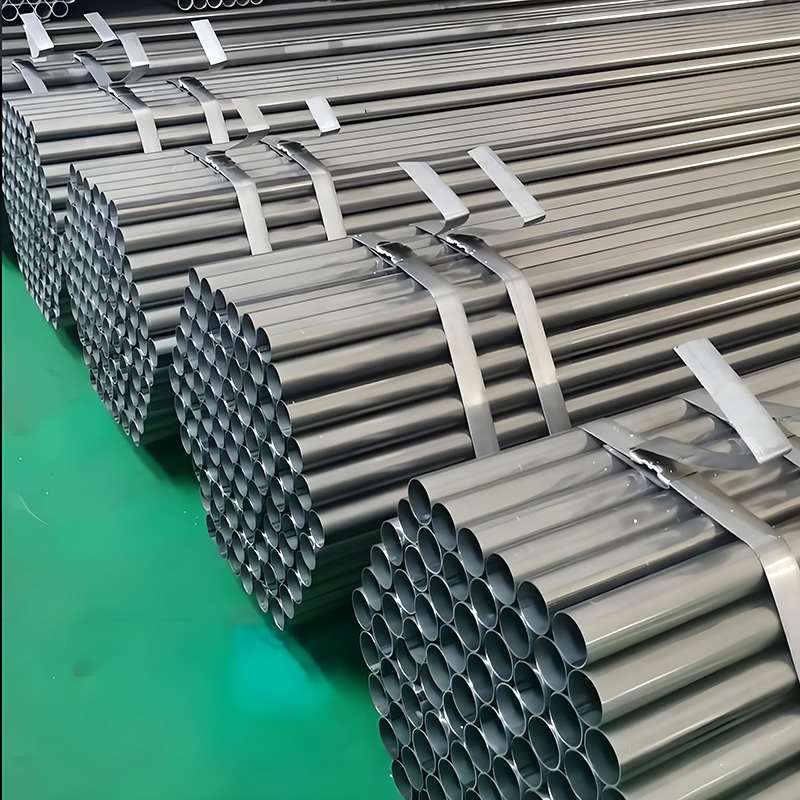
Steel band strapping: Bundling pipes into bundles.
Woven bags/plastic sheets: Outer layer wrapping for moisture and dust protection.
Wooden boxes/metal boxes: Provide stronger protection, suitable for long-distance transportation or situations with high requirements for pipe appearance.
Rust prevention: Rust-preventive oil is typically applied or desiccants are placed inside the packaging prior to sealing.
End protection: Plastic caps or similar components are used to prevent deformation or damage to the pipe ends during transportation.
Standard compliance: Suppliers adhere to international packaging standards such as ISPM 15 (International Plant Protection Convention Standard No. 15, applicable to wooden packaging) based on the requirements of the destination port.
Complete documentation: Documents such as commercial invoices, packing lists, certificates of origin, and material certificates (MTC) compliant with international trade requirements will be provided.
Tip: When requesting quotes and signing contracts, it is essential to clearly specify your export destination and specific packaging requirements. This helps suppliers provide accurate quotes and compliant packaging, avoiding customs clearance delays or additional costs.