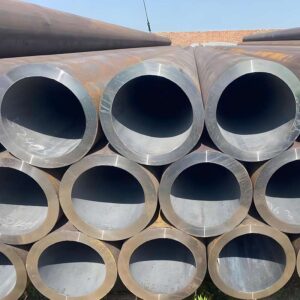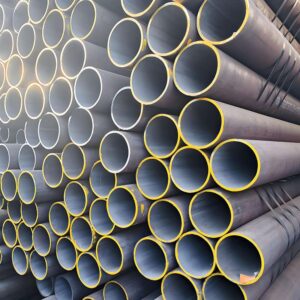
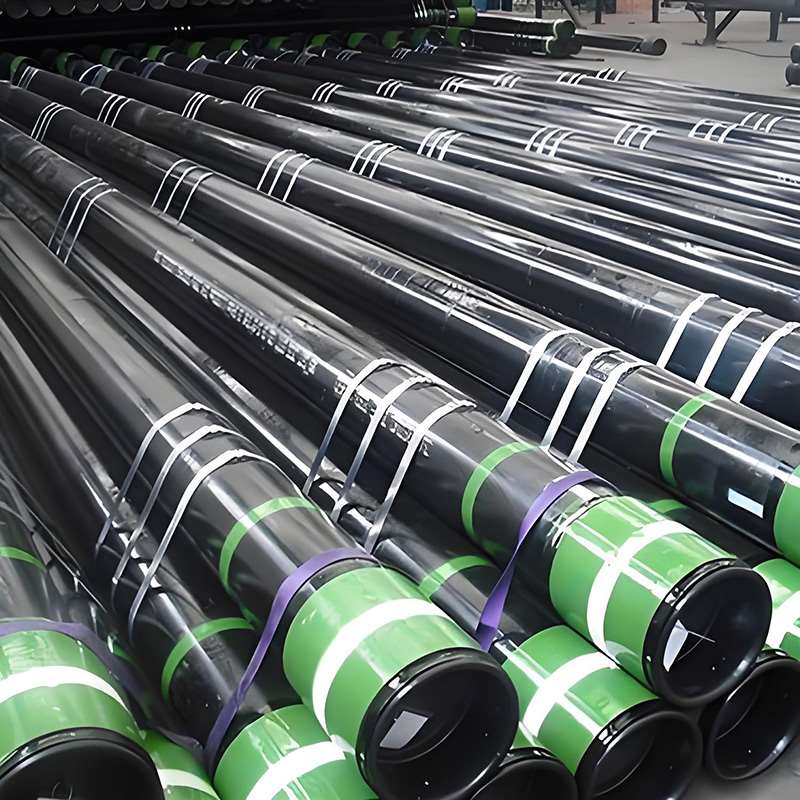
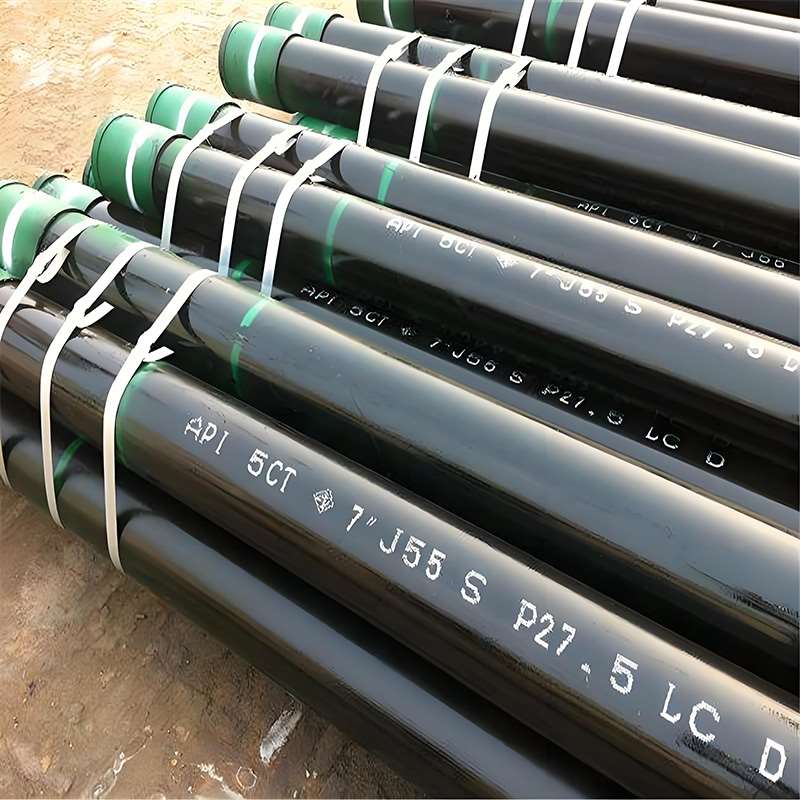
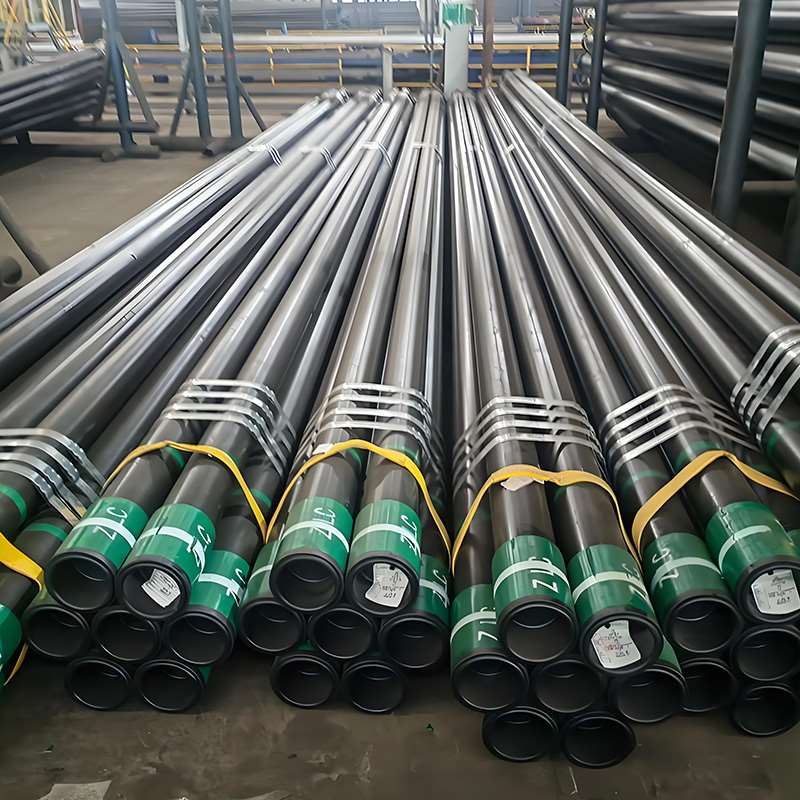
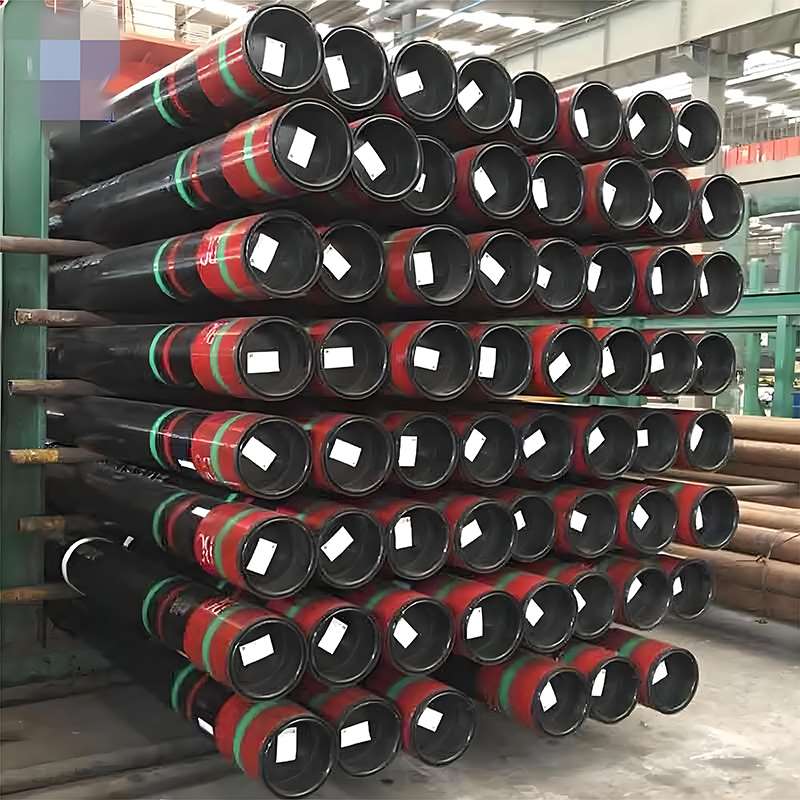
I. API 5CT Seamless Steel Pipe Overview
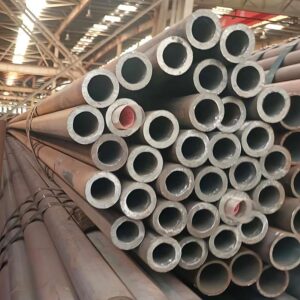
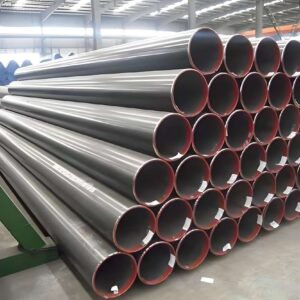
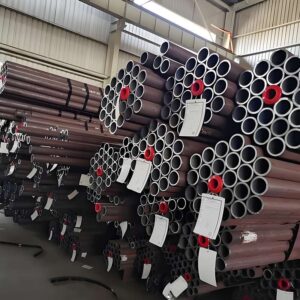
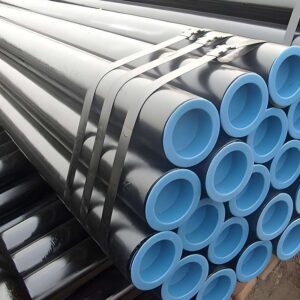
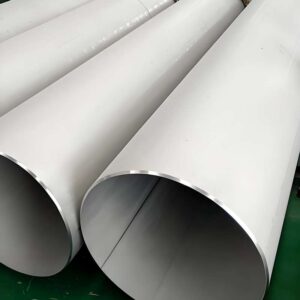
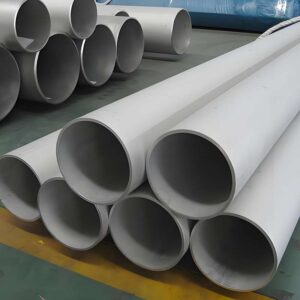
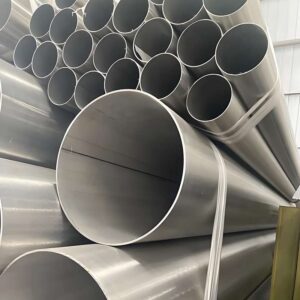
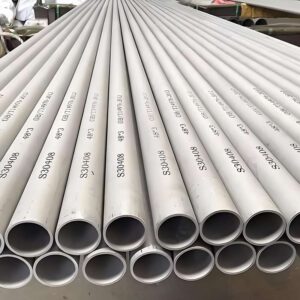
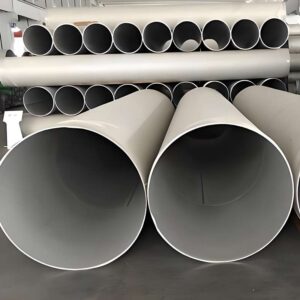
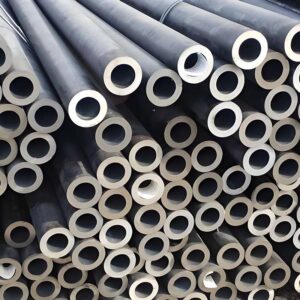
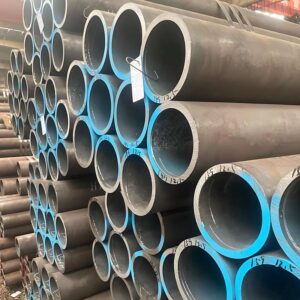
API 5CT seamless steel pipe is a high-strength steel pipe specifically designed for oil and gas well casing and tubing. It is manufactured in strict accordance with the American Petroleum Institute (API) 5CT standard.
This product is widely used in oil and gas extraction and geological exploration, and is capable of withstanding high pressures, high temperatures, and complex geological conditions.
Key Features:
High Strength and Reliability: The pipe’s high yield strength and tensile strength withstand the high-pressure environments of oil wells while ensuring long-term stability.
Excellent Low-Temperature Performance: Suitable for low-temperature oil and gas wells and cold regions, effectively preventing brittle fracture.
Various Grades and Materials: Common grades include J55, K55, N80, L80, C90, and P110, meeting the needs of various depths, pressures, and temperatures.
Excellent Processability: The pipe can be threaded, welded, and heat-treated, facilitating on-site installation and connection.
Strict Quality Control: The production process includes chemical composition analysis, mechanical property testing, ultrasonic flaw detection, and hydraulic testing to ensure that each pipe meets API 5CT standards.
II. API 5CT seamless steel pipe grade comparison table
| Grade | Yield Strength (MPa) | Tensile Strength (MPa) | Low Temperature Toughness (J @ -29℃) | Typical Application |
|---|---|---|---|---|
| J55 | 379–552 | 415–655 | ≥ 27 | Shallow wells, low to medium pressure oil and gas casing, economical, commonly used in conventional wells |
| K55 | 379–552 | 415–655 | ≥ 27 | Similar to J55, suitable for shallow wells and low-pressure oil wells, slightly adjusted chemical composition |
| N80 | 552–690 | 586–724 | ≥ 27 | Medium to deep wells, medium to high-pressure casing, some models suitable for acidic wells (N80-1, N80-Q) |
| L80 | 552–690 | 586–758 | ≥ 27 | Medium to deep wells corrosion-resistant casing (C, CO types), suitable for mild corrosive media wells |
| C90 | 620–758 | 655–827 | ≥ 27 | Deep wells, high-pressure oil and gas casing, strong pressure-bearing capability |
| P110 | 758–896 | 827–965 | ≥ 27 | Deep wells, high-temperature and high-pressure oil and gas casing, high strength and high pressure-bearing capacity |
III. API 5CT Thread Type Comparison Table
| Thread Type | Feature | Pressure Rating | Applicable Well Depth | Installation Difficulty | Typical Application |
|---|---|---|---|---|---|
| NC (National Coupling) | Conventional cylindrical thread end, standardized connection | Medium | Shallow and medium wells | Easy | Standard oil well casing and tubing |
| LC (Long Coupling) | Extended coupling design, improves connection strength | Medium-High | Medium to deep wells | Moderate | Deep well casing, multi-stage connections |
| BTC (Buttress Thread Connection) | Trapezoidal thread, strong axial tensile and high-pressure bearing | High | Deep and high-pressure wells | High | High-pressure wells, long-distance pipelines |
| REG (Regular Thread) | Standard thread, easy to install and remove | Medium | Shallow wells | Easy | Ordinary oil wells and shallow well casing |
| NC/NC 2ST (Double Shoulder Thread) | Double shoulder design, enhances pressure and torque resistance | High | Medium to deep and high-pressure wells | High | High-pressure wells and deep well casing |
| Custom / Special Threads | Customized per project, meets special operating conditions | According to design | According to well depth | According to design | Special well depths, high-temperature, high-corrosion environments |
Description:
Pressure Capacity: BTC and NC/NC 2ST threads have the highest pressure capacity and are suitable for deep wells and high-pressure conditions.
Installation Difficulty: Standard NC and REG threads are easy to install; BTC and double-shoulder threads require specialized tools.
Selection Recommendation: Select the thread type based on well depth, pressure rating, temperature, and corrosive media to ensure casing safety and reliability.
IV. Chemical composition of API 5CT seamless steel pipe
| Grade | C (%) | Mn (%) | P (%) | S (%) | Cr (%) | Mo (%) | Ni (%) | Cu (%) | Description |
|---|---|---|---|---|---|---|---|---|---|
| J55 | 0.24–0.30 | 0.29–1.06 | ≤0.035 | ≤0.035 | — | — | — | — | Low carbon, low to medium strength oil well casing, economical |
| K55 | 0.28–0.33 | 0.29–1.06 | ≤0.035 | ≤0.035 | — | — | — | — | Similar to J55, suitable for shallow and low-pressure wells |
| N80 | 0.30–0.37 | 0.30–1.20 | ≤0.035 | ≤0.035 | 0.30–0.60 | — | — | ≤0.40 | Medium to high strength casing, suitable for acidic wells (N80-1/N80-Q) |
| L80-C | 0.27–0.34 | 0.30–1.20 | ≤0.035 | ≤0.035 | 0.30–0.60 | — | — | ≤0.40 | High strength corrosion-resistant casing, suitable for mild corrosive media |
| L80-CO | 0.27–0.34 | 0.30–1.20 | ≤0.035 | ≤0.035 | 0.30–0.60 | 0.15–0.25 | — | ≤0.40 | High strength corrosion-resistant casing, suitable for CO₂ environments |
| P110 | 0.27–0.35 | 0.30–1.20 | ≤0.030 | ≤0.030 | 0.30–0.60 | 0.15–0.30 | 0.30–0.50 | ≤0.40 | High strength, high pressure-bearing casing for deep wells |
V. API 5CT Seamless Steel Pipe Quality Inspection Standard
(1)Chemical Composition Testing
Purpose: To ensure that the steel’s carbon content, alloying elements, and impurities meet grade requirements, ensuring strength, low-temperature toughness, and corrosion resistance.
Method: Spectroscopic or chemical analysis.
Standard Requirements: Strictly comply with the chemical composition ranges specified for each grade in API 5CT.
(2)Mechanical Properties Testing
Purpose: Verify that yield strength, tensile strength, elongation, and hardness meet design requirements.
Method: Tensile test, Brinell or Rockwell hardness test.
Standard Requirements: Yield strength, tensile strength, and elongation for different grades shall be tested in accordance with API 5CT standards.
(3) Low-temperature impact test
Purpose: To ensure that the pipe will not break brittlely in low-temperature environments.
Method: Charpy V-notch test @ -29°C or lower.
Standard requirement: Impact value ≥ 27 J. Some low-temperature or deep-well environments may require higher values.
(4) Dimension and Tolerance Inspection
Purpose: To ensure that the outer diameter, wall thickness, pipe length and straightness meet the design and installation requirements.
Method: Vernier caliper, laser measurement, vector measuring instrument, etc.
Standard requirement: Comply with API 5CT dimensional tolerance standard.
(5) End Thread Inspection
Purpose: To ensure that the threaded connection is reliable, has good sealing performance, and that the pressure bearing capacity meets the design requirements.
Method: Thread gauge inspection and assembly test.
Standard requirements: Comply with API 5CT thread standards (NC, BTC, REG, etc.).
(6) Hydrostatic Test
Purpose: To verify the pressure bearing capacity and sealing performance of the pipe.
Method: The pipe ends are sealed and pressurized to the design pressure or the pressure specified by the standard and maintained for a certain period of time.
Standard requirements: No leakage, rupture or permanent deformation shall occur.
(7) Nondestructive Testing (NDT)
Purpose: To detect internal or surface defects and ensure the quality of pipes.
Methods: Ultrasonic testing (UT), radiographic testing (RT), magnetic particle testing (MT), or penetrant testing (PT).
Standard requirements: Defects should comply with the allowable range of API 5CT standard.
(8) Surface quality inspection
Purpose: To ensure that the pipe is free of defects such as cracks, oxide scale, slag inclusions, etc.
Method: Visual inspection or magnified inspection
Standard requirements: The surface quality must comply with API 5CT standard to ensure reliable adhesion of the anti-corrosion coating.
(9) Anti-corrosion layer/coating inspection (if applicable)
Purpose: To ensure the anti-corrosion performance of the pipe and its suitability for use in buried or corrosive environments.
Method: Coating thickness measurement, adhesion test, and surface uniformity inspection.
Standard requirements: Execute in accordance with FBE, 3PE, or epoxy coating standards.
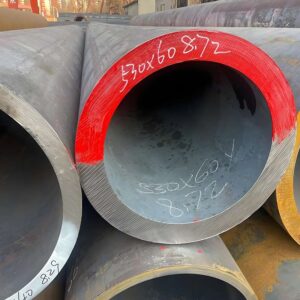
(10) Labeling and factory certification
Purpose: To ensure that each pipe is traceable and facilitate construction and inspection.
Content: Grade, size, length, batch number, manufacturer, production date, inspection report number.
Standard requirements: Labeling must be clear, wear-resistant, and not fall off. A complete inspection report must be provided with the goods.