
Welcome to our comprehensive FAQ on spiral steel pipes. This resource compiles information covering all aspects of spiral steel pipes, including production standards, material selection, quality inspection, anti-corrosion treatment, engineering applications, transportation and installation, procurement pricing, and after-sales maintenance. Whether you’re a first-time buyer or have specific technical questions, you’ll find relevant answers here.
I. Product Fundamentals and Standards
(1) What are the production standards for spiral welded steel pipes? (e.g., GB, API, ASTM)
Production standards for spiral welded steel pipes include GB/T 3091 (Chinese National Standard), API 5L (American Petroleum Institute Standard), and ASTM A252 (American Society for Testing and Materials Standard for Piles), among others. Different standards cater to varying industry requirements.
(2) What distinguishes spiral welded steel pipes from straight seam steel pipes?
Spiral welded pipes are manufactured using spiral welding technology, suitable for larger diameter pipelines. Straight seam pipes employ linear welding and are better suited for smaller diameters. Spiral welded pipes offer greater stability in strength and weld quality compared to straight seam pipes.
(3) What are the common specifications and models for spiral welded pipes?
Common specifications include diameters ranging from 219mm to 3000mm and wall thicknesses from 6mm to 25mm, with customization available based on project requirements.
(4) What material grades are available for spiral welded steel pipes? (e.g., Q235B, Q345B, X42-X70)
Common materials include Q235B, Q345B, and X42-X70, suitable for varying working environments and load requirements.
(5) What are the wall thickness and diameter ranges specified in the standards for spiral welded steel pipes?
Wall thickness typically ranges from 6mm to 25mm, while diameters span from 219mm to 3000mm, with customization available based on specific requirements.
(6) What are the chemical composition requirements for spiral steel pipe materials?
The steel must contain elements such as Carbon (C), Manganese (Mn), Sulfur (S), and Phosphorus (P). Specific composition ratios are determined by the standards for each material grade.
(7) Can the length of spiral welded steel pipes be customized? What is the maximum length?
Customization is available. The standard maximum length is 12 meters, though longer lengths may be produced for special projects based on transportation constraints and project requirements.
(8) What are the tolerance standards for spiral welded steel pipes?
Tolerance standards are typically established according to API 5L and GB/T 3091, covering permissible deviations for diameter, wall thickness, length, and other dimensions.
(9) What media can spiral welded steel pipes transport?
They are suitable for conveying petroleum, natural gas, sewage, drinking water, and various other media, demonstrating excellent performance particularly under high-pressure and low-temperature conditions.
(10) What is the typical service life of spiral welded steel pipes?
Under normal operating conditions and with proper anti-corrosion treatment, spiral welded steel pipes can achieve a service life exceeding 30 years.

II. Production Processes and Quality Inspection
(11) How are spiral steel pipes manufactured?
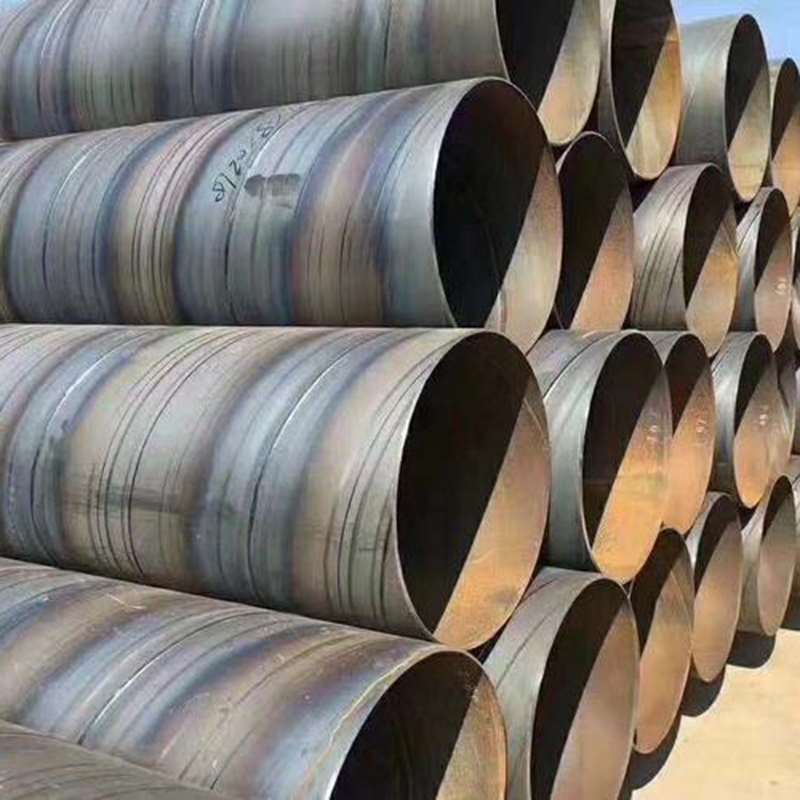
Spiral steel pipes are produced using spiral welding technology, where steel plates are rolled into a tubular shape and continuously welded to form the pipeline.
(12) How is the weld quality of spiral steel pipes ensured?
Weld quality is guaranteed through automated welding and ultrasonic non-destructive testing to prevent welding defects from compromising pipeline strength.
(13) How is non-destructive testing conducted during spiral steel pipe production?
Non-destructive testing techniques such as ultrasonic testing (UT) and radiographic testing (RT) are employed to comprehensively inspect welds and the pipe interior, ensuring quality.
(14) What welding methods are used in spiral steel pipe production?
Spiral welding is primarily used. This continuous arc welding technology ensures robust welds and is suitable for large-diameter pipelines.
(15) How is hydrostatic testing performed on spiral welded pipes?
Hydrostatic testing involves filling the pipe with water and pressurizing it to verify sealing integrity and pressure resistance under working conditions, ensuring no leakage occurs.
(16) What distinguishes external and internal welds in spiral pipe production?
External welds bear external pressure and undergo rigorous inspection. Internal welds primarily withstand internal pressure, requiring higher aesthetic standards to ensure zero defects.
(17) At which stage is the anti-corrosion coating applied to spiral welded steel pipes?
Anti-corrosion coatings are typically applied after pipe production is completed. Common anti-corrosion treatments include 3PE coating, epoxy coating, etc.
(18) How is the quality of spiral welded steel pipe welds determined?
Weld integrity is assessed through visual inspection and non-destructive testing (such as ultrasonic testing and radiographic testing).
III. Anti-Corrosion and Coating Treatment
(19) What are the common anti-corrosion methods for spiral steel pipes? (e.g., 3PE, epoxy, FBE)
Common anti-corrosion methods include 3PE (three-layer polyethylene coating), epoxy coating, FBE (powder coating), etc.
(20) What are the advantages of 3PE-coated spiral steel pipes?
3PE coatings offer superior corrosion resistance, extended service life, and enhanced mechanical damage resistance, making them particularly suitable for harsh environments.
(21) What is the standard thickness for anti-corrosion coatings on spiral steel pipes?
The thickness of 3PE coatings typically ranges from 3mm to 5mm, with specific dimensions adjusted according to project requirements.
(22) What is the anti-corrosion construction process for spiral steel pipes?
The anti-corrosion construction process includes surface cleaning, primer application, anti-corrosion coating application, and curing inspection.
(23) Can corrosion-resistant spiral steel pipes be used in marine engineering?
Yes. Corrosion-treated spiral steel pipes are highly suitable for marine engineering, effectively resisting seawater corrosion.
(24) What is the difference between external and internal corrosion protection for spiral steel pipes?
External protection primarily safeguards pipes against external environmental corrosion, while internal protection prevents corrosion from internal media. The choice of protection method depends on specific requirements.


IV. Engineering and Construction Applications
(25) What are the advantages of spiral welded steel pipes in water conveyance projects?
Spiral welded steel pipes offer high strength, corrosion resistance, and excellent pressure tolerance, making them highly suitable for long-distance water conveyance.
(26) What application requirements must spiral welded steel pipes meet for oil and gas transmission?
For oil and gas transmission, spiral welded steel pipes must possess corrosion resistance, high pressure tolerance, and fatigue resistance.
(27) Can spiral welded steel pipes be used for high-pressure transmission?
Yes, spiral welded steel pipes are particularly suitable for high-pressure transmission. Especially after undergoing appropriate anti-corrosion treatment, they can effectively withstand high pressures.
(28) What should be noted during underground pipeline construction with spiral welded steel pipes?
Attention must be paid to protecting the anti-corrosion coating, ensuring the sealing integrity of pipe connections, and preventing pipeline damage during construction.
(29) How should suitable spiral steel pipe specifications be selected for municipal projects?
Select appropriate diameter, wall thickness, and material grade based on specific project requirements (e.g., flow rate, pressure, geological conditions).
(30) How are spiral steel pipes used in bridge pile driving?
Spiral steel pipes serve as pile foundation conduits, typically employed in deep foundation pit construction to withstand high pressure and impact forces.
(31) What are the applications of spiral welded steel pipes in steel structure projects?
Spiral welded steel pipes are extensively used in steel structure supports and frameworks, providing structural stability and load-bearing capacity.
(32) What temperature and pressure ranges are spiral welded steel pipes suitable for?
Spiral welded steel pipes are suitable for ambient to high-temperature conditions. Their pressure resistance range can be adjusted based on wall thickness and anti-corrosion requirements.
(33) How corrosion-resistant are spiral welded steel pipes in chemical pipelines?
Corrosion-treated spiral welded steel pipes exhibit excellent corrosion resistance, enabling long-term use in highly acidic or alkaline chemical environments.
(34) Can spiral welded steel pipes replace seamless steel pipes?
In many applications, spiral welded steel pipes can substitute seamless steel pipes, particularly excelling in large-diameter pipelines and pile foundation construction.
V. Transportation and Installation
(35) How to prevent damage during spiral steel pipe transportation?
During transportation, pipes should be protected from violent collisions and scratches using protective packaging and specialized transport equipment.
(36) What precautions should be taken during spiral steel pipe loading and unloading?
Avoid collisions and violent impacts during handling. Use lifting equipment to ensure pipe safety.
(37) How should welded joints be handled during spiral steel pipe installation?
Welded joints must strictly follow standard operating procedures to ensure flawless weld integrity and undergo quality inspection.
(38) How is on-site welding quality of spiral steel pipes tested?
Welding quality is verified through visual inspection and non-destructive testing (e.g., ultrasonic testing).
(39) What connection methods are available for spiral steel pipes?
Connection methods include welding, flange connections, and bolted connections. Selection depends on project requirements.
(40) How is pressure testing conducted after spiral steel pipe installation?
Perform hydrostatic or pneumatic pressure testing post-installation to verify leak-free operation and compliance with design specifications.
VI. Procurement and Pricing
(41) What factors influence the price of spiral steel pipes?
Pricing is affected by multiple factors including steel material costs, specifications, anti-corrosion treatment, transportation, and market demand.
(42) What is the current market price for spiral steel pipes?
Prices vary based on material type, specifications, quantity, and market fluctuations. Specific quotations require consultation with manufacturers.
(43) How do I calculate the weight and price of spiral steel pipes?
Use the formula: Weight = Diameter × Wall Thickness × Length × Material Density.
(44) What is the minimum order quantity for spiral steel pipes?
The minimum order is typically one ton or one batch, subject to the manufacturer’s requirements.
(45) Is warranty coverage provided for bulk purchases of spiral steel pipes?
Warranty periods are generally offered for bulk orders, typically lasting one year or longer.
(46) How can one select a reliable spiral steel pipe manufacturer?
Choose manufacturers with a strong reputation, proven technical capabilities, and quality certifications. It is advisable to review customer feedback and their product warranty policies.
VII. After-Sales and Maintenance
(47) What is the typical warranty period for spiral steel pipes?
Generally, a warranty period of 1 to 3 years is provided, subject to the specific terms of the contract.
(48) What should be done if corrosion occurs on spiral steel pipes during use?
Corrosion repair can be performed, such as reapplying anti-corrosion coatings or implementing other protective measures.
(49) What are the regular inspection items for spiral steel pipes?
Regular inspections include weld quality, anti-corrosion coating integrity, pipeline integrity, and pressure testing.
(50) How can the service life of spiral steel pipes be extended?
Regular maintenance, anti-corrosion treatment, and avoiding excessive pressure on the pipeline can significantly extend its service life.