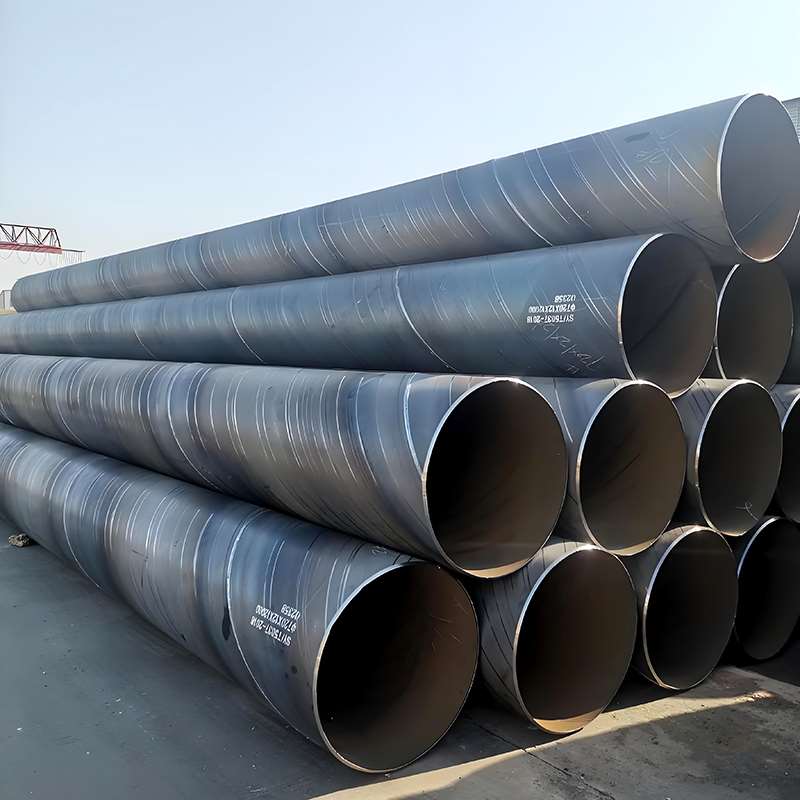
I. Standards and Scope of Application
(1) What is the scope of application for the ASTM A252 standard?
The ASTM A252 standard applies to spiral welded pipes used in pile foundation engineering, specifically for steel pipe piles. It specifies requirements for the material composition, dimensions, and mechanical properties of welded steel pipes.
(2) In which engineering fields are ASTM A252 spiral welded pipes primarily used?
They are mainly used in pile foundation engineering, such as bridge support piles, port and wharf piles, offshore platform foundations, tunnel support structures, and other structural infrastructure projects.
(3) How does ASTM A252 differ from ASTM A53 and API 5L standards?
ASTM A252 primarily targets pile foundation structures, emphasizing load-bearing capacity. In contrast, ASTM A53 and API 5L are mainly for transmission pipelines, focusing on pressure resistance and fluid conveyance performance.
A252 prioritizes structural load-bearing capabilities, while the latter two are suited for fluid transportation.
(4) Can the ASTM A252 standard be used for conveying media, or is it only applicable to pile foundations?
The ASTM A252 standard is primarily used for pile foundation engineering and is suitable for civil structural foundations. While it can be used for certain conveying applications, it is not as specialized for fluid conveyance as API 5L or ASTM A53.
(5) Does ASTM A252 spiral welded pipe meet international pile foundation engineering requirements?
Yes, ASTM A252 is an internationally recognized standard for pile foundation engineering and is widely used in pile foundation construction projects across the United States, Europe, and other countries.
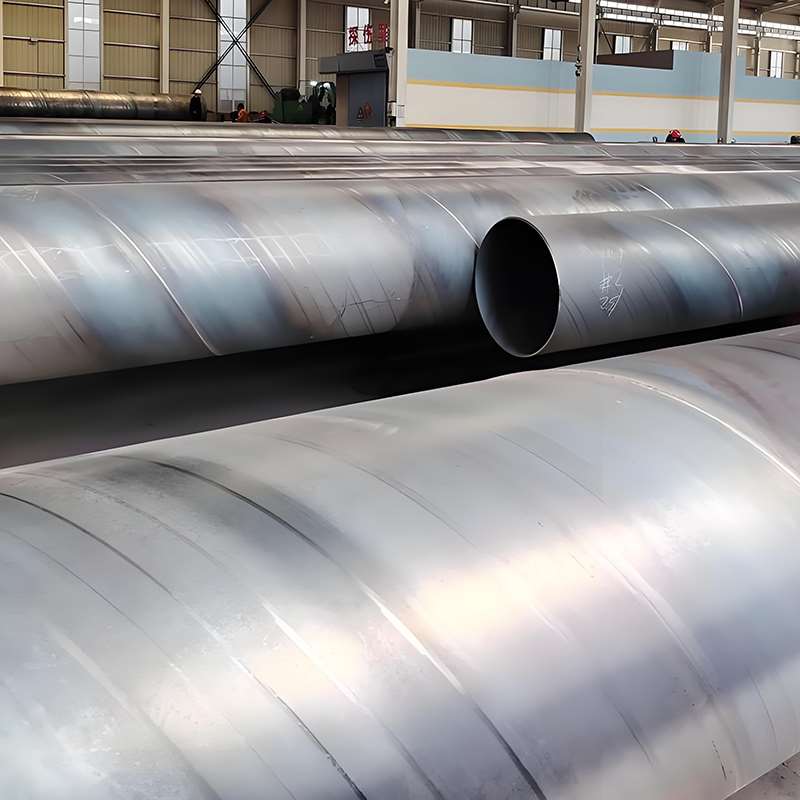
II. Materials and Grades
(6) What material grades (Grade 1, 2, 3) are specified for ASTM A252 spiral welded pipe?
ASTM A252 includes three material grades: Grade 1, Grade 2, and Grade 3. Each grade corresponds to different yield strength and tensile strength values, suitable for varying engineering requirements.
(7) What are the yield strength and tensile strength requirements for each grade?
Grade 1: Yield strength 207 MPa, Tensile strength 345 MPa
Grade 2: Yield strength 241 MPa, Tensile strength 414 MPa
Grade 3: Yield strength 310 MPa, Tensile strength 455 MPa
(8) How should ASTM A252 grades be selected based on project requirements?
Select grades according to load-bearing requirements and soil conditions. Grade 1 is suitable for light-load foundations, Grade 2 for most standard projects, while Grade 3 is applicable for heavy loads or extreme conditions.
(9) Can ASTM A252 materials substitute for Q235B or Q345B?
Yes, particularly Grades 2 and 3 can substitute for Q235B or Q345B provided the design load-bearing capacity requirements are met.
(10) What advantages does ASTM A252 Grade 3 offer in heavy-duty projects?
Grade 3 provides higher yield strength and tensile strength, making it suitable for pile foundation construction under high loads and complex geological conditions.

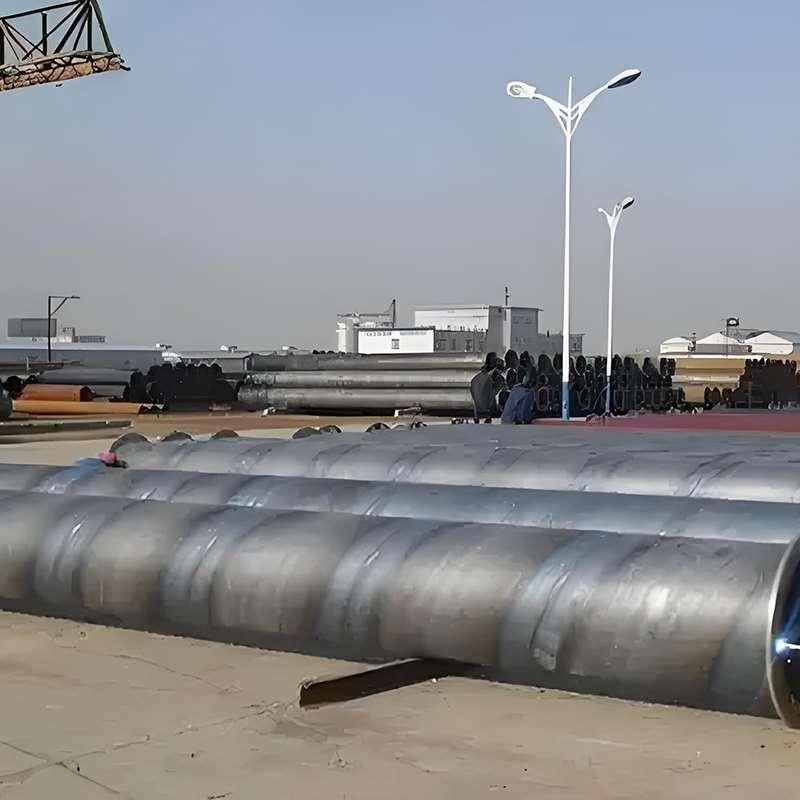
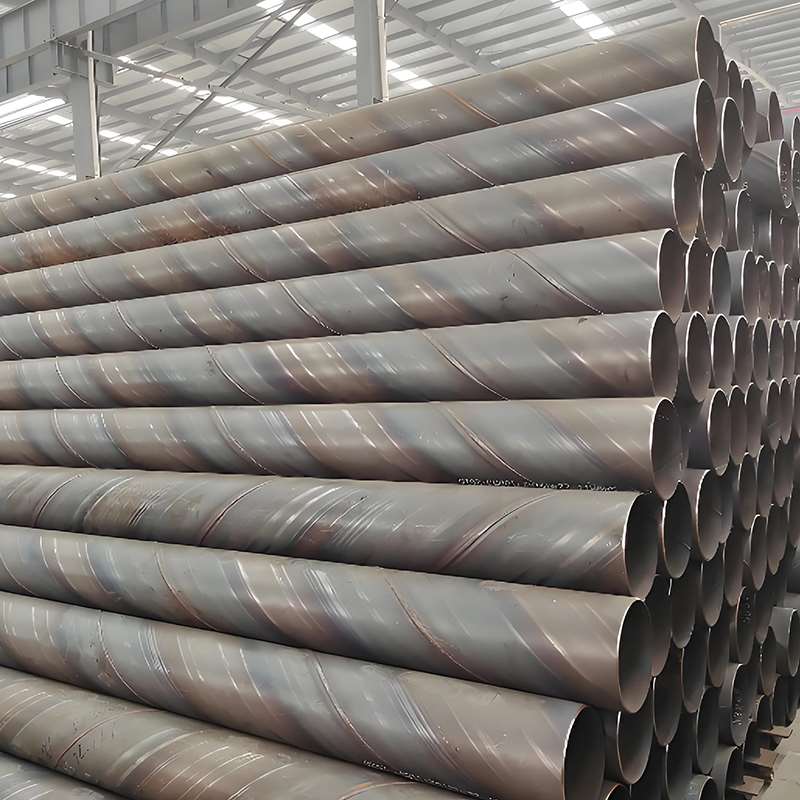
III. Chemical Composition and Properties
(11) What are the chemical composition requirements for steel under ASTM A252?
ASTM A252 does not strictly limit chemical composition, but typically employs low-carbon steel with controlled levels of carbon, manganese, silicon, sulfur, phosphorus, and other elements to ensure weldability and strength.
(12) What is the maximum carbon content for ASTM A252?
The maximum carbon content for ASTM A252 is 0.26%.
(13) What are the control standards for sulfur and phosphorus content in ASTM A252?
Sulfur and phosphorus content are generally limited to no more than 0.05% to prevent adverse effects on steel toughness and weldability.
(14) Does ASTM A252 specify impact toughness requirements?
ASTM A252 itself does not mandate impact toughness specifications, but additional testing may be required under specific conditions (e.g., low temperatures).
(15) What methods are used to test the mechanical properties of ASTM A252?
Tensile testing is primarily employed to determine yield strength, tensile strength, and elongation, ensuring compliance with standard requirements.
IV. Dimensions and Tolerances
(16) What is the standard diameter range for ASTM A252 spiral welded pipe?
Common diameters range from 6 inches to 120 inches (150mm to 3000mm), with custom sizes available upon request.
(17) What are the wall thickness ranges and tolerance requirements for ASTM A252?
Wall thickness typically ranges from 0.250 inches (6.35 mm) to 1.000 inches (25.4 mm), with specific tolerances varying based on diameter and wall thickness.
(18) Does ASTM A252 specify a maximum length?
The standard does not explicitly limit maximum length, but pipe lengths are typically customized according to transportation and construction requirements.
(19) What are the allowable deviations for roundness and straightness in ASTM A252 pipe?
Roundness deviation is generally within 1%, while straightness deviation is typically required not to exceed 0.5% of the length per 3-meter pipe section.
(20) What are the requirements for end face cutting in ASTM A252?
End face cutting must be flat and perpendicular to the pipe axis to avoid affecting installation and connection.
V. Production and Inspection
(21) What welding methods are used for ASTM A252 spiral welded pipes?
Spiral submerged arc welding (SSAW) is typically employed, though some projects utilize longitudinal submerged arc welding (LSAW) or other welding methods.
(22) Does ASTM A252 require ultrasonic testing of all welds?
Yes, ASTM A252 mandates non-destructive testing (e.g., ultrasonic testing) of welds to ensure weld quality.
(23) What are the hydrostatic test requirements for ASTM A252?
Each pipe must pass a hydrostatic test to ensure it will not leak or rupture during service.
(24) How does ASTM A252 ensure weld quality during production?
Weld quality is guaranteed through strict welding procedures, real-time monitoring, and non-destructive testing.
(25) What items are included in the factory inspection for ASTM A252?
Comprehensive inspection items include dimensions, mechanical properties, weld quality, hydrostatic testing, chemical composition, and more.
VI. Corrosion Protection and Treatment
(26) Does ASTM A252 spiral welded pipe require corrosion protection treatment?
The standard itself does not mandate it, but corrosion protection is typically provided per customer requirements. Common methods include 3PE, epoxy coatings, etc.
(27) What are the common corrosion protection methods for ASTM A252 pipes?
Primary methods include 3PE (polyethylene corrosion protection), epoxy resin coatings, FBE (powder coating), etc.
(28) Does ASTM A252 permit internal and external coatings?
Yes. ASTM A252 pipes can be coated internally and externally based on project requirements.
(29) Are there standards for the thickness of ASTM A252 anti-corrosion coatings?
There are no rigid specifications for coating thickness. It is typically designed based on project requirements and the operating environment. Common thicknesses for 3PE coatings range from 3-5mm.
(30) Can the 3PE anti-corrosion process be used for ASTM A252?
Yes. 3PE is a commonly used anti-corrosion process for ASTM A252 spiral welded pipes, particularly suitable for long-term underground applications.
VII. Engineering and Construction
(31) What are the advantages of ASTM A252 spiral welded pipes in pile foundation construction?
High strength, ease of construction, adaptability to complex geology, and effective support for bridge and high-rise building foundations.
(32) Is ASTM A252 suitable for port and marine engineering?
Yes, particularly in marine environments. Corrosion protection treatments significantly enhance its resistance, making it widely used in port terminals, offshore platforms, and other infrastructure.
(33) How are ASTM A252 spiral welded pipes driven during foundation construction?
Pipes are driven into the ground via the pile-driving method or the bored pile method to form deep foundation pit supports.
(34) How are ASTM A252 pipes connected during construction?
Connection methods include welding and bolting, with specific techniques determined by project requirements.
(35) How is ASTM A252 spiral welded pipe inspected on-site?
Inspection involves verifying dimensions, weld quality, mechanical properties, and other aspects to ensure compliance with design specifications.
VIII. Transportation and Storage
(36) What protective requirements apply to ASTM A252 pipes during transportation?
Pipes should be protected from impact and scratches during transport, particularly safeguarding the coating to ensure it remains undamaged.
(37) How can transport damage to ASTM A252 spiral welded pipes be prevented?
Use appropriate packaging and loading methods to avoid friction and collisions; employ protective materials when necessary.
(38) How should ASTM A252 pipes be protected against rust during storage?
Store in a dry, well-ventilated environment, avoiding moisture and corrosion sources.
(39) Does long-term storage of ASTM A252 pipes require additional treatment?
During extended storage, pipes should be inspected periodically. Apply rust-preventive oil or protective coatings as needed.
(40) ASTM A252: What precautions should be taken for storage in cold regions?
Special attention must be paid to freeze protection and moisture prevention to avoid cracks in pipes caused by temperature fluctuations.
IX. Procurement and Quality Assurance
(41) What is the minimum order quantity for ASTM A252 spiral welded pipe?
There is typically no strict minimum order requirement, but smaller batches may increase the unit price. We recommend bulk purchasing based on project requirements.
(42) What factors influence the price of ASTM A252 pipe?
Pricing is affected by raw materials, specifications, manufacturing processes, corrosion protection treatments, transportation, and market supply and demand.
(43) Is a Material Test Certificate (MTC) provided for ASTM A252?
Yes, a Material Test Certificate is provided upon shipment, including test reports for chemical composition and mechanical properties.
(44) Does ASTM A252 come with an inspection report?
Yes, an inspection report is included upon shipment, detailing all test data to ensure product compliance.
(45) How is compliance with ASTM A252 determined?
Compliance is verified through the Material Test Certificate, inspection report, and third-party testing and certification.
X. Standard Extensions and Comparisons
(46) What are the differences between ASTM A252 and EN 10219?
ASTM A252 is primarily used for pile foundations, while EN 10219 is for structural piping. The standards have different focuses, with the former emphasizing load-bearing capacity.
(47) Are ASTM A252 and BS 4360 materials interchangeable?
Both share similar material properties, but ASTM A252 emphasizes pile foundation applications, while BS 4360 is more suitable for building structures.
(48) What are the differences between ASTM A252 and the domestic SY/T 5037 standard?
SY/T 5037 applies to oil and gas transmission pipelines, while ASTM A252 focuses on structural foundations.
(49) Can ASTM A252 spiral welded pipes pass API 5L inspection?
Yes, but API 5L is primarily for transmission pipelines, whereas ASTM A252 specializes in pile foundation projects—the two standards differ in scope.
(50) When was the latest version of the ASTM A252 standard published?
The latest version of the ASTM A252 standard was updated in 2014. Minor revisions are typically made based on industry requirements.